 Save
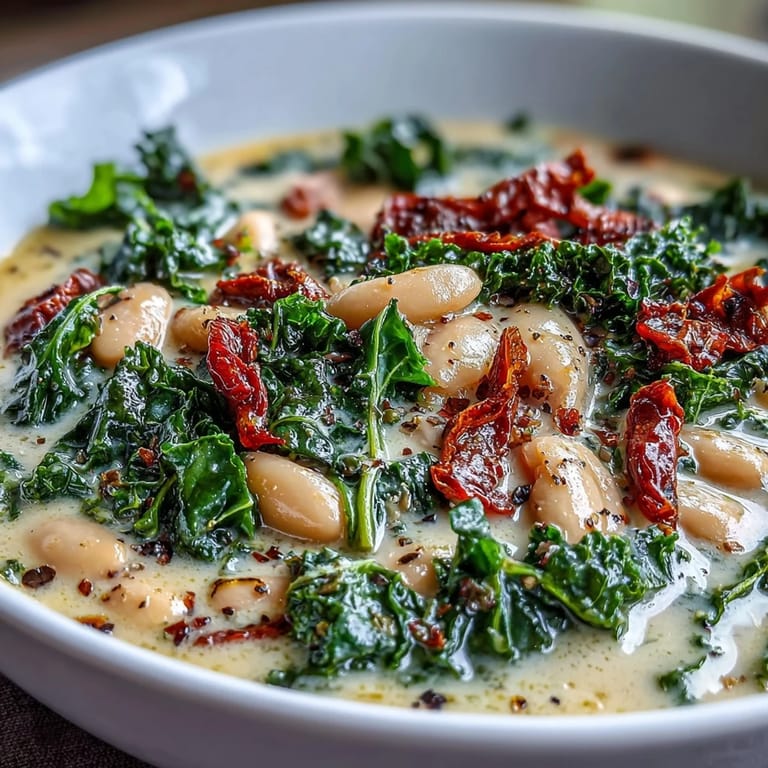
Save There's something about the first really cold evening of autumn that made me crave something warm and substantial, and I found myself standing in the produce section with no plan, just an empty basket and a vague sense of purpose. My eyes landed on a bunch of lacinato kale, then the sun-dried tomatoes, and suddenly this Tuscan soup materialized in my head as if I'd been making it forever. That first bowl, with its creamy cashew swirl melting into garlicky broth, reminded me why simple vegetable soups can feel like the most elegant thing you've ever made.
I made this for a friend who'd just gone vegan, and I watched her face when she took that first spoonful—she thought something this creamy couldn't possibly be plant-based. The moment she tasted it and then said nothing for a full minute, just kept eating with this quiet satisfaction, I knew I'd made something that transcended dietary restrictions and became just good food.
Ingredients
- Olive oil: Use a good quality one here since it's not being cooked aggressively, and it becomes part of the flavor profile.
- Yellow onion, carrots, and celery: The holy trinity that builds every soup's foundation, and they're best diced uniform so they soften at the same pace.
- Garlic: Mince it finely because it mellows into the broth beautifully rather than lingering as sharp chunks.
- Crushed red pepper flakes: Optional but worth the tiniest pinch—they whisper heat rather than shout it.
- Cannellini beans: Canned and rinsed work perfectly here; they're already tender and you're not waiting for anything.
- Vegetable broth: This is your canvas, so use something you'd actually want to drink on its own.
- Sun-dried tomatoes: The oil-packed ones are non-negotiable for flavor; they bring concentrated sweetness and depth that dry-packed versions struggle with.
- Lacinato kale: Its tender, almost sweet leaves hold up better in soup than curly kale, and they don't turn bitter with cooking.
- Dried thyme and oregano: These Italian staples bloom when heated in broth, but add them early enough that they infuse rather than just dust the surface.
- Raw cashews: Soak them in hot water beforehand so they blend into something silky rather than grainy; this step changes everything.
- Lemon juice: It brightens the whole soup and cuts through the richness of the cream in a way that feels intentional.
- Nutritional yeast: Optional but gives a savory, almost cheese-like depth if you're missing that umami note.
Tired of Takeout? 🥡
Get 10 meals you can make faster than delivery arrives. Seriously.
One email. No spam. Unsubscribe anytime.
Instructions
- Make the cashew cream first:
- Blend your soaked cashews with water, garlic, lemon juice, nutritional yeast, and salt until it's completely smooth—you want no graininess at all, so blend longer than you think necessary. Set it aside and let it cool slightly while you build the soup's base.
- Start your aromatic base:
- Heat olive oil in a large pot over medium heat, then add the onion, carrots, and celery together; this takes about 5 to 6 minutes and the pot will smell incredible when they start to soften and release their sweetness. You're looking for them to lose their raw crunch but still have some shape.
- Wake up the garlic:
- Add minced garlic and red pepper flakes now, cooking for just a minute until it's fragrant—this is when your kitchen smells like a Tuscan kitchen should. Don't let it brown or it turns bitter and harsh.
- Build the soup body:
- Stir in the beans, sun-dried tomatoes, thyme, oregano, salt, and pepper, mixing everything so the dried herbs start to wake up in the warmth. Then pour in your vegetable broth and bring it all to a boil before reducing the heat to a gentle simmer.
- Simmer and develop flavor:
- Let it bubble softly for 15 minutes so the herbs infuse and the beans warm through completely, tasting as you go because broth strengths vary. The soup will already taste good at this point, but it's about to get better.
- Add the kale:
- Stir in your chopped kale and let it simmer for another 5 to 7 minutes, just until it's tender but still a little bit green rather than gray. You'll notice the pot shrinks as the kale wilts down, which is oddly satisfying to watch.
- Finish with creaminess:
- Stir in the cashew cream gently, letting it swirl through the broth for about 2 minutes of simmering so it integrates rather than sitting in a layer. Taste now and adjust the salt and pepper because the cream changes the overall seasoning balance.
- Serve with intention:
- Ladle it into bowls and finish with a crack of fresh black pepper and a light drizzle of olive oil if you're feeling fancy. Serve immediately while it's hot and the kale is still at its best texture.
 Save
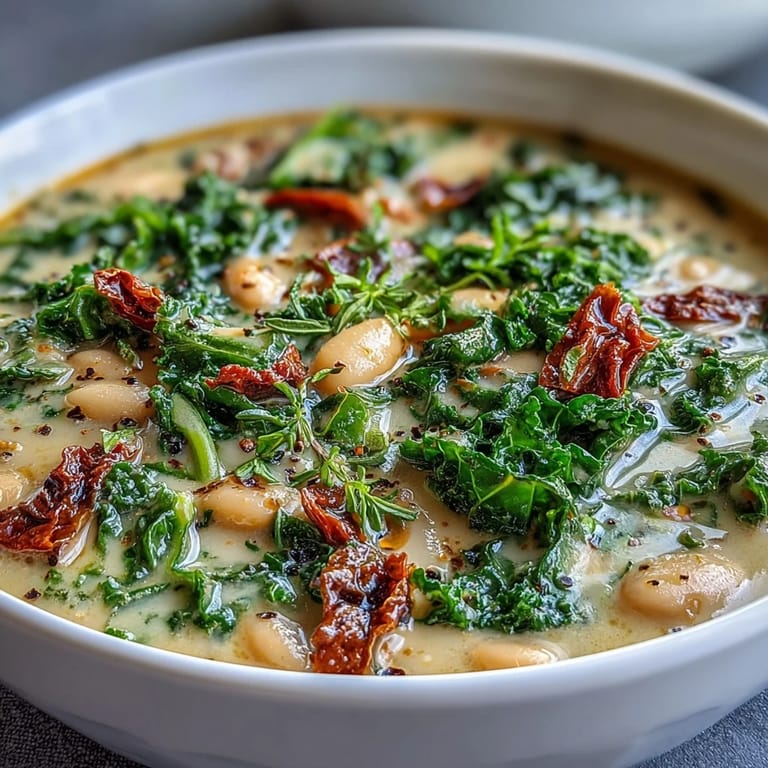
Save There was a quiet evening in late October when I served this soup to my family, and my youngest asked if we could have it again next week, then the week after that. It became an autumn ritual, the soup that marked the season more reliably than any calendar, and I realized it had somehow become comfort food despite being technically vegan and elegant—proof that the best recipes are the ones that don't announce themselves as anything other than deeply satisfying.
The Beauty of Cashew Cream
I used to think you needed heavy cream to make soup feel luxurious, but cashew cream changed that thinking entirely. When you blend soaked cashews with just the right amount of water, you get something that's richer and silkier than dairy cream, with a subtle nuttiness that adds dimension rather than just coating your mouth. The first time I poured it into the broth and watched it swirl, I understood why so many vegan cooks had converted to this method long ago—it's genuinely better, not just a substitute.
Variations That Keep It Fresh
Once you understand the bones of this soup, it becomes a template for whatever's in your kitchen and whatever your mood demands. I've made it with spinach instead of kale on nights when I was out of greens, added white beans mixed with chickpeas for more protein, and even stirred in a handful of fresh basil at the end because it was growing wildly on my windowsill. The sun-dried tomatoes and garlic cashew cream are the non-negotiables that hold the Italian identity, but everything else invites playfulness and adaptation.
Serving Suggestions and Pairings
This soup is complete on its own, but it also plays beautifully with other elements if you want to build a larger meal. A slice of crusty sourdough bread is the obvious partner, something you can dip and drag through the broth, or a sprinkle of crispy croutons if you want textural contrast. I've also served it over cooked farro or pearl barley for nights when the soup needed to be more substantial, and it transforms into something heartier without losing its elegance.
- A simple arugula salad with lemon dressing cuts through the richness and adds a peppery brightness.
- Pair it with a light white wine—something crisp and mineral that won't compete with the garlic and herbs.
- Finish each bowl with a handful of fresh cracked pepper and a tiny drizzle of really good olive oil for the people who understand that final flourish matters.
 Save
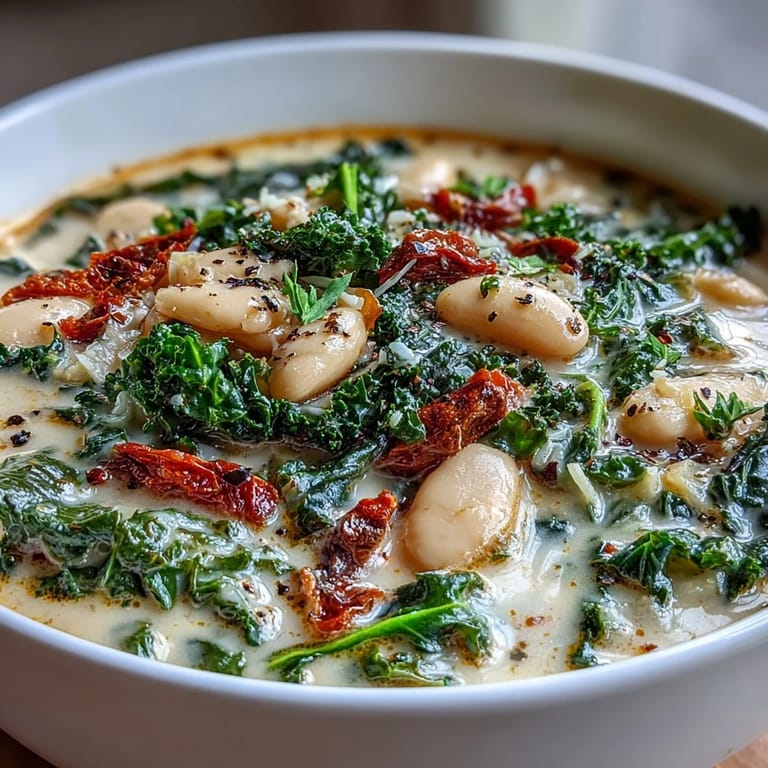
Save This soup has become my answer to every question about what to cook when you want something that feels both nourishing and indulgent. Make it once and you'll understand why it earns a permanent spot in rotation.
Recipe FAQs
- → What gives the soup its creamy texture?
The creamy texture comes from a blend of soaked cashews, garlic, lemon juice, and water, creating a smooth and rich base without dairy.
- → Can I substitute another leafy green for kale?
Yes, baby spinach or Swiss chard can be used as alternatives, though cooking times may vary slightly.
- → Does the dish suit a vegan diet?
Absolutely, all ingredients are plant-based, making it vegan, dairy-free, and gluten-free.
- → How do sun-dried tomatoes influence flavor?
Sun-dried tomatoes add a tangy, concentrated sweetness and depth, enhancing the overall savory profile.
- → Is there a way to add extra richness?
Adding a splash of unsweetened plant-based milk to the cashew cream can enhance the richness and smoothness.