 Save
Save There's something about the smell of split peas simmering with ham that fills a kitchen with pure comfort. My neighbor once stopped by mid-afternoon, caught that aroma wafting through the hallway, and didn't leave until I'd ladled her a bowl. That's when I realized this soup wasn't just food—it was an invitation, a reason to slow down and sit together on a cold day.
I made this soup the day my daughter came home from college, and she ate three bowls before even unpacking her suitcase. Her friends showed up unannounced, smelled what was cooking, and suddenly we had six people gathered around the kitchen counter with spoons in hand. That's when I understood why this recipe has traveled through generations—it's the kind of dish that makes people want to stay.
Ingredients
- Smoked ham hock or diced cooked ham (1 lb): This is your flavor foundation—the smokiness and salt infuse the entire pot and make every spoonful feel earned and rich.
- Dried green split peas (1 lb), rinsed and sorted: Rinsing removes dust, and sorting out any wrinkled or discolored peas prevents surprises in finished soup.
- Carrots (2 medium, peeled and diced): They soften into sweet little pockets of flavor that balance the salty ham perfectly.
- Celery stalks (2, diced): Often overlooked, celery adds a subtle earthiness that makes the broth taste like it's been simmering for hours.
- Onion (1 large, diced): Your aromatic base—sauté it until translucent so it breaks down completely and disappears into the background.
- Garlic (2 cloves, minced): One minute of cooking is all it needs; any longer and it turns bitter and harsh.
- Low-sodium chicken broth or water (8 cups): Broth adds depth, but water works fine if you prefer to let the ham and peas shine alone.
- Bay leaves (2): They quietly deepen flavor—always remove them before serving since biting into one is never pleasant.
- Dried thyme (1 tsp): This herb whispers herbaceous notes without overpowering the soup's natural earthiness.
- Freshly ground black pepper (1/2 tsp) and salt to taste: Taste as you go because dried split peas absorb seasoning differently depending on your water and ham choice.
Tired of Takeout? 🥡
Get 10 meals you can make faster than delivery arrives. Seriously.
One email. No spam. Unsubscribe anytime.
Instructions
- Build your flavor base:
- Heat a splash of oil in a large pot over medium heat, then add onion, carrots, and celery. You're listening for a gentle sizzle and watching for the onion to turn translucent and slightly golden at the edges—this takes 5 to 7 minutes and is non-negotiable for depth.
- Welcome the garlic:
- Stir in minced garlic and cook for just one minute, stirring constantly so it releases its aroma without scorching. You'll smell when it's ready—that pungent, fresh garlic fragrance.
- Bring everything together:
- Add split peas, ham hock or diced ham, bay leaves, thyme, and black pepper to the pot. Stir everything so the peas are coated in oil and the seasonings are distributed evenly.
- Add your liquid:
- Pour in chicken broth or water, stirring gently to ensure no peas stick to the bottom. The mixture should look loose and soupy at this point.
- Begin the long simmer:
- Bring the pot to a boil—you'll see big rolling bubbles—then reduce heat to low, cover partially, and let it simmer gently. This is the magic hour: the peas will soften, the flavors will marry, and the broth will gradually turn creamy from the peas breaking down.
- Tend to your ham:
- After 1 to 1.5 hours, remove the ham hock and let it cool slightly. Pull any meat from the bone with two forks, discard the bone and excess fat, and return the shredded meat to the pot.
- Taste and adjust:
- Remove those bay leaves, then taste a spoonful. Add salt and pepper until it feels right for your palate—remember, ham is salty, so you may need less than you'd expect.
- Serve and enjoy:
- Ladle into bowls and serve hot with crusty bread for soaking up every last drop.
 Save
Save Years ago, my mother-in-law taught me that split pea soup is less a recipe and more a ritual, a quiet way of saying I care about you without making a fuss. Every time I make it now, I feel her presence in the kitchen, reminding me that the best meals are the ones made without ego.
Texture Matters
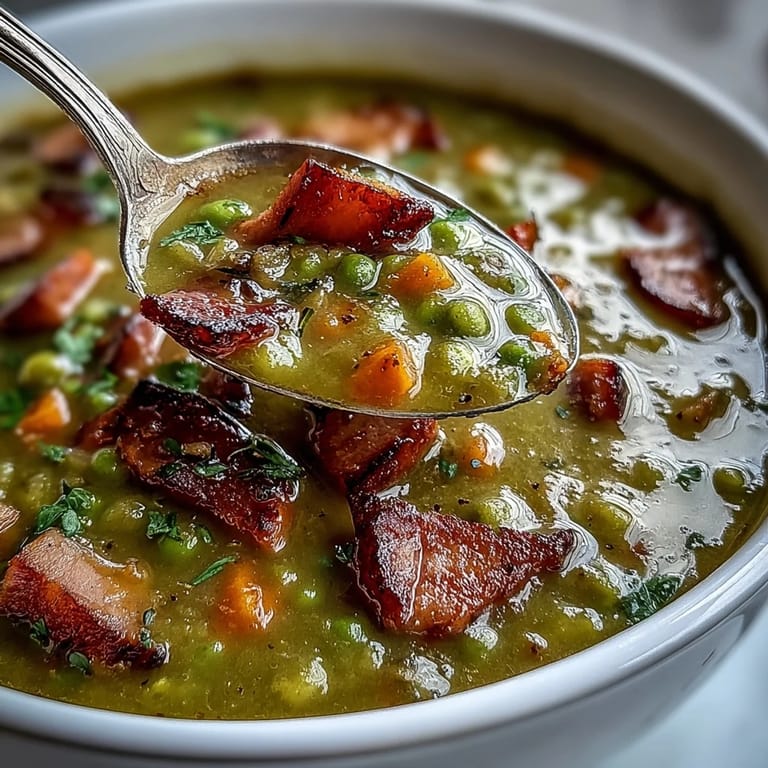
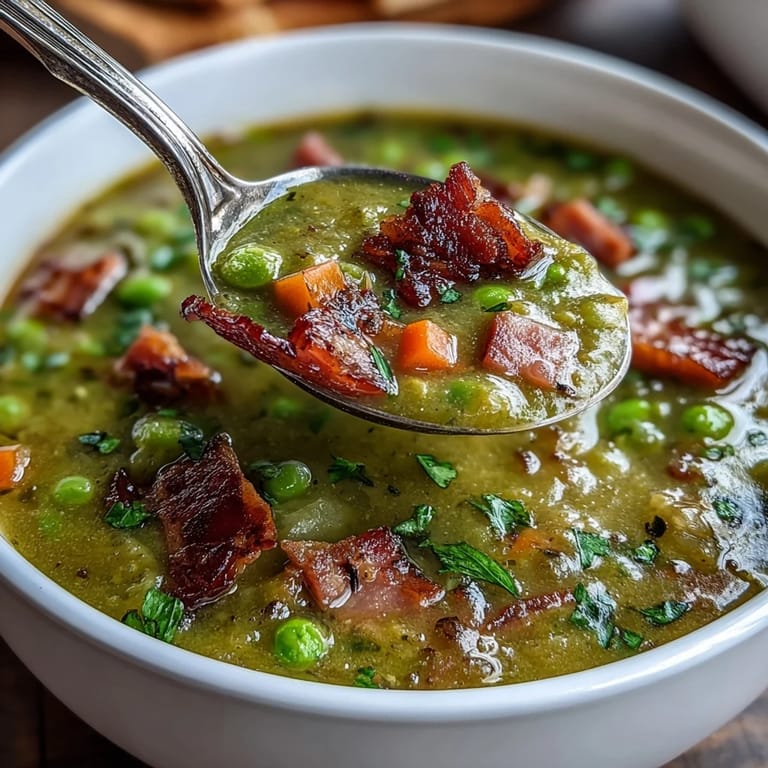
Split peas naturally break down as they cook, creating a thick, creamy broth with little bits of softened peas throughout. Some people love this rustic texture; others prefer something smoother. If you want creaminess with more elegance, use an immersion blender to partially purée the soup after cooking—blend about half of it so you keep some texture and body. The result is sophisticated without losing the comfort factor that makes this soup feel like home.
Make It Your Own
This recipe is flexible and forgiving, which is part of why it's endured. Diced potatoes add heartiness, fresh parsley stirred in just before serving adds brightness, and a splash of apple cider vinegar at the end can sharpen flavors if they feel flat. Smoked turkey leg substitutes beautifully for ham if you want something lighter, and some cooks add a smidge of brown sugar to balance the earthiness.
Storage and Make-Ahead
This soup tastes even better the next day after flavors have had time to settle and deepen, so don't hesitate to make it ahead. Store it in the refrigerator for up to five days, or freeze portions in containers for up to three months. When reheating, add a splash of broth or water since the soup will thicken further as it sits.
- Freezing works best if you freeze before blending, since puréed soup can separate slightly when thawed.
- A slow cooker version works beautifully—sauté the vegetables first, then transfer everything to the slow cooker on low for 4 to 5 hours.
- Leftovers reheat gently on the stovetop, never a hard boil, which keeps the texture silky rather than grainy.
 Save
Save This soup reminds us that real comfort doesn't require fancy ingredients or complicated techniques. It just requires time, attention, and a willingness to let something simple become something meaningful.
Recipe FAQs
- → What type of ham works best for this dish?
Smoked ham hocks impart a rich, smoky flavor, but diced cooked ham also works well for convenience.
- → Can I use different legumes instead of split peas?
While split peas create a creamy texture, lentils or chickpeas can be used though they may alter cooking time and consistency.
- → How can I adjust the soup’s thickness?
Simmer longer for a thicker texture or add a splash of broth for a thinner consistency. Using an immersion blender can also smooth it out.
- → What herbs enhance the flavor of this soup?
Bay leaves and dried thyme provide subtle earthy notes that complement the smoky ham and peas perfectly.
- → How do I store leftover soup?
Cool completely and keep in an airtight container in the refrigerator for up to 3 days or freeze for longer storage.
- → Is there a lighter meat alternative?
Substituting smoked turkey leg provides a lighter smoky taste without sacrificing depth of flavor.