 Save
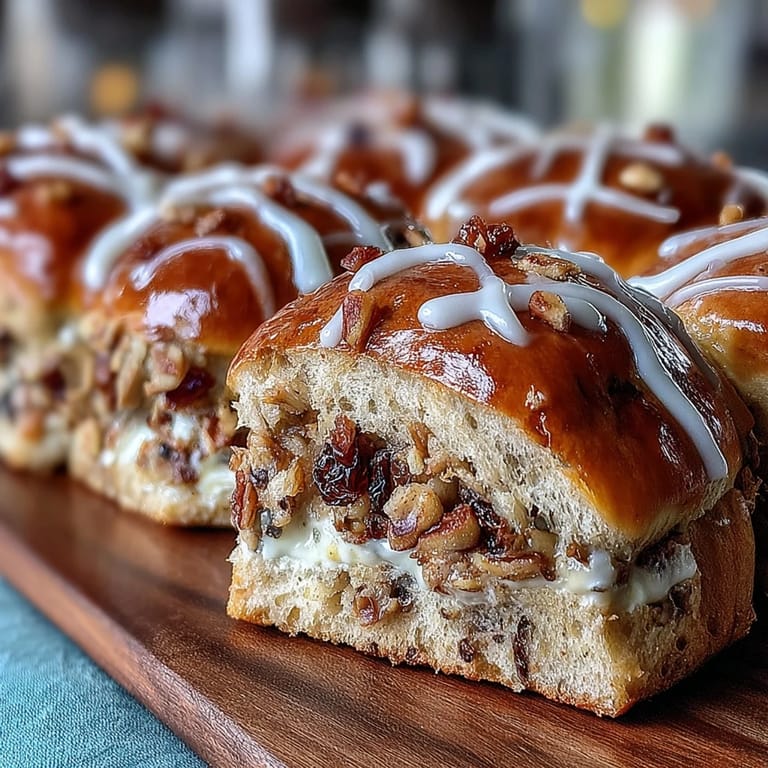
Save My kitchen smelled like a spice market the first time I attempted hot cross buns—cinnamon, nutmeg, and allspice all mingling with warm dough that felt impossibly soft between my fingers. I'd watched my neighbor pull a tray of perfectly golden buns from her oven one Easter morning, and the sight of that glossy citrus glaze catching the light stuck with me for months. When I finally committed to making them myself, I realized these weren't just bread; they were edible tradition, something that demanded patience but rewarded it with every fragrant, fruity bite.
There was an afternoon when my daughter helped me shape each ball of dough, her small hands mirroring mine, slightly clumsy but absolutely earnest about the work. We'd hum between tasks, and she'd ask why the kitchen felt warm even though the oven wasn't on yet—it was the dough rising, I told her, doing its quiet magic. When we pulled those buns from the oven and she watched me brush on the glaze, her eyes went wide like I'd just performed actual sorcery.
Ingredients
- Bread flour (4 cups / 500 g): This gives structure and chew; all-purpose flour makes them crumbly, so don't skip the upgrade.
- Instant yeast (2 1/4 tsp / 7 g): Check your expiration date—stale yeast means flat, sad buns with zero rise.
- Ground cinnamon, allspice, nutmeg (1 tsp, 1/2 tsp, 1/2 tsp): These aren't optional flourishes; they're what make these buns distinctly themselves, warm and inviting.
- Mixed dried fruit (3/4 cup / 110 g): Currants, raisins, and candied orange peel create pockets of sweetness and texture—don't use one type alone.
- Orange and lemon zest: Fresh zest, not the powdered stuff in a jar; the oils in fresh zest brighten the entire bun.
- Whole milk and water (1/2 cup each / 120 ml): This blend hydrates the dough without making it too dense; milk adds richness, water keeps it workable.
- Unsalted butter (1/4 cup / 60 g), melted: Melted butter distributes evenly throughout the dough, keeping the crumb tender.
- Large eggs (2, room temperature): Cold eggs won't incorporate smoothly, so leave them out beforehand.
- Powdered sugar and citrus juices for glaze: Fresh-squeezed juice matters here; bottled tastes thin and one-dimensional by comparison.
Tired of Takeout? 🥡
Get 10 meals you can make faster than delivery arrives. Seriously.
One email. No spam. Unsubscribe anytime.
Instructions
- Combine your dry foundation:
- In a large bowl, whisk together bread flour, sugar, instant yeast, cinnamon, allspice, nutmeg, and salt so the spices distribute evenly and the yeast isn't clumped. You're building the flavor base here, so don't rush this.
- Prepare the wet mixture:
- Whisk milk, water, melted butter, and room-temperature eggs in a separate bowl until they're fully combined and the butter is evenly dispersed. The temperature matters—warm liquid activates the yeast, but too hot kills it.
- Bring it together:
- Pour the wet ingredients into the dry and mix with a wooden spoon or your hands until you have a shaggy, wet dough that comes together. Don't overwork it yet; you're just bringing everything into conversation.
- Build texture with dried fruit:
- Add the mixed dried fruit, orange zest, and lemon zest, then knead by hand or with a stand mixer for 8–10 minutes until the dough is smooth, elastic, and springs back when you poke it. The zest should be evenly distributed, creating little flavor bursts throughout.
- First rise:
- Place the dough in a greased bowl, cover with a damp cloth or plastic wrap, and let it rise in a warm spot for about an hour until it's roughly doubled in size. You'll know it's ready when a finger poke leaves an indent that doesn't spring back.
- Shape your buns:
- Turn the dough out onto a lightly floured surface, divide it into 12 equal pieces (a kitchen scale helps here), and shape each one into a tight ball by pulling the edges toward the center and rotating it. Arrange them on a parchment-lined baking tray with a little space between each—they'll puff up and touch, which is exactly what you want.
- Second rise and oven prep:
- Cover the tray loosely with plastic wrap and let the buns rise for 30 minutes until they're noticeably puffy and feel light when you gently touch one. While they're rising, preheat your oven to 375°F (190°C).
- Pipe the crosses:
- Mix flour and water to create a thick, pipeable paste, transfer it to a piping bag or a small zip-top bag with a corner snipped off, and pipe a cross over each bun with steady, confident lines. This is the signature mark—make it yours.
- Bake to golden:
- Bake for 20–25 minutes until the buns are deep golden brown and sound hollow when you tap the bottom of one. The aroma at this point is almost overwhelming in the best way possible.
- Make the glaze while they bake:
- Whisk together powdered sugar, fresh orange juice, and lemon juice until smooth and pourable, adjusting consistency with tiny splashes of juice if needed. The glaze should be thin enough to brush on easily but thick enough to coat.
- Finish with citrus brightness:
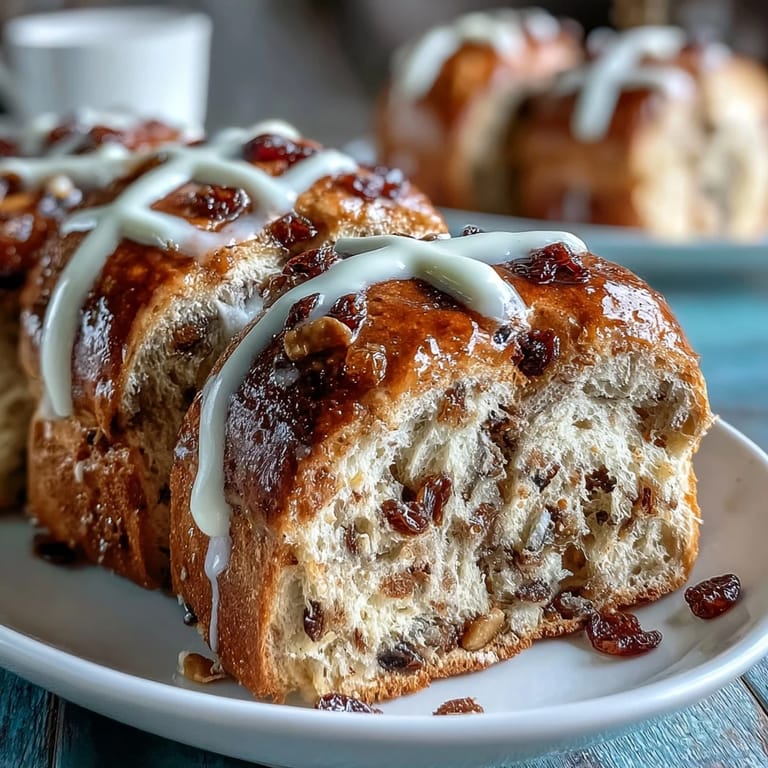
- Remove the buns from the oven and immediately brush each one generously with the citrus glaze while they're still warm—the heat helps the glaze sink in and gives the buns a glossy finish. Transfer them to a wire rack to cool slightly before serving.
 Save
Save There's a quiet moment after you pull these buns from the oven and brush them with glaze—when the kitchen steam rises and everything smells like spring and possibility—that reminds me why people bake. These buns have been part of celebrations for centuries, and now they're part of your kitchen, your traditions, your mornings.
The Science of Spiced Dough
The reason hot cross buns have such a tender crumb compared to other enriched doughs is the balance of fat, eggs, and liquid working together rather than against each other. The butter softens the gluten structure slightly, the eggs add richness and help bind everything, and the two-liquid system (milk and water) keeps the dough hydrated but not soggy. Understanding this balance means you can troubleshoot if something feels off—too dry and crumbly, add a splash more liquid; too sticky, dust in a bit more flour while kneading.
Timing and Temperature Matter More Than You Think
I once made these on a cold morning and wondered why the dough seemed sluggish until I realized my kitchen was only 62 degrees—cold spaces slow fermentation dramatically. The next batch, I set the bowl in a warmed oven (turned off) and watched the dough respond eagerly. Temperature isn't about impatience; it's about giving yeast the conditions it needs to actually work.
Beyond the Classic Cross
The cross paste is versatile in ways you might not expect, and experimenting with it taught me that traditions are guidelines, not rulebooks. Some bakers add a tiny pinch of cardamom to the paste for extra spice, or even a whisper of vanilla extract for depth. The base recipe is solid, but your kitchen should feel like a place where you can play, adjust, and make something feel like yours.
- If you prefer your buns less spiced, reduce the cinnamon to 3/4 teaspoon and skip the allspice entirely.
- Dried cranberries or apricots swap in beautifully for part of the fruit mix if currants aren't your thing.
- Serve these slightly warm with good butter or clotted cream, and they'll remind you why simple things, done with care, become extraordinary.
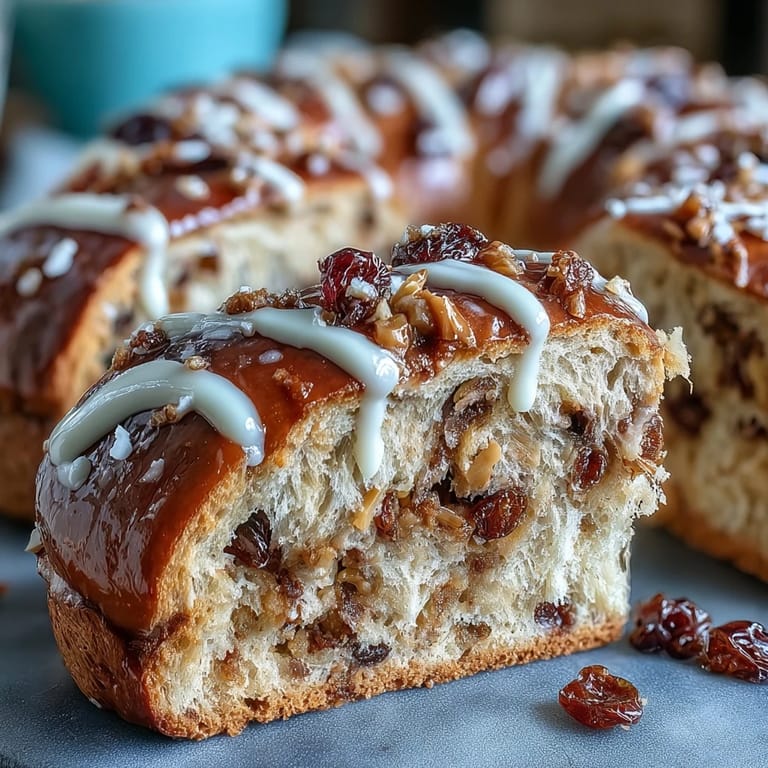 Save
Save Making hot cross buns isn't about perfection—it's about showing up in your kitchen and creating something warm enough to share and good enough to remember. Each batch you make teaches you something small, and those small lessons add up to real confidence.
Recipe FAQs
- → What type of dried fruit works best in these buns?
Currants, raisins, and chopped candied orange peel provide a balanced sweetness and texture. You can also try cranberries or apricots for a fruity twist.
- → How do I ensure the dough rises properly?
Keep the dough covered in a warm, draft-free spot until it doubles in size, usually about an hour, then allow a second rise after shaping for best texture and lightness.
- → Can I prepare the cross paste in advance?
Yes, mix the flour and water into a thick paste just before piping to maintain pipeability and clear lines on each bun.
- → What’s the best way to apply the citrus glaze?
Brush the glaze onto the buns immediately after baking while they are still warm to ensure it sets nicely with a shiny finish.
- → Are there any substitute spices I can use?
Adding a pinch of cardamom enhances warmth. Ground ginger or cloves can also complement the existing spice mix.