 Save
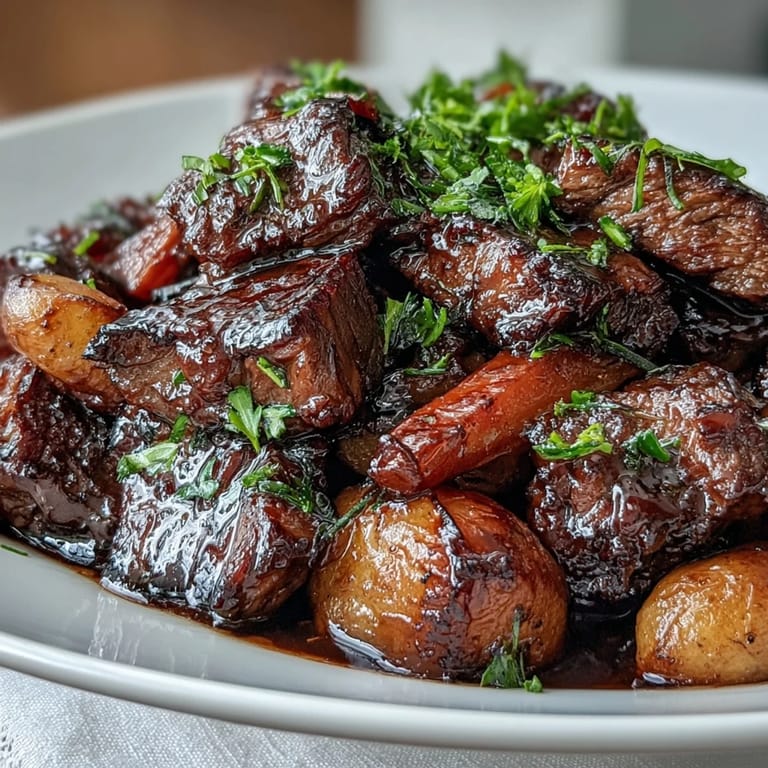
Save My first encounter with nikujaga wasn't in Japan—it was in my friend's tiny Tokyo apartment kitchen on a rainy Tuesday, where she moved her small pot in circles on the stove, explaining that this dish was what her mother made when she wanted comfort without fuss. The smell of soy and mirin folding into beef and potatoes felt like stepping into a warm conversation. What struck me wasn't the complexity, but how something so simple could taste like it had been simmering for hours in someone's memory.
Years later, I made this on a winter evening when my partner came home exhausted, and watching their face soften over that first spoonful reminded me why home cooking matters—it's not about following rules perfectly, it's about saying I thought of you today through potatoes and beef.
Ingredients
- Thinly sliced beef: Chuck or ribeye works beautifully because the fat renders into the sauce, making it richer and more forgiving than leaner cuts that can toughen up.
- Waxy potatoes: These hold their shape and don't turn into mush, which is crucial since you want distinct bites of tender potato, not potato soup.
- Onions and carrots: The onions melt into the sauce and become almost caramelized, while carrots stay firm enough to feel like you're eating something real.
- Dashi stock: This is the backbone—if you can't find it, instant dashi powder mixed with water works just as well, and honestly, no one will know the difference.
- Soy sauce, mirin, sake, and sugar: This quartet creates that signature glossy coating; mirin is the secret that keeps everything tasting rounded and not one-note salty.
- Optional shirataki noodles: They add texture and absorb all that beautiful sauce, so if you're serving to anyone who loves slurping, don't skip them.
- Snow peas or green beans: These go in at the very end so they stay bright and crisp instead of turning gray and tired.
Tired of Takeout? 🥡
Get 10 meals you can make faster than delivery arrives. Seriously.
One email. No spam. Unsubscribe anytime.
Instructions
- Soften the onions first:
- Heat your oil over medium heat and let the onions get a head start, about 2-3 minutes, until they're translucent at the edges—this builds flavor before the beef even hits the pan.
- Brown the beef lightly:
- Add your sliced beef and stir often for a few minutes until it loses its raw look but doesn't need to be fully cooked, since it'll braise and tenderize later in the sauce.
- Build your braising base:
- Add potatoes and carrots, give everything a good mix so the vegetables are cradled among the beef, then pour in your dashi stock followed by soy sauce, mirin, sake, and sugar—stir until the sugar dissolves and you can smell the sweetness mingling with salt.
- Skim and simmer gently:
- Bring to a gentle boil and watch for foam rising to the surface—skim it off with a spoon because this makes the final dish cleaner tasting. Then cover with the lid slightly ajar and reduce heat to low, letting it bubble away for 20-25 minutes until the potatoes yield to a fork.
- Add noodles midway if using:
- About 10 minutes before the potatoes are done, add rinsed shirataki noodles so they have time to absorb flavor without getting mushy.
- Finish with a glossy reduction:
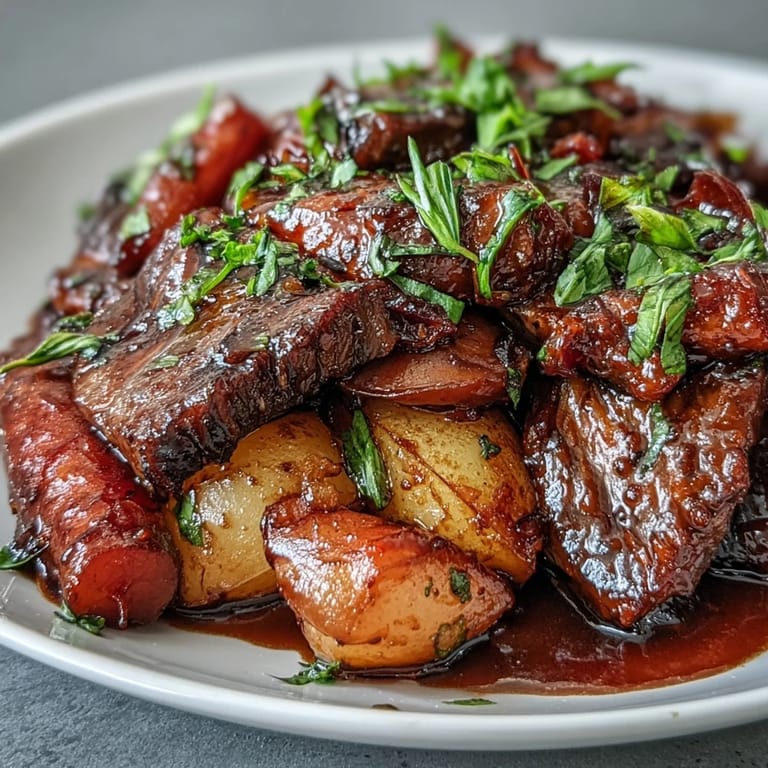
- Remove the lid for the final 5 minutes and let the sauce reduce slightly, coating everything in a shiny glaze that clings to each bite.
- Brighten with greens at the last moment:
- Toss in snow peas or green beans just 2-3 minutes before serving so they stay crisp and add color contrast to all that glossy brown.
 Save
Save There was a moment when I served this to my skeptical sister, who ate meat minimally, and she had seconds without thinking about it—the sauce had done something almost magical, making beef feel more like an accent than the main event. That's when I realized nikujaga isn't really about the beef at all; it's about balance and patience.
The Art of the Glossy Finish
That final uncovered simmer is where amateurs and confident cooks split paths. When you remove the lid in those last 5 minutes, you're not just reducing sauce—you're concentrating flavor and creating a coating that clings to each potato chunk and piece of beef. Watch it, because it goes from beautiful to caramelized too sticky in maybe a minute, and you want to catch it just when it looks like it's hugging everything with a light shine. The starch from the potatoes helps thicken the sauce naturally, so you don't need cornstarch or anything fancy.
Swaps and Flexibility
Pork shoulder or pork belly can replace beef entirely—in fact, I prefer pork sometimes because it breaks down even softer and releases more collagen into the sauce. For a vegetarian version, firm tofu cut into chunks or even chickpeas work, though you'd want to use vegetable broth and add the tofu toward the end so it doesn't disintegrate. If you're avoiding alcohol, skip the sake or replace it with more mirin or a splash of orange juice for subtle sweetness and depth. The beauty of this dish is that it forgives substitutions because the sauce is what matters most.
Serving and Pairing Wisdom
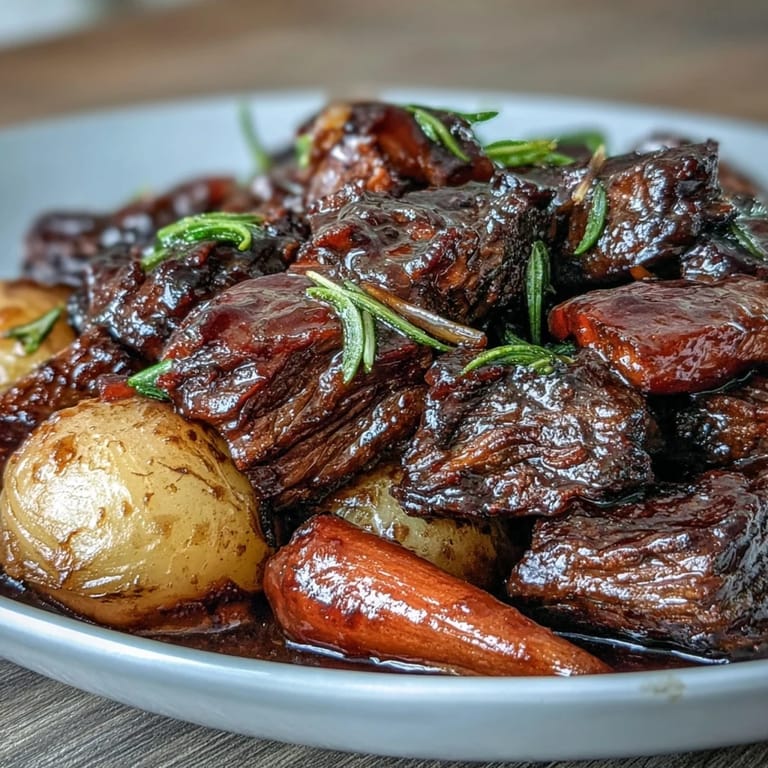
This dish breathes with white rice—plain, simple, absorbing every drop of sauce from your bowl. I've tried it with brown rice and barley, and while they work, white rice feels like the intended canvas, the way the dish was designed to taste. A chilled sake on the side is traditional, but honestly, cold green tea is equally perfect if you want something cleaner to cut through the richness. Leftover nikujaga reheats beautifully the next day, and the flavors actually deepen, so don't hesitate to make extra.
- Serve over white rice to let the sauce be the star.
- A cold beverage—sake or green tea—balances the sweet-savory richness perfectly.
- This dish keeps well refrigerated and tastes even better the next day.
 Save
Save Nikujaga is the kind of dish that proves comfort food doesn't require complexity, just intention and a little patience. Make it tonight, and you'll understand why it lives in the hearts of people who grew up eating it.
Recipe FAQs
- → What cut of beef works best in this dish?
Thinly sliced chuck or ribeye are ideal for their tenderness and quick cooking time.
- → Can I substitute any vegetables in this dish?
Yes, snow peas or green beans add crunch, while carrots and onions provide sweetness and depth.
- → How do I achieve the glossy finish on the sauce?
Removing the lid in the last few minutes lets the sauce reduce and thicken, creating a shiny coating.
- → Is it possible to make a vegetarian version?
Yes, replace beef with firm tofu and use vegetable broth instead of dashi stock.
- → What side dishes complement this main dish well?
Steamed white rice and a chilled sake or green tea pair nicely with the savory flavors.