 Save
Save My neighbor stopped by one October afternoon with a bag of fresh carrots from her garden, and I suddenly remembered a stew my grandmother used to make on cool evenings—the kind that filled the whole house with warmth before you even tasted it. I dug through my pantry and found dried lentils, ham in the fridge, and thought, why not build something in one pot that tastes like it simmered for hours but takes barely an hour total? That first batch taught me that sometimes the simplest combinations are the ones people keep asking for.
I made this for my sister during a particularly stressful week of hers, and watching her face soften at the first spoonful reminded me why cooking for others matters. She came back three days later asking if I'd made it again, and I had to admit the leftovers were already gone—my own doing.
Ingredients
- Cooked ham, diced (250 g): Use good quality ham if you can; cheaper versions can taste overly salty and throw off the whole balance.
- Dried brown or green lentils, rinsed (250 g): Rinsing them removes dust and odd bits, and brown lentils hold their shape better than red ones, which would turn to mush.
- Medium onions, finely chopped (2): The finer you chop them, the more they dissolve into the broth and sweeten everything around them.
- Medium carrots, diced (2): Carrots take longer to soften than you'd think, so cutting them smaller helps them cook evenly with everything else.
- Celery stalks, diced (2): This is the secret ingredient nobody talks about—it adds a subtle earthiness that ties the whole stew together.
- Garlic cloves, minced (3): Don't skip this step; raw garlic turns bitter if you're not careful, so mince it fine and add it after the softer vegetables so it just perfumes the pot.
- Low-sodium chicken or vegetable stock (1.2 L): Low-sodium lets you control the salt level, which matters more than you'd think when lentils are absorbing liquid.
- Bay leaf (1): Fish this out before serving—nobody wants to bite into it, and it's done its job of adding subtle flavor by then.
- Dried thyme (1 tsp): Thyme has a gentle, almost minty note that plays beautifully with smoky ham without overpowering anything.
- Smoked paprika (½ tsp): This is what gives the stew its depth; regular paprika won't give you that same complexity.
- Salt and freshly ground black pepper, to taste: Taste as you go, especially at the end, because the lentils absorb salt and the flavors concentrate.
- Fresh parsley, chopped (2 tbsp, optional): A handful of fresh parsley at the end brightens everything up and makes it look less like a pot of brown and more like something you meant to serve.
- Olive oil (1 tbsp): Just enough to coat the bottom of the pot and start the vegetables releasing their moisture.
Tired of Takeout? 🥡
Get 10 meals you can make faster than delivery arrives. Seriously.
One email. No spam. Unsubscribe anytime.
Instructions
- Build your base with vegetables:
- Heat the olive oil in a large, heavy-bottomed pot over medium heat and add the onions, carrots, and celery together. Let them soften for 6 to 8 minutes, stirring now and then—you're looking for them to turn translucent and smell sweet, not brown.
- Wake up the garlic:
- Stir in the minced garlic and cook for just 1 minute until it becomes fragrant. The kitchen should smell amazing at this point, and you'll know you haven't burned it because raw garlic smells sharp, but cooked garlic smells warm and inviting.
- Toast the ham briefly:
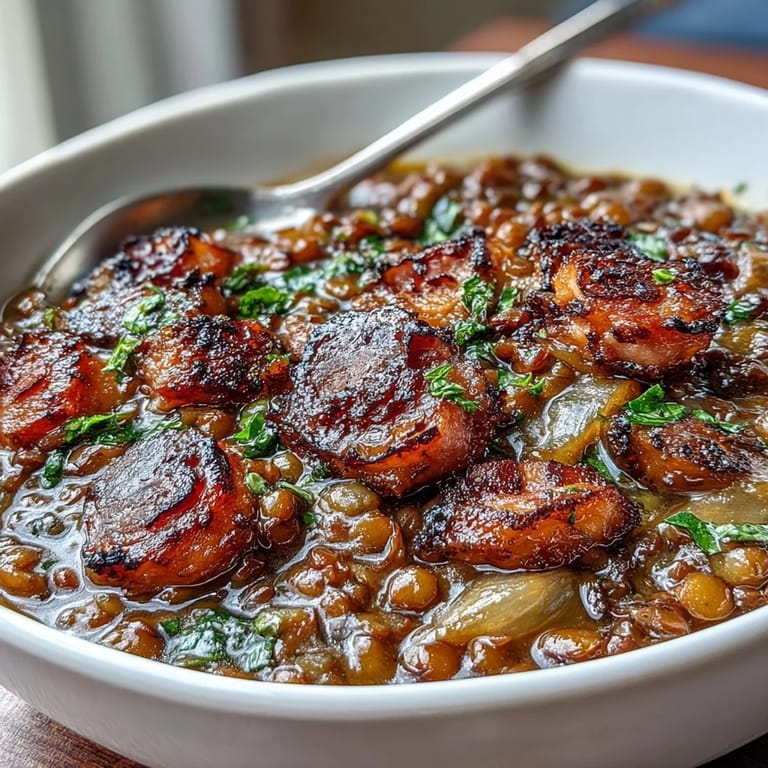
- Add the diced ham and let it sit for about 2 minutes, stirring occasionally, so the edges start to caramelize just a little. This adds flavor that wouldn't be there if you just threw it in raw.
- Bring everything together:
- Add the lentils, bay leaf, thyme, smoked paprika, stock, and a pinch of salt and pepper. Stir everything so the lentils are covered and nothing's sticking to the bottom, then turn up the heat and wait for it to boil.
- Let it simmer gently:
- Once it's boiling, reduce the heat to low, cover the pot, and let it bubble softly for 35 to 40 minutes. Stir it a few times as it cooks—this prevents sticking and helps the flavors meld. The lentils are done when they're tender but haven't fallen apart into mush.
- Finish and taste:
- Fish out the bay leaf, take a spoonful, and taste it. This is when you decide if it needs more salt, pepper, or even a pinch more smoked paprika to round everything out.
- Serve warm:
- Ladle it into bowls, sprinkle with fresh parsley if you have it, and serve hot with crusty bread alongside if you want to make a meal of it.
 Save
Save There's a particular magic in watching someone eat something you've made and seeing them slow down, genuinely tasting it instead of just consuming it. This stew does that—it's humble and honest, but it tastes like you put thought into it.
Why This Stew Works
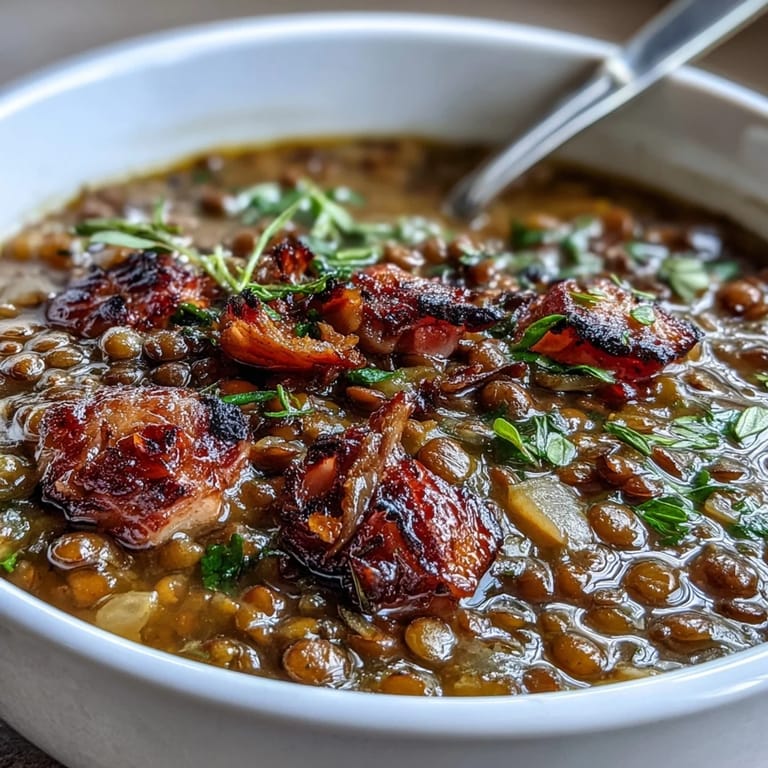
The combination of carrots and celery with onions creates a flavor base that most good cooks would recognize, even if they don't know why it works so well together. Add lentils, which have a mild, almost nutty taste, and they become the canvas for everything else. The ham brings smokiness and salt, thyme adds an herbal whisper, and smoked paprika ties it all together with a hint of warmth. What makes this stew special isn't any single ingredient but how they respect each other in the pot—nothing fights for attention, and nothing gets lost.
Variations and Flexibility
The beauty of this stew is that it's forgiving about substitutions and changes. If you want to make it vegetarian, skip the ham and add extra carrots, diced mushrooms, or even some smoked tofu for that same depth. Brown lentils, green lentils, and Puy lentils all work here, though cooking times might vary slightly—Puy lentils stay firmer, so if you prefer a creamier stew, brown lentils are your best bet. You can also adjust the spices to your taste; some people add a teaspoon of mustard powder or a dash of cayenne if they want heat. The stock can be chicken or vegetable, and honestly, if you have homemade stock on hand, use it—the stew will taste like you've been cooking all day.
Storage and Reheating
This stew keeps beautifully in the refrigerator for up to four days, and many people swear it tastes better on day two or three once the flavors have had time to really marry. Let it cool completely before covering it, and when you reheat it, add a splash of water or stock if it's gotten too thick. You can also freeze it for up to three months, though the lentils might become slightly softer after thawing. Serve it with crusty bread, oyster crackers, or a simple green salad on the side—something to balance the richness of the stew and make the meal feel complete.
- Cold stew thickens as it sits, so don't worry if it looks thinner while cooking.
- Reheat gently on the stovetop rather than blasting it in the microwave to keep the lentils from breaking apart.
- A dollop of sour cream or a squeeze of fresh lemon juice right before eating adds brightness and helps cut through the richness.
 Save
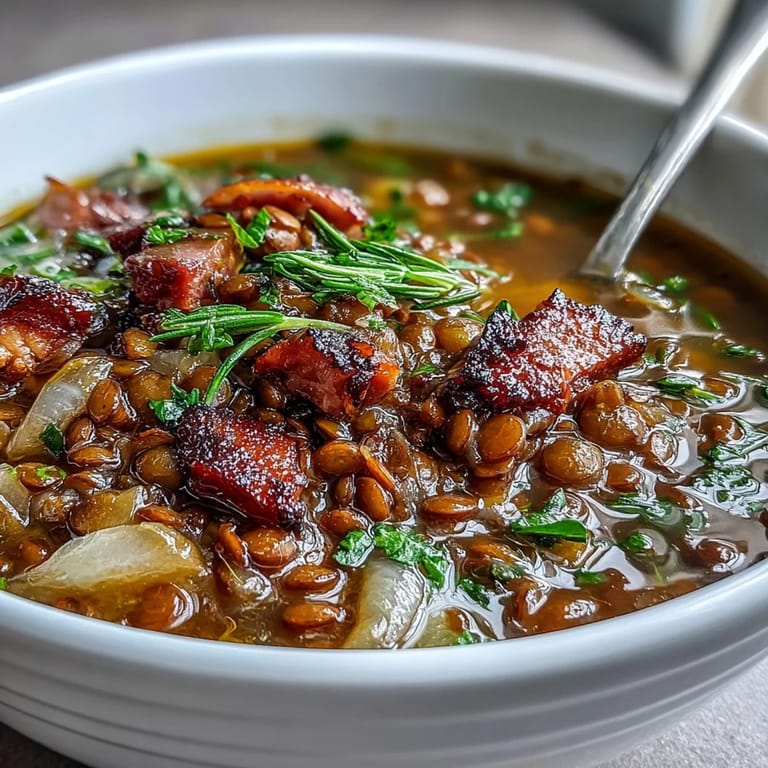
Save This is the kind of stew that makes your kitchen smell like home, the kind that people come back for not because it's fancy but because it's genuine. Make it once, and it'll become something you turn to whenever you need comfort in a bowl.
Recipe FAQs
- → Can I use a vegetarian substitute for the ham?
Yes, you can omit the ham and add extra vegetables or smoked tofu to maintain a smoky depth without meat.
- → What type of lentils work best in this stew?
Brown or green lentils are ideal as they hold shape well during simmering, but Puy lentils can also be used.
- → How do I ensure the lentils are properly cooked?
Simmer the stew covered on low heat for 35–40 minutes, stirring occasionally, until the lentils are tender but not mushy.
- → Can I prepare this stew in advance?
Absolutely, this stew keeps well and the flavors deepen after resting, making it perfect for meal prep.
- → What breads pair well with this dish?
Crusty breads like baguette or sourdough complement the hearty texture and flavors wonderfully.
- → Is this stew suitable for gluten-free diets?
Yes, as long as you use certified gluten-free stock, the stew remains gluten-free and safe for sensitive diets.