 Save
Save There's something about the way mushrooms turn golden in a hot pan that makes you feel like you've unlocked a secret. Years ago, I was determined to recreate the stroganoff my friend Elena made during a rainy Sunday dinner, but without the beef. She laughed when I suggested mushrooms could carry the dish, but the moment that creamy sauce hit the noodles and everything came together, she was quiet in the way that means someone's been genuinely impressed. Now it's become my version of comfort, especially when I want something that tastes indulgent but doesn't require hours at the stove.
I made this for my sister the night she got that promotion she'd been stressed about for months. She arrived tired and skeptical about vegetarian anything, but watching her take that first bite and then immediately go silent told me everything. The stroganoff became part of the celebration without trying to be, just sitting there warm and creamy on the table like it belonged in that moment.
Ingredients
- Unsalted butter and olive oil: The combination gives you both richness and a higher smoke point, so your onions caramelize instead of burn.
- Large yellow onions, thinly sliced: These break down into nearly nothing as they cook, becoming the silky foundation of everything that follows.
- Cremini or button mushrooms, sliced: Don't buy them pre-sliced if you can help it; the browning happens faster and more evenly when you do it yourself.
- All-purpose flour: This thickens the sauce but also acts as a binder that keeps everything cohesive.
- Sweet paprika: The spice that makes stroganoff taste like itself; don't skip it or use hot paprika unless you want something completely different.
- Dry white wine or vegetable broth: The wine adds complexity and brightness, but broth works just fine if that's what you have.
- Vegetable broth: Use the good stuff here because it becomes the soul of your sauce.
- Soy sauce and Dijon mustard: These are the quiet umami agents that make people ask what's in here, even though they can't quite place it.
- Sour cream: Stir it in at the very end over low heat, and it becomes silky instead of curdled and broken.
- Wide egg noodles: Their ruffled edges catch the sauce in ways that smaller pastas can't.
- Fresh parsley: Just a sprinkle at the end, but it wakes everything up and makes the dish look less heavy than it actually tastes.
Tired of Takeout? 🥡
Get 10 meals you can make faster than delivery arrives. Seriously.
One email. No spam. Unsubscribe anytime.
Instructions
- Start the pasta:
- Fill a large pot with water, salt it generously like the sea, and bring it to a rolling boil while you prep everything else. The noodles should cook while your sauce builds, so they're ready to embrace it.
- Build your base:
- Heat butter and olive oil in your largest skillet over medium heat until you can smell the butter starting to turn golden. Add those sliced onions and let them sit undisturbed for a minute before stirring, so they actually make contact with the hot pan instead of just steaming.
- Caramelize the onions:
- Stir them around every minute or so for five to six minutes until they're soft and turned golden at the edges. This isn't something you can rush; those caramelized bits are flavor deposits you're building.
- Add the mushrooms:
- Increase the heat slightly once you add them, because mushrooms release moisture and you want to cook it off, not trap it. They'll go from pale to deeply browned in about seven to eight minutes, which is exactly when they've given up their liquid and turned sweet.
- Finish the vegetables:
- Stir in the minced garlic and cook for just a minute so it perfumes everything without turning bitter.
- Make the sauce base:
- Sprinkle flour and paprika over the vegetables, stirring constantly for a full minute to cook out the raw flour taste. You're creating a roux here, the thickening agent that keeps your sauce from being a puddle.
- Deglaze the pan:
- Pour in your wine or extra broth, scraping the bottom with your spoon to release every browned bit stuck there. Those are the concentrated flavors that make stroganoff taste like itself, not just like vegetables in cream.
- Build the sauce:
- Add vegetable broth, soy sauce, and Dijon mustard, then simmer gently for four to five minutes so the flavors marry and the sauce thickens slightly. Taste it now; it should taste rich and a little mysterious, not flat.
- Finish with cream:
- Reduce the heat to low, then stir in sour cream slowly until it's completely smooth and the sauce is heated through but never boiling. Boiling breaks the cream and turns it grainy, which is the one thing that actually ruins this dish.
- Plate and serve:
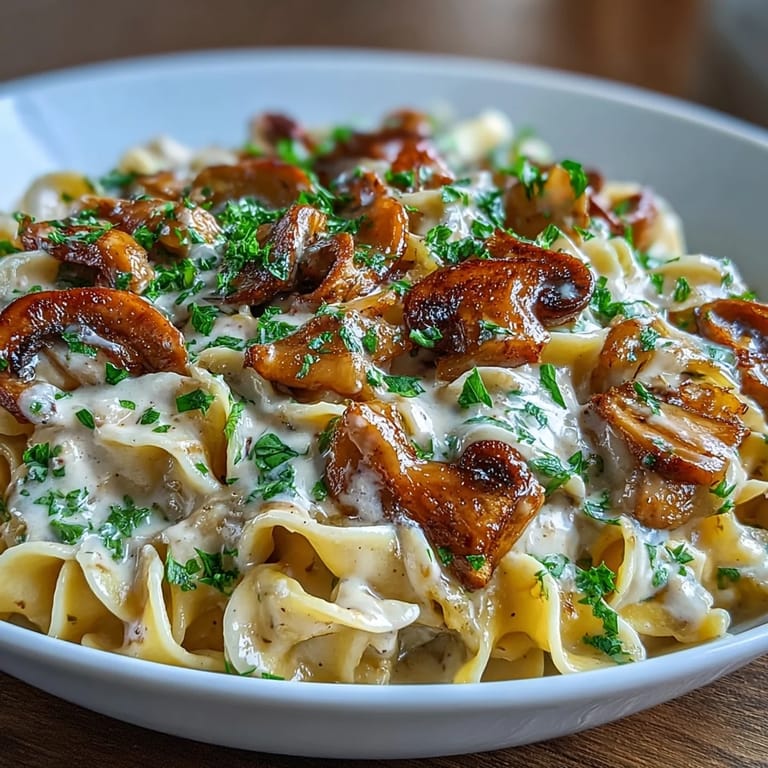
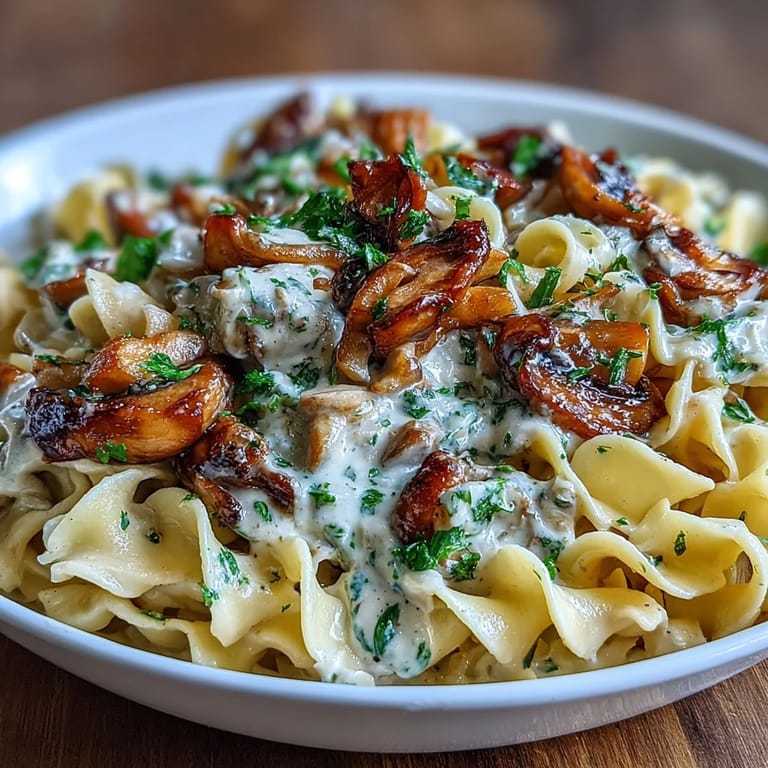
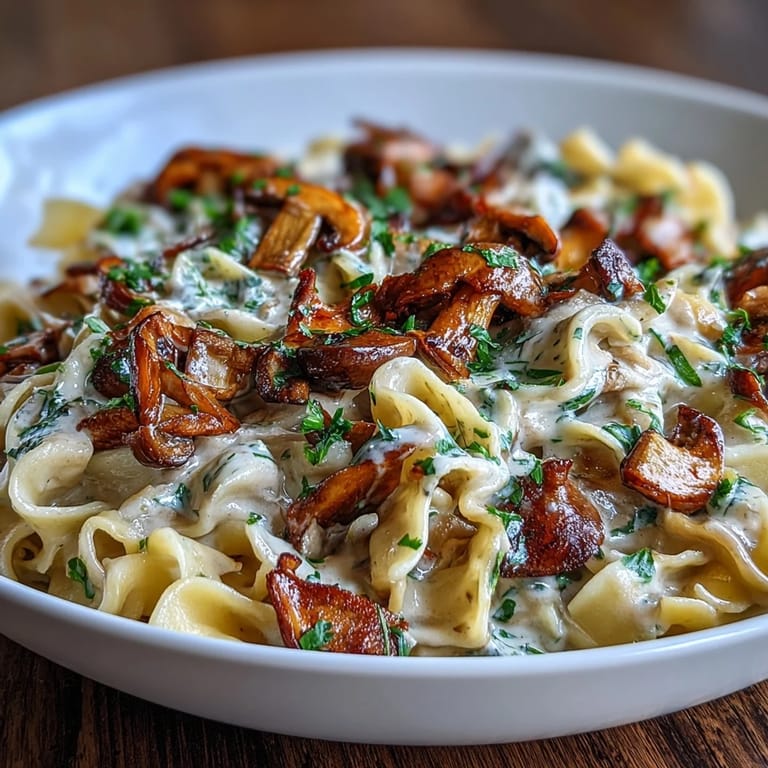
- Spoon the stroganoff over warm egg noodles, letting some of that sauce pool around them, then scatter parsley on top like you're being generous with something precious.
 Save
Save This dish has a way of making ordinary evenings feel like small celebrations. There's something about a creamy, comforting plate of stroganoff that quiets the noise of the day and reminds you why cooking for people matters.
The Secret of Proper Caramelization
Patience with your onions is not negotiable. I learned this the hard way by trying to rush them, only to end up with onions that were just soft instead of actually caramelized. The difference is the browning, which happens when you let them sit in contact with the hot pan, get some color, then stir. That golden, slightly sticky layer on the bottom of the pan is pure umami, and it's what transforms this from a simple cream sauce into something that tastes like it came from a restaurant.
Why Mushrooms Are the Perfect Stand-In
Mushrooms have a meaty texture and a savory depth that beef brings, which is why vegetarian stroganoff works so beautifully. The moment they release their moisture and then cook it off, they turn almost chewy and develop browned, caramelized edges that taste almost umami-fermented. They also absorb flavors better than most vegetables, so they soak up that paprika and mustard in ways that feel natural and complete.
Making It Your Own
This recipe is forgiving in the best way, and it invites experimentation without demanding it. A pinch of smoked paprika adds a subtle depth, or you could add a splash of cognac if you wanted something fancier. The soy sauce is there to amplify umami, but if you don't have it, a bit of miso paste works too, though you'd dissolve it in the broth first to avoid grainy streaks.
- For a vegan version, swap the butter for vegan butter and the sour cream for the thick kind made from cashews or oat cream.
- If you want to add vegetables, sautéed diced celery or a handful of fresh dill at the end both work beautifully.
- Wide egg noodles are the best choice here, but if you only have spaghetti or regular noodles, they'll work too, just won't catch the sauce quite the same way.
 Save
Save This is the kind of dish that lives in your rotation forever once you've made it once. It proves that comfort food doesn't need animal products to feel indulgent, just time, heat, and attention to the small moments when everything comes together.
Recipe FAQs
- → What type of mushrooms work best?
Cremini or button mushrooms are ideal due to their firm texture and mild flavor, which complements the creamy sauce well.
- → Can I use a substitute for sour cream?
Yes, plant-based sour cream works well for a dairy-free version while maintaining the creamy consistency.
- → How can I make the sauce thicker?
Sprinkling flour over the sautéed vegetables and cooking briefly before adding liquids helps to thicken the sauce smoothly.
- → Is white wine necessary in the sauce?
White wine adds depth, but vegetable broth can be used instead without compromising flavor significantly.
- → What pasta pairs well with this dish?
Wide egg noodles are traditional, providing a tender base that holds the creamy sauce nicely.
- → Can this dish be made vegan?
Yes, by substituting vegan butter, plant-based sour cream, and vegan pasta, it easily becomes vegan-friendly.