 Save
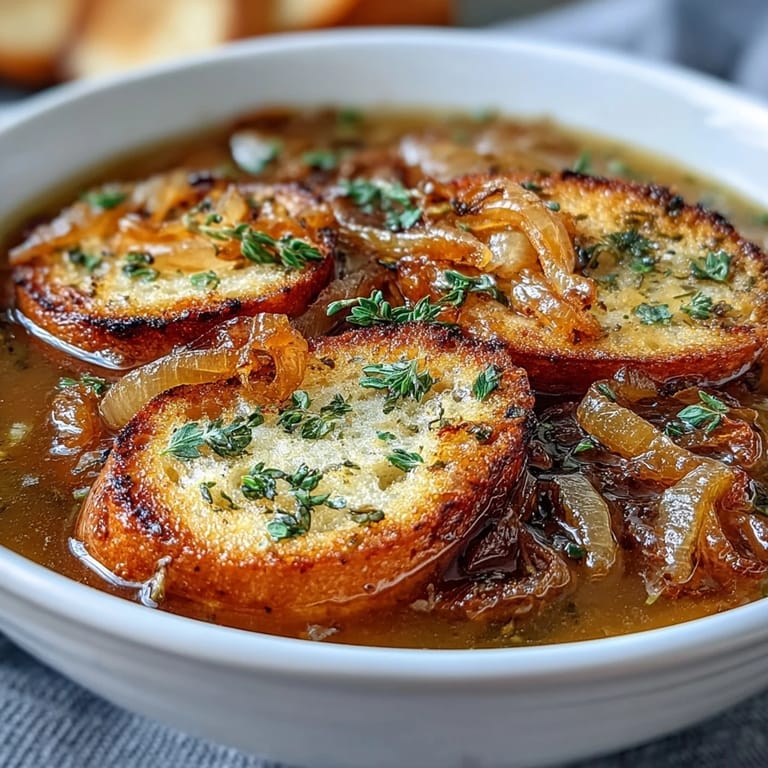
Save There's something almost meditative about watching garlic transform in the oven—those papery heads becoming soft, golden, and impossibly sweet. I discovered this soup on a chilly October evening when my neighbor dropped off a basket of fresh garlic from her garden, and I had no idea what to do with so much of it. What started as an experiment in roasting became a ritual, and now whenever the weather turns cold, I find myself making this deeply comforting bowl of caramelized onions and buttery, mellow garlic.
I made this for my book club one November, and I remember one friend closing her eyes after the first spoonful and saying nothing for a solid minute—just sat there, tasting. That's when I knew this wasn't just soup; it was the kind of dish that makes people slow down and actually notice what they're eating. She asked for the recipe before she even finished her bowl.
Ingredients
- Yellow onions (3 large, thinly sliced): These are your backbone—low and slow heat brings out their natural sugars, transforming them into glossy, caramel-colored ribbons that give the soup its soul.
- Garlic heads (2 whole): Roasting mellows garlic completely, turning it into something almost sweet and spreadable, nothing like raw garlic's sharp personality.
- Olive oil and unsalted butter: The combination of both gives you richness and helps achieve that deep caramelization on the vegetables—use good quality oil here because you'll taste it.
- Leek, celery, and carrot: These build a traditional aromatic base, but the leek especially adds a gentle sweetness that complements the roasted garlic beautifully.
- Dry white wine: Choose something you'd actually drink; it adds brightness and helps deglaze the pot, pulling up all those flavorful browned bits stuck to the bottom.
- Vegetable broth (5 cups): Quality matters here since broth is your liquid foundation—homemade is wonderful, but a good store-bought broth with recognizable ingredients works perfectly.
- Soy sauce (1 tsp, optional): This is my trick for adding umami depth without anyone knowing why the soup tastes so incredibly savory and complete.
- Fresh thyme and bay leaf: These create an herbal backbone that runs quietly through every spoonful—remove them before blending or serving so you don't bite into tough stems.
- Day-old baguette for croutons: Slightly stale bread absorbs the olive oil better and crisps up more evenly than fresh bread, which tends to get chewy instead of crunchy.
- Herbs for croutons (fresh parsley, dried thyme, garlic powder): These transform plain bread into something that tastes intentional and aromatic, worth every minute of extra effort.
Tired of Takeout? 🥡
Get 10 meals you can make faster than delivery arrives. Seriously.
One email. No spam. Unsubscribe anytime.
Instructions
- Prepare the garlic for roasting:
- Preheat your oven to 400°F and slice the very tops off your garlic heads just enough to expose the cloves. Drizzle the cut side with olive oil, wrap the whole heads loosely in foil, and slide them into the oven for 40 minutes until the flesh is soft and golden brown, almost jammy.
- Start the caramelization:
- While garlic roasts, heat olive oil and butter together in a large pot over medium-low heat, then add your thinly sliced onions along with the leek, celery, and carrot. Stir often over the next 25 to 30 minutes, watching as the onions gradually transform from raw and sharp to deeply golden and sweet—this patience is where the magic happens, so resist the urge to rush it on high heat.
- Deglaze and build:
- Pour in your white wine, scraping the bottom of the pot with a wooden spoon to release all those caramelized bits, then let it simmer until the liquid reduces by about half. Once the roasted garlic has cooled enough to handle, squeeze the soft cloves out of their papery skins and stir them into the pot along with your broth, herbs, and soy sauce if using.
- Simmer and meld:
- Bring everything to a gentle boil, then lower the heat and let it simmer uncovered for about 25 minutes so the flavors marry together. Remove the thyme sprigs and bay leaf before the next step, fishing them out with tongs or a slotted spoon.
- Make the croutons:
- While the soup simmers, toss your bread cubes with olive oil, fresh parsley, dried herbs, garlic powder, and a pinch of salt, then spread them on a baking sheet. Bake at 400°F for 10 to 12 minutes, stirring once halfway through, until they're golden and crispy on all sides.
- Adjust texture and taste:
- Use an immersion blender to puree part of the soup if you like it smooth, or blend it all if you prefer something velvety—I usually go for partial blending to keep some texture. Taste carefully and adjust the seasoning with salt and pepper.
- Serve with intention:
- Ladle the soup into bowls and top generously with warm herb croutons, letting a few float on top and a few sink into the liquid. A small handful of fresh parsley or a few extra croutons on the side makes it feel like you're serving something special.
 Save
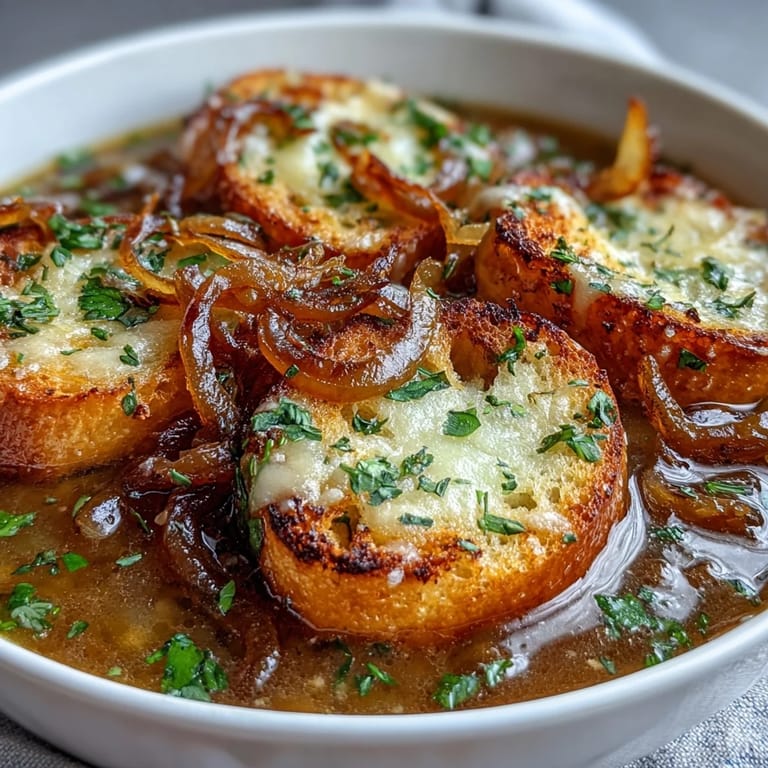
Save My mom made a version of this soup for my college roommate when they first met, and it became the thing my friend always asked for when visiting. Years later, she texted me a photo of her own pot of this soup with the caption 'Teaching my partner what love tastes like'—and honestly, that's what this dish does. It doesn't show off or demand attention; it just wraps around you like something safe and familiar, even if you've never made it before.
The Secret of Slow Caramelization
Caramelizing onions isn't about speed or high heat—it's about patience and trust. When you keep the heat at medium-low and stir every few minutes, you're allowing the natural sugars in the onions to break down and brown gradually, building layers of flavor that raw or quickly cooked onions simply can't achieve. The pot will smell incredible around the 20-minute mark, and that's when you know you're on the right track. This slow approach is what separates a decent onion soup from one that tastes like you've been simmering memories in a pot.
Why Roasted Garlic Changes Everything
Raw garlic is sharp and demanding, but roasted garlic is gentle and sweet—almost creamy when you squeeze it from the skin. The heat transforms the harsh sulfur compounds into softer, more subtle flavors, which is why roasted garlic tastes almost like a completely different ingredient. In this soup, roasted garlic doesn't announce itself like a shout; instead, it whispers throughout, adding depth and richness that you might not even identify as garlic unless someone tells you. This transformation is one of those kitchen moments that reminds you that cooking isn't just about ingredients—it's about what time and heat can do to them.
Building Layers and Making It Your Own
This soup is a canvas, and the beauty is how forgiving it is to your personal taste. Some people love it silky smooth; others prefer a chunkier texture where you can still see the vegetables. Some finish it with a shower of Gruyère or Parmesan for that classic French onion vibe, while others keep it purely vegetarian and add a swirl of good olive oil instead. I've made it for friends who requested it less rich, so I adjusted the butter and added extra broth, and it was still delicious. The structure of the recipe is strong enough to handle your adjustments.
- For a cheesy finish, stir in grated Gruyère or Parmesan just before serving, or broil croutons topped with cheese for a crostini effect.
- If you want it sweeter, substitute shallots for half the onions, or add a small diced apple during the caramelization step.
- For a vegan version, simply use olive oil instead of butter and skip the cheese—the roasted garlic and caramelized onions are rich enough to carry the whole dish.
 Save
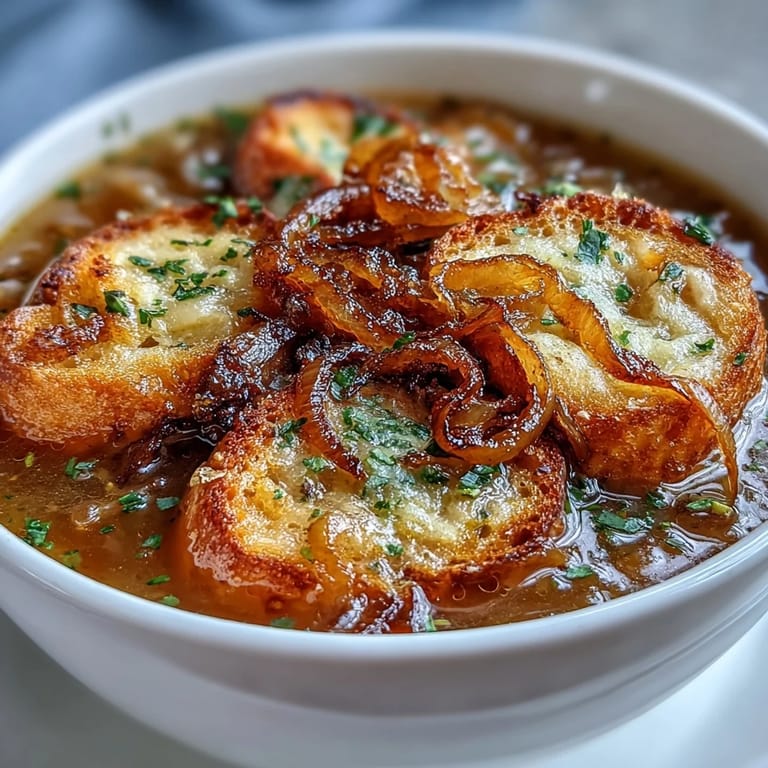
Save This is the kind of soup that fills your kitchen with warmth while it cooks and fills your guests with quiet gratitude while they eat it. Make it once and you'll find yourself returning to it through every cool season that comes.
Recipe FAQs
- → What is the best way to caramelize the onions?
Cook the thinly sliced onions over medium-low heat with olive oil and butter, stirring frequently for 25-30 minutes until they are deeply browned and sweet.
- → How do you roast garlic for this dish?
Slice the tops off whole garlic heads, drizzle with olive oil, wrap in foil, and roast at 400°F for about 40 minutes until soft and golden.
- → Can this soup be made vegan?
Yes, by using olive oil instead of butter and omitting any cheese toppings, this dish suits a vegan diet.
- → What herbs are used in the croutons?
The croutons incorporate dried thyme or Italian herbs, garlic powder, salt, and chopped fresh parsley for aroma and flavor.
- → How can I adjust the soup texture?
For a smoother consistency, blend part or all of the soup using an immersion blender to your preferred texture.
- → What wines pair well with this soup?
Dry white wines, such as Sauvignon Blanc, complement the rich flavors and add a bright contrast.