 Save
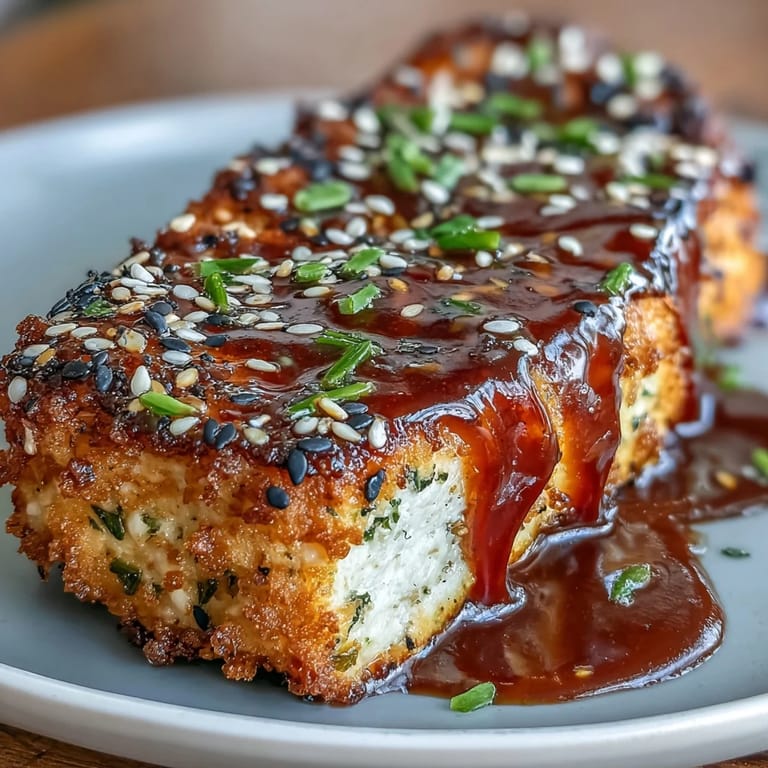
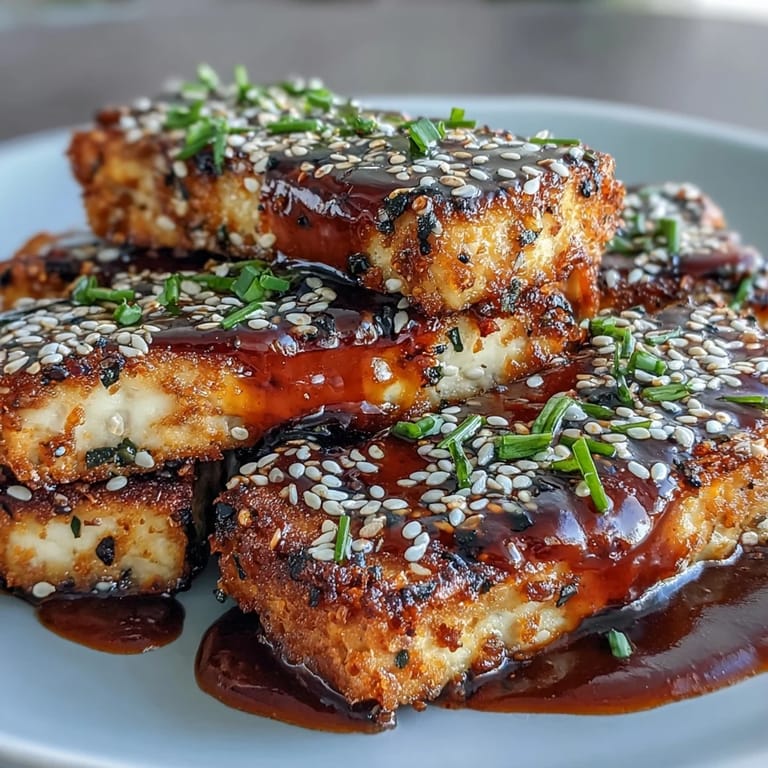
Save There's something almost theatrical about watching sesame seeds toast in a hot pan, the way they shift from pale to burnished gold in seconds. I discovered this dish on a Tuesday when I was tired of my usual weeknight rotation and decided to stop treating tofu like it needed an apology. Pressing it until it was firm enough to hold its own, then coating it in that crunchy sesame crust, felt like I was finally giving this ingredient the respect it deserved. The first time I plated it with that glossy teriyaki glaze pooling underneath, a friend actually paused mid-conversation and asked what smelled so good.
I made this for my sister's partner last month, someone who's skeptical about anything without meat, and watched his entire face change when he took that first bite. He actually asked for the recipe, which in his world is the equivalent of a standing ovation. That moment proved to me that good food doesn't need justification, it just needs to taste like you cared enough to get the details right.
Ingredients
- Extra-firm tofu, pressed (400 g): This is non-negotiable because mushy tofu won't hold the crust or develop that golden sear you're after; pressing it removes excess moisture so it can actually get crispy.
- Soy sauce: Use it twice, once in the tofu prep and again in the sauce, because those layers of salt and umami are what make this taste like restaurant food.
- White and black sesame seeds (3 tbsp and 2 tbsp): The mix looks stunning and gives you different flavor notes, with the black seeds adding a slightly earthier undertone.
- Panko breadcrumbs: Optional but honestly worth it if you want that shatter factor to be unmissable, adding another dimension of crunch.
- Maple syrup or brown sugar: This sweetens the teriyaki without the crystalline harshness of regular sugar, and maple has this subtle depth that brown sugar can't quite match.
- Rice vinegar: The acidity cuts through the richness and keeps the sauce from being cloying, which is the difference between memorable and forgettable.
- Mirin: If you can find it, use it; it adds an authentic gloss and slight sweetness that you can't replicate otherwise, though the sauce still works without it.
- Fresh ginger and scallions: Ginger brings heat and brightness to the sauce, while scallions scattered on top add a sharp green note that wakes up the whole plate.
- Toasted sesame oil: Just a drizzle at the end transforms this from good to unforgettable, so don't skip it even though it's optional.
Tired of Takeout? 🥡
Get 10 meals you can make faster than delivery arrives. Seriously.
One email. No spam. Unsubscribe anytime.
Instructions
- Press and slice your tofu:
- Use a proper tofu press or wrap it in clean kitchen towels and weight it down for at least 15 minutes; you want it as dry as possible so the sesame actually adheres. Slice into four even slabs about three-quarters of an inch thick, and pat them completely dry with fresh paper towels.
- Season the tofu:
- Brush soy sauce onto all sides of each slab, then dust lightly with cornstarch and shake off any excess, because too much cornstarch makes the crust gummy instead of crispy. This coating helps the sesame seeds stick while creating a subtle thickening agent against the moisture in the tofu.
- Build the sesame crust:
- Mix white sesame seeds, black sesame seeds, and panko in a shallow dish, then press each tofu slab firmly into the mixture, coating both sides generously. You want visible sesame seeds covering the surface, not just a light dusting, so don't be shy about the pressure.
- Heat your pan:
- Use a nonstick skillet over medium heat and add 2 tbsp neutral oil like vegetable or canola, letting it get hot enough that a sesame seed sizzles immediately when it hits the pan. You're aiming for the temperature sweet spot where the outside gets golden without the inside staying raw.
- Sear the tofu steaks:
- Place each slab in the hot oil and resist the urge to move it around for 3 to 4 minutes; you need that contact time for the sesame to brown and crisp up. Flip once and give the other side the same treatment, then transfer to a clean plate.
- Make the teriyaki sauce:
- Combine soy sauce, maple syrup, rice vinegar, mirin, and ginger in a small saucepan over medium heat, stirring until everything dissolves together. Once it's simmering, add your cornstarch slurry and whisk continuously for about a minute until it transforms into something glossy and thick enough to coat the back of a spoon.
- Glaze and finish:
- Spoon that still-warm teriyaki sauce generously over the tofu steaks while they're still hot, which helps everything meld together. Top with sliced scallions and a small drizzle of toasted sesame oil, then serve immediately over rice or with whatever vegetables you have on hand.
 Save
Save The real magic happens in those last 30 seconds after you pour the hot sauce over the hot tofu, when the glaze starts to set slightly and everything becomes unified into one perfect, glistening thing. That's when you know you've done it right, and honestly, that small moment of satisfaction makes the whole endeavor worth it.
The Marinating Secret
If you have even 20 minutes before you want to eat, marinate the pressed tofu slabs in soy sauce after brushing but before the cornstarch coating. I stumbled onto this when I got distracted plating something else, and came back to find the tofu had absorbed this deep, salty flavor that made every bite taste intentional. It's not a requirement, but it's the difference between good and the kind of meal people ask you to make again.
Sauce Temperature Matters
Pour the teriyaki sauce onto the tofu steaks while it's still hot off the stove, because that warmth helps the glaze set into a beautiful shiny coat rather than just sitting on top like an oil slick. I've made this mistake of letting the sauce cool slightly, and it made everything taste less polished, less restaurant-quality, less like I'd actually tried.
Vegetable Pairings and Serving Suggestions
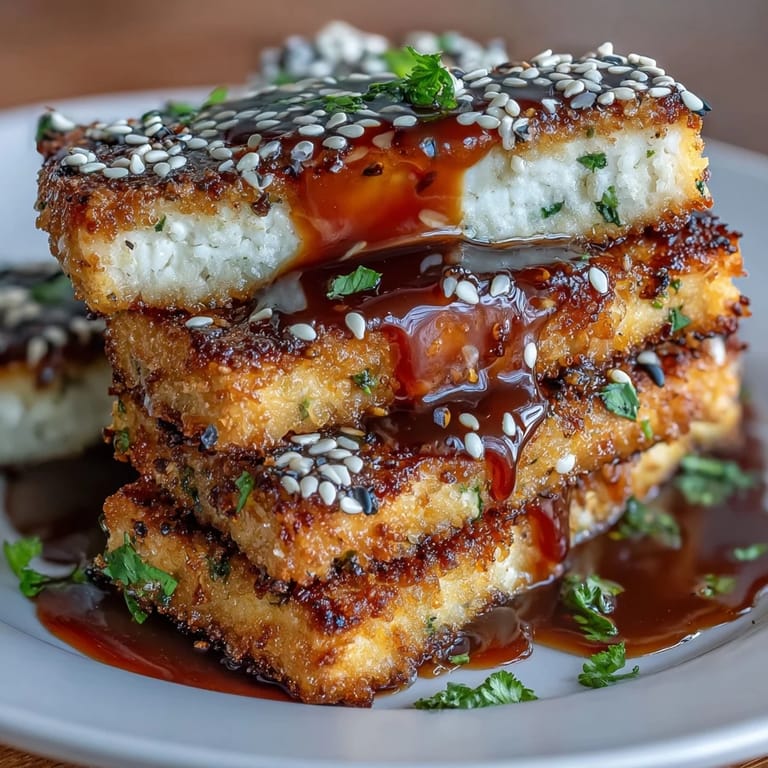
This dish sings alongside steamed bok choy that's been finished with a little garlic and sesame oil, or crispy roasted broccoli that's developed some caramelized edges. I like serving it over jasmine rice because the fragrant steam carries all those sesame and ginger notes right up to your nose the moment you open the lid. The whole meal feels cohesive when every element shares that sesame-forward, umami-rich language.
- Sautéed bok choy with garlic adds a peppery green element that balances the richness of the teriyaki glaze beautifully.
- Steamed broccoli or roasted snap peas give you a crispy textural contrast and keep the plate from feeling too sauce-heavy.
- Serve over jasmine rice, white rice, or even cauliflower rice if you want to keep things lighter without sacrificing the restaurant-quality presentation.
 Save
Save This recipe taught me that vegan cooking isn't about substitution or apology, it's about understanding how to build flavors and textures that stand completely on their own merit. Make it once and you'll understand why I keep coming back to it.
Recipe FAQs
- → How do I press tofu effectively?
Wrap tofu in a clean towel and place a heavy weight on top for at least 15-20 minutes to remove excess moisture, ensuring a firmer texture when cooked.
- → Can I use gluten-free alternatives for panko?
Yes, substitute with gluten-free breadcrumbs or crushed rice crackers to maintain crunch without gluten.
- → What oil is best for pan-searing tofu steaks?
Use neutral oils with high smoke points like vegetable, canola, or grapeseed oil to achieve a crisp crust without burning.
- → How can I make the teriyaki glaze thicker?
Simmer the sauce with a cornstarch-water slurry, stirring constantly until it thickens to a glossy consistency just before removing from heat.
- → Is it necessary to marinate tofu before coating?
Marinating enhances flavor but is optional; even a short soak in soy sauce deepens savoriness before crusting.
- → What sides complement these tofu steaks?
Steamed vegetables like bok choy or broccoli, and fluffy steamed rice pair well to balance the dish.