 Save
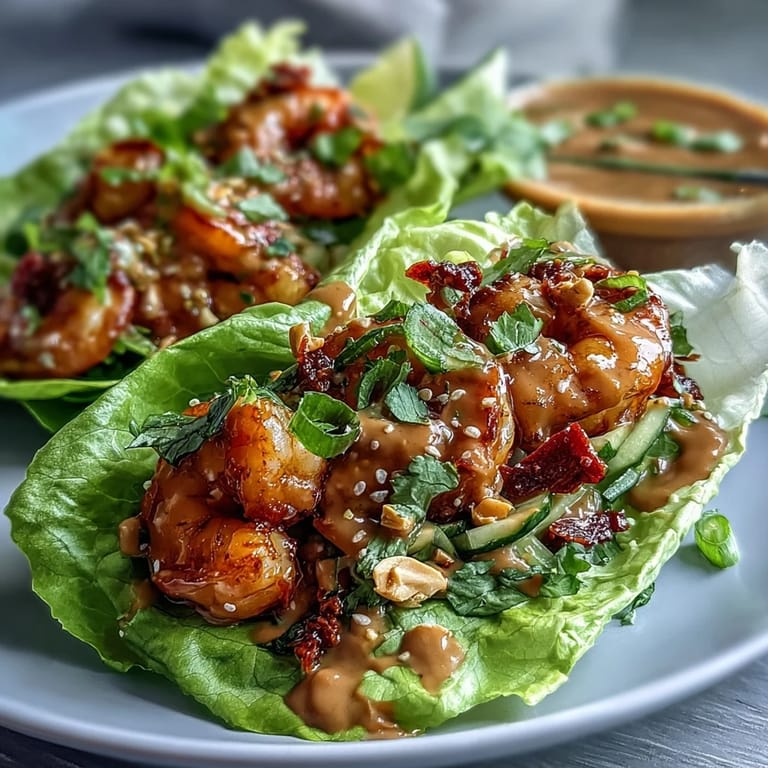
Save My neighbor brought these shrimp lettuce wraps to a casual Sunday gathering, and I watched people abandon their usual small talk to focus entirely on eating them. There's something about the way crisp lettuce cradles warm, garlicky shrimp that makes you slow down and actually taste what you're eating. The peanut sauce was the real revelation—creamy but bright, nothing like the heavy versions I'd made before. I asked for the recipe that same afternoon, and now they appear on my table whenever I need something that feels both indulgent and honest.
I made these the night my partner came home talking about finally getting the job they'd been waiting for, and we sat on the kitchen counter eating them straight from the platter, laughing with our mouths full and not caring about proper plates. That moment taught me that the best recipes are the ones that disappear into the background so people can actually connect—the food becomes part of the celebration, not the focus.
Ingredients
- Large shrimp (400g): Choose wild-caught if you can; they have better texture and flavor, and they cook faster than farmed varieties.
- Vegetable oil: Any neutral oil works here—avocado or grapeseed oil handles the heat beautifully without dominating the delicate shrimp flavor.
- Garlic and ginger: Mince them finely so they distribute evenly through the pan and perfume the shrimp rather than sitting in chunks.
- Creamy peanut butter: The kind without added sugar is best; check the ingredient list so you're not accidentally buying candy.
- Soy sauce or tamari: If you're gluten-free, tamari is your friend—it tastes deeper and slightly richer than regular soy sauce anyway.
- Butter lettuce: Those pale, tender leaves are essential; iceberg is too crispy and watery, and romaine too stiff for proper wrapping.
- Fresh lime juice: Bottled works in a pinch, but fresh lime brightens the peanut sauce in a way bottled juice simply cannot match.
- Roasted peanuts: Toast your own if you have time—they add a final layer of flavor that elevates the whole plate.
Tired of Takeout? 🥡
Get 10 meals you can make faster than delivery arrives. Seriously.
One email. No spam. Unsubscribe anytime.
Instructions
- Whisk the peanut sauce first:
- In a small bowl, combine peanut butter, soy sauce, lime juice, honey, and sesame oil, whisking until the mixture turns smooth and glossy. Start with 2 tablespoons of water and add more if you prefer a thinner sauce—you want it to drip from a spoon but still coat the back of one. Set it aside and let the flavors mingle while you cook.
- Get your skillet singing:
- Pour vegetable oil into a large skillet and heat it over medium-high until it shimmers and moves easily around the pan—you'll know it's ready when a small piece of garlic sizzles immediately. Add your minced garlic and ginger and stir constantly for about 30 seconds; you're looking for that moment when the kitchen smells like an Asian restaurant and you know something delicious is happening.
- Cook the shrimp with intention:
- Toss in your shrimp, sprinkle generously with salt and pepper, and let them sit for about 90 seconds before stirring—this builds color and flavor on one side. Stir and cook for another 2-3 minutes until they've all turned pink and feel firm when you press one gently; overcooked shrimp become rubbery, so watch them closely.
- Build your wraps:
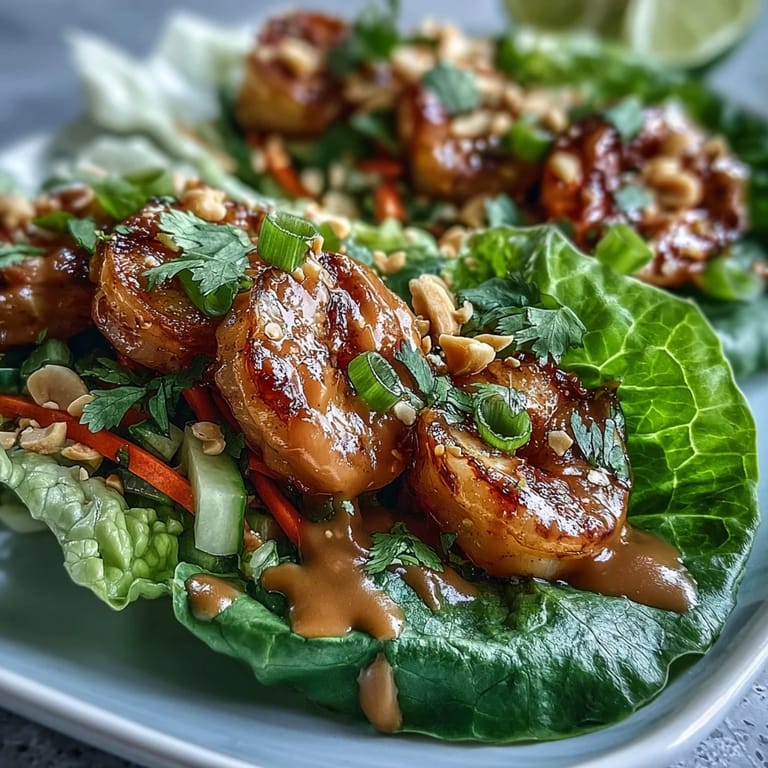
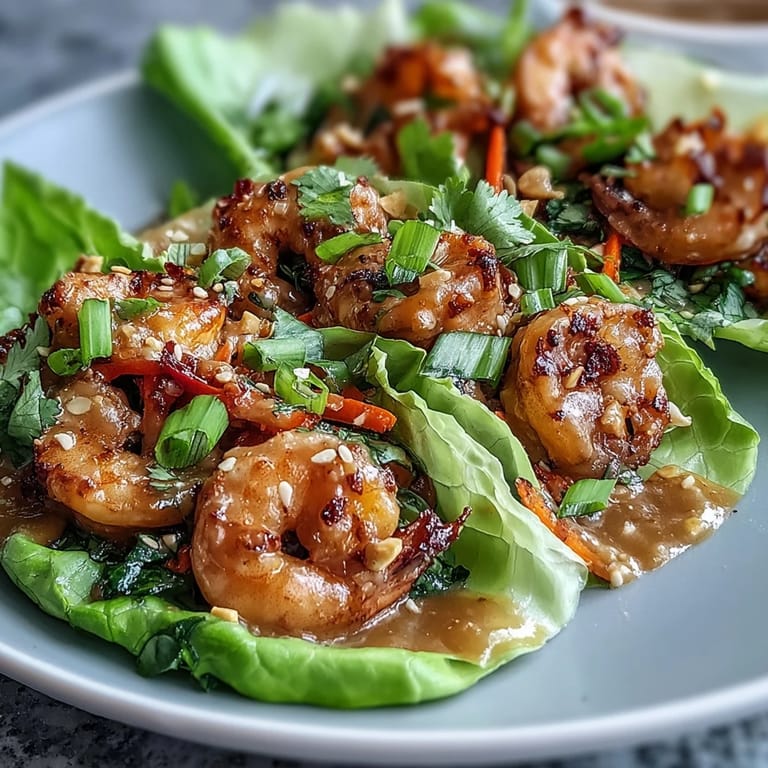
- Arrange butter lettuce leaves on a platter or individual plates, then distribute the warm shrimp evenly among them. Top each wrap with julienned carrot, red pepper slices, and cucumber, then drizzle with peanut sauce right before serving so the lettuce stays crisp.
- Finish and serve:
- Scatter chopped roasted peanuts and fresh cilantro over everything, add a few slices of green onion if you like their bite, and serve with lime wedges for people to squeeze at their own pace. The moment between plating and eating matters here—serve immediately so every element is at its best temperature.
 Save
Save There's a particular kind of magic in handing someone a plate of these and watching them construct their first bite, deciding how much sauce to use, whether to add extra cilantro. Suddenly they're not just eating dinner—they're participating, making choices, creating something that tastes exactly like they want it to taste. That's when food stops being about nutrition or technique and becomes about giving people permission to enjoy themselves.
The Peanut Sauce Matters More Than You Think
This sauce is where the entire recipe either sings or stumbles. A jarring imbalance between salt and sweet, or peanut butter that's too thick, will make the whole plate feel heavy instead of bright. The best approach is to make it while you're relatively calm, taste it on a plain lettuce leaf, and adjust before the shrimp even hits the pan. I learned this the hard way by rushing the sauce while the stove was already heating, then realizing mid-service that I'd made something unpleasantly salty. Now I treat sauce preparation like a meditation—a moment to slow down and get it right before the cooking begins.
Why Butter Lettuce Is Non-Negotiable
You might think any lettuce would work here, but the texture and delicacy of butter lettuce completely changes the eating experience. Those pale, fragile leaves are sturdy enough to hold toppings without breaking, but tender enough to feel luxurious between your teeth—iceberg would be boring, and anything tougher would compete with the shrimp instead of cradling it. The first time I substituted because I couldn't find butter lettuce, I understood exactly what I'd been taking for granted. It's worth seeking out, and most grocery stores stock it year-round if you know to look in the specialty lettuce section.
Customization Without Losing the Soul of the Dish
These wraps are infinitely adaptable, which is partly why they work so well for different occasions and dietary needs. Grilled chicken works beautifully if shrimp isn't your thing, and I've made vegetarian versions with marinated tofu that converted several skeptics at a potluck. The one thing I'd caution against is adding too many ingredients—the magic lives in restraint and allowing each component to shine rather than burying everything under toppings. Here are a few swaps I've tested and loved:
- Trade the shrimp for grilled chicken breast cut into bite-sized pieces, or use crispy tofu if you're going vegetarian.
- Add a thin layer of rice noodles at the bottom of each wrap if you want something more filling for a main course.
- Stir a small pinch of sriracha or red pepper flakes into the peanut sauce if you want heat that builds rather than burns.
 Save
Save This dish reminds me that some of the best meals come together not from complexity but from clarity—knowing exactly what you're doing and why. Serve these to people you enjoy feeding, and you'll understand why they keep appearing on my table.