 Save
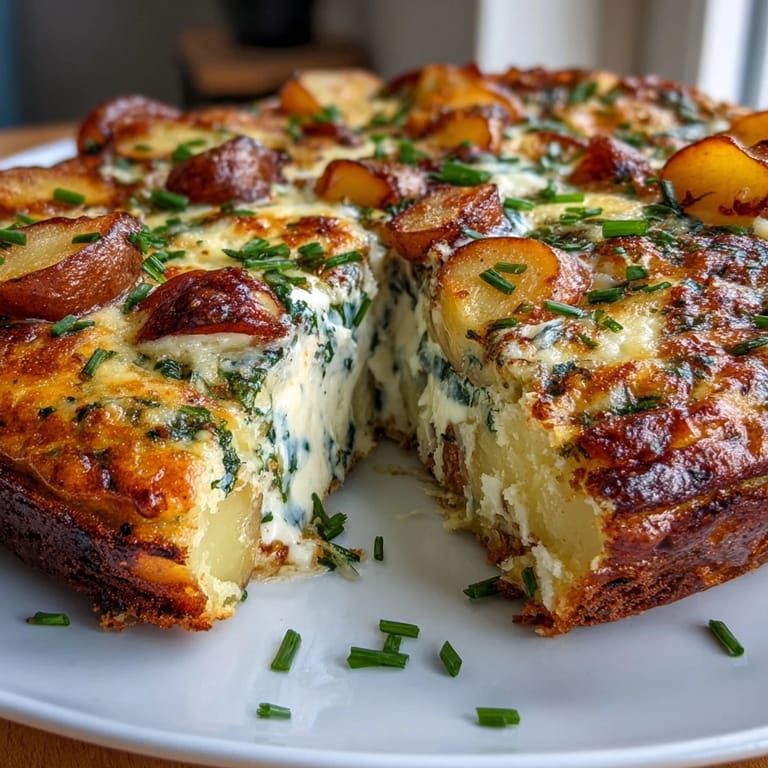
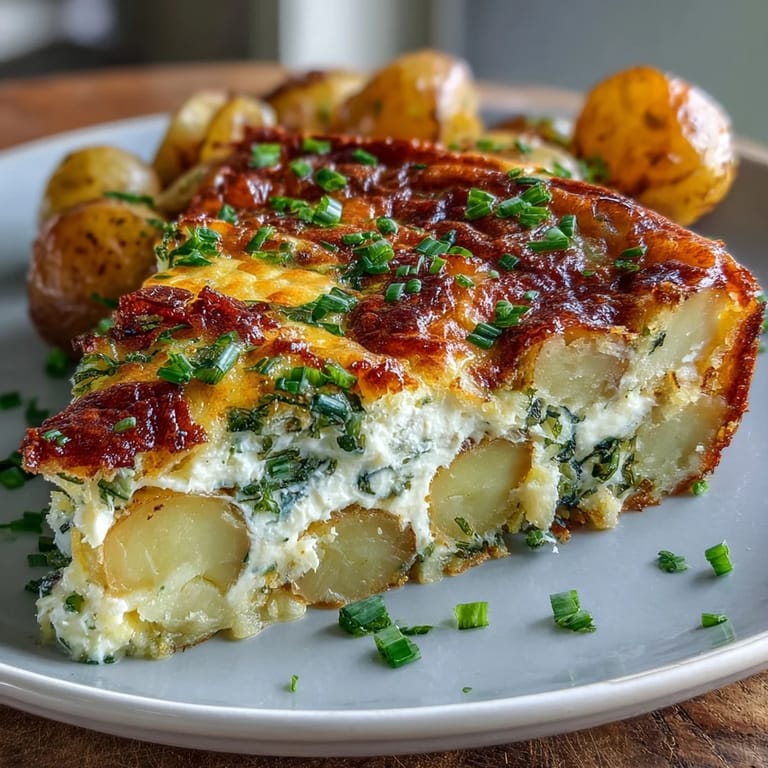
Save There's something wonderfully unpretentious about a frittata—it's the kind of dish that doesn't demand much fussing but always feels like you've made something intentional. I discovered this particular version on a lazy Sunday morning when I had a handful of spring onions going soft in the crisper and decided to stop overthinking breakfast. The way the potatoes turn golden while the cheese melts into every crevice is pure kitchen magic, the sort of thing that makes you wonder why you don't make frittatas more often.
I'll never forget cooking this for my neighbor Sarah, who'd just moved in next door and seemed overwhelmed by unpacking boxes. She came over skeptical about eggs being a proper meal, then ate three slices and asked for the recipe before she'd even finished chewing. That's when I realized a frittata isn't just food—it's the sort of gesture that says, 'I made something warm and I want you to have it.'
Ingredients
- Waxy potatoes (300 g): These hold their shape beautifully when sliced thin, unlike starchy varieties that turn into mush. I learned this the hard way after one disastrous attempt with russets that left me with potato soup instead of distinct layers.
- Spring onions (4): The white parts add a gentle, cooked-down sweetness while the greens stay bright and fresh—using both separately is the small trick that makes this taste more alive than you'd expect.
- Mature Cheddar cheese (100 g): Aged Cheddar has the complexity to stand up to eggs without tasting one-dimensional, and it melts into pockets of richness rather than turning stringy.
- Eggs (6 large): Room temperature eggs whisk more smoothly and incorporate more air, creating that signature fluffy texture that makes people think you've done something complicated.
- Whole milk (60 ml): This loosens the egg mixture just enough to stay tender, though I've skipped it in a pinch and added a splash of water instead with nearly identical results.
- Olive oil (2 tbsp): Use the good stuff if you have it—the flavor matters here since there aren't many other ingredients competing for attention.
- Salt and black pepper: Taste as you go; you'll want slightly more seasoning than feels natural since eggs are forgiving but bland.
Tired of Takeout? 🥡
Get 10 meals you can make faster than delivery arrives. Seriously.
One email. No spam. Unsubscribe anytime.
Instructions
- Fire up the oven and get your pan ready:
- Preheat to 190°C while you gather everything. Having your ovenproof skillet close by saves that moment of panic when you realize you need to transfer a half-cooked frittata.
- Coax the potatoes to golden:
- Heat oil over medium heat and add your thin potato slices with a pinch of salt. You're looking for them to soften and develop light golden edges, which takes about 8–10 minutes of occasional stirring—they should yield to a fork but still hold their shape.
- Invite the white spring onions to the party:
- Once potatoes are nearly there, add the white parts and let them soften for just a minute or two. You want them tender but not disappearing into the background.
- Build your egg mixture with intention:
- Whisk your six eggs with milk, salt, and pepper until well combined, then stir in half your grated cheese and all the green spring onion parts. This is your binding agent, your base of flavor.
- Pour and gently distribute:
- Tip the egg mixture over the potatoes in the skillet and give everything a gentle stir to make sure the vegetables are somewhat evenly scattered. You're not aiming for perfection here—rustic is the entire point.
- Top with remaining cheese:
- Sprinkle the last of your Cheddar across the top. This creates a golden crust and little melted pockets throughout.
- Transfer to the oven for the final magic:
- Slide the skillet into your preheated oven for 12–15 minutes, watching for the moment when the edges are set but the center has just a hair of jiggle. It'll continue cooking slightly as it cools.
- Rest and slice with confidence:
- Let it rest for 5 minutes—this helps it hold together beautifully when you slice. Serve warm or at room temperature, both are equally lovely.
 Save
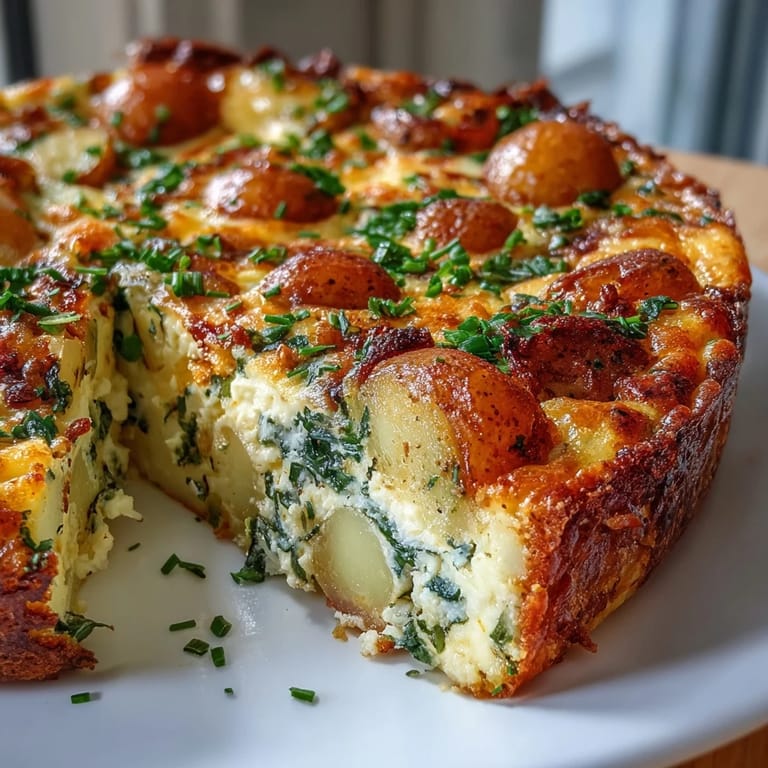
Save There was a quiet morning last April when I made this frittata purely because I felt like doing something with my hands that wasn't looking at a screen. My daughter came down halfway through, drawn by the smell of toasting cheese, and we ended up having a conversation I'd been postponing for weeks—the kind that only happens when you're doing something simple and real together. Food has this way of opening doors that direct talking can't.
Why This Works So Well for Brunch
A frittata sits in this beautiful middle ground between breakfast and lunch, making it perfect when people arrive at your table at odd hours or you're not quite sure what the meal should be. The warm potatoes feel substantial enough for lunch, but the eggs and cheese keep it light enough that you don't feel heavy afterward. I've found it works equally well straight from the oven or cold from the fridge the next day, which is the ultimate test of a recipe's versatility.
Variations That Keep Things Interesting
Once you understand the basic structure, this frittata becomes a canvas for whatever needs using. I've added crispy bacon pieces, sautéed mushrooms, fresh herbs, and even leftover roasted vegetables. The beauty is that the eggs and cheese create such a forgiving base that almost any addition works as long as you don't overcrowd the pan or add anything too watery.
Serving Suggestions and Kitchen Notes
This tastes wonderful alongside a simple green salad dressed in sharp vinaigrette—the acidity cuts through the richness beautifully. A slice of crusty bread for soaking up any runaway yolk is never a bad idea either. I've learned that room temperature frittata is actually more flavorful than straight-from-the-oven, so don't feel rushed to serve it piping hot.
- Pair with a crisp white wine or light beer if you're eating this for lunch or an early dinner.
- Leftovers reheat gently in a low oven, or eat them cold straight from the fridge without apology.
- Make this on Sunday for a week of impromptu lunches, and it somehow tastes better on day three than it did fresh.
 Save
Save A frittata reminds me that the best meals don't come from complicated techniques or ingredients you can't pronounce. They come from knowing when to step back and let simple things speak for themselves. Make this when you need something nourishing, or when you need an excuse to bring people together.
Recipe FAQs
- → What type of potatoes work best?
Waxy potatoes are ideal as they hold their shape when sliced and cooked, giving a tender but firm texture.
- → Can I substitute the cheddar cheese?
Yes, cheeses like Gruyère, feta, or goat cheese add pleasant variations in flavor and texture.
- → How can I prevent the frittata from sticking to the skillet?
Use an ovenproof skillet with a non-stick surface or coat well with olive oil before cooking.
- → Is it necessary to cook the potatoes before baking?
Pre-cooking the potatoes softens and lightly browns them, ensuring they cook evenly and become tender in the final dish.
- → How long should the frittata rest before serving?
Allow it to cool for about 5 minutes to let it set fully and improve slicing.