 Save
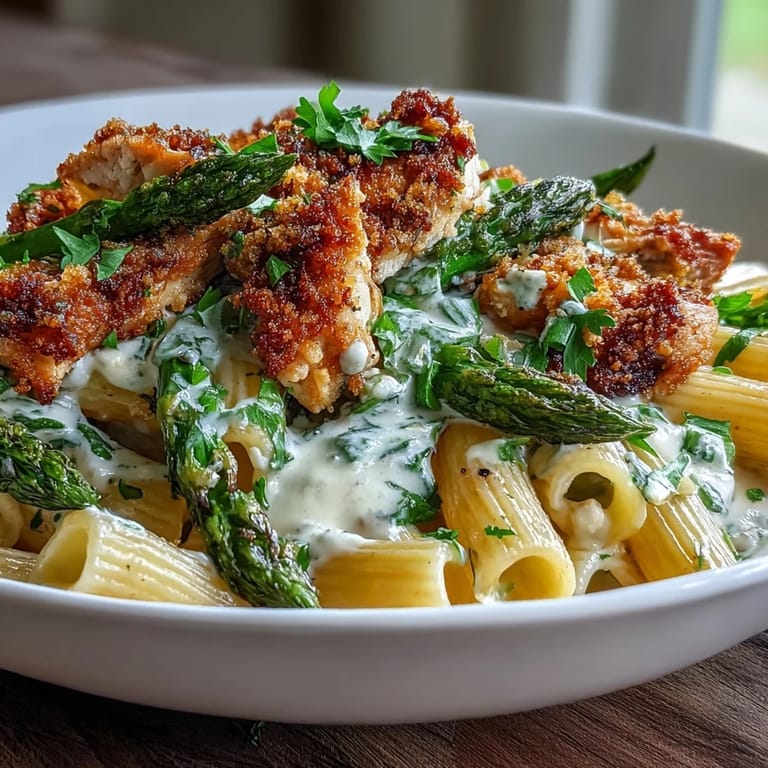
Save My kitchen filled with the smell of roasting asparagus and lemon one Wednesday evening when I was trying to use up what felt like too many vegetables at once. Somehow, between the crispy cheese topping catching golden light and the way the sauce pooled silky around fresh pasta, everything clicked into place. This dish emerged almost by accident that night, but it's been on rotation ever since because it manages to feel both comforting and elegant without demanding hours of your time.
I made this for my parents last spring when they visited, and my mom actually asked for the recipe before dessert even arrived. She's not one to cook much anymore, but watching her taste the bright lemon-cream sauce made me realize this wasn't just dinner, it was the kind of meal that makes people sit a little longer at the table.
Ingredients
- Penne or rigatoni, 340 g (12 oz): The tube shape catches that creamy sauce beautifully, but honestly any medium pasta works if that's what you have on hand.
- Boneless, skinless chicken breasts, 2 large (about 450 g/1 lb): Slicing them into strips means they cook fast and stay tender, which I learned after one too many dried-out chicken dishes years ago.
- Salt and black pepper: Season the chicken generously before it hits the pan, not after, so the flavor actually penetrates.
- Garlic powder, 1/2 tsp: This goes on the chicken for subtle depth without having to mince fresh garlic twice in one recipe.
- Olive oil, 2 tbsp total (divided): One tablespoon for the chicken, one for the asparagus, because using the right amount matters more than you'd think.
- Asparagus, 1 bunch (about 300 g/10 oz): Cut into 1-inch pieces after trimming those woody ends that nobody wants to chew through.
- Panko breadcrumbs, 1/2 cup (50 g): These stay crispy longer than regular breadcrumbs, which means your topping won't get soggy even an hour later.
- Parmesan cheese, 1/4 cup grated (25 g) for asparagus, plus 1/2 cup (50 g) for sauce: Don't buy pre-grated if you can help it, the waxy coating prevents it from melting smoothly.
- Asiago cheese, 1/4 cup grated (25 g): This adds a slightly sweet, nutty note that regular Parmesan can't quite match, but Pecorino Romano works in a pinch.
- Unsalted butter, 2 tbsp: Salted butter will throw off your seasoning control, which sounds fussy until you taste the difference.
- Garlic, 3 cloves minced: Mince it right before adding to the butter so it releases all its fragrance.
- Lemon, 1 whole (zest and juice): Zest before you juice, and use a microplane if you have one because it creates such a fine, delicate texture.
- Heavy cream, 1 cup (240 ml): Cold cream straight from the fridge, so the sauce doesn't break when it hits the hot pan.
- Fresh parsley, 1/4 cup (15 g) chopped: This is what brings everything to life at the very end, so don't skip it or make it wilted by adding it too early.
Tired of Takeout? 🥡
Get 10 meals you can make faster than delivery arrives. Seriously.
One email. No spam. Unsubscribe anytime.
Instructions
- Start with heat and water:
- Get your oven going at 200°C (400°F) and put a large pot of salted water on to boil. The salt matters because it seasons the pasta from the inside out.
- Cook the pasta properly:
- Drop your penne or rigatoni in once the water's actually rolling, and fish out a piece a minute before it should be done to taste it. You want it to have just a whisper of resistance in the center, not soft.
- Prepare the asparagus base:
- While the pasta cooks, toss your asparagus pieces with olive oil and a pinch of salt and pepper on a baking sheet. In a small bowl, combine panko, Parmesan, and Asiago until it looks like coarse sand.
- Build the crispy topping:
- Sprinkle that panko mixture evenly over the asparagus, pressing down gently so it sticks. Slide it into the oven and let it roast for 10–12 minutes until the topping turns golden and the asparagus is tender with a slight snap to it.
- Sear the chicken to golden:
- While asparagus gets crispy, season your chicken strips with salt, pepper, and garlic powder. Heat olive oil in a large skillet over medium-high heat until it shimmers, then lay the chicken strips in carefully to avoid crowding.
- Know when chicken is done:
- Don't move the chicken around too much, let it sit for 2–3 minutes so it develops that beautiful golden crust. It'll cook through in about 5–6 minutes total, and you'll know it's ready when it feels firm to the touch and there's no pink inside.
- Create the lemon-cream sauce:
- Using the same skillet (all those flavorful bits stuck to the bottom are treasure), melt butter over medium heat and add your minced garlic and lemon zest. Sauté for just a minute, breathing in that incredible aroma, then add the lemon juice.
- Bring the sauce together:
- Pour in the cold cream carefully, stirring constantly, and let it come to a gentle simmer. Add your Parmesan and stir until it dissolves into something silky and smooth, then taste and season with salt and pepper.
- Combine everything gently:
- Add your drained pasta and cooked chicken back to the skillet, tossing everything together slowly so you're coating rather than breaking. If the sauce seems too thick, add some of that reserved pasta water a splash at a time until it reaches that creamy-but-not-heavy consistency you want.
- Finish with the crispy accent:
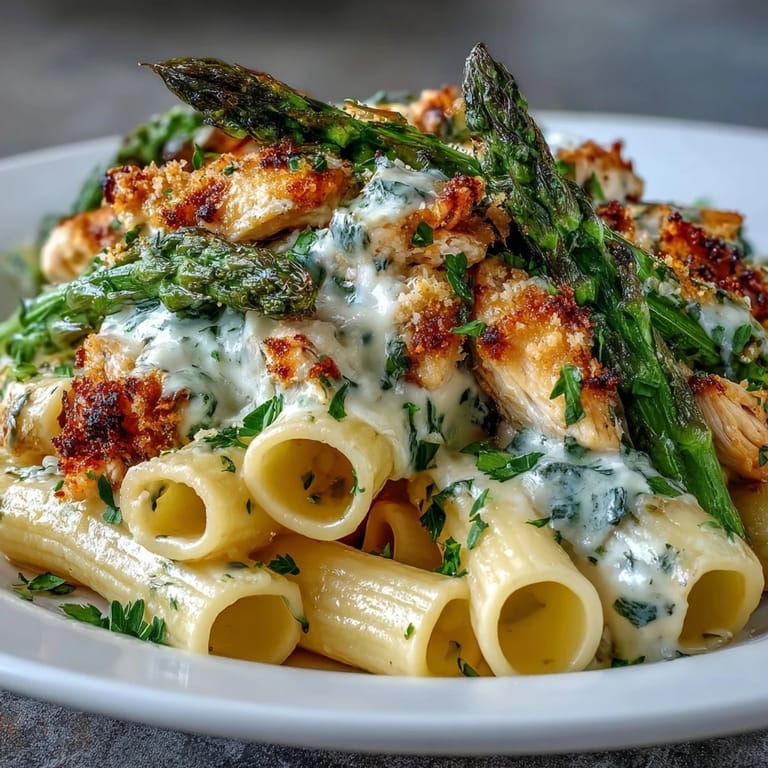
- Fold in your roasted asparagus with all its golden topping, being gentle so you don't crush those crispy bits. Taste one more time, adjust seasoning if needed, and scatter fresh parsley on top right before serving.
 Save
Save 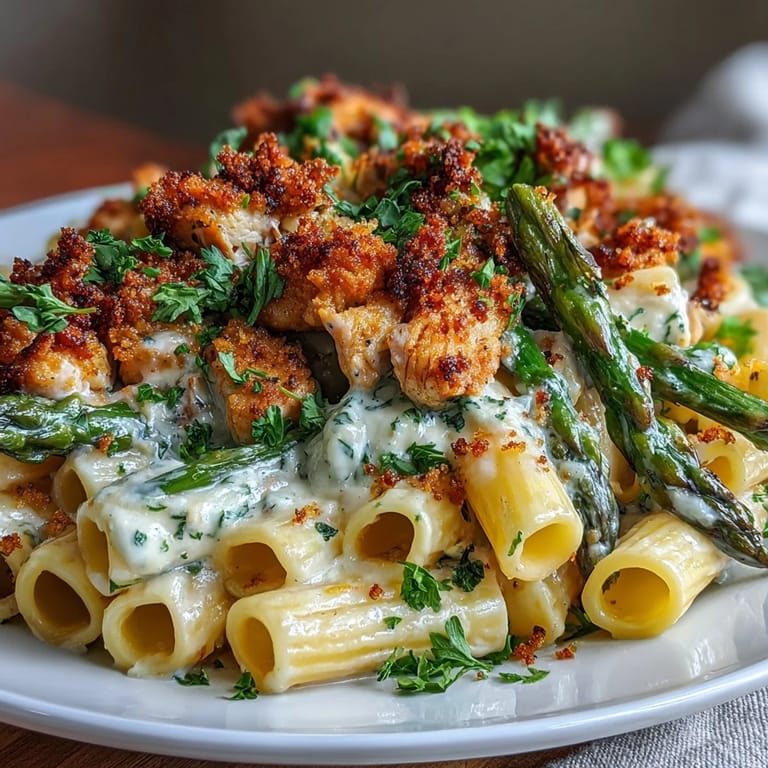 Save
Save There's something about watching someone's face light up when they taste how the crispy cheese topping plays against the creamy sauce that makes cooking feel worthwhile. This dish has a way of making ordinary Wednesday nights feel like something worth celebrating.
The Secret Behind the Crispy Topping
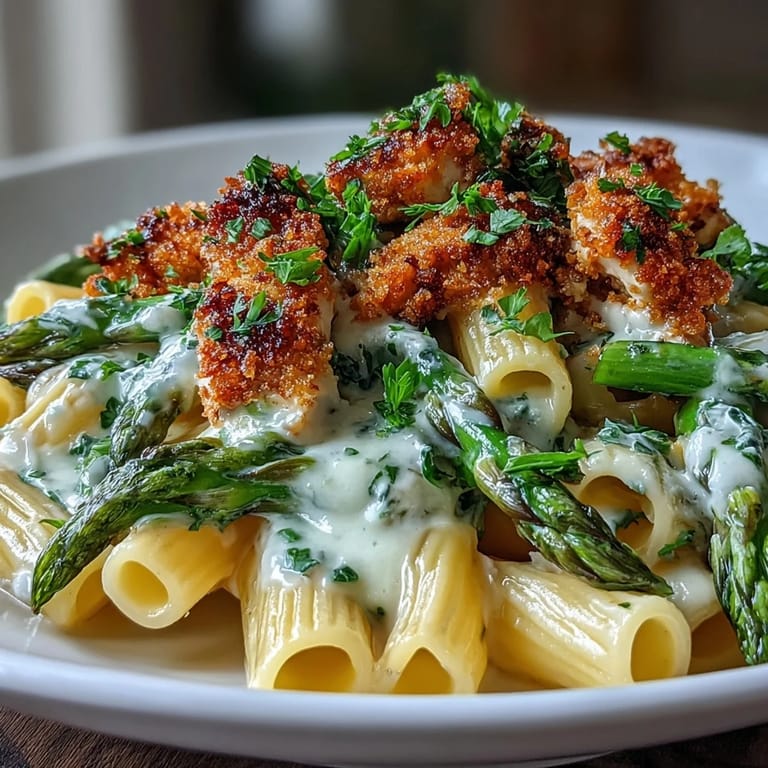
The panko-Parmesan mixture is what separates this from just another creamy pasta dish, and I discovered by accident that keeping it crunchy matters more than I expected. Roasting it separately on the asparagus, then folding it in gently just before serving, means you get that textural contrast in every bite instead of it dissolving into the sauce. It's a small technique that teaches you something about how different elements need their own moment to shine.
Why Fresh Lemon Actually Changes Everything
Bottled lemon juice will make this taste flat no matter what else you do right, so it's worth squeezing a fresh lemon even though it adds thirty seconds to your prep. The zest brings this bright, almost floral quality to the sauce that bottled juice simply can't match, and together they create this balance where you're not quite sure if it's sweet or savory. I learned this the hard way after a batch that tasted like something was missing, and once I switched to fresh lemon, it was immediately right again.
Timing and Temperature Tricks
Getting all these components ready at the right moment takes practice, but the goal is to have everything warm and ready to combine at once rather than eating something that's been sitting around cooling down. I usually start my pasta first, then get the asparagus in the oven, then sear the chicken so the sauce gets made while everything else finishes. This orchestration means you're eating within minutes of plating, which is when the contrast between temperatures and textures is most vibrant.
- Have all your ingredients prepped and measured before you start cooking, because once you're moving between the oven and stove, there's no time to mince garlic.
- If one component finishes early, just turn the heat down and let it hang out; a finished chicken strip won't suffer from sitting in a warm pan for five minutes.
- Serve this immediately on warm plates because the sauce sets up quickly once it cools, and you want that flowing, silky quality.
 Save
Save 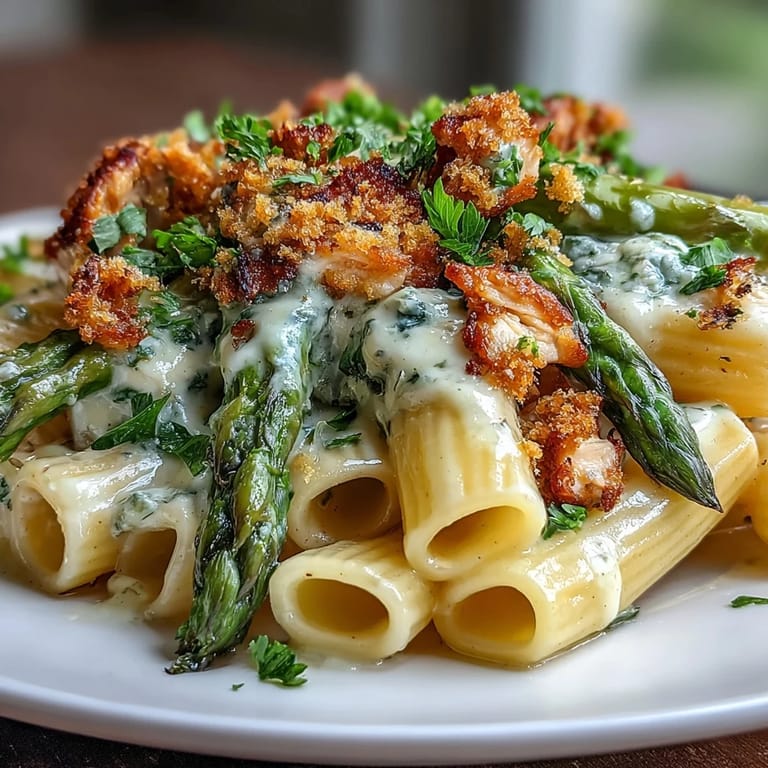 Save
Save This pasta has become one of those dishes I make when I want to cook something that feels special without making myself tired, and it never fails to make people linger over dinner a little longer. There's real magic in how something this simple can taste like someone spent hours thinking about flavor.
Recipe FAQs
- → Can I use a different pasta shape?
Yes, penne and rigatoni work beautifully as they capture the creamy sauce. Fusilli, farfalle, or ziti also pair well with the chunky chicken and asparagus pieces.
- → How do I prevent the cream sauce from separating?
Keep the heat at medium-low when adding the cream, and avoid boiling vigorously. Stir continuously while incorporating the Parmesan, and add pasta water gradually to reach desired consistency.
- → Can I make this dish ahead of time?
The components can be prepped in advance—cook the pasta, roast the asparagus, and slice the chicken. However, assemble just before serving to maintain the crispy topping and prevent the sauce from absorbing completely.
- → What can I substitute for heavy cream?
Half-and-half creates a lighter sauce, though it will be less thick. For a dairy-free option, use full-fat coconut milk, noting it will add subtle coconut flavor.
- → How do I know when the asparagus is perfectly roasted?
Look for bright green stalks with slightly browned edges and a golden-brown topping. The asparagus should yield easily when pierced with a fork but still maintain a slight crunch.
- → Can I add vegetables to this dish?
Sautéed mushrooms, roasted cherry tomatoes, or fresh spinach complement the flavors beautifully. Add them during step 5, allowing them to wilt briefly before combining with the pasta.