 Save
Save There's something magical about Sunday mornings when you're trying to eat well but don't want to sacrifice flavor. I discovered this egg white frittata on a particularly ambitious wellness kick, standing in my kitchen at 8 AM with a pile of vegetables and absolutely no idea if they'd work together. Three minutes into chopping, the kitchen smelled incredible—garlic and fresh herbs mixing with sautéing peppers—and I knew I'd stumbled onto something that felt indulgent while being genuinely good for me. Now it's become my go-to when I want brunch that doesn't leave me feeling guilty or hungry by noon.
I made this for my sister during a visit last spring, and she ate three slices before even asking what was in it. When I told her it was basically just egg whites and vegetables, she didn't believe me—that's how satisfying and genuine it tastes. It became our Saturday morning tradition that week, and now whenever she visits, this frittata is the first thing she requests.
Ingredients
- Baby spinach, chopped (1 cup): It wilts dramatically in the pan but provides iron and this beautiful green throughout—buy it pre-chopped if you're short on time and it won't judge you.
- Broccoli florets, finely chopped (1 cup): Chop these smaller than you think because they don't soften much in the quick sauté, and you want them distributed evenly.
- Red bell pepper, diced (1 cup): The sweetness here balances everything; red peppers are sweeter than yellow or green and add visual drama too.
- Zucchini, diced (1 cup): This releases moisture as it cooks, which helps create a custard-like texture—don't skip it thinking it'll water things down.
- Red onion, finely diced (1 small): Raw red onion would be sharp, but sautéed gently it becomes sweet and almost caramelized, adding depth.
- Cherry tomatoes, halved (1/2 cup): These go on top and burst slightly in the oven, creating little pockets of brightness that stay slightly firm.
- Liquid egg whites (2 cups): You can separate eggs yourself, but bottled egg whites save time and honestly perform better—they're already perfectly mixed.
- Low-fat feta cheese, crumbled (1/4 cup, optional): This is optional because the frittata stands on its own, but it adds a salty, creamy note that makes people pause and compliment.
- Fresh parsley, chopped (2 tablespoons): Add this to the egg mixture, not before cooking, so it stays vibrant green and fresh-tasting rather than turning dark.
- Dried oregano (1 teaspoon): Mediterranean dried herbs feel right with these vegetables; oregano in particular ties everything together cohesively.
- Garlic powder (1/2 teaspoon): Fresh garlic can overpower egg whites, so powder works better here—it distributes evenly and stays subtle.
- Black pepper (1/2 teaspoon): Freshly cracked is nicer if you have it, but ground black pepper from a tin works fine.
- Salt (1/2 teaspoon): Taste as you go because different feta varieties and egg whites have varying salt levels.
- Nonstick cooking spray or olive oil (1 teaspoon): This is genuinely enough—egg whites don't need much fat to release cleanly.
Tired of Takeout? 🥡
Get 10 meals you can make faster than delivery arrives. Seriously.
One email. No spam. Unsubscribe anytime.
Instructions
- Heat your oven and prep the pan:
- Set your oven to 375°F and give it a few minutes to preheat while you lightly coat a 9-inch oven-safe skillet with cooking spray or oil. This small step prevents the frittata from sticking and makes cleanup genuinely easy.
- Sauté the harder vegetables:
- In the same skillet over medium heat, add your diced onions, bell pepper, and broccoli florets. You'll hear them sizzle and start to soften after about 3-4 minutes—this is when the kitchen smells incredible.
- Wilt the spinach and soften the zucchini:
- Add the zucchini and spinach to the pan, stirring occasionally for 2-3 minutes until the spinach goes dark and silky. The zucchini will start to soften and the whole mixture will look more condensed than it did at the start.
- Combine your egg white base:
- In a separate bowl, whisk together your egg whites with garlic powder, oregano, black pepper, salt, and the fresh parsley. Whisking properly creates a uniform mixture that cooks evenly and feels light rather than rubbery.
- Bring everything together:
- Stir the cooled vegetables into your egg white mixture, then pour everything evenly back into the skillet. Use a spatula to gently distribute the vegetables so they're not all clumped in one area.
- Add your finishing touches and bake:
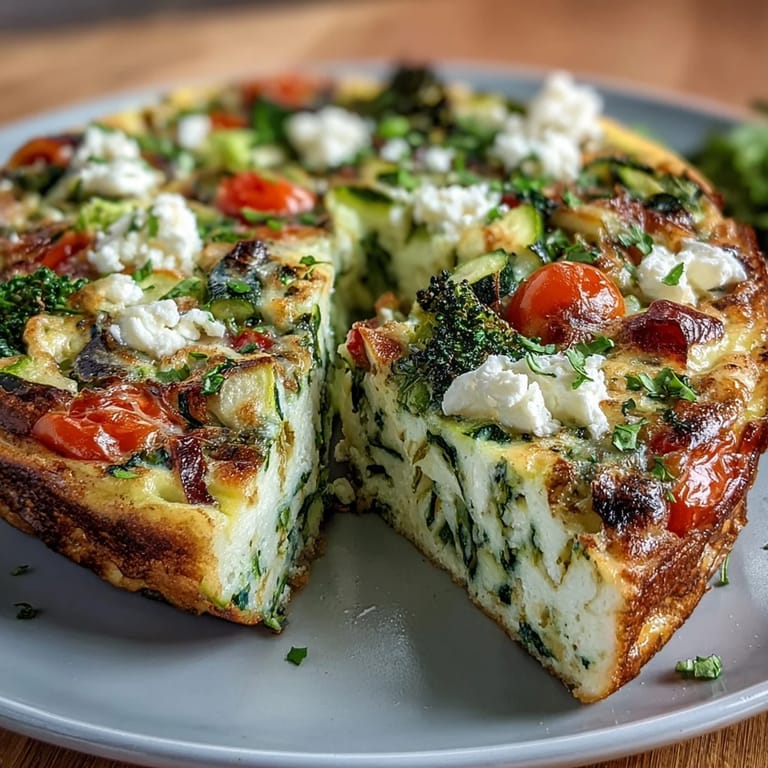
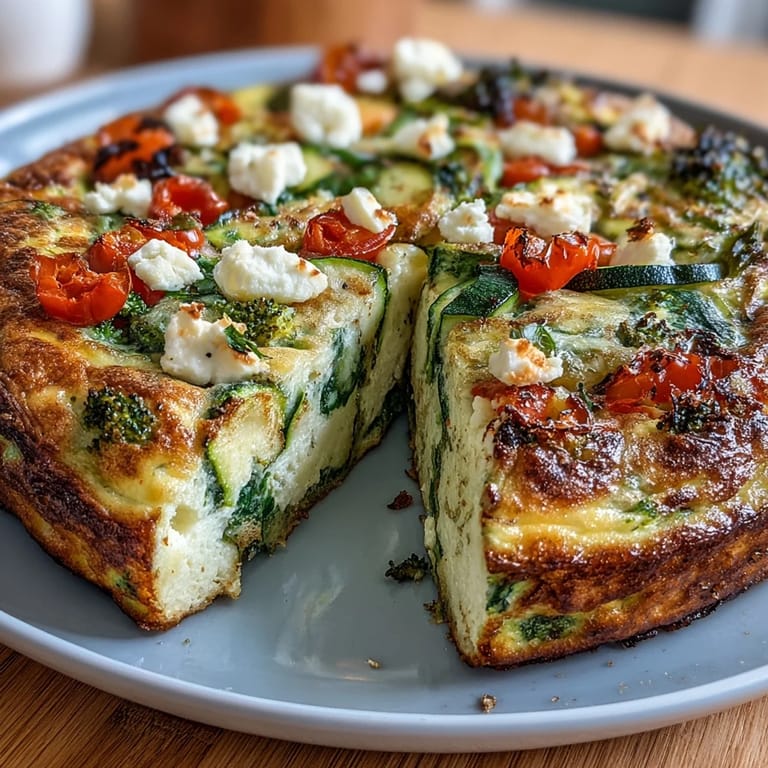
- Scatter the cherry tomato halves and feta cheese (if using) over the top, then slide the whole skillet into the oven. Bake for 20-25 minutes—you'll know it's done when the center no longer jiggles when you gently shake the pan and the top is lightly golden but not browned.
- Rest and slice:
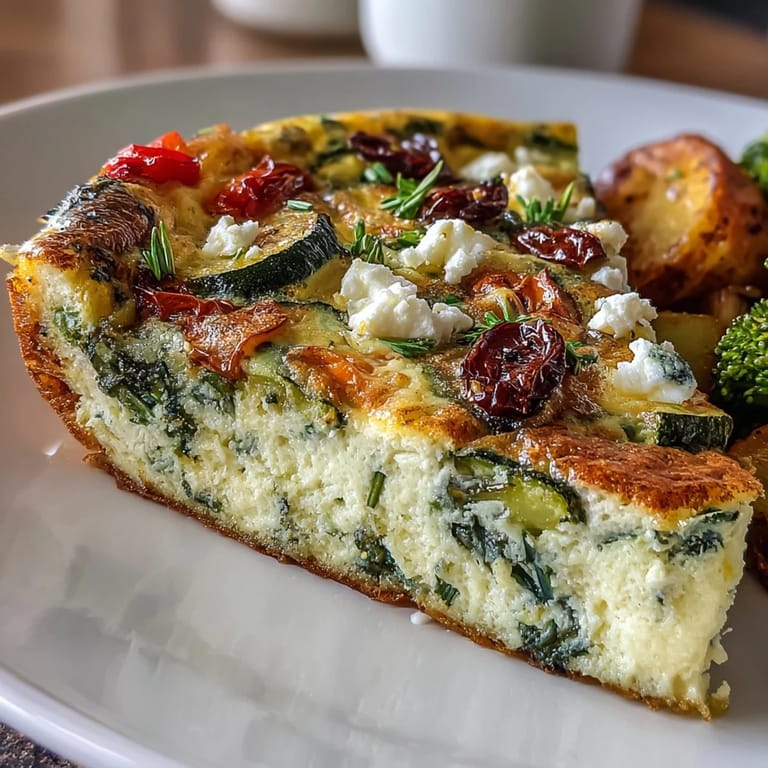
- Let it cool for 5 minutes in the pan so the structure sets properly, then slice into four wedges and serve warm or at room temperature. It's equally good fresh, cooled, or even reheated the next day.
 Save
Save What started as a nutrition-focused experiment turned into something I genuinely crave, which feels like a small victory. It proved to me that healthy food doesn't have to feel like penance—it can be colorful, satisfying, and something you actually want to eat.
How to Make This Your Own
The beauty of this frittata is that it adapts to whatever you have or whatever you're in the mood for. I've made versions with mushrooms and kale, others with just whatever vegetables are about to expire in my crisper drawer. The technique stays exactly the same—sauté your vegetables, whisk your eggs, combine them, bake—so feel free to play around.
Storage and Meal Prep
This frittata keeps beautifully in the refrigerator for up to four days, which makes it perfect for slice-and-go breakfasts or quick lunches. I portion it into wedges, store them in glass containers, and reheat gently in the oven at 300°F for about 5 minutes whenever I need it.
Simple Serving Suggestions
Serve this warm, at room temperature, or even cold straight from the fridge—it's genuinely good every way. A simple side salad with lemon dressing brightens it up, or pair a slice with whole grain toast for something more substantial.
- A handful of mixed greens with olive oil and lemon juice complements it perfectly and adds extra vegetables without effort.
- Fresh fruit on the side—berries or a sliced orange—provides sweetness and rounds out the meal nutritionally.
- If you add the optional feta, you probably don't need additional cheese elsewhere, but a sprinkle of fresh herbs on top when serving adds visual appeal.
 Save
Save This frittata has become my proof that eating well doesn't require suffering through bland food or complicated recipes. I hope it becomes as much of a kitchen staple for you as it's become for me.
Recipe FAQs
- → What vegetables work best in this frittata?
Spinach, broccoli, bell pepper, zucchini, and cherry tomatoes provide great texture and flavors. You can also add mushrooms, asparagus, or kale.
- → Can I make this frittata dairy-free?
Yes, simply omit the feta cheese or substitute with a dairy-free cheese alternative.
- → How should I cook the vegetables before baking?
Sauté onions, bell pepper, and broccoli first until slightly softened, then add zucchini and spinach until wilted to enhance their natural flavors.
- → Is this dish suitable for a low-calorie diet?
Absolutely. Using egg whites and fresh vegetables keeps the calorie count low while providing satisfying protein and nutrients.
- → What cooking tools are required?
A 9-inch oven-safe skillet or baking dish, mixing bowls, whisk, knife, cutting board, and spatula are needed for preparation and cooking.
- → How long should I bake the frittata?
Bake at 375°F (190°C) for 20-25 minutes until the center is set and the top turns lightly golden.