 Save
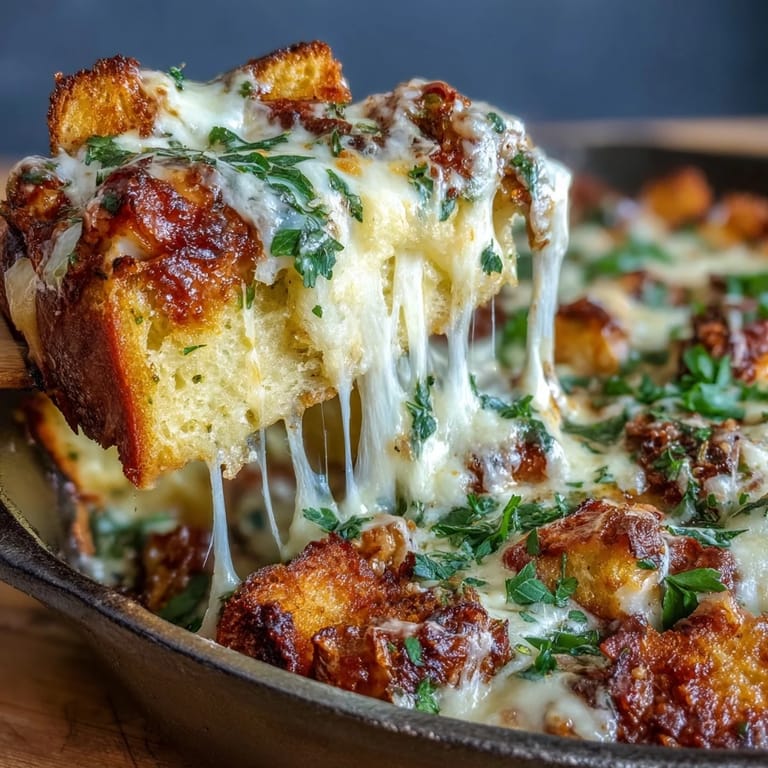
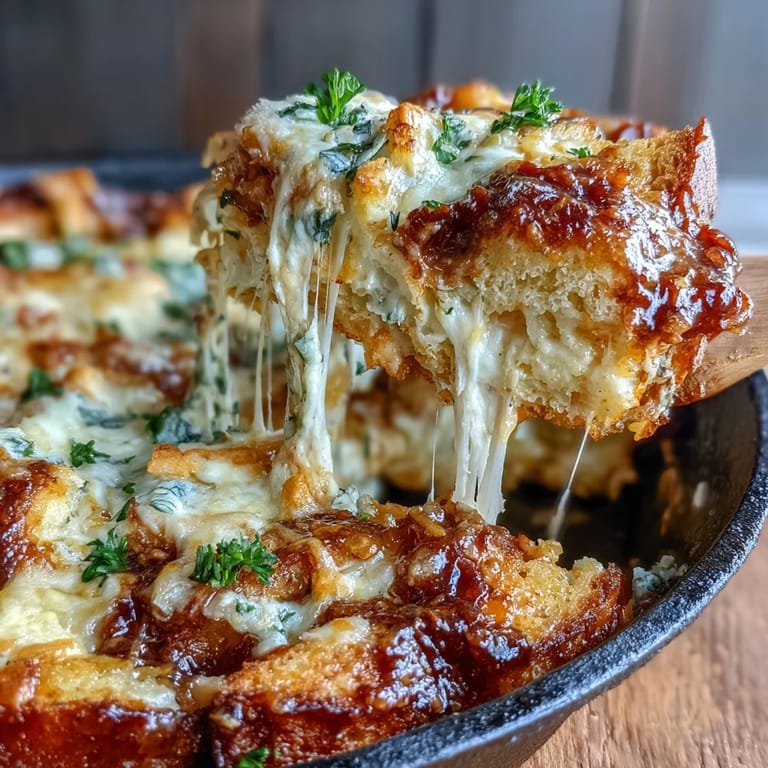
Save My cast-iron skillet has become my secret weapon for weeknight dinners that taste like I spent hours fussing. One Tuesday, I was staring at a half-used jar of marinara and some crusty bread, thinking about lasagna but too tired for the traditional assembly line approach. What emerged from that lazy moment was this: a skillet that does all the heavy lifting, where garlicky bread cubes soak up rich meat sauce and melt into something altogether different from either dish alone. It's the kind of food that makes people pause mid-bite and ask what exactly they're eating.
My neighbor knocked on the door just as I was pulling this from the oven, lured by the smell of garlic and melting cheese wafting through the hallway. She stayed for dinner and ate two servings, then texted me the next day asking if I'd make it for her dinner party. That's when I knew this skillet had something special—it bridges that gap between comfort food and something you're proud to put on a real table.
Ingredients
- Large baguette or Italian loaf (cut into 2-inch cubes): This is your structure, so choose a loaf with a sturdy crumb that won't turn to mush. Day-old bread is actually better here because it holds its shape and absorbs flavors without falling apart.
- Unsalted butter (4 tbsp, melted): The butter carries the garlic into every crevice of the bread and helps it toast golden. Never use cold butter for this part—you want it to coat everything evenly.
- Fresh garlic (5 cloves total, minced): Split between the bread coating and the meat sauce, garlic is what makes this dish sing. Fresh minced is non-negotiable; the pre-jarred stuff tastes metallic here.
- Fresh parsley (2 tbsp, chopped): This brings brightness against all that richness and adds a hint of color that makes people think you care.
- Ground beef (1 lb) or Italian sausage: If you use sausage, remove it from the casings and break it up as it cooks. For a vegetarian version, sautéed mushrooms work beautifully and soak up the sauce like meat would.
- Onion (1 small, diced): It softens into the sauce and adds sweetness that balances the acidity of the tomatoes.
- Marinara sauce (24 oz jar): A good jarred sauce is an honest shortcut; don't waste time on homemade when quality jarred versions exist. Pick one you'd actually eat straight from the jar.
- Ricotta cheese (1 cup) mixed with egg and Parmesan: This mixture binds everything and creates creamy pockets throughout. Cold ricotta mixes smoother, so pull it from the fridge just before combining.
- Mozzarella cheese (2 cups, shredded): Use whole milk mozzarella if you can—it melts more luxuriously than low-fat versions. Shred it fresh if time allows; pre-shredded has additives that prevent it from turning silky.
Tired of Takeout? 🥡
Get 10 meals you can make faster than delivery arrives. Seriously.
One email. No spam. Unsubscribe anytime.
Instructions
- Heat your oven and prep your bread:
- Set your oven to 375°F and let it preheat while you work. In a large bowl, whisk together melted butter, minced garlic, chopped parsley, and a pinch of salt, then toss your bread cubes through it until every piece glistens—you want them coated but not soggy.
- Brown the meat and build the sauce:
- Get your cast-iron skillet hot over medium heat and crumble in the ground beef with the diced onion. Let it sizzle and brown for about five to six minutes, breaking it up as it cooks, then pour off any excess fat that pools at the edges. Stir in the remaining garlic, the marinara sauce, oregano, salt, and pepper, then let it bubble gently for five minutes.
- Prepare your creamy layer:
- While the meat sauce simmers, combine ricotta, a beaten egg, and grated Parmesan in a separate bowl. Mix it smooth with a fork—this is what creates those pockets of creaminess throughout the skillet.
- Begin the layering dance:
- Remove half of the meat sauce from the skillet and set it aside. You're essentially creating a two-layer situation: spread half the garlic bread cubes directly over the remaining sauce in the skillet, dollop half the ricotta mixture over the bread, then scatter half the mozzarella on top.
- Add your second layer:
- Spoon that reserved meat sauce over the cheese, then layer the remaining bread cubes, ricotta mixture, and mozzarella. You're building a cheesy, saucy, garlicky cake at this point.
- Bake until golden and bubbling:
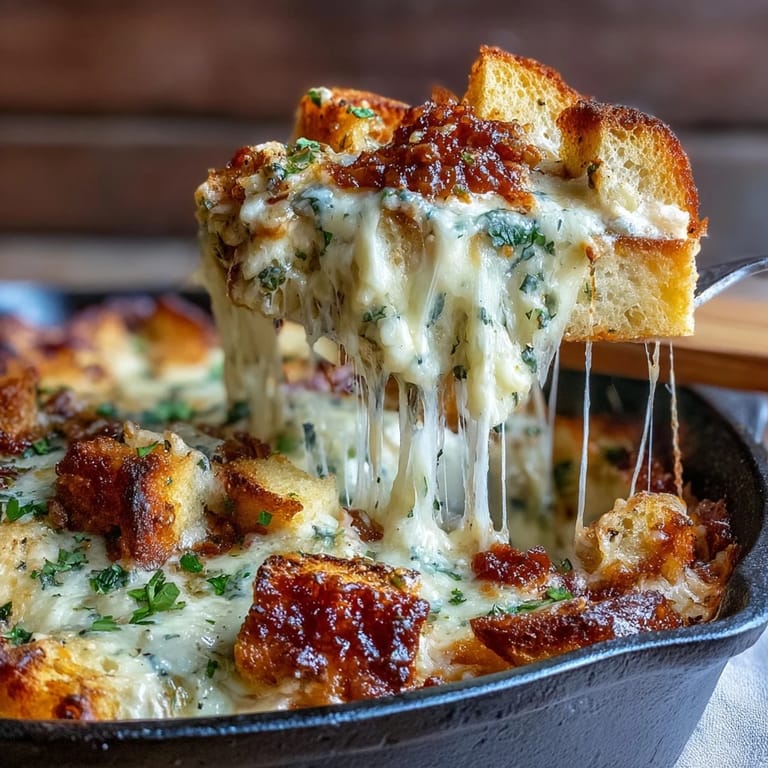
- Cover the skillet loosely with aluminum foil—loose is key, so the steam can escape—and slide it into the oven for twenty minutes. Remove the foil and bake for another ten to fifteen minutes until the cheese is bubbling around the edges and the top has turned golden brown.
- Rest and serve:
- Let the skillet sit for ten minutes before digging in; this helps everything set so it doesn't fall apart on the plate. A fresh sprinkle of parsley on top makes it look intentional.
 Save
Save There's a moment when you pull the foil off and the steam rises, and you see that golden, bubbling cheese surface—that's when you remember why cast-iron cooking feels almost ceremonial. This dish transforms a Tuesday night into something worth remembering.
Why Cast-Iron Matters Here
The cast-iron skillet isn't just a vessel; it distributes heat evenly so nothing burns on the bottom while the top stays pale. It also holds heat so well that this dish stays warm long enough for seconds, and it builds a gorgeous crust on the bottom layer that's almost impossible to achieve in a ceramic dish. Plus, there's something satisfying about serving directly from the skillet that makes casual food feel more generous.
Playing With Variations
The beauty of a skillet lasagna is how forgiving it is. Crumbled Italian sausage instead of ground beef leans spicy and herbaceous. Sautéed mushrooms—cremini or a mix—work beautifully for vegetarian versions and actually develop umami that rivals meat. You can layer in spinach between the cheese and sauce, or add roasted red peppers for sweetness. Some nights I add a pinch of red pepper flakes to the meat mixture and suddenly it's a different dish entirely.
Serving and Pairing Ideas
Serve this with a crisp green salad dressed in lemon vinaigrette to cut through the richness—that contrast makes both bites better. A glass of Chianti or even a lighter red wine complements it without overwhelming your palate. Garlic bread lasagna doesn't need much else, though a simple arugula salad with shaved Parmesan feels like the right move for when you want it to feel like an occasion.
- Make a double batch and freeze half before baking for future weeknight wins.
- Leftovers actually improve after a day in the fridge as flavors meld together.
- Reheat gently in a 325°F oven covered with foil so the cheese doesn't brown further.
 Save
Save This skillet has become my answer to that 6 p.m. question of what's for dinner when you want something that tastes like you planned it for days. It's one of those meals that reminds you that the best food often comes from practical shortcuts and a willingness to break the rules a little.
Recipe FAQs
- → Can I make this ahead of time?
Yes, assemble the entire skillet up to 24 hours in advance and refrigerate. Add 5-10 minutes to the baking time if cooking from cold.
- → What bread works best?
A day-old Italian loaf or baguette works best as it holds up better during baking without becoming too soggy.
- → Can I freeze leftovers?
Leftovers freeze well for up to 3 months. Thaw overnight in the refrigerator and reheat at 350°F until warmed through.
- → How do I make it vegetarian?
Replace the ground beef with plant-based crumbles, sautéed mushrooms, or lentils for a hearty vegetarian version.
- → Why use a cast-iron skillet?
Cast iron provides even heating and goes from stovetop to oven seamlessly. The heavy base prevents burning and creates a nicely crisped bottom layer.