 Save
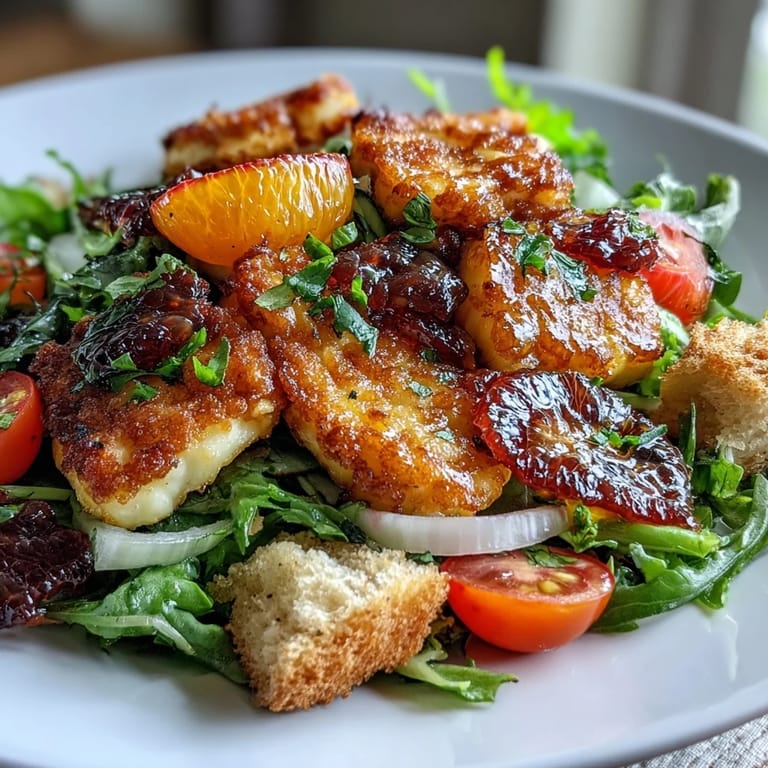
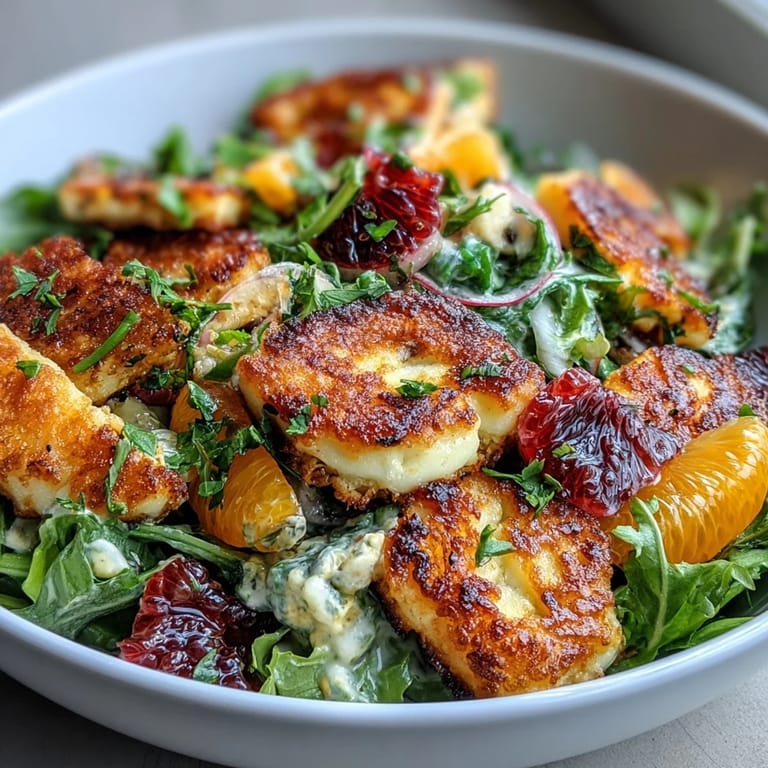
Save My neighbor brought over a container of pomegranate molasses one autumn afternoon, insisting I had to try it in a salad. I was skeptical until she mentioned halloumi—the kind that squeaks between your teeth when you bite it. That conversation sparked this salad, a dish that somehow manages to be both elegant and effortlessly thrown together, with warm cheese meeting bright citrus in the most unexpected way.
I made this for a friend who'd been talking about wanting to cook more Middle Eastern food but felt intimidated by it. Watching her taste that first bite—the warm cheese, the tart pomegranate molasses, the brightness of the blood orange—and then watching her relax, realizing it wasn't complicated at all, that was the moment I knew this recipe mattered.
Ingredients
- Halloumi cheese, 200g sliced into 1cm pieces: This is the anchor of the whole dish, and its ability to hold its shape when heated is what makes it so special—don't skip buying the real thing from a good source.
- Blood oranges, 2 peeled and segmented: These have a deeper, almost wine-like flavor compared to regular oranges, which makes them worth seeking out, though you can substitute if the season hasn't blessed your market.
- Mixed salad greens, 150g (romaine, arugula, parsley, mint): The combination matters—parsley and mint add an herbal note that ties everything to Middle Eastern traditions.
- Cucumber, 1 small diced: This adds cooling crunch that plays beautifully against the warm cheese.
- Cherry tomatoes, 8 halved: Their sweetness balances the tartness of the dressing without needing to be cooked.
- Red onion, ½ small thinly sliced: The raw sharpness mellows slightly as it sits with the dressing, but keeps the salad from feeling heavy.
- Radishes, 2 thinly sliced: They give a peppery bite that keeps your palate engaged through every bite.
- Sourdough bread, 2 thick slices cut into cubes: Use a good sourdough with real tang—it makes the croutons taste intentional rather than like an afterthought.
- Olive oil, 5 tbsp total (2 for croutons, 3 for dressing): Quality matters here since it's tasted directly, not just used for cooking.
- Fresh lemon juice, 1½ tbsp: Squeeze this fresh—bottled changes the entire character of the dressing.
- Pomegranate molasses, 1 tbsp: This is the secret weapon, that tangy-sweet depth that makes people ask what's in your dressing.
- Sumac, 1 tsp: Its lemony tang is irreplaceable, though if you truly can't find it, extra lemon juice works in a pinch.
- Sea salt and black pepper to taste: Don't rush seasoning—taste as you go.
Tired of Takeout? 🥡
Get 10 meals you can make faster than delivery arrives. Seriously.
One email. No spam. Unsubscribe anytime.
Instructions
- Make your croutons golden:
- Heat your oven to 200°C and toss the sourdough cubes with olive oil and salt, spreading them on a tray where they'll have room to breathe. Bake for 8 to 10 minutes, watching until they're golden and crispy on the edges but still slightly yielding inside.
- Fry the halloumi until it sings:
- Get a non-stick skillet warm over medium heat and slide in your halloumi slices—you'll hear them sizzle almost immediately. After 2 to 3 minutes per side they'll be golden and the edges will start to caramelize, at which point a quick drain on paper towels removes excess oil without cooling them down too much.
- Build your salad foundation:
- In your largest bowl, combine all the greens, cucumber, tomatoes, onion, radishes, and blood orange segments, letting them nestle together naturally. This is where the salad starts to look like something special before anything warm even touches it.
- Whisk your dressing into existence:
- In a small bowl, whisk the olive oil, lemon juice, pomegranate molasses, sumac, black pepper, and salt until everything's emulsified and the color deepens slightly. Taste it straight from the whisk—this is your moment to adjust seasoning before it meets the greens.
- Bring it all together:
- Add the still-warm halloumi and crispy croutons to your salad bowl, then drizzle the dressing over everything and toss gently so nothing breaks apart. The heat from the cheese will slightly soften the greens while the dressing coats every surface.
- Serve while the magic is still warm:
- Get this onto plates or a platter immediately—the contrast between warm cheese and cool greens is only there for a few minutes, and that's exactly when you want to eat it.
 Save
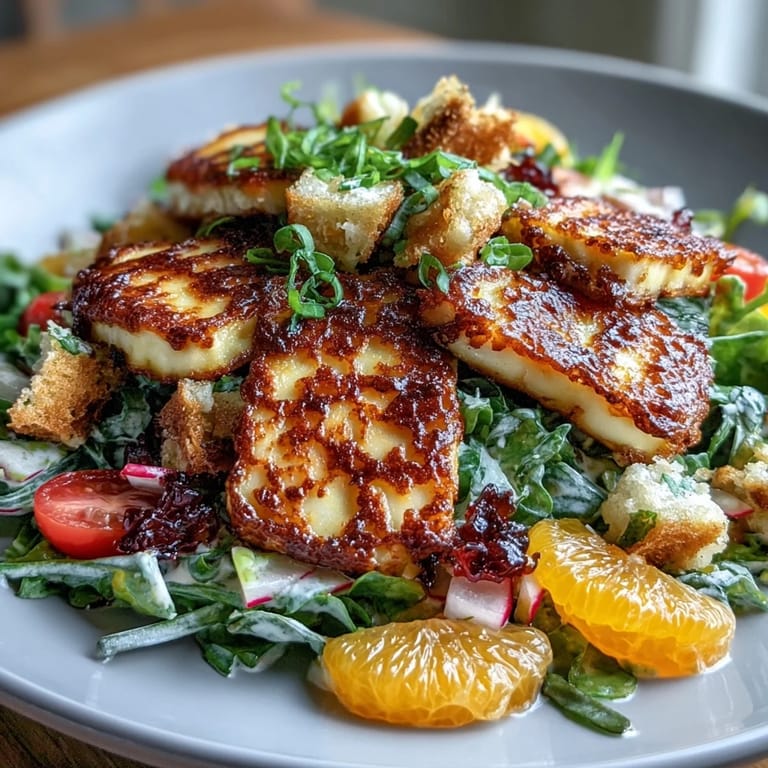
Save There's a moment in cooking when you realize a dish has become more than the sum of its parts. I had that moment when someone said this salad tasted like a long dinner in a Beirut garden, even though we were sitting at a kitchen table in November. That's when food stops being about technique and becomes about place.
The Halloumi Question
When I first moved into cooking with cheese seriously, I didn't understand why halloumi mattered so much. It seemed like a gimmick—a cheese that fried instead of melted. Then I tasted it warm against cold citrus and understood: it's a textural contrast that no other ingredient can provide. The slight squeak against your teeth, the creamy middle against the crispy exterior, it's a sensory experience that elevates a simple salad into something memorable. Buy the best halloumi you can find, because unlike some ingredients that hide in a dish, this one is the show.
Why Pomegranate Molasses Changes Everything
The first time I used pomegranate molasses, I approached it like I was defusing a bomb—so afraid of making the dressing too sour that I barely used any. Then I tasted it side by side with a dressing made only with lemon juice and understood the difference. Pomegranate molasses has this tart-sweet depth that feels ancient and intentional, like someone took all the complexity of actual pomegranates and distilled it into a bottle. It's not just sour; it's layered. That's why people will taste this salad and ask what's in your dressing with genuine curiosity. It's the ingredient that makes you sound like you actually know what you're doing.
Building Flavor in Layers
This salad teaches you something fundamental about seasoning: it's not about dumping everything in at once and hoping for the best. The red onion provides raw sharpness, the radishes add peppery bite, the cherry tomatoes bring sweetness, the blood oranges deliver brightness, and then the dressing ties everything together with its warm spice notes from the sumac. When you taste each component individually before mixing, you understand why they all need to be there. It's a conversation between ingredients rather than a blur of flavors.
- Taste your dressing before it meets the greens so you can adjust seasoning with confidence.
- Don't slice the red onion too thick or it'll overpower the delicate greens, but don't make it paper-thin either or it'll disappear.
- If you make this ahead, keep the components separate and only assemble when you're ready to serve so everything stays crisp.
 Save
Save This salad has taught me that some of the most impressive dishes are simply about respecting good ingredients and giving them space to be themselves. Make it once and it becomes part of your rotation, the dish you turn to when you want to feel capable and fed.
Recipe FAQs
- → What makes fattoush different from other salads?
Fattoush is a Middle Eastern salad characterized by crispy croutons and sumac spice. The combination of warm fried cheese with fresh vegetables and tangy pomegranate molasses dressing creates distinctive flavors and textures you won't find in typical green salads.
- → Can I prepare the components ahead of time?
You can prepare the vegetables, dressing, and croutons up to 4 hours in advance. Store them separately in the refrigerator. Fry the halloumi just before serving to maintain its golden texture and warmth, which creates the best contrast with the crisp vegetables.
- → What can I substitute for blood oranges?
Regular navel oranges work beautifully as a substitute. Pink grapefruit adds a lovely pink hue and slightly different flavor profile. Even mandarin segments can provide sweetness, though they're more delicate to handle.
- → Is halloumi suitable for vegetarians?
Halloumi is a semi-hard cheese traditionally made from sheep's and goat's milk, though cow's milk versions exist. It's vegetarian-friendly as it uses vegetable rennet in most commercial brands. Always check the label if you follow strict vegetarian guidelines.
- → How do I prevent halloumi from becoming rubbery?
Avoid overcooking—fry just 2-3 minutes per side until golden. Use medium heat, not high, to cook through evenly. Pat the slices dry before frying to remove excess moisture, and don't crowd the pan so each piece browns properly.
- → What pairs well with this fattoush?
Grilled chicken or lamb skewers make excellent protein additions. Serve alongside hummus and warm pita bread for a complete Middle Eastern spread. A crisp white wine like Sauvignon Blanc complements the citrus and salty notes beautifully.