 Save
Save The first time I made these neon noodles, I was hunting for something unexpected to serve at a dinner party, something that would make my guests do a double-take the moment they saw the plate. I'd been fascinated by agar-agar for months after watching someone demonstrate it at a food festival—the way it transformed from liquid to firm in seconds felt almost like magic. When I realized I could pipe it into those impossibly thin, bouncy strands and dye them in electric colors, I knew I'd found my showstopper.
I served these at a friend's birthday dinner last spring, and I'll never forget how her eyes lit up when she lifted her chopsticks and the noodles jiggled like little clouds on her plate. Someone asked if they were safe to eat, and there was this wonderful moment of everyone tentatively trying them, discovering the salty-sweet sauce, and then going back for more. That's when I knew this recipe was more than just impressive—it was genuinely delicious and memorable.
Ingredients
- Water: This is your base, and it needs to be measured carefully because it determines how many noodles you'll get.
- Agar-agar powder: The magic ingredient that gives you that firm, bouncy texture in seconds—make sure you're using powder, not flakes, because the timing is different.
- Sugar: Just a touch sweetness to balance the earthiness of the agar.
- Food coloring (neon gel or liquid): Gel colors are more vibrant and won't water down your mixture like liquid colors sometimes do, so they're worth seeking out.
- Soy sauce or tamari: The backbone of your dipping sauce; tamari is your gluten-free friend here.
- Rice vinegar: Brings brightness and prevents the sauce from feeling too heavy.
- Mirin: A gentle sweetness that rounds out the salty notes.
- Sesame oil: Just a teaspoon is enough to add that toasty depth.
- Fresh ginger: Grate it right before mixing so you get the sharp, fresh bite instead of something mellow.
- Scallion: The fresh pop that makes people taste it and say, 'Oh, that's what that is.'
- Toasted sesame seeds: Optional but worth the effort—they add a subtle crunch and nuttiness.
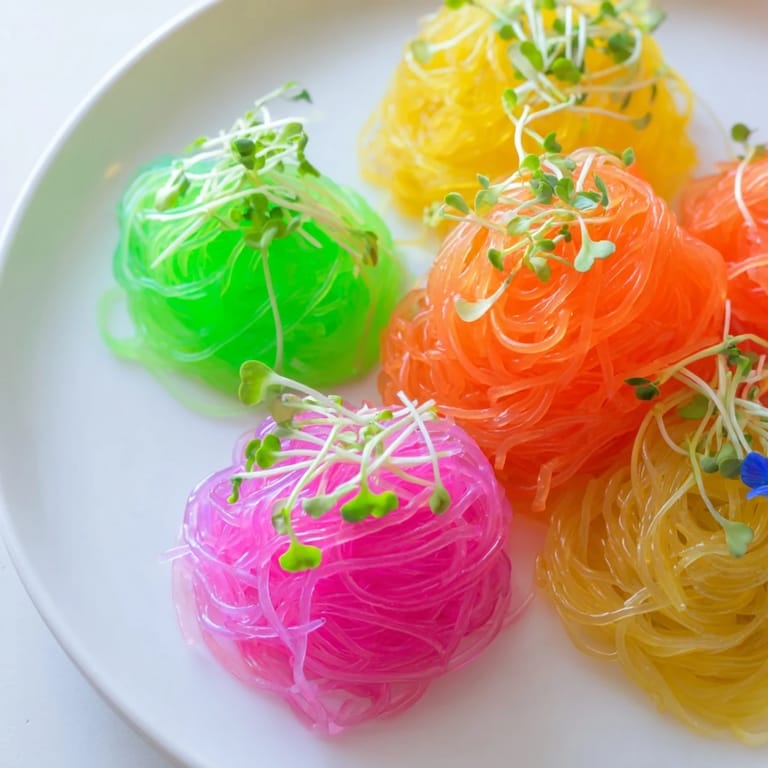
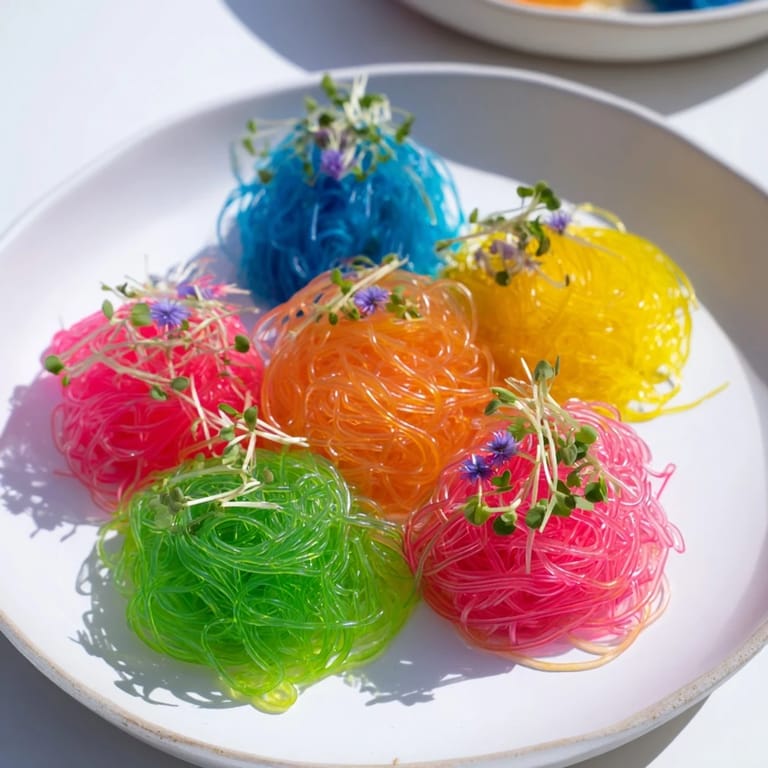
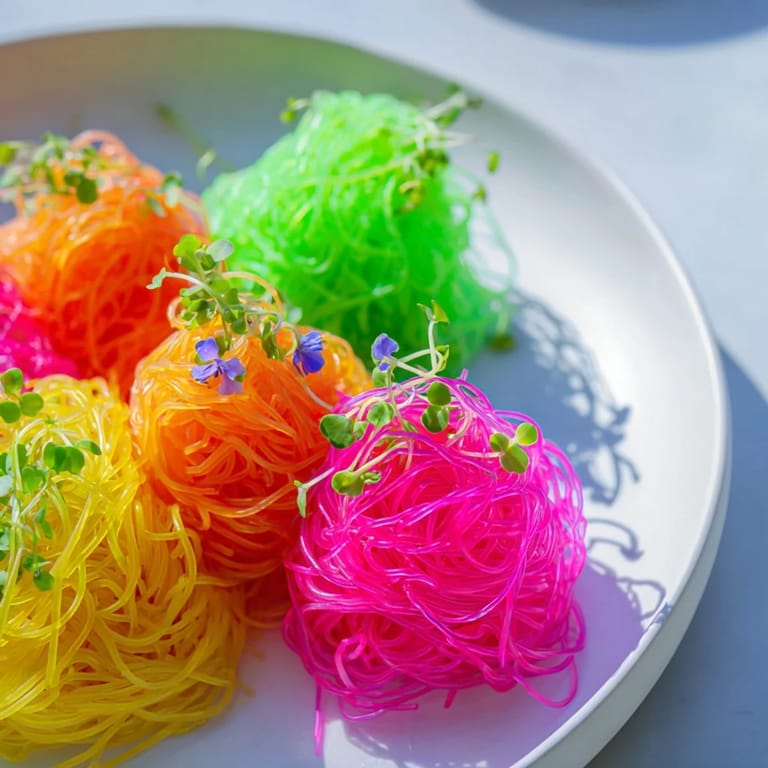
- Microgreens or edible flowers: For that final visual moment that says you actually care about presentation.
Tired of Takeout? 🥡
Get 10 meals you can make faster than delivery arrives. Seriously.
One email. No spam. Unsubscribe anytime.
Instructions
- Create your agar base:
- In a saucepan, whisk together water, agar-agar powder, and sugar over medium heat, stirring constantly until the powder dissolves completely—you'll see the grainy texture smooth out after about 2-3 minutes. Once it's boiling and clear, you're ready to color.
- Divide and dye:
- Pour the hot mixture into separate bowls, one for each color you want, and add just a drop or two of food coloring to each—the colors intensify as they cool, so go lighter than you think you need. Stir well and let cool for a minute so you don't burn yourself handling the syringe.
- Pipe into noodles:
- Fill your syringe or squeeze bottle with one colored mixture and gently squeeze thin strands directly into a bowl of ice water, watching them firm up instantly as they hit the cold. If using a tray instead, pour the mixture thin, let it set for 5 minutes, then slice with a sharp knife using a gentle sawing motion so the noodles don't shatter.
- Set and chill:
- Let your noodles sit in the ice water for 1-2 minutes until completely firm, then drain carefully and transfer to the refrigerator to chill until you're ready to serve. They'll keep their bounce and color beautifully.
- Make your sauce:
- In a small bowl, whisk soy sauce, rice vinegar, mirin, sesame oil, sugar, and ginger together until the sugar dissolves, then fold in the scallion and sesame seeds just before serving so they stay fresh and bright.
- Plate and serve:
- Gather the noodles into small, whimsical bundles on plates or in bowls, top with a few microgreens or edible flowers if you have them, and serve the sauce in a small dish on the side for dipping. Let your guests have fun with it—this dish is meant to be playful.
 Save
Save There's something deeply satisfying about making something that looks like it should be difficult but actually isn't. The first time someone told me these noodles were 'almost too pretty to eat,' I realized I'd made something that was equal parts dinner and conversation starter. That feeling of turning the ordinary into something that makes people smile—that's when cooking stops being a chore and becomes an art.
The Art of Color Piping
The technique of piping the noodles is simpler than it looks, but it's where the personality of the dish comes through. I've found that holding the syringe at a slight angle and letting the noodles fall gently into the ice water creates that cloud-like quality that gives the dish its name. If you're nervous about it the first time, remember that even imperfect strands look beautiful when they're that color, and if things go sideways, you can always chop them into shorter pieces and serve them in small bundles. The sauce will distract from any imperfection anyway.
Sauce as the Unsung Hero
While the noodles steal the show visually, the sauce is what makes people come back for another bite. The balance of salty soy, tangy vinegar, and sweet mirin is classic for a reason, but the fresh ginger and toasted sesame seeds are what keep it from tasting like something you've had a thousand times before. I've learned that warming the sauce slightly before serving makes the flavors bloom more, though some people prefer it chilled alongside the cold noodles—try both and see which one makes you happier.
Variations and Personal Touches
This recipe is genuinely fun to play with, and I've found that's part of what makes it worth making again. You can use natural colorants like spirulina for green, butterfly pea flowers for blue, or beet juice for pink if you want to avoid synthetic food coloring entirely. A tiny drizzle of yuzu juice or chili oil in the sauce adds complexity without overwhelming the dish, and swapping out the sesame seeds for something more unexpected keeps it interesting. Don't be afraid to make it your own—that's when a recipe becomes a tradition.
- Try adding a whisper of yuzu or a single drop of chili oil to the sauce for unexpected depth.
- Natural plant-based colorants like spirulina or beet juice create softer, more elegant tones than bright gels.
- Serve this between courses as a palate cleanser, or let it be the star of an appetizer spread.
 Save
Save Making these neon noodles reminds me that cooking can be playful and irreverent and still taste wonderful. Every time I serve them, I watch someone's face shift from 'Is this even food?' to pure delight, and that never gets old.
Recipe FAQs
- → What gives the noodles their vibrant colors?
Food-safe neon gel or liquid colorings are added to the agar-agar mixture for bright, eye-catching hues. Natural alternatives like spirulina or beet juice can also be used.
- → How is the bouncy texture achieved?
The agar-agar powder sets the noodles firmly after boiling, creating a pleasingly chewy, springy texture unlike traditional wheat noodles.
- → Can the dipping sauce be adjusted for dietary needs?
Yes, substituting tamari for soy sauce makes it gluten-free without compromising the savory flavor.
- → What tools help shape the noodles effectively?
Using a syringe or squeeze bottle allows precise piping of noodle strands into ice water, forming delicate, uniform shapes.
- → Are there optional garnishes to enhance presentation?
Microgreens or edible flowers can be added for an attractive, fresh garnish complementing the dish’s neon colors.