 Save
Save There's something oddly satisfying about the sound of a knife moving through fresh carrots—that sharp crunch as the blade hits the cutting board. I discovered quick pickles completely by accident when I had a handful of carrots going soft in the crisper drawer and wanted something snappy to add to my lunch the next day. What started as a five-minute fix became a habit, then a favorite, and now I can't imagine my fridge without a jar of these tangy spears waiting to brighten up whatever I'm eating.
I made these for a friend's impromptu taco night once, brought them in an unmarked mason jar, and watched her face light up when she realized they weren't store-bought. She asked for the recipe immediately, which gave me that quiet thrill of having contributed something homemade to the gathering. Now whenever she hosts, there's always an expectation that I'll show up with a jar of these pickles tucked under my arm.
Ingredients
- Carrots: Use firm, medium-sized ones for the best texture—they'll stay crisp and snappy where softer carrots might turn mushy.
- Distilled white vinegar: The clarity matters here; it keeps your pickles bright and doesn't cloud the brine like other vinegars sometimes do.
- Water: Simple and essential for diluting the vinegar to the right balance of tang.
- Granulated sugar: Just enough to round out the sharp edges of the vinegar without making these sweet.
- Kosher salt: It dissolves cleanly and seasons the entire jar evenly.
- Garlic cloves: Split them in half so the flavor distributes throughout the brine without overpowering.
- Black peppercorns, mustard seeds, and coriander seeds: Together these create a warm, subtle spice that feels sophisticated without being obvious.
- Red pepper flakes: Optional, but a pinch adds a gentle heat that lingers pleasantly on your tongue.
- Fresh dill: If you have it, toss it in for an herbal note that makes these feel like something from a farmers market.
Tired of Takeout? 🥡
Get 10 meals you can make faster than delivery arrives. Seriously.
One email. No spam. Unsubscribe anytime.
Instructions
- Prep and pack your jar:
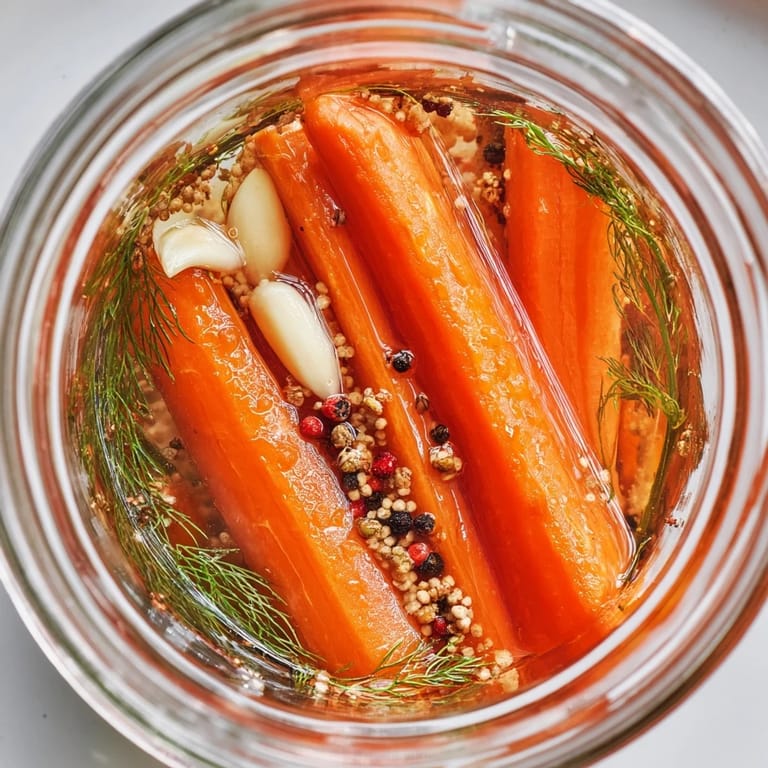
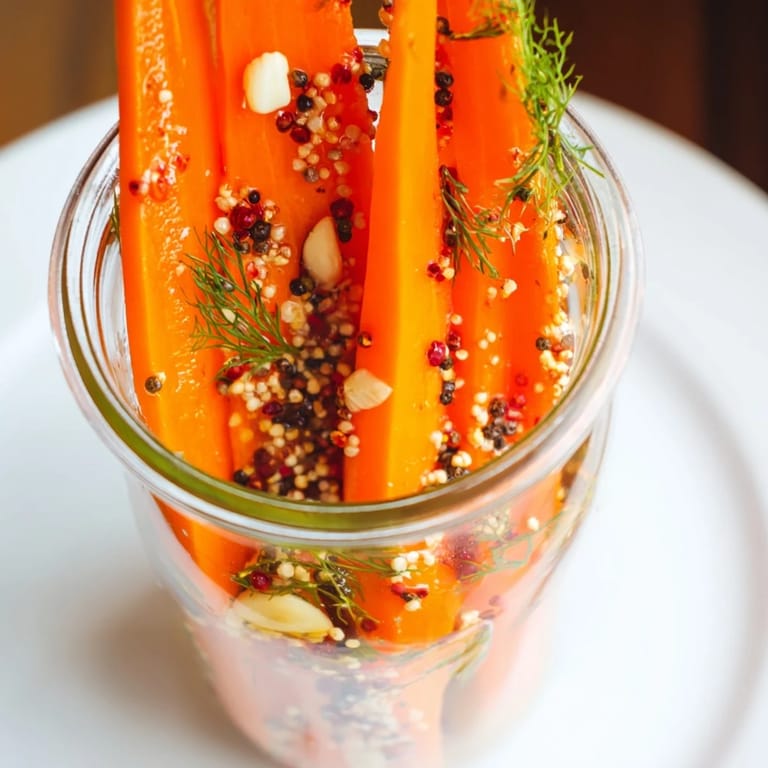
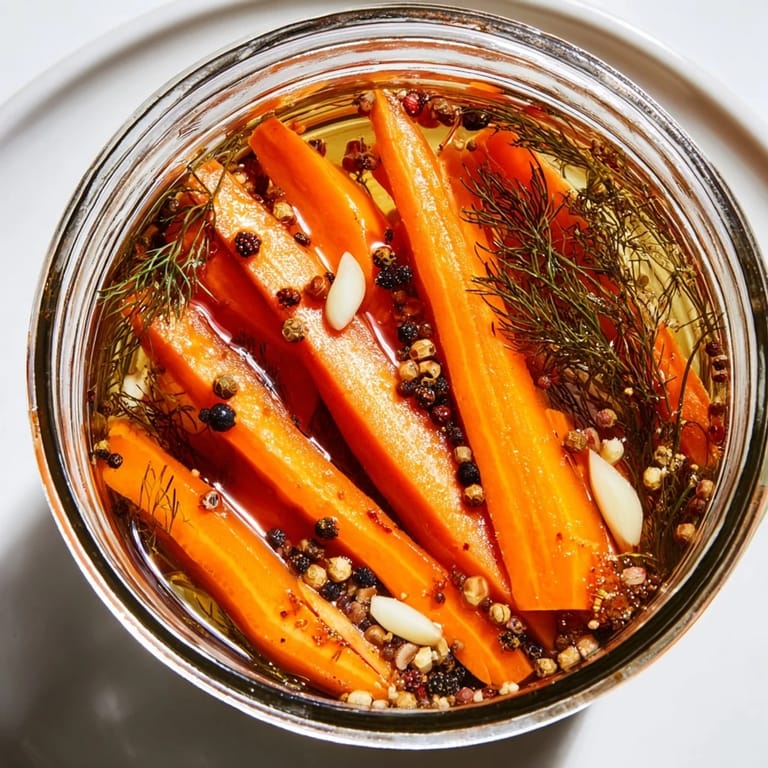
- Peel and cut your carrots into long spears, then stand them vertically in your clean jar like tiny soldiers waiting for their brine bath. Scatter the garlic, dill, and all your spices around them, tucking everything into the spaces between the carrot spears.
- Make the brine:
- Combine vinegar, water, sugar, and salt in a small saucepan and set it over medium heat, stirring occasionally until the granules dissolve and you can see the mixture turn clear and smooth. This usually takes just a few minutes, and you want to catch it right as it starts to simmer—don't let it boil.
- Pour and cool:
- Carefully pour that hot brine over the carrots, making sure every spear gets submerged beneath the liquid; any carrot poking above the surface can turn mushy or discolor. Let the jar sit on your counter uncovered until it reaches room temperature, which gives the flavors a moment to start mingling.
- Seal and chill:
- Once cool, cap the jar with its lid and slide it into the refrigerator for at least an hour before your first taste. If you can wait 24 hours, the flavors deepen considerably and the carrots soak up even more tang.
 Save
Save My favorite moment with these pickles happened when my neighbor smelled them through the open kitchen window and invited herself in to investigate. We ended up sitting on my counter eating them straight from the jar with toothpicks, talking about nothing in particular, and I realized that food at its best isn't about impressing anyone—it's just about sharing something good. She asked for her own jar the next day, and I've been making double batches ever since.
Why These Pickles Work
The magic here is in the ratio and timing. The vinegar-to-water balance means you get a proper pickle tang without the harshness that happens when you go too heavy on acid. The sugar keeps everything in harmony, rounding out the sharp edges, while the salt amplifies every other flavor and helps the carrots hold their firmness. Quick pickling works on refrigerator-safe principles, which means no canning knowledge required and no sterilizing jars—just clean glass and a cold fridge.
How to Store and Use Them
These keep for up to two weeks in the refrigerator, though they rarely last that long in my house. I've found that the longer they sit, the more the flavors develop and deepen, so if you can resist eating them immediately, day three or four is when they hit their stride. The brine is flavorful enough to be useful too—I've drizzled it over grain bowls, used it to dress coleslaw, and added it to salad dressings for an extra layer of complexity.
Playing with Flavor
One of the joys of quick pickling is how easy it is to experiment without worrying about food safety the way you would with traditional canning. I've tried sliced jalapeños for heat, swapped the dill for fresh thyme for an earthier tone, and once added a strip of lemon zest just to see what would happen. The formula stays the same; only your additions change, which means you can make these taste like anything you want them to be.
- If you like heat, add sliced jalapeños or increase the red pepper flakes to a half teaspoon.
- For an herb variation, try tarragon, oregano, or bay leaf instead of or alongside the dill.
- A single dried chili or a strip of citrus zest can completely shift the personality of a batch.
 Save
Save These pickles remind me that some of the best things to cook are the simplest ones—no fuss, no fancy techniques, just good ingredients and a little patience. They belong in your kitchen not because they're complicated, but because they're consistently delicious and they take five minutes of actual work.
Recipe FAQs
- → How long should the carrot spears chill before eating?
Allow at least one hour to chill in the refrigerator for a quick tang, but 24 hours brings out deeper flavors.
- → Can I adjust the spice level in the brine?
Yes, adding sliced jalapeños or increasing crushed red pepper flakes will give a spicier kick.
- → What kind of vinegar is best for pickling?
Distilled white vinegar provides a clean, sharp acidity perfect for bright, crisp pickled carrots.
- → Are there alternative herbs to dill for flavor?
Fresh thyme works well as a subtle herbal alternative to dill, adding a different aromatic dimension.
- → How long do the pickled carrots stay fresh refrigerated?
When stored properly in a sealed jar, they keep fresh and flavorful for up to two weeks in the fridge.