 Save
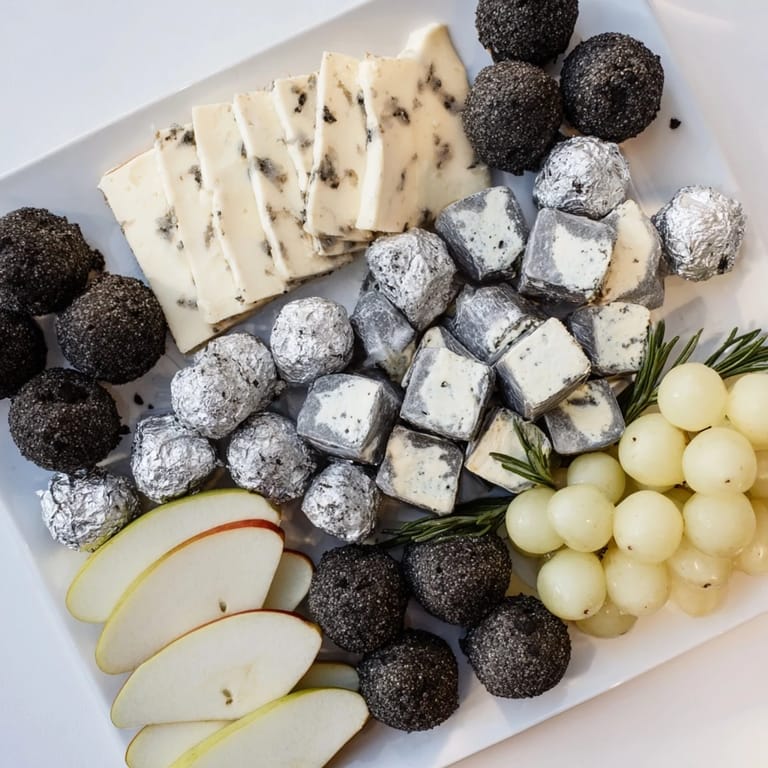
Save I discovered this board concept on a rainy evening when a friend texted asking what to serve for a spontaneous gathering, and I found myself drawn to the idea of creating something that felt both luxurious and effortless. The monochromatic silver and cream palette struck me as distinctly cinematic, and I realized that food could be an homage to old Hollywood glamour without requiring any cooking at all. Something about the contrast of creamy cheeses against dark chocolate wrapped in foil, all arranged in deliberate patterns, felt like setting a scene.
The first time I made this for a small film club gathering, I arranged everything in perfect lines while the opening credits rolled, and my friend commented that the board itself felt like a scene from a Tarkovsky film. That moment of someone noticing the care in the arrangement, rather than just grabbing food, reminded me that hospitality is partly about creating a mood, not just feeding people.
Ingredients
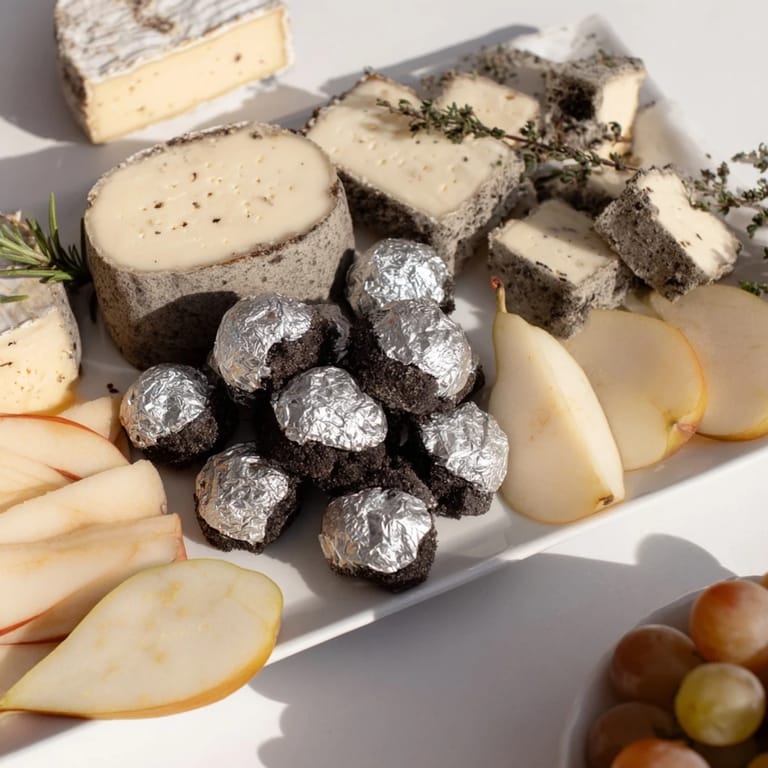
- Truffle brie, sliced: The creamy heart of this board—slice it just before serving so the cut edges catch the light and stay soft and yielding.
- Ash-ripened goat cheese, cut into rounds: Its subtle tang and delicate texture create complexity that balances the sweetness of chocolate, and the visual contrast of the ash coating is essential to the monochromatic effect.
- Aged white cheddar, cubed: Sharp and crystalline, it grounds the board with substance and provides a different textural experience that keeps the palate engaged.
- Truffle-infused cream cheese, shaped into quenelles: A quenelle (three elegant ovals shaped with warm spoons) adds refinement and makes even cream cheese feel like haute cuisine.
- Silver-wrapped dark chocolate truffles: Buy the best ones you can afford—the wrapper is part of the visual story, and quality matters when chocolate is the main attraction.
- White chocolate pralines, silver-dusted: The dusting should be light and intentional; if you can't find pre-dusted ones, edible pearl dust applied carefully does the same work.
- Plain water crackers: Their neutrality keeps them from competing with the starring ingredients, and their pale color extends the silver screen aesthetic.
- White baguette slices: Toast them lightly for a subtle crunch that won't overshadow the cheeses, and let them cool completely before arranging.
- Seedless white grapes: They serve as both flavor contrast and visual punctuation, their round forms playing off the angular lines of the board.
- Asian pear, thinly sliced: Its sweetness and crisp texture bridge cheese and chocolate beautifully, and the pale flesh looks ethereal arranged in overlapping patterns.
- Blanched almonds, lightly toasted: Toast them yourself just long enough to awaken their flavor without darkening them; this step transforms them from ordinary to essential.
- White candied ginger, sliced: A tiny amount goes a long way—it adds a sophisticated warmth and spice that keeps the board from feeling one-dimensional.
- Edible silver leaf: Optional but genuinely transformative; a few carefully placed leaves catch light and complete the cinematic mood.
- Fresh rosemary or sage sprigs: Their green tips break up the monochromatic palette just enough to feel intentional, and they perfume the board subtly.
Tired of Takeout? 🥡
Get 10 meals you can make faster than delivery arrives. Seriously.
One email. No spam. Unsubscribe anytime.
Instructions
- Start with structure:
- Arrange your board horizontally and divide it into invisible zones—place cheeses in alternating sections so no two similar textures sit adjacent. This creates visual rhythm and ensures every bite offers something different.
- Position the stars:
- Cluster the silver-wrapped chocolates and white pralines in gaps between cheeses, treating them as jewels rather than filler. Let their reflective wrapping do the visual work.
- Build the foundation:
- Spread crackers and baguette slices in neat rows or gentle arcs, creating pathways that guide the eye across the board and give structure to the arrangement.
- Fill with brightness:
- Scatter grapes, pear slices, almonds, and candied ginger in deliberate clusters rather than random dots—this feels curated rather than haphazard.
- Add the finishing shimmer:
- If using edible silver leaf, apply it with a light touch to one or two elements like the brie or around chocolate clusters. Finish by tucking rosemary sprigs into gaps and along edges.
- Serve with intention:
- Bring the board to room temperature for 10 minutes before serving so cheeses soften slightly and release their full flavor. The moment of presentation, when someone first sees it, matters as much as the taste.
 Save
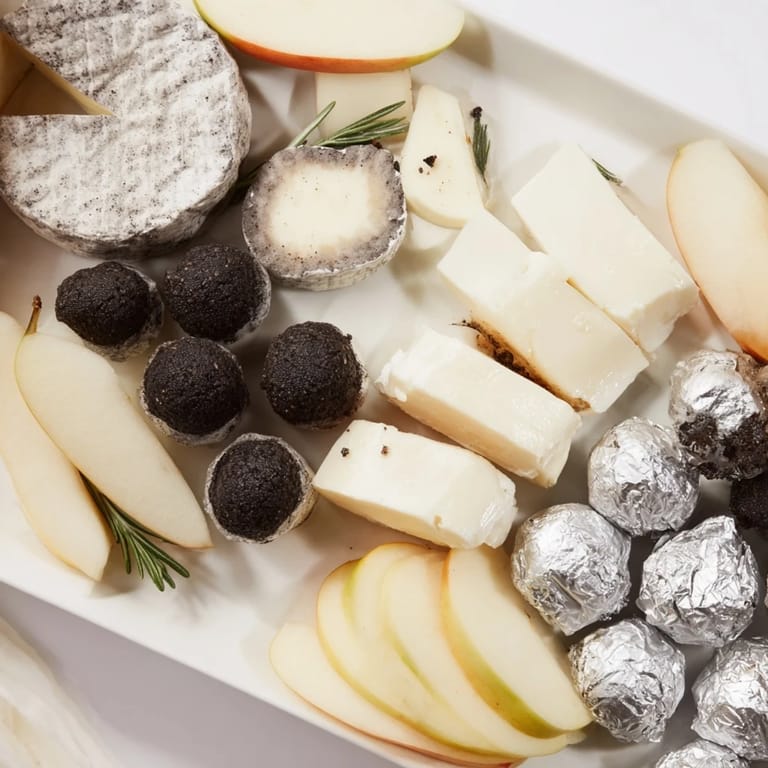
Save I learned this lesson when I once arranged a similar board in tight, dense clusters, and guests kept choosing only the items closest to them rather than exploring. The next time, when I created more open space and visual flow, people naturally moved through the board like it was a tasting menu, and the conversation around it deepened because they were experiencing everything together.
The Power of Visual Narrative
Food boards are an underrated form of storytelling—they whisper rather than shout about abundance, care, and intention. The monochromatic palette here isn't just aesthetic; it's a deliberate choice to let texture and subtle color variation become the focal points. When everything is cream, white, silver, and dark chocolate, each element gains clarity rather than competing. The restraint itself becomes elegant.
Pairing and Progression
Think of this board as a small conversation between flavors rather than a free-for-all. Pair the sharp aged cheddar with a truffle chocolate for a surprising savory-sweet moment, then move to the delicate goat cheese with a pear slice to reset your palate. The candied ginger provides a palate-cleansing warmth, while the almonds add grounding substance. Serve it with a crisp Champagne or dry white wine that cuts through the richness without demanding attention.
Making It Your Own
The framework here is intentionally flexible—swap cheeses based on what moves you, replace white chocolate with dark if that's your inclination, or add elements like marcona almonds, dried white figs, or candied lemon peel if you want more complexity. The guiding principle is maintaining that silver-screen aesthetic of restraint and luminosity, where every element earns its place through either flavor, texture, or visual contribution.
- If preparing ahead, arrange everything except soft cheeses and sliced pear up to 2 hours before, then add these elements just before serving so they stay fresh and appealing.
- For a larger gathering, scale the quantities proportionally but keep the proportions of cheese to chocolate to crackers consistent, roughly 50:25:25 by weight.
- Trust your instincts about arrangement—the most beautiful boards often come from moving things around until the composition feels balanced to your eye, not from following a rigid template.
 Save
Save This board exists at the intersection of restraint and indulgence, requiring nothing but intention and assembly yet delivering genuine sophistication. Serve it, watch people pause before eating to take it in, and you'll understand why presentation matters.
Recipe FAQs
- → What cheeses work best for this board?
Truffle brie, ash-ripened goat cheese, aged white cheddar, and truffle-infused cream cheese provide a balanced mix of flavors and textures, perfect for this elegant spread.
- → How should I arrange the board for best presentation?
Alternate the cheeses in separate sections for contrast, cluster silver-wrapped chocolates nearby, and fill spaces with crackers, fruit, nuts, and candied ginger for a balanced and visually appealing layout.
- → Can this board accommodate dietary restrictions?
Yes, you can substitute with plant-based truffle cheeses and vegan chocolates to make the board suitable for vegan guests.
- → What drinks pair well with this combination?
A crisp Champagne or dry white wine complements the creamy cheeses and rich chocolates, enhancing the overall tasting experience.
- → Is edible silver leaf necessary?
No, the silver leaf is optional but adds a glamorous touch and elevates the board’s elegant appearance.
- → How long should the cheeses sit before serving?
Allow cheeses to reach room temperature for about 20 minutes prior to serving to bring out their full flavors.