 Save
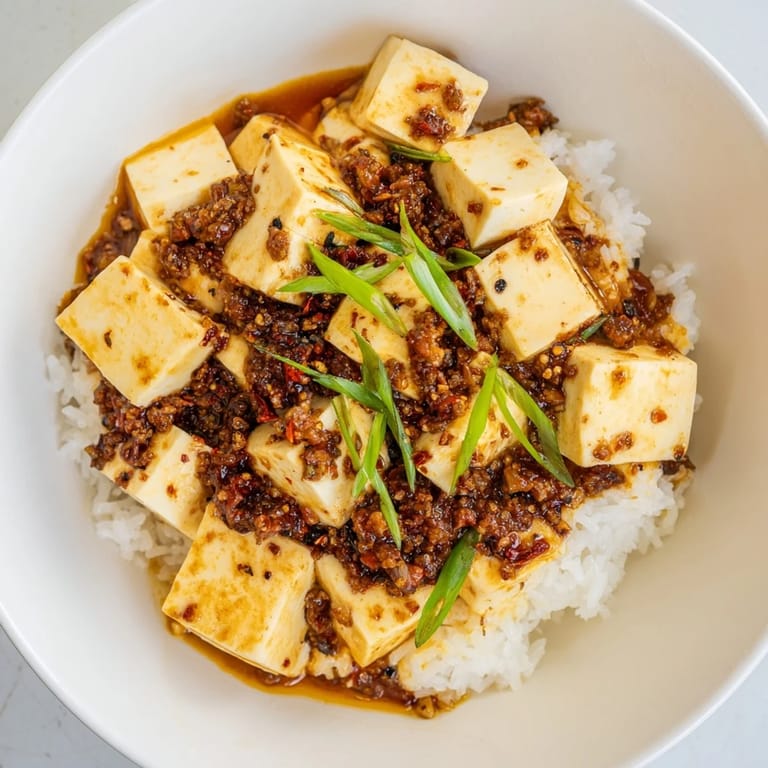
Save My first encounter with mapo tofu was in a tiny Sichuan restaurant where the chef seemed to throw ingredients together with barely a glance, and yet each spoonful delivered this perfectly balanced tingle and heat that made my lips and tongue feel alive in the most unexpected way. Years later, I finally understood what she was doing—it wasn't careless at all, but years of muscle memory condensed into a few decisive movements. Now when I cook this at home, I chase that same feeling, that moment where silky tofu meets bold, numbing sauce and everything just clicks.
I made this for my roommate on a cold Tuesday night when she came home discouraged from work, and watching her face light up at that first spoonful reminded me why comfort food matters so much—it's not about perfection, it's about someone taking the time to stir a pot with care and attention just for you.
Ingredients
- Silken or soft tofu, cubed: The silken version melts almost into the sauce and feels luxurious, though soft tofu works beautifully too if you want something that holds its shape through the simmer.
- Ground pork or beef: If you include meat, it adds richness and texture, but honestly the vegetarian version is just as satisfying once you taste how the sauce carries the whole dish.
- Sichuan doubanjiang: This fermented chili bean paste is the soul of the dish—it's worth hunting down in an Asian market because there's really no substitute for that deep, complex heat.
- Sichuan peppercorns: Toast them yourself just before grinding and you'll understand why restaurants taste so different from home cooking; that volatile oil makes all the difference.
- Shaoxing wine: A splash of this transforms the sauce from flat to rounded, but dry sherry works if you can't find it.
- Soy sauce, sugar, and broth: These three work together to balance the heat and give the sauce body.
- Cornstarch slurry: This thickens the sauce into something that clings to the tofu instead of pooling at the bottom of the pan.
- Garlic, ginger, and scallions: Layer these in at the right moment and they bloom into the oil, filling your kitchen with that warm, welcoming smell.
Tired of Takeout? 🥡
Get 10 meals you can make faster than delivery arrives. Seriously.
One email. No spam. Unsubscribe anytime.
Instructions
- Toast and grind the peppercorns:
- Heat your wok or skillet over medium heat and toss in the Sichuan peppercorns, listening for them to pop and release their aroma. Once fragrant, grind them coarsely in a mortar and pestle—you want some texture, not fine powder.
- Build the aromatic base:
- Pour in the oil and add the scallion whites, minced garlic, and ginger, stirring constantly for about a minute until the smell becomes so good you almost can't wait to eat. This is where the foundation of flavor gets laid down.
- Brown the meat:
- If using pork or beef, add it now and break it apart with your spoon as it cooks, letting it brown without crowding the pan. You're looking for golden bits, not gray mush.
- Wake up the bean paste:
- Stir in the doubanjiang and dried chilies, cooking for a minute or two until the oil turns red and fragrant—this is when you know the fermented flavors are activating. Don't rush this step.
- Create the sauce:
- Pour in the Shaoxing wine, soy sauce, sugar, and broth, stirring until everything dissolves and combines. The liquid should smell complex and inviting now, with layers you can actually detect.
- Introduce the tofu gently:
- Slide the tofu cubes in carefully and let them simmer for about five minutes, occasionally spooning sauce over the top so they absorb all that flavor. Move slowly here—rushing will break them apart.
- Thicken the sauce:
- Stir your cornstarch slurry one more time, then drizzle it in while stirring gently, watching as the sauce transforms from thin to silky and clingy. The moment it coats the tofu properly is deeply satisfying.
- Finish and serve:
- Sprinkle the ground Sichuan peppercorns on top along with the scallion greens, and serve immediately over steaming rice. The heat should be captured right then, at its peak.
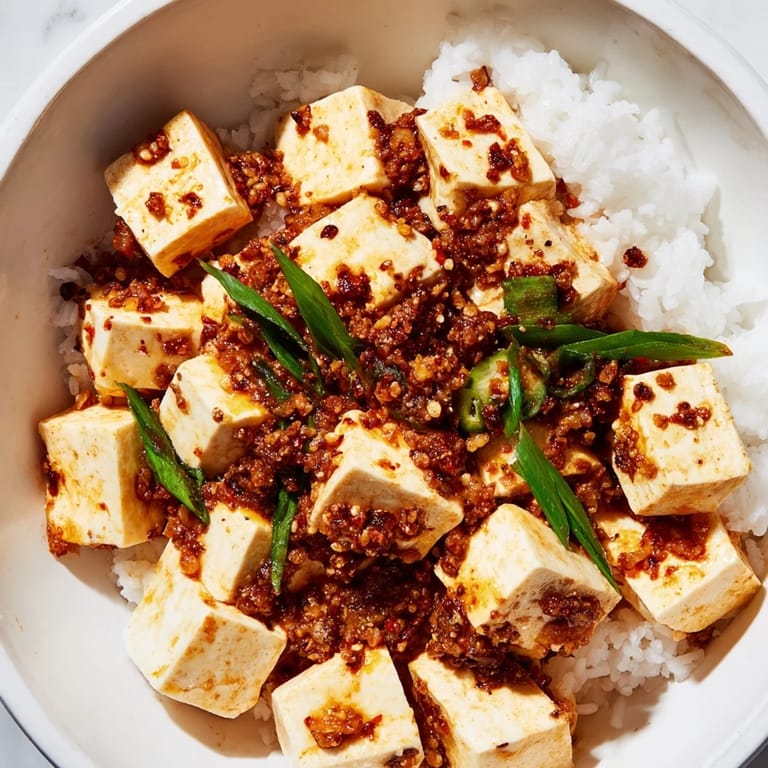 Save
Save There's a particular kind of quiet that happens at the dinner table when someone takes their first bite of mapo tofu—a pause where they process the heat, the numbness, the salty-sweet sauce all at once, followed by that little smile that says they're already planning to ask you to make it again.
The Tingle That Makes It Real
That numbing sensation on your tongue isn't a bug, it's the whole point—Sichuan peppercorns contain hydroxy-alpha-sanshool, which literally tricks your nerve endings into feeling a mild electric current, and once you understand that's what you're chasing, you'll never look at this dish the same way. It's not heat like chili peppers; it's something stranger and more intriguing, and it's worth experimenting with the quantity until you find your perfect balance.
Vegetarian or Meat: Both Versions Shine
I've made this a hundred times both ways, and the truth is that if you use really good vegetarian doubanjiang and vegetable broth, the meat is almost optional—the sauce is so flavorful and layered that adding ground pork feels like a bonus rather than a necessity. The tofu itself is where all the silky luxury comes from, and when it's surrounded by that spicy, numbing liquid, you honestly don't miss anything.
Small Moments That Matter
I once made this dish while my grandmother watched from the kitchen counter, and she kept nodding at the small details—the way I separated the scallion whites and greens, the moment I tasted and adjusted the seasoning, the careful way I poured the cornstarch in. It made me realize that cooking isn't about following steps perfectly; it's about understanding why each step exists and giving it your full attention, even when you're tired or the kitchen is loud.
- Prep everything before you start cooking because this dish moves quickly once the wok gets hot, and having your tofu cubed, aromatics minced, and slurry mixed means you can stay present and responsive.
- Taste the sauce before the tofu goes in and adjust the salt and spice then, because it's much easier to fix it when it's just liquid than when it's clinging to delicate cubes.
- If your sauce seems too thin after you add the cornstarch, cook it another minute or two without stirring—sometimes it needs a little extra heat to thicken properly.
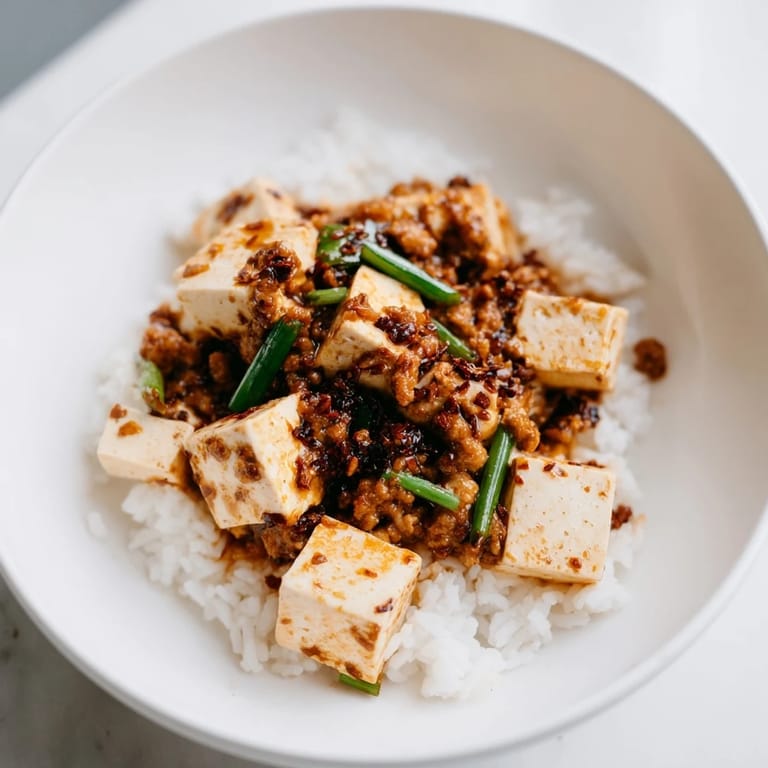 Save
Save Every time I make mapo tofu, I'm grateful for dishes that deliver this much flavor and texture in such a short time—it's the kind of meal that turns an ordinary weeknight into something worth remembering. Serve it hot, enjoy the tingle, and don't be surprised when people ask for seconds.
Recipe FAQs
- → What type of tofu is best for this dish?
Silken or soft tofu works well for a silky texture, while firm tofu holds its shape better during cooking.
- → Can I make it vegetarian?
Yes, omit the meat and use vegetarian chili bean paste along with vegetable broth to keep it plant-based.
- → How spicy is the dish?
The heat comes from fermented chili bean paste and dried red chilies; adjust their amounts to control spiciness.
- → What is the role of Sichuan peppercorns?
They add a unique numbing and citrusy aroma that balances the bold chili flavors.
- → What should I serve it with?
Serve hot over steamed jasmine rice to complement and mellow the spicy, savory sauce.