 Save
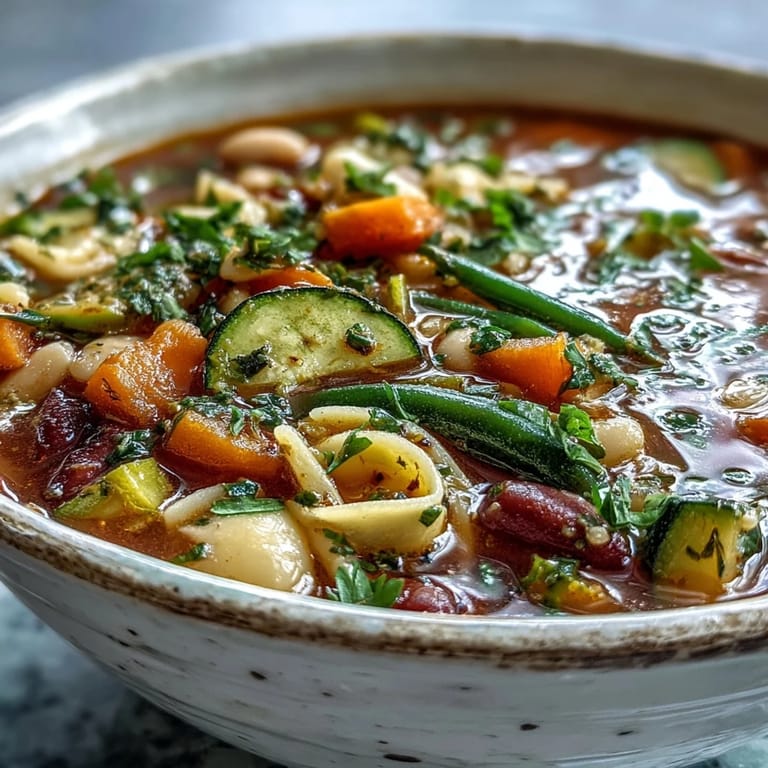
Save My kitchen usually smells like a chaotic mix of whatever I forgot in the fridge but rainy Tuesday afternoons demand something more intentional. This minestrone started as a desperate attempt to clear out a vegetable drawer that was looking a bit sorry for itself. I tossed in wrinkled carrots and the last of a zucchini half expecting a muddy mess. Instead the steam rising from the pot smelled like a sun drenched Italian garden. It was the first time I realized how much magic a single bay leaf could actually pull off.
I remember making a massive batch of this when my sister moved into her drafty new apartment with no heating. We sat on packing boxes passing a single spoon back and forth because we could not find the silverware. The warmth of the kidney beans and the tender ditalini felt like a physical hug. Every vegetable we added seemed to brighten the room just a little bit more. By the time we finished the pot the cold windows did not seem so intimidating.
Ingredients
- Olive Oil: Use a good extra virgin variety to start that base with a peppery depth.
- Aromatics (Onion, Carrots, Celery): This trinity builds the foundation so do not rush the softening process.
- Garlic: Two cloves might seem small but they provide a sharp backbone to the sweetness of the carrots.
- Zucchini and Green Beans: These add a necessary crunch and vibrant color against the red tomato broth.
- Dried Herbs (Oregano, Basil, Thyme): Drying intensifies these flavors making them stand up well to the long simmering time.
- Vegetable Broth: A high quality stock ensures your soup has body rather than tasting like watered down juice.
- Cannellini and Kidney Beans: This duo provides a creamy texture and a punch of plant based protein.
- Ditalini Pasta: These small tubes are perfect because they catch little drops of broth inside every bite.
- Fresh Spinach or Kale: Stirring these in at the very end keeps the greens bright and nutrient dense.
Tired of Takeout? 🥡
Get 10 meals you can make faster than delivery arrives. Seriously.
One email. No spam. Unsubscribe anytime.
Instructions
- Sweat the Trinity:
- Warm the oil until it shimmers then let your onion, carrot, and celery soften until they look translucent. Keep the heat steady so they do not brown too quickly.
- Introduce the Garden:
- Toss in the garlic, zucchini, and green beans, stirring them frequently so they get coated in that flavorful oil. This short sauté helps the vegetables hold their shape later.
- Build the Base:
- Pour in the tomatoes and broth, then sprinkle your herbs and drop the bay leaf into the center like a lucky charm. Ensure the liquid covers everything by at least an inch.
- The First Simmer:
- Lower the flame and let the pot bubble gently under a lid so all those vegetable essences can mingle and deepen. You want the carrots to be tender but not mushy.
- Cook the Pasta:
- Stir in your beans and ditalini, letting them swim uncovered until the pasta is tender but still has a bit of a bite. The pasta will continue to cook slightly even after you turn off the heat.
- Wilt the Greens:
- Fold in the spinach or kale right at the end until the leaves turn a brilliant emerald green. This only takes a minute or two in the hot broth.
- Final Polish:
- Pull out the bay leaf and give the broth a taste, adding a pinch more salt if the flavors need a little boost. Serve it steaming hot with a drizzle of oil on top.
 Save
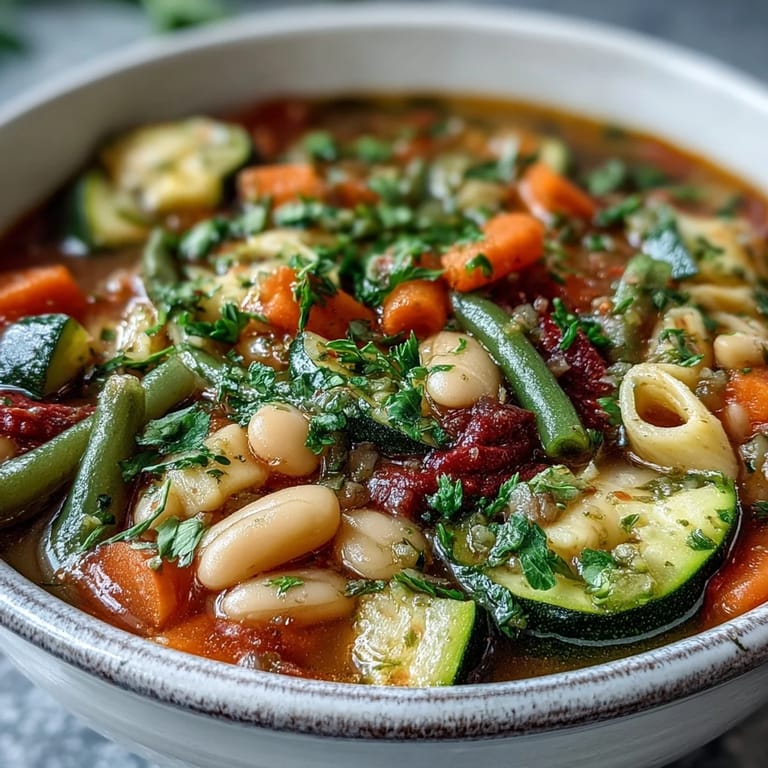
Save There was a winter when this soup was the only thing that could get my daughter to eat her greens without a fuss. I told her the spinach leaves were magic sails for the little pasta boats floating in the bowl. We spent the whole dinner making up stories about where the beans were traveling. Now whenever I see a pot of minestrone on the stove I think of those quiet imaginative nights.
The Art of the Saute
Achieving that perfect flavor starts with patience during the very first step. If you brown the onions too quickly you lose the subtle sweetness that balances the acidic tomatoes. I like to keep the heat medium low and listen for a gentle sizzle rather than a loud pop. This slow start allows the carrots to release their natural sugars into the oil. It sets the stage for a broth that feels complex and layered.
Finding Your Favorite Pasta
While ditalini is the traditional choice I have had great success with small shells or even broken pieces of spaghetti. The key is choosing a shape that is small enough to fit on a spoon alongside the beans and vegetables. I once used large rotini in a pinch and it felt a bit like a vegetable pasta salad in broth. Stick to the smaller shapes to ensure every spoonful is perfectly balanced.
Making It Your Own
This recipe is a canvas for whatever is currently growing in your garden or sitting in your crisper drawer. I often toss in a handful of peas or some chopped cabbage if I want extra texture. Even the parmesan rind can be dropped into the simmering broth for a hidden layer of umami.
- Try adding a squeeze of fresh lemon juice just before serving to brighten the earthy herbs.
- If you want a thicker soup mash a few of the cannellini beans against the side of the pot with your spoon.
- Always serve this with a thick slice of toasted sourdough to soak up the bottom of the bowl.
 Save
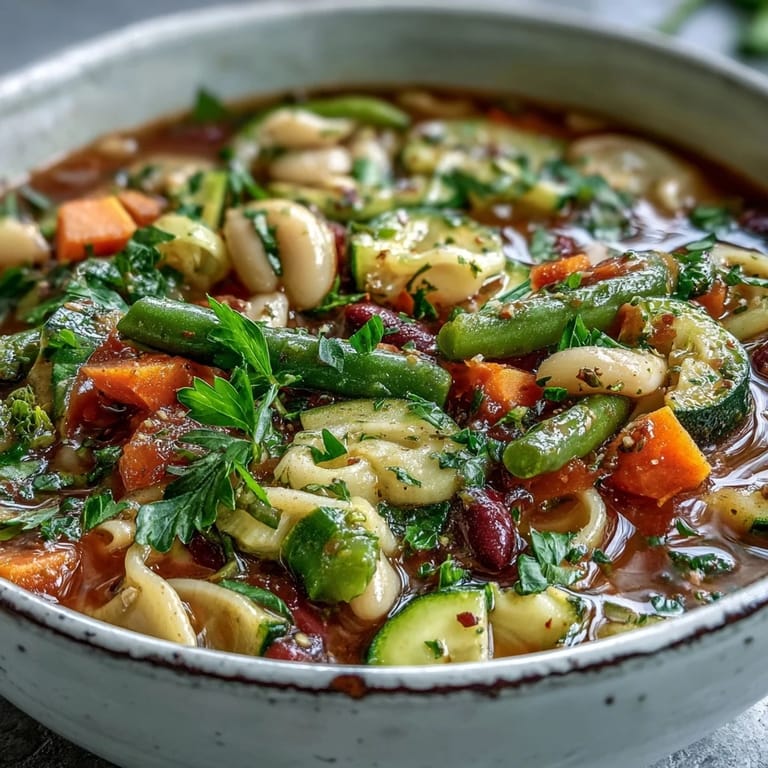
Save This soup is a testament to how simple ingredients can transform into something truly nourishing. I hope every bowl brings you as much comfort as it has brought to my kitchen over the years.
Recipe FAQs
- → What vegetables work best in minestrone?
Traditional minestrone includes onions, carrots, celery, zucchini, green beans, and leafy greens like spinach or kale. You can also add potatoes, cabbage, or peas based on seasonal availability and personal preference.
- → Can I make minestrone ahead of time?
Yes, minestrone actually tastes better the next day as flavors meld. Store in the refrigerator for up to 4 days. Add pasta when reheating to prevent it from becoming too soft, or slightly undercook when initially preparing.
- → What pasta shape is ideal for minestrone?
Small pasta shapes like ditalini, elbow macaroni, or small shells work perfectly because they're proportionate to the vegetables and beans. These shapes hold onto the flavorful broth while maintaining texture.
- → Is minestrone suitable for freezing?
Minestrone freezes beautifully for up to 3 months. For best results, freeze without the pasta and add fresh pasta when reheating. Cool completely before transferring to airtight containers.
- → How do I make minestrone vegan?
Simply omit the Parmesan cheese garnish or use a plant-based alternative. The soup itself is naturally vegan, relying on vegetables, beans, and herbs for its rich flavor profile.
- → What's the difference between minestrone and other vegetable soups?
Minestrone specifically combines vegetables with beans and pasta in a tomato-based broth, while other vegetable soups may use cream, broth-only bases, or different starches like potatoes or rice.