 Save
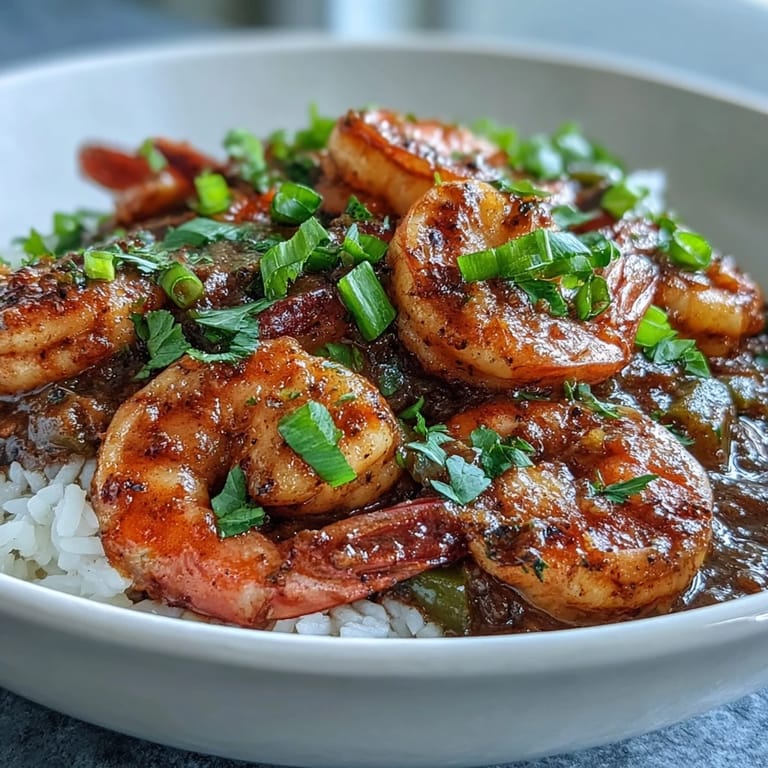
Save My neighbor Diane brought over a pot of étouffée one rainy Thursday, still warm from her stove, and I stood in my doorway spooning it straight from the container like some kind of rice-covered mess. The dark sauce clung to each grain, the shrimp tender and sweet against that deep, almost smoky roux. She laughed at my lack of manners and said that's how you know it's good. I've been making my own version ever since, chasing that same rich, comforting flavor.
I made this for my book club on a cold February night, and we ended up abandoning the discussion entirely to talk about roux technique and whose grandmother made the best gumbo. Someone brought wine that paired terribly with the Cajun spices, but no one cared. We scraped the bottom of the pot clean, and I realized that étouffée has this way of turning a regular dinner into something people remember.
Ingredients
- Vegetable oil and all-purpose flour: These two create the foundation roux, and you need the oil's high smoke point to get that deep chocolate color without burning.
- Onion, green bell pepper, and celery: The holy trinity of Cajun cooking, they add sweetness and backbone to the sauce in a way no other vegetables can replicate.
- Garlic: Minced fresh garlic brings a sharp, aromatic punch that wakes up the entire dish right before the liquid goes in.
- Shrimp or crawfish: I prefer shrimp for easier sourcing, but crawfish will make any Louisiana native nod in approval if you can find them fresh.
- Seafood stock: This amplifies the briny sweetness of the shrimp and ties the whole sauce together with more depth than water ever could.
- Worcestershire sauce: Just a tablespoon adds umami and a subtle tang that rounds out the spice without announcing itself.
- Cajun seasoning and cayenne pepper: These bring the heat and complexity, but start conservative because you can always add more after tasting.
- Bay leaf: It sits quietly in the pot, lending an herbal undertone that you'd miss if it weren't there.
- Cooked white rice: The fluffy, neutral base that soaks up all that rich, spicy sauce and makes every bite complete.
- Green onions and parsley: Freshness and color at the end, they cut through the richness and make the whole bowl look alive.
Tired of Takeout? 🥡
Get 10 meals you can make faster than delivery arrives. Seriously.
One email. No spam. Unsubscribe anytime.
Instructions
- Start the roux:
- Heat the vegetable oil in your heaviest pot over medium heat, then whisk in the flour until it's smooth and paste-like. This is your foundation, so don't rush it.
- Darken the roux:
- Stir constantly with a wooden spoon or whisk, watching it slowly shift from blonde to peanut butter to deep chocolate brown over 15 to 20 minutes. If you see black specks, you've burned it and need to start over, so stay close and keep stirring.
- Cook the vegetables:
- Add the onion, bell pepper, and celery right into the hot roux, listening to them sizzle as they hit the pan. Stir them around for 5 to 7 minutes until they soften and start to blend into the roux.
- Add the garlic:
- Toss in the minced garlic and stir for about a minute, just until the smell fills your kitchen. Don't let it brown or it'll turn bitter.
- Incorporate the stock:
- Pour in the seafood stock gradually, whisking as you go to avoid lumps and watching the roux loosen into a silky, dark sauce. It should come together smoothly if you keep stirring.
- Season and add shrimp:
- Stir in the shrimp, Worcestershire sauce, Cajun seasoning, cayenne, bay leaf, salt, and pepper, making sure everything is coated in that rich base. The shrimp will start to turn pink almost immediately.
- Simmer until thickened:
- Bring it to a gentle simmer, then lower the heat and let it cook uncovered for 20 to 30 minutes, stirring now and then. The sauce will thicken and the flavors will deepen into something that smells like a New Orleans backyard.
- Finish and serve:
- Taste for seasoning, adding more salt or cayenne if needed, then fish out the bay leaf and toss it. Spoon the étouffée over hot rice and scatter green onions and parsley on top.
 Save
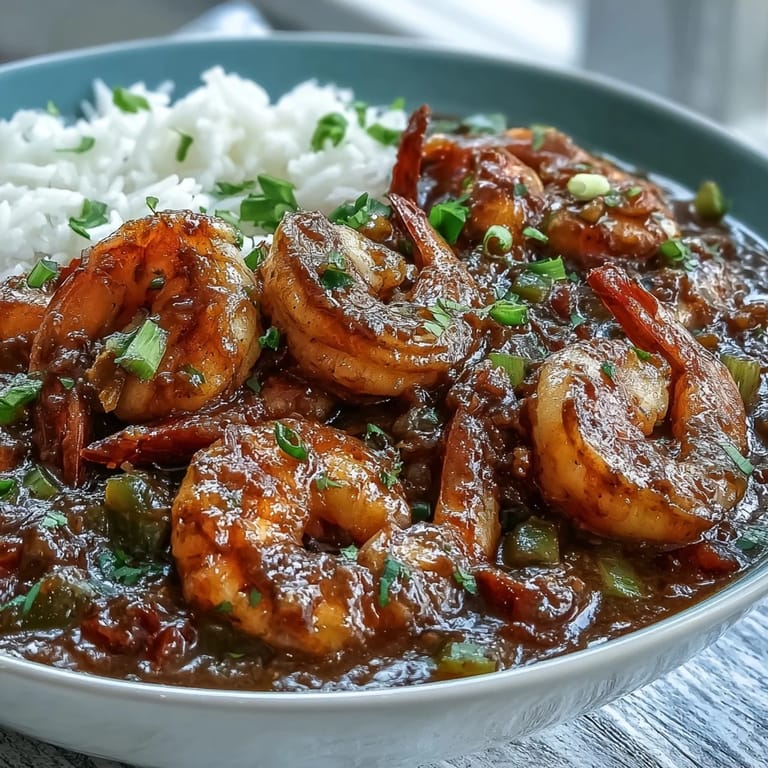
Save My friend Marcus, who grew up in Baton Rouge, tasted my étouffée and paused mid-bite to ask if I'd ever been to Louisiana. I said no, and he shook his head with a grin, saying I got the soul of it right even without the geography. That might be the best compliment I've ever received in my kitchen.
Making It Your Own
If shrimp isn't your thing or you're cooking for someone with a shellfish allergy, this works beautifully with diced chicken thighs, sliced andouille sausage, or even thick-cut mushrooms for a vegetarian spin. I've done a half-shrimp, half-sausage version that added a smoky depth I didn't expect. The roux and the holy trinity do most of the heavy lifting, so the protein is more flexible than you'd think.
Storing and Reheating
Étouffée keeps in the fridge for up to three days in an airtight container, and honestly, it tastes better on day two after the spices have had time to marry. Reheat it gently on the stovetop with a splash of stock or water to loosen the sauce, stirring occasionally so the shrimp don't overcook. I don't recommend freezing it because shrimp can get mealy when thawed, but if you made it with chicken or sausage, it freezes just fine for up to two months.
Serving Suggestions
I always put out a basket of crusty French bread to soak up every last bit of sauce, and sometimes a simple green salad with a sharp vinaigrette to cut through the richness. A cold beer or a crisp white wine works better than anything fancy, and if you're feeling ambitious, a side of coleslaw adds a cool, crunchy contrast.
- Serve it family-style in a big bowl so everyone can help themselves and go back for seconds.
- If you like heat, put a bottle of hot sauce on the table for those who want an extra kick.
- Leftover rice mixed with leftover étouffée makes an incredible quick lunch the next day, heated in the microwave with a damp paper towel over the bowl.
 Save
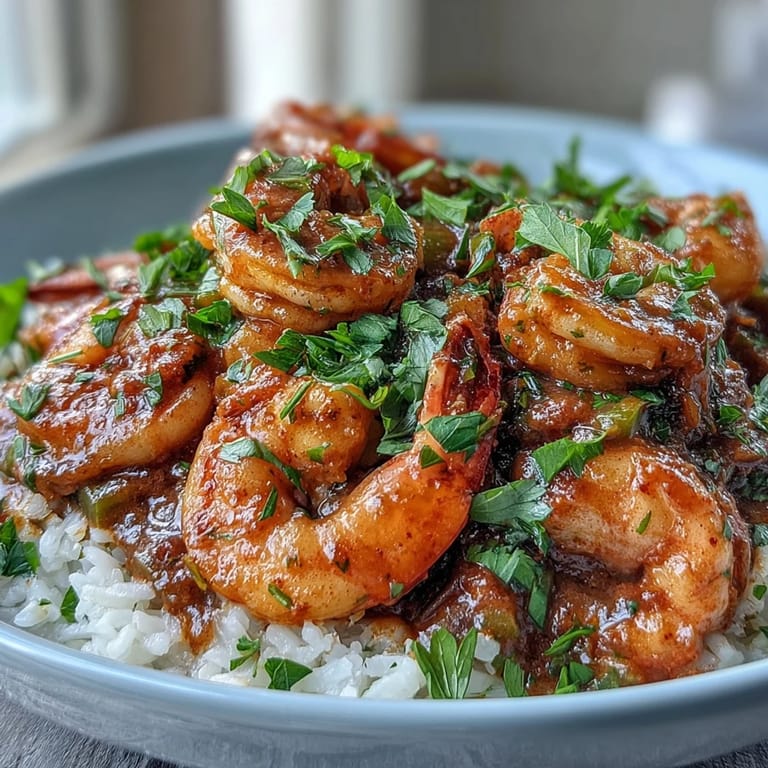
Save There's something about standing over a pot of étouffée, watching the steam rise and smelling that blend of roux and spice, that makes your kitchen feel like it belongs somewhere far away and deeply rooted all at once. I hope it does the same for you.
Recipe FAQs
- → What makes an authentic étouffée?
Authentic étouffée starts with a dark roux cooked to chocolate color, the holy trinity of vegetables (onion, bell pepper, celery), fresh shellfish, and traditional Cajun spices like cayenne and bay leaf.
- → How dark should the roux be?
The roux should cook for 15-20 minutes until it reaches a deep chocolate brown color. Stir constantly to prevent burning—this dark roux provides the signature rich flavor and color.
- → Can I make this with other proteins?
Absolutely. Crawfish is traditional, but you can substitute chicken, andouille sausage, or even mushrooms for a vegetarian version.
- → How long does étouffée keep?
Étouffée actually tastes better the next day as flavors meld. Store in the refrigerator for up to 3 days. Reheat gently over low heat, adding a splash of stock if needed.
- → Is étouffée gluten-free?
Traditional étouffée contains gluten from the flour in the roux. To make it gluten-free, use a certified gluten-free flour blend and ensure your stock is gluten-free.
- → What's the difference between étouffée and gumbo?
Both use roux and the holy trinity, but gumbo typically contains okra or filé powder and has a thinner, soupier consistency. Étouffée has a thicker, velvety sauce that coats the seafood and rice.