 Save
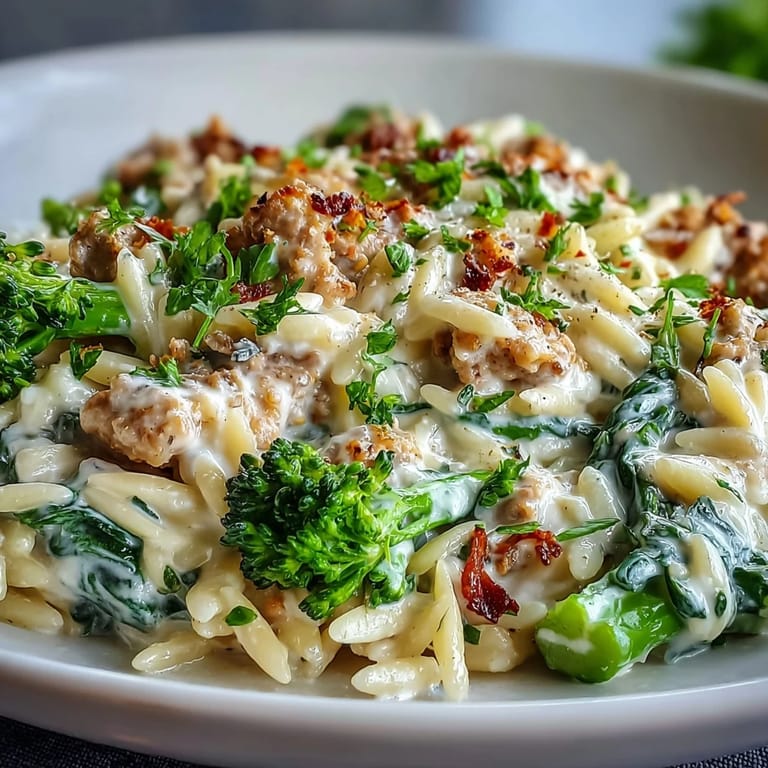
Save One Tuesday evening, I was standing in front of my fridge with absolutely no inspiration, staring at a package of turkey mince and wondering what on earth to do with it. My partner mentioned craving something creamy and comforting, but nothing too heavy, and suddenly it clicked—what if I threw together all the elements of a rotisserie chicken pasta but made it my own? That first bowl, with the turkey melting into the garlicky sauce and the broccoli catching those little pockets of creaminess, changed how I thought about weeknight cooking entirely.
I made this for a friend who was going through a rough patch, and watching her face light up at the first bite reminded me why cooking for people matters so much. She asked for the recipe immediately, and now it's become her go-to when she needs something that feels like a hug in a bowl. That's when I knew this dish had staying power.
Ingredients
- Turkey mince (500 g / 1 lb): Lean turkey gives you that protein-packed base without the greasiness of beef, and it browns quickly if you don't crowd the pan.
- Fresh broccoli florets (350 g / 12 oz): Cut them small so they soften into the sauce rather than staying stubbornly crunchy, and they'll add a gentle vegetable note that balances the richness.
- Yellow onion (1 small, finely chopped): The foundation of flavor here—don't skip the fine chopping because it helps the onion practically melt into the sauce.
- Garlic cloves (3, minced): This is where the magic happens; fresh garlic makes all the difference, and don't even think about using jarred.
- Orzo pasta (250 g / 9 oz): Those little rice-shaped pieces absorb the sauce beautifully and create pockets of creamy goodness throughout.
- Low-sodium chicken broth (700 ml / 3 cups): Low-sodium lets you control the salt level and prevents the dish from becoming overwhelmingly salty as it reduces.
- Whole milk (180 ml / ¾ cup): This is your creaminess without the heaviness; whole milk strikes the perfect balance.
- Parmesan cheese (60 g / ½ cup, finely grated): Finely grated melts more evenly than chunks, and it's worth grating it fresh if you have time.
- Cream cheese (2 tbsp): This creates an impossibly silky sauce and helps everything come together cohesively.
- Olive oil (2 tbsp): Use good quality here because it's one of the primary flavors in the beginning stages.
- Dried thyme and oregano (½ tsp each): These dried herbs add earthiness without overpowering the dish; they're forgiving and reliable.
- Crushed red pepper flakes (¼ tsp, optional): A whisper of heat that you can adjust to your preference or skip entirely.
- Salt and black pepper: Always taste and adjust; seasoning at the end makes a world of difference.
- Fresh parsley and extra parmesan for garnish: The fresh parsley adds brightness that cuts through the richness perfectly.
Tired of Takeout? 🥡
Get 10 meals you can make faster than delivery arrives. Seriously.
One email. No spam. Unsubscribe anytime.
Instructions
- Brown the turkey with purpose:
- Heat your skillet over medium heat until a drop of oil shimmers, then add the turkey mince. Don't stir it immediately—let it sit for a minute so it browns properly instead of just steaming. Break it up with your spoon and cook until there's no pink left, about 5 to 6 minutes.
- Build your flavor foundation:
- Add the chopped onion and let it soften for a couple minutes, then stir in the minced garlic and let it bloom for just 30 seconds until the whole pan smells incredible. This is where patience pays off; don't rush the garlic or it'll taste bitter.
- Embrace the broccoli:
- Toss in your broccoli florets along with the thyme, oregano, and red pepper flakes if you're using them. Stir everything together for about 2 minutes so the broccoli gets a light coating of oil.
- Create the sauce base:
- Add the orzo, pour in the chicken broth and milk, and season generously with salt and pepper. Bring everything to a simmer, then turn the heat down to medium-low so it bubbles gently rather than aggressively.
- Let it cook covered:
- Pop a lid on the skillet and let it simmer for about 10 minutes, stirring occasionally to prevent the orzo from sticking to the bottom. You want the pasta to be tender and the broccoli to be just soft enough that a fork breaks it easily.
- Make it creamy:
- Remove from heat and stir in the cream cheese and parmesan until everything is smooth and silky. If it seems too thin, let it sit for a minute; if too thick, add a splash of milk.
- Let it rest:
- Give it 2 to 3 minutes off the heat to thicken up and let all those flavors settle into each other.
- Finish and serve:
- Scatter fresh parsley and extra parmesan over the top, and serve immediately while it's warm and the parsley is still vibrant.
 Save
Save My sister brought her three kids over for dinner last month and honestly, I wasn't sure if they'd eat something this creamy. But watching them scrape their bowls clean, with little bits of broccoli on their faces, was a reminder that food doesn't have to be complicated to be special. Sometimes the simplest dishes become the ones people remember.
The Secret to Creamy Without Being Heavy
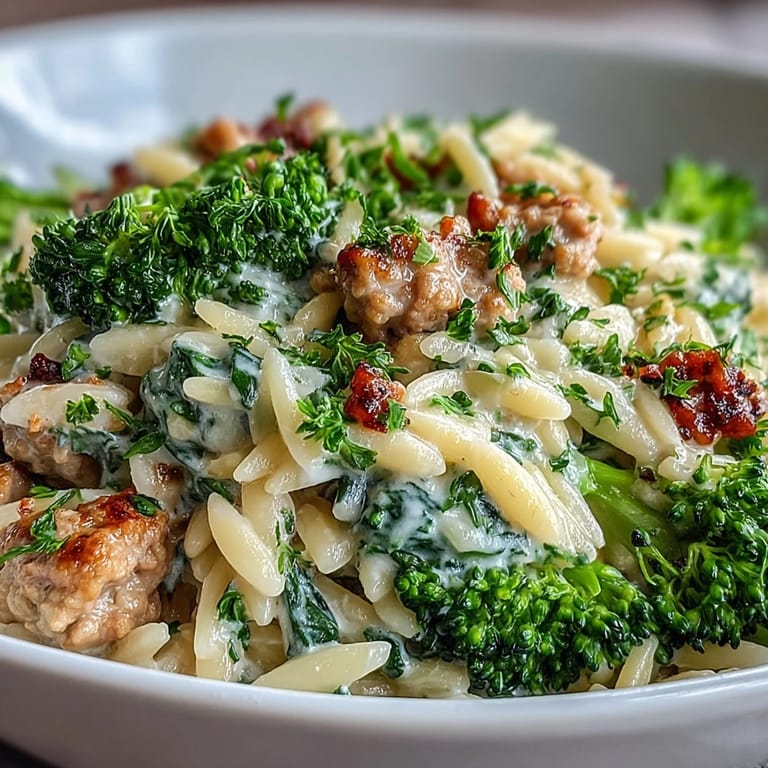
The trick here is using both cream cheese and parmesan rather than heavy cream or extra butter. Cream cheese gives you that luxurious mouthfeel while the parmesan provides the umami depth, and together they create a sauce that tastes indulgent but feels surprisingly light. I learned this by accident when I ran out of heavy cream one night and improvised, and now I never go back.
Timing Is Everything with Orzo
Orzo is finicky about doneness—cook it a minute too long and it gets mushy, but a minute too short and you're chewing on little pasta pebbles. The key is watching it closely during those last few minutes, tasting a piece to check for that tender-but-still-slightly-firm texture. Once you nail this, you'll have it down forever.
Making It Your Own
This recipe is genuinely flexible, and I've made dozens of variations depending on what's in my kitchen or what I'm craving. The structure stays the same, but the flavors can shift based on your mood or what you have on hand. Here are some ways I've played with it:
- Swap the turkey for ground chicken or even ground beef if that's what you've got, though the cooking times might shift slightly.
- Throw a handful of baby spinach in during the last couple minutes for extra vegetables and a subtle earthiness that complements the garlic perfectly.
- Add sun-dried tomatoes or roasted red peppers for a Mediterranean twist that feels completely different but equally satisfying.
 Save
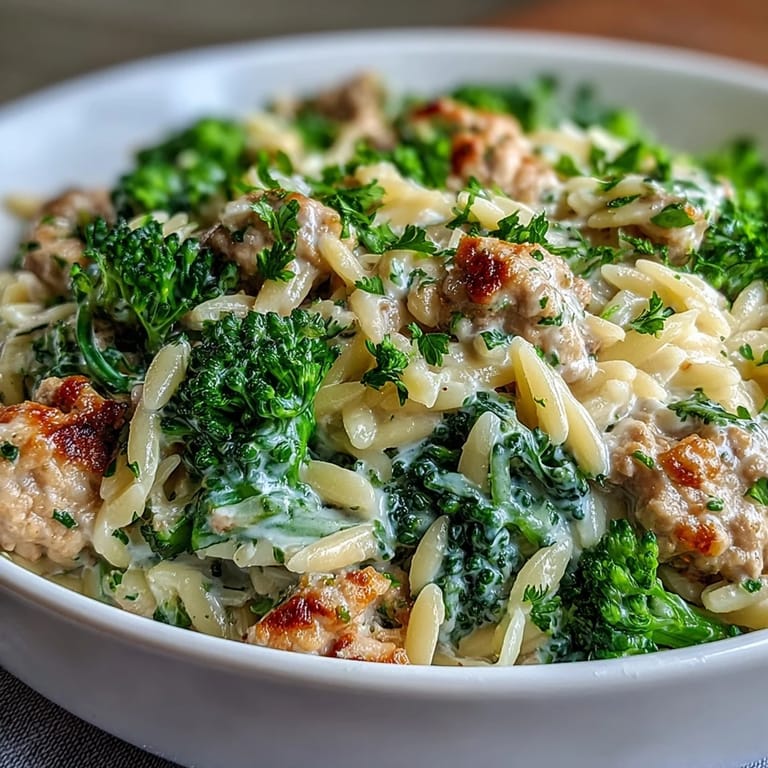
Save This dish has become my answer to the question of what to make when you want something that feels like comfort but doesn't take forever. It's the kind of recipe that sits comfortably in the middle ground between weeknight practicality and genuine deliciousness.
Recipe FAQs
- → Can I use ground chicken instead of turkey?
Yes, ground chicken works beautifully as a substitute for turkey mince. Cook it the same way, breaking it up in the skillet until browned and cooked through.
- → What can I substitute for orzo pasta?
You can use small pasta shapes like acini di pepe, stelline, or even broken spaghetti pieces. Adjust cooking time slightly as smaller pasta cooks faster.
- → How do I store leftovers?
Store cooled leftovers in an airtight container in the refrigerator for up to 3 days. Reheat gently with a splash of milk or broth to restore creaminess.
- → Can I make this vegetarian?
Substitute turkey mince with plant-based ground meat or extra vegetables like mushrooms and bell peppers. Use vegetable broth instead of chicken broth.
- → Why does my sauce look too thick?
The orzo continues absorbing liquid as it stands. If the dish becomes too thick, simply stir in additional warm broth or milk until reaching desired consistency.
- → Can I add other vegetables?
Absolutely. Spinach, peas, diced zucchini, or bell peppers work well. Add heartier vegetables with the broccoli, and quick-cooking greens like spinach in the last 2 minutes.