 Save
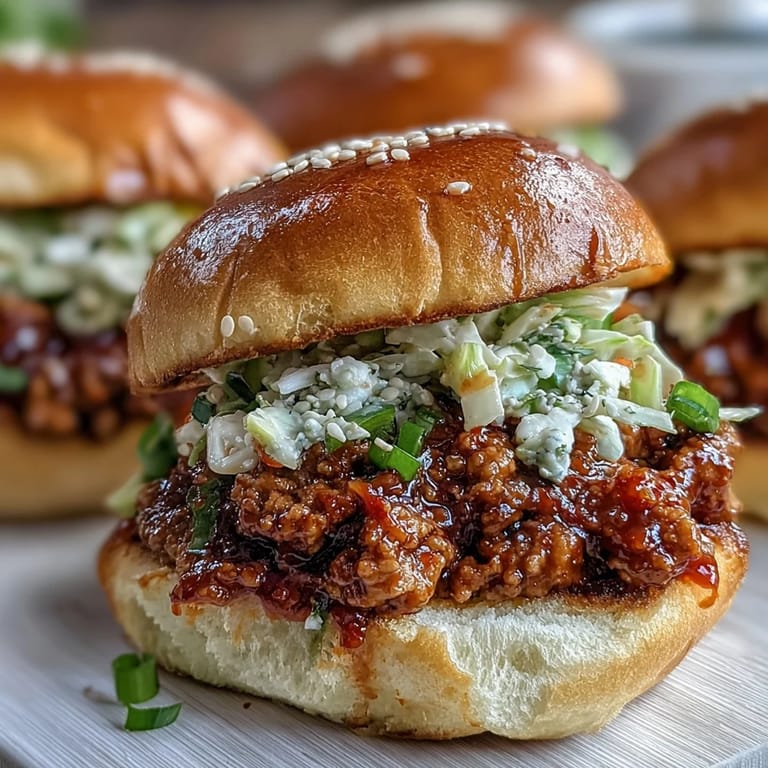
Save My friend Sarah texted me a photo of Korean gochujang sitting in her pantry with a simple question: what do I do with this? Twenty minutes later, I was in her kitchen mixing it into ground turkey, and suddenly her kitchen smelled like a Seoul street vendor had set up shop between her stove and sink. The magic happened when that spicy-sweet filling hit soft slider buns topped with bright, crunchy slaw, and Sarah took one bite and just went quiet. Sometimes the best dishes come from solving someone else's pantry puzzle.
I made these for a casual weeknight gathering, and my neighbor Mike, who usually sticks to his meat-and-potatoes routine, grabbed a second one before anyone else had finished their first. Watching him pair it with the tangy slaw and then nod approvingly told me everything I needed to know about whether this fusion thing actually works. Food that converts skeptics into fans is worth making again and again.
Ingredients
- Ground turkey: Lean but needs that sesame oil and gochujang to shine, so don't skimp on flavor building.
- Gochujang (Korean chili paste): This is the soul of the whole thing, bringing heat and umami that regular hot sauce won't touch.
- Soy sauce: The savory backbone that ties the sweet and spicy together into something cohesive.
- Brown sugar: Creates a subtle sweetness that balances the chili paste without making it taste like dessert.
- Rice vinegar: The secret weapon that adds brightness and cuts through richness in both the filling and slaw.
- Sesame oil: Just a teaspoon goes a long way, adding toasted depth and a whisper of nuttiness.
- Fresh ginger: Grate it right before using so you get those sharp, spicy notes that wake up your palate.
- Green cabbage: Shred it thin so it stays crunchy and soaks up the slaw dressing without getting soggy.
- Mayonnaise: Binds the slaw together and softens the sharpness of the vinegar just enough.
- Slider buns: Go for soft ones that won't overpower the filling, and toasting them adds a subtle defense against sogginess.
Tired of Takeout? 🥡
Get 10 meals you can make faster than delivery arrives. Seriously.
One email. No spam. Unsubscribe anytime.
Instructions
- Prepare the slaw ahead:
- Toss your shredded cabbage, carrots, and green onions in a bowl, then dress them with the rice vinegar, mayo, sugar, sesame oil, salt, and pepper. Letting it sit in the fridge while you cook the turkey means the vegetables soften slightly and the flavors marry together beautifully.
- Start with the aromatic base:
- Heat oil in a large skillet over medium heat and add your diced onion, letting it soften for about three minutes until it turns translucent and sweet. The moment you add the garlic and ginger, the kitchen transforms into something that smells like Korean comfort food.
- Brown the turkey properly:
- Add your ground turkey and break it up with a spoon as it cooks, about five to seven minutes, until there's no pink left and it's starting to stick slightly to the bottom of the pan. That's when you know it's ready for the sauce.
- Build the sauce layer:
- Pour in your gochujang, soy sauce, brown sugar, rice vinegar, ketchup, and sesame oil all at once, stirring constantly so the paste breaks down and coats every piece of turkey. After three to four minutes of gentle simmering, the mixture should look glossy and slightly thickened, clinging to the turkey like a delicious glaze.
- Finish and assemble:
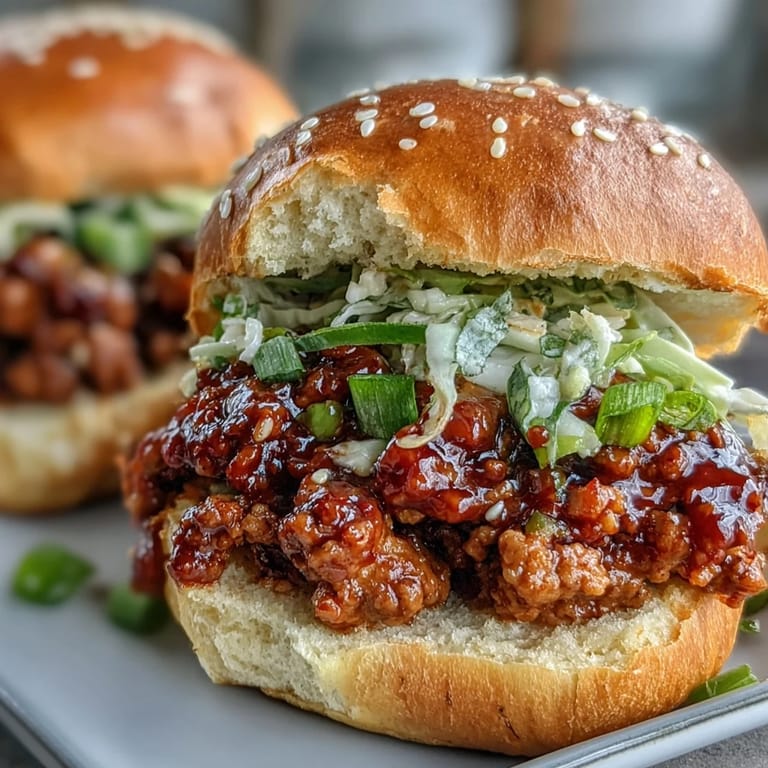
- Stir in your fresh green onions right at the end so they keep some crunch and fresh flavor, then toast your slider buns if you want them to have a slight crust that holds up to the filling. Pile the turkey mixture generously onto each bottom bun, top with a generous handful of slaw, maybe a sprinkle of sesame seeds, and cap it off with the top bun.
 Save
Save My daughter, who was skeptical about anything spicy, took one bite and immediately asked if I could make these every week. There's something about the way a kid's face lights up when fusion food actually works that reminds you why you bother experimenting in the kitchen at all.
The Sweet-Spicy Balance
The magic of these sliders lives in the tension between heat and sweetness, something I didn't fully appreciate until I tried them without the brown sugar. That sweetness isn't there to make it dessert-like; it's there to round out the gochujang's sharper edges and let you taste all the other flavors instead of just mouth-burning heat. Think of it like seasoning with a light hand instead of swinging for the fences.
Why the Slaw Matters
The slaw isn't just a topping, it's the entire reason these sliders don't feel heavy. When you bite through that crunchy, tangy cabbage and carrots right after the rich, spiced turkey, something shifts in your mouth that makes you want another bite immediately. It's the contrast between textures and temperatures that keeps these interesting, not just the flavors alone.
Serving and Storage Smarts
These taste best eaten immediately, but if you're meal prepping, store the turkey filling and slaw separately in airtight containers for up to three days. The turkey actually gets more flavorful as it sits, though the slaw will soften slightly if kept too long. Assemble them fresh when you're ready to eat, or the buns will start absorbing moisture and lose their structure.
- Toast your buns right before serving so they're still warm and have a slight crust that resists sogginess.
- If making for a crowd, set up a simple assembly line with the filling, slaw, and buns so people can build their own and customize the toppings.
- Serve with pickled vegetables or sweet potato fries on the side to echo the Asian fusion theme and add another layer of flavor complexity.
 Save
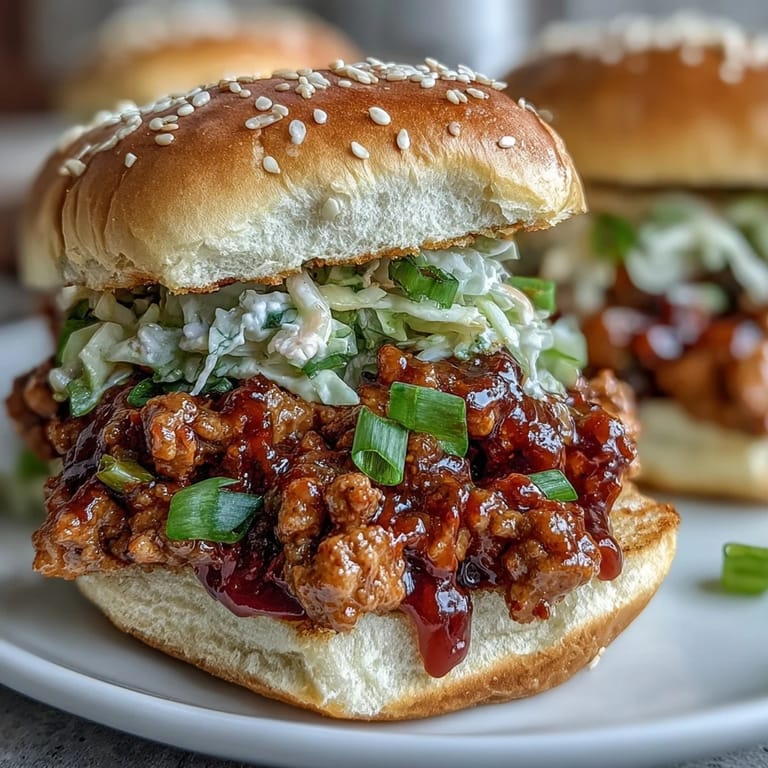
Save These Korean turkey sloppy joe sliders prove that comfort food doesn't need to stay in one lane. They're the kind of dish that makes people ask for the recipe, which is really all you need to know.
Recipe FAQs
- → What makes these sliders Korean-style?
The Korean flavor comes from gochujang (Korean chili paste), soy sauce, fresh ginger, garlic, and toasted sesame oil in the turkey mixture. These ingredients create that signature sweet-spicy-savory balance found in Korean cuisine.
- → Can I make these sliders ahead of time?
Yes, prepare the turkey filling and slaw up to 24 hours in advance. Store them separately in airtight containers in the refrigerator. Reheat the turkey gently before assembling and serving on fresh toasted buns.
- → What can I substitute for gochujang?
If unavailable, mix sriracha with miso paste or use chili garlic sauce mixed with a touch of brown sugar. For a milder version, substitute with additional ketchup and a pinch of red pepper flakes.
- → How spicy are these sliders?
These have a medium heat level from the gochujang. They're spicy enough to have a kick but not overwhelmingly hot. Adjust by adding more or less gochujang, or include sriracha for extra heat as suggested in the notes.
- → What sides pair well with these sliders?
Sweet potato fries complement the sweet-spicy flavors perfectly. Pickled vegetables, kimchi, or a simple Asian-inspired cucumber salad also work well. For a lighter option, serve with mixed greens dressed with sesame vinaigrette.
- → Can I use regular-sized buns instead of sliders?
Absolutely. Using regular hamburger buns will yield approximately 4 larger sandwiches instead of 8 sliders. You may need slightly more slaw per sandwich to maintain the proper topping-to-meat ratio.