 Save
Save There's a particular Thursday evening I keep coming back to, when my partner walked through the door during a particularly hectic work week and the smell of roasting asparagus and searing chicken filled our tiny kitchen. I'd been experimenting with ways to make weeknight dinners feel less like an obligation and more like something worth looking forward to, and this dish somehow bridged that gap between impressive and genuinely doable. The lemon brightness cuts through the creaminess in a way that makes you feel nourished rather than heavy, even though there's butter and cream involved. I remember thinking halfway through cooking that this was the kind of meal that tastes like you spent all day in the kitchen when really you're wrapping up in under an hour.
I made this for a small dinner party where everyone arrived hungry and slightly skeptical about yet another pasta dish, but something clicked when we all sat down. The way the roasted asparagus held its texture and that golden, crispy cheese edge caught everyone's attention before they even tasted it. One guest asked for the recipe before dessert arrived, which felt like the ultimate compliment in that moment.
Ingredients
- Asparagus, about 400 g: Look for bunches with firm, tight tips and a vibrant color because they'll hold their shape better during roasting than thinner, more delicate spears.
- Asiago and Parmesan cheese, 1/3 cup each: Grating these fresh rather than using pre-shredded makes a noticeable difference in how well they melt and caramelize on the asparagus.
- Lemon zest, 1/2 teaspoon: This tiny amount creates an aromatic layer that hints at brightness without making the dish taste sour or one-dimensional.
- Boneless, skinless chicken breasts, 400 g total: Pound them to an even thickness if you have a moment so they cook through at the same rate without drying out the edges.
- Garlic powder for the chicken, 1/2 teaspoon: This seasons the chicken itself rather than just the sauce, giving you deeper flavor in every bite of meat.
- Penne or rigatoni pasta, 350 g: The ridged shape actually catches and holds the creamy sauce better than smooth pasta would, which matters more than you'd think.
- Heavy cream and chicken broth, 1/2 cup each: Using both rather than just cream alone keeps the sauce from feeling too heavy while still giving you that luxurious texture.
- Fresh lemon juice, about 2 tablespoons: Squeeze this at the very end because the heat can mellow its brightness, and you want that final pop of flavor.
- Fresh parsley, 2 tablespoons optional: If you use it, chop just before serving so it stays vibrant green and doesn't turn dark and oxidized.
Tired of Takeout? 🥡
Get 10 meals you can make faster than delivery arrives. Seriously.
One email. No spam. Unsubscribe anytime.
Instructions
- Get your oven ready and prep the asparagus:
- Preheat to 220°C (425°F) and line a baking sheet with parchment paper while you trim those woody asparagus ends, which snap naturally when you bend them gently. Toss the trimmed spears with olive oil, salt, pepper, both cheeses, and lemon zest, then spread them out so they're not crowded and can actually develop that golden, crispy edge.
- Roast until golden and tender:
- This takes 12 to 15 minutes depending on the thickness of your asparagus, and you'll know it's ready when the tips start to look slightly caramelized and the cheese has melted into the spears. Once they come out, let them cool just enough to handle, then chop into 2 to 3 cm pieces so they mix into the pasta without disappearing.
- Season and sear the chicken:
- Pat your chicken breasts dry, then season all over with salt, pepper, and garlic powder to create a flavorful crust. Heat olive oil in a large skillet over medium-high and sear for 4 to 5 minutes per side until golden and cooked through, then rest it on a plate for 5 minutes before slicing, which keeps it tender instead of tough.
- Cook the pasta to al dente:
- While the chicken rests, get a large pot of salted water boiling and cook your pasta until it has just a slight bite to it, then reserve 1/2 cup of that starchy pasta water before draining. This pasta water becomes your secret weapon for adjusting the sauce consistency later.
- Build your creamy lemon sauce:
- In the same skillet where you cooked the chicken, melt butter over medium heat and sauté minced garlic for about a minute until the kitchen smells amazing. Pour in chicken broth and heavy cream, simmer for 2 to 3 minutes until it starts to thicken slightly, then stir in Parmesan until the sauce is smooth and creamy.
- Combine pasta with sauce:
- Add your drained pasta to the sauce along with lemon juice and half of that reserved pasta water, tossing constantly so every strand gets coated. If it looks too thick, add more pasta water a splash at a time until you have a silky sauce that clings to the pasta without pooling at the bottom.
- Gently fold in chicken and asparagus:
- Add your sliced chicken and chopped asparagus pieces, stirring gently to warm everything through without breaking apart the delicate roasted asparagus tips. Taste and adjust the salt and pepper, remembering that the Parmesan already brings saltiness.
- Plate while it's hot:
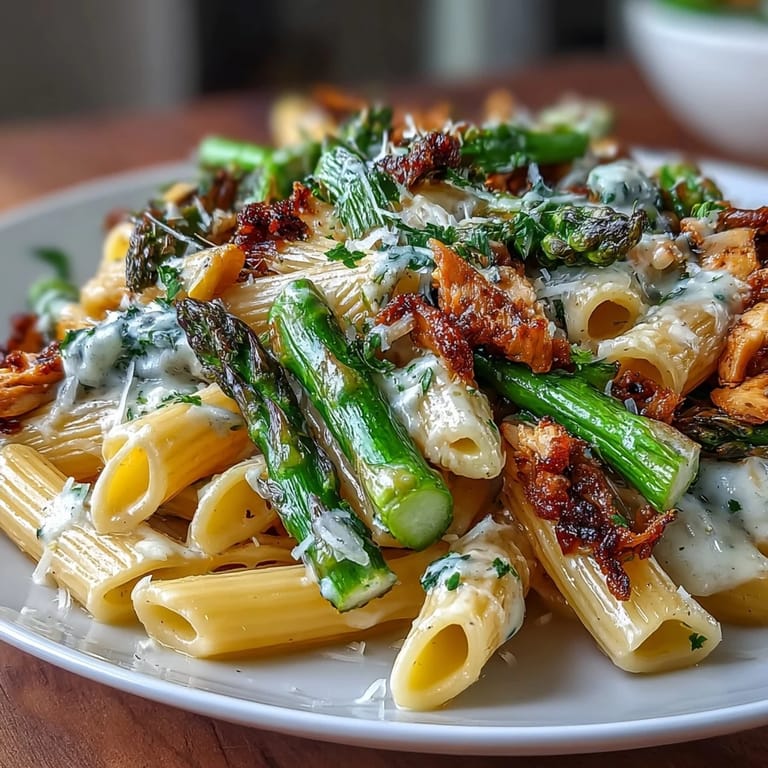
- Serve immediately in warm bowls, garnishing with fresh parsley and extra Parmesan if you'd like, because this dish really shines when it gets to the table at peak temperature.
 Save
Save What made this dish stick with me was realizing that good food doesn't have to be complicated or take forever to show someone you care about feeding them well. That Thursday night turned into a regular request, and I've made small tweaks each time, but the core of what makes it work has stayed the same.
Why This Combination Works
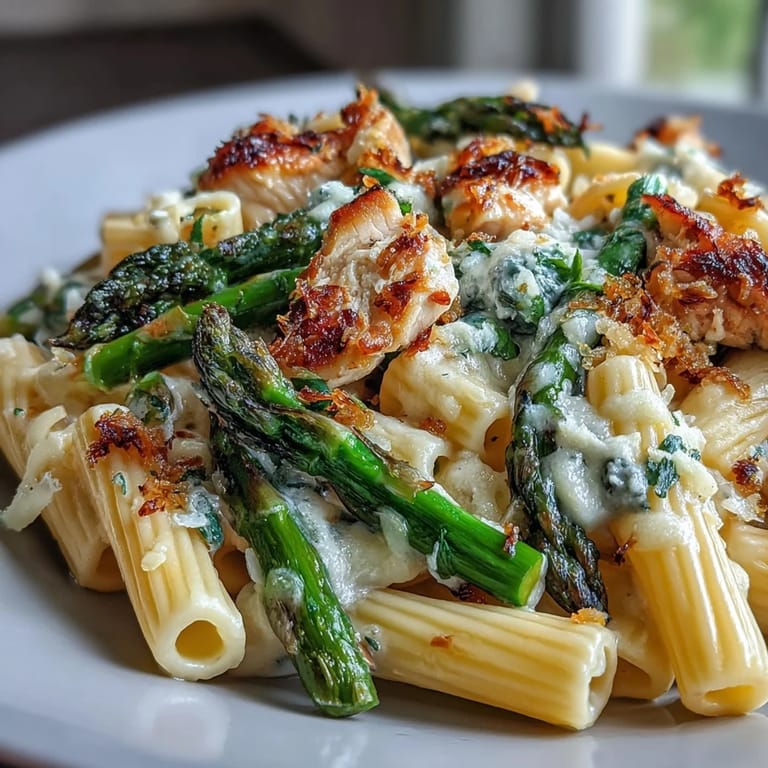
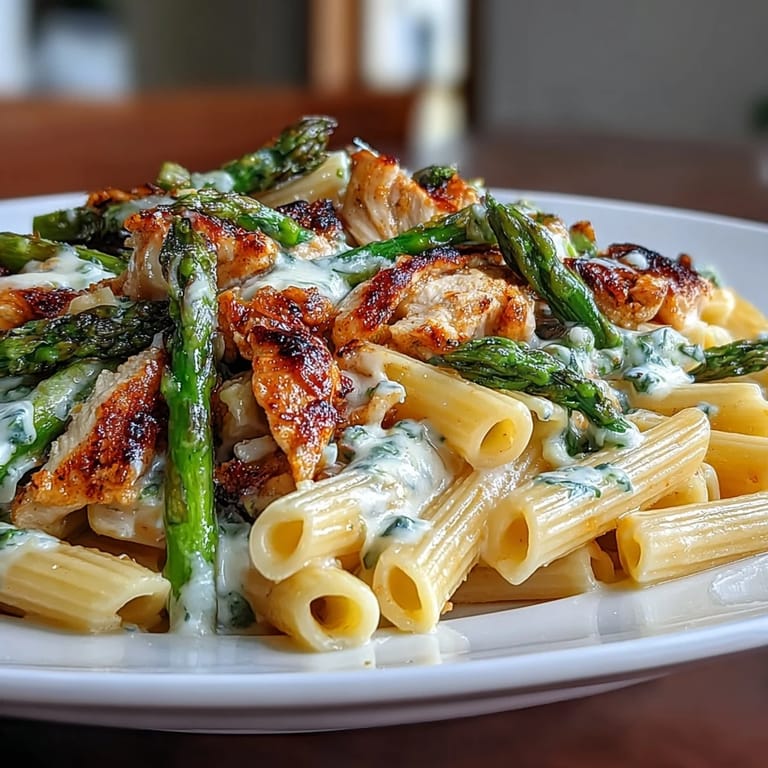
The magic happens when you layer textures and flavors in a way that doesn't compete with itself. The crispy, caramelized cheese on the asparagus plays against the silky creaminess of the sauce, and the lemon brightness keeps everything from feeling heavy or one-note. The chicken absorbs all these flavors without overpowering them, serving as the anchor that makes this feel like a real, balanced dinner rather than a side dish with cream.
Timing and Rhythm in the Kitchen
The beauty of this recipe is that almost everything can happen simultaneously once you start, which means you're not standing around waiting between steps. I usually get the asparagus in the oven first, then start heating my pasta water while the asparagus roasts. By the time the asparagus is done, the water is boiling and I'm ready to sear the chicken, so everything comes together at roughly the same moment with minimal scrambling.
Customizing to Your Mood and Pantry
This dish is more adaptable than it first appears, and I've learned that flexibility in cooking is sometimes more valuable than following rules exactly. If you don't have Asiago, extra Parmesan works just fine, or you could add a pinch of chili flakes if you want gentle heat moving through the dish. Some nights I use white wine instead of some of the chicken broth, and other times I've added sun-dried tomatoes or caramelized onions when I had them sitting around.
- Swap the asparagus for green beans, broccolini, or even zucchini if that's what you have and want to roast with those cheeses.
- A small handful of fresh basil mixed in at the end brings an herbal quality that pairs beautifully with the lemon and cream.
- If cream isn't your thing, use more chicken broth and a bit of mascarpone or ricotta for creaminess with a lighter feel.
 Save
Save This is the kind of meal that reminds you why home cooking matters, even on ordinary weeknights when everyone's tired and nobody's up for a project. Serve it with a crisp white wine and crusty bread to soak up the sauce, and you've made something that tastes like you care without the stress.
Recipe FAQs
- → Can I make this dish ahead of time?
Yes, roast the asparagus and cook the chicken up to a day in advance. Store them separately in the refrigerator. Make the sauce fresh when ready to serve, then combine everything with hot pasta for best texture and flavor.
- → What pasta shapes work best?
Penne and rigatoni are ideal because their ridges and tubes catch the creamy sauce. Fusilli, farfalle, or ziti also work well. Avoid long strands like spaghetti—the sauce and ingredients need pasta with more surface area to cling to.
- → How do I get the asparagus crispy?
Spread the asparagus in a single layer on the baking sheet without overcrowding. The high oven temperature (425°F/220°C) and direct contact with the hot pan creates golden, caramelized edges while the cheese forms a delicate crust.
- → Can I substitute the heavy cream?
Half-and-half works but yields a thinner sauce. For a lighter version, use whole milk mixed with a tablespoon of flour or cornstarch. Coconut cream adds richness but will subtly alter the flavor profile.
- → How do I prevent the sauce from separating?
Keep the heat at medium when making the sauce—high heat can cause dairy to curdle. Stir continuously when adding the cheese, and remove from heat once it melts. The lemon juice should be added off the heat for the smoothest result.
- → What vegetables can I use instead of asparagus?
Broccoli florets, green beans, or Brussels sprouts halved work beautifully with the same roasting method. Adjust roasting time slightly—broccoli may need a few extra minutes while green beans cook faster.