 Save
Save The first spoonful of real French onion soup I ever tasted was in a cramped bistro in Lyon, where the owner refused to serve it any way but scorching hot, with cheese stretched so far it landed on my lap. I came home determined to recreate that moment in my own kitchen, armed with nothing but a heavy Dutch oven and more onions than seemed reasonable. What I learned that evening, standing over a pot of slowly browning onions, is that this soup teaches you patience whether you want the lesson or not. The smell alone, sweet and savory and impossibly deep, is worth the wait. It's become the dish I make when I need to slow down and remember that good things rarely happen quickly.
I made this for a small dinner party once, during a cold snap in February, and served it in mismatched oven-safe bowls I'd collected over the years. Everyone went quiet after the first bite, which is the highest compliment a cook can get. One friend, who claimed she didn't like onions, scraped her bowl clean and asked for the recipe on her way out the door. That night, I realized this soup has a way of converting skeptics and turning a simple meal into a memory people carry with them.
Ingredients
- Yellow onions: The backbone of the entire dish, they need to be sliced thin and cooked low and slow until they collapse into sweet, jammy strands that coat your spoon.
- Butter and olive oil: The combination prevents burning while adding richness, and I learned the hard way that skipping the oil means the butter will scorch before the onions are done.
- Sugar: Just a teaspoon helps jumpstart the caramelization, though the onions have enough natural sugar to do the work if you're patient.
- Garlic: Added late so it perfumes the pot without turning bitter, which happens faster than you think.
- Beef broth: The soul of the soup, it should be good quality because there's nowhere for a weak broth to hide here.
- White wine: Deglazes all those beautiful browned bits stuck to the bottom and adds a subtle acidity that balances the sweetness.
- Thyme and bay leaves: Earthy and aromatic, they steep into the broth and make the whole pot smell like a French countryside kitchen.
- Worcestershire sauce: A sneaky umami boost that deepens the flavor without announcing itself.
- Baguette: Slightly stale is actually better because it holds up under the cheese and broth without dissolving into mush.
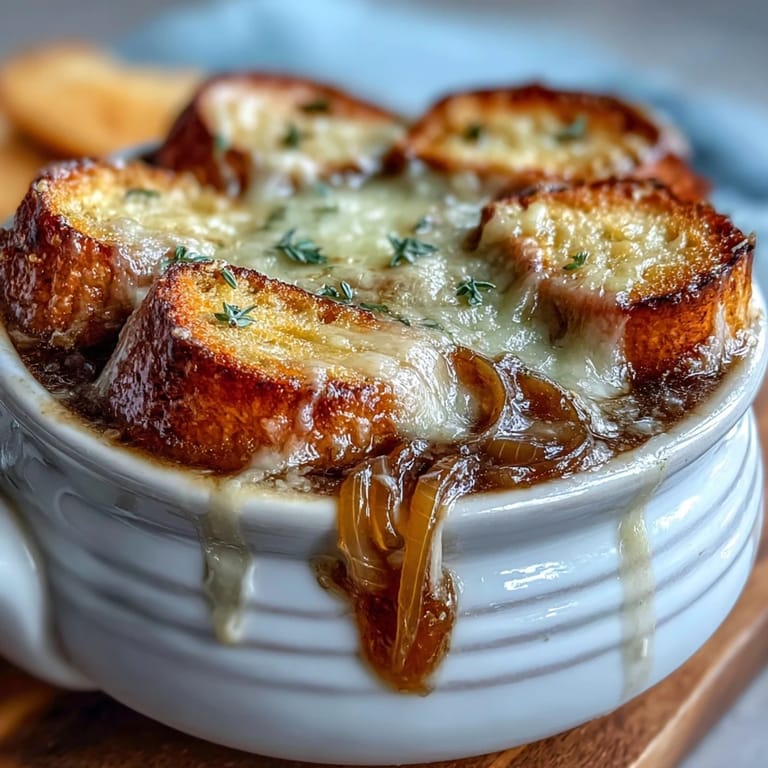
- Gruyere cheese: Nutty, melty, and the traditional choice for a reason, it turns golden and bubbly under the broiler in a way that makes you want to take a picture before you eat.
Tired of Takeout? 🥡
Get 10 meals you can make faster than delivery arrives. Seriously.
One email. No spam. Unsubscribe anytime.
Instructions
- Start the caramelization:
- Melt the butter with olive oil in your Dutch oven over medium heat, then add the sliced onions and sugar. Stir them every few minutes, letting them slowly collapse and turn a rich amber color over the course of 40 to 45 minutes, resisting the urge to crank up the heat.
- Add the garlic:
- Toss in the minced garlic and stir for just a minute until the kitchen smells like a French bistro. Any longer and it'll burn, turning bitter and sharp.
- Deglaze with wine:
- Pour in the white wine and use a wooden spoon to scrape up all the caramelized bits stuck to the bottom of the pot. Let it simmer for 2 to 3 minutes until the wine reduces slightly and loses its raw edge.
- Build the broth:
- Add the beef broth, thyme, bay leaves, and Worcestershire sauce, then bring everything to a gentle simmer. Reduce the heat and let it cook uncovered for 20 to 30 minutes, allowing the flavors to meld and deepen, then season with salt and pepper and fish out the bay leaves.
- Toast the bread:
- While the soup simmers, preheat your broiler and arrange the baguette slices on a baking sheet. Toast them under the broiler for 1 to 2 minutes per side until golden and crisp, watching closely so they don't burn.
- Assemble the bowls:
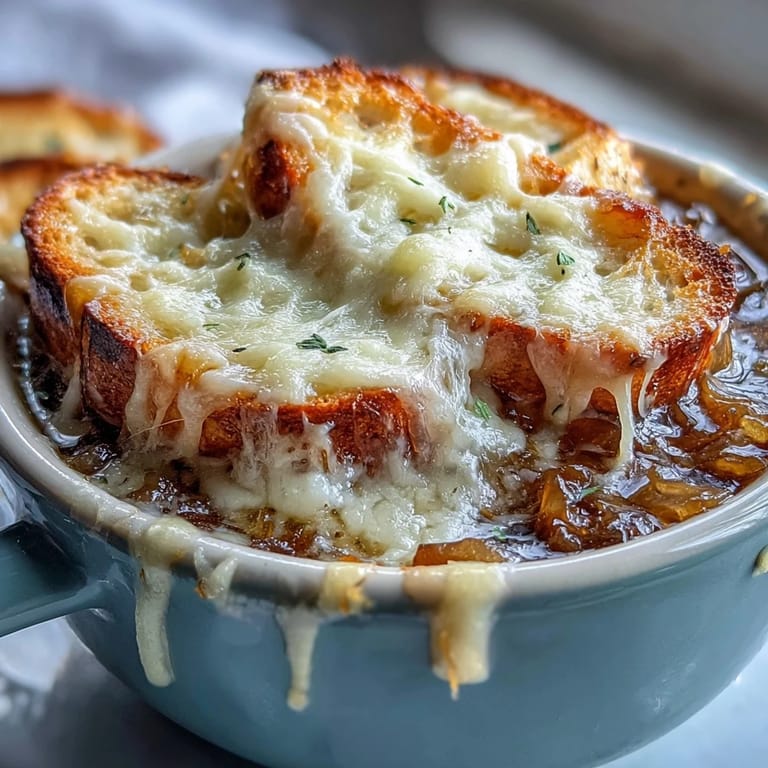
- Ladle the hot soup into oven-safe bowls, top each with a toasted baguette slice, and pile on a generous handful of grated Gruyere and Parmesan if you're using it. The more cheese, the better the crust.
- Broil until bubbly:
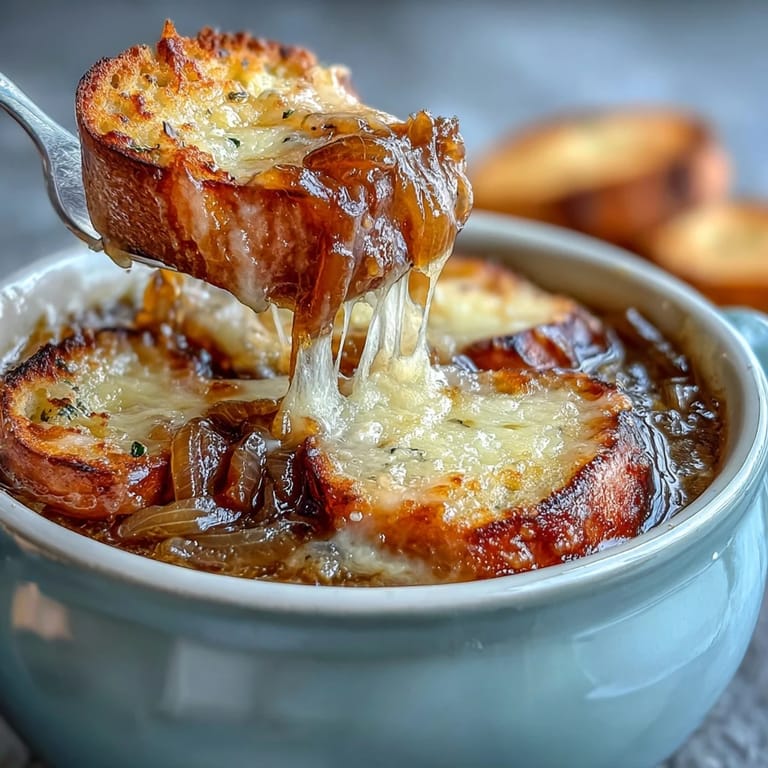
- Set the bowls on a baking sheet and slide them under the broiler for 2 to 4 minutes, watching through the oven door as the cheese melts, bubbles, and turns golden brown. Serve immediately, while the cheese is still stretching and the soup is piping hot.
 Save
Save There's a moment when you set a bowl of this soup in front of someone and they pause, spoon hovering, taking in the smell and the sight of that golden cheese crust. It's happened at my table more times than I can count, and it never stops feeling like a small victory. This soup has a way of turning an ordinary weeknight into something worth lingering over, and I think that's what comfort food is really supposed to do.
Making It Your Own
I've made this with vegetable broth when cooking for vegetarian friends, and it still delivers that rich, savory depth as long as you use a good quality broth and maybe add a splash of soy sauce for extra umami. Some nights I've stirred in a little sherry at the end, which adds a nutty complexity that feels fancy without any extra effort. If you can't find Gruyere, Swiss or Emmental work beautifully, and I've even used a mix of whatever hard cheeses I had on hand when the grocery store let me down.
Serving Suggestions
This soup is rich and filling, so I like to serve it with a crisp green salad dressed simply with lemon and olive oil to cut through the richness. A glass of white Burgundy or a light Chardonnay is traditional, though I've also enjoyed it with a dry cider on cold nights when I wanted something a little less formal. Leftovers reheat beautifully on the stovetop, though you'll want to make fresh cheese toasts since the broiled ones don't keep well.
Storage and Reheating
The soup itself keeps for up to four days in the fridge and actually tastes better the next day after the flavors have had time to marry. I store it in a large container and reheat individual portions on the stove, adding a splash of broth if it's thickened up too much. The toasted baguette and cheese topping should always be made fresh, because reheated cheese turns rubbery and sad, and nobody wants that.
- Let the soup cool completely before refrigerating to avoid condensation that waters it down.
- Freeze the soup without the bread and cheese for up to three months, then thaw and top fresh when ready to serve.
- If reheating frozen soup, do it gently on the stovetop rather than the microwave for the best texture.
 Save
Save This soup has taught me that the best meals aren't always the quickest, and that a little patience in the kitchen can yield something far greater than the sum of its parts. I hope it brings as much warmth to your table as it has to mine.
Recipe FAQs
- → How long does it take to properly caramelize the onions?
Properly caramelizing the onions takes 40-45 minutes over medium heat with frequent stirring. This slow process develops the deep, sweet flavor that makes French onion soup so distinctive. Don't rush this step—it's the foundation of the dish.
- → Can I make this vegetarian?
Yes, simply substitute vegetable broth for beef broth and use a vegetarian Worcestershire sauce or omit it entirely. The caramelized onions provide plenty of umami flavor even without meat-based broth.
- → What cheese works best if I can't find Gruyère?
Swiss cheese or Emmental are excellent substitutes with similar melting properties and nutty flavor. A combination of mozzarella and Parmesan also works well for a melty, flavorful topping.
- → Do I need oven-safe bowls?
Yes, oven-safe bowls are essential for broiling the cheese topping directly on the soup. Look for ceramic or stoneware bowls that can withstand high broiler temperatures without cracking.
- → Can I prepare this ahead of time?
The soup base can be made up to 3 days ahead and refrigerated. When ready to serve, reheat the soup, toast the bread, and add the cheese topping just before broiling for the best texture.
- → What wine pairs well with this soup?
A crisp white Burgundy or Chablis complements the rich, savory flavors beautifully. The wine used for cooking can also be served alongside the meal for a cohesive pairing.