 Save
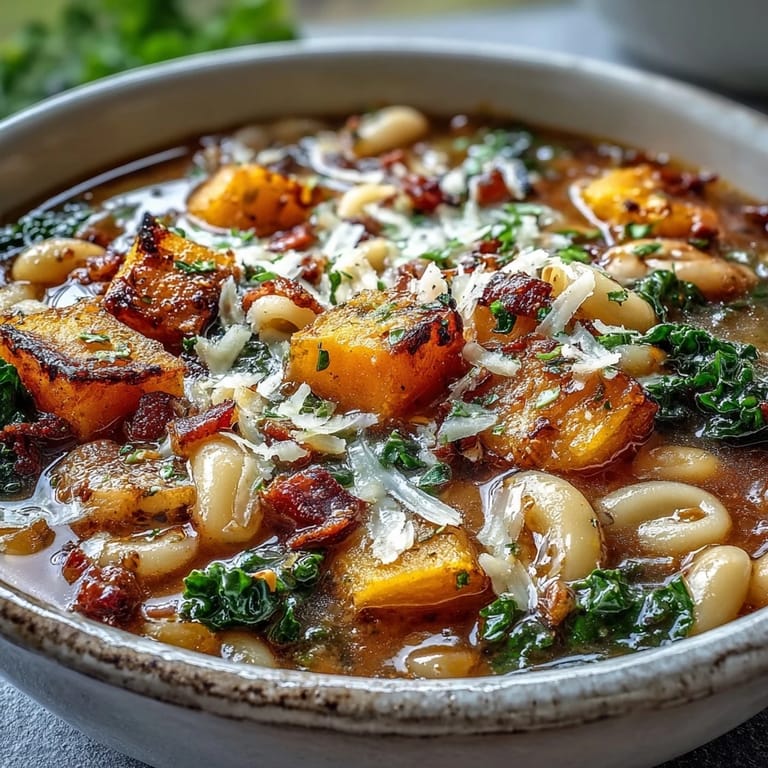
Save One particularly chilly afternoon last October, I found myself staring at a butternut squash and a bunch of kale in my fridge, wondering what comfort food I could conjure up. The wind was howling outside, rattling the kitchen windows as I chopped vegetables, the familiar rhythm of my knife against the cutting board somehow soothing my weather-induced anxiety. This Fall Minestrone was born that day, steam rising from the pot and fogging my glasses as I leaned in for that first taste.
My brother dropped by unexpectedly last November while I was simmering a batch of this minestrone, his cheeks red from the cold. He stood over the pot, inhaling deeply before announcing he was staying for dinner. Three bowls later, he asked for the recipe, which honestly felt like winning a culinary gold medal since hes normally a meat and potatoes guy. Now he texts me photos whenever he makes it for his family.
Ingredients
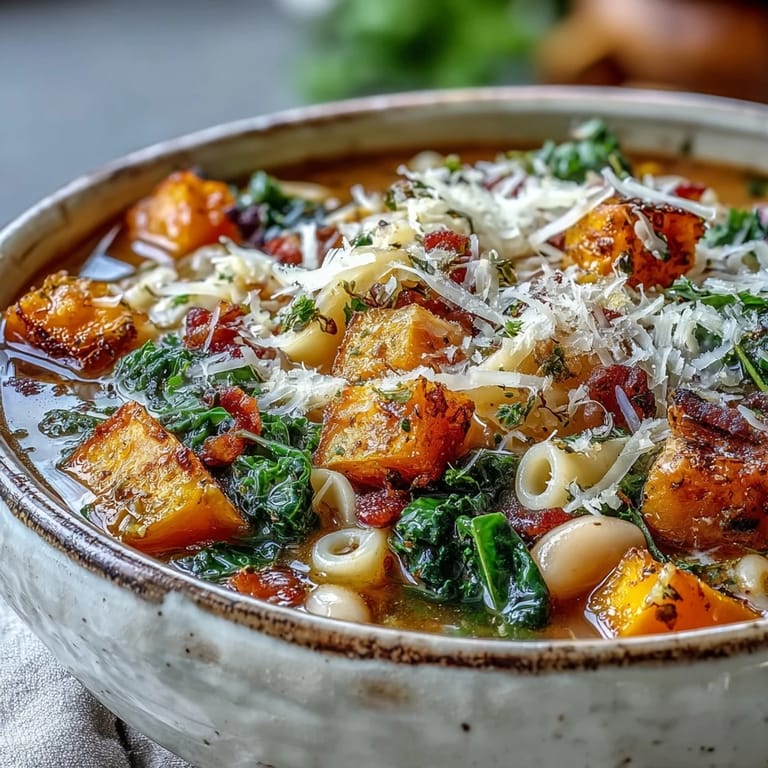
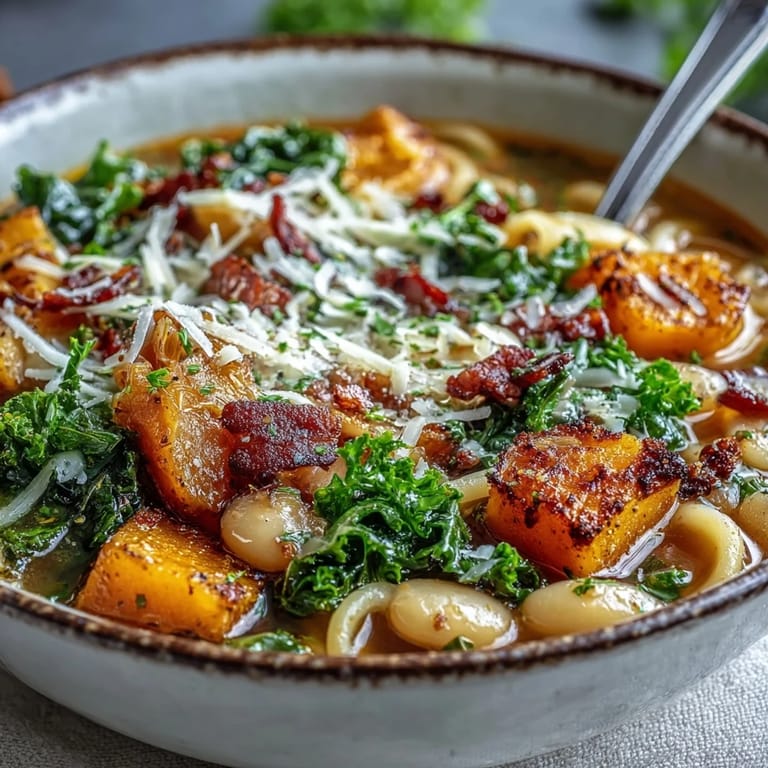
- Pancetta: Those 120g of diced pancetta add a smoky depth that transforms this from a simple vegetable soup into something extraordinary, though I learned you can substitute bacon in a pinch if needed.
- Butternut Squash: The 2 cups of butternut cubes should be relatively uniform in size so they cook evenly, something I discovered after serving a bowl with some pieces perfectly tender and others practically raw.
- Kale: Fresh kale works best here, but if youre using the pre-chopped bagged kind, give it an extra rinse as I find it can sometimes have a bitter edge.
- Ditalini Pasta: This small pasta shape captures broth in its hollow centers, but after forgetting to buy it once, I discovered small shells or even orzo work beautifully too.
- White Beans: Cannellini beans hold their shape while adding creaminess, but navy beans have saved me on more than one grocery-forgetting occasion.
Tired of Takeout? 🥡
Get 10 meals you can make faster than delivery arrives. Seriously.
One email. No spam. Unsubscribe anytime.
Instructions
- Crisp the Pancetta First:
- Heat that tablespoon of olive oil in your Dutch oven until it shimmers, then add the diced pancetta and listen for that satisfying sizzle. The kitchen will start smelling incredible as the fat renders and the meat crisps up.
- Build Your Flavor Base:
- After removing the pancetta, those vegetables will soak up all that savory goodness left in the pot. Watch how the onions, carrots and celery soften and become translucent, releasing their sweetness into the mix.
- Add the Star Ingredients:
- When you introduce the butternut squash and garlic, youll notice an immediate fragrance change thats so enticing. Give them just enough time to release their aromatics before moving to the next step.
- Create Your Broth Foundation:
- As you pour in those tomatoes and broth, use a wooden spoon to scrape up any browned bits stuck to the bottom of the pot. Thats concentrated flavor waiting to be incorporated into your soup.
- Let Everything Mingle:
- During the 20-minute simmer, the squash will begin to soften and the broth will take on a beautiful orange-red hue. This patience pays off in flavor development.
- Add Pasta and Kale:
- Wait until this point to add the pasta and kale, as adding them earlier would leave you with mushy pasta and dull green kale. Youll see the kale transform from stiff leaves to silky ribbons woven through the soup.
- Finish with Flair:
- The way the crispy pancetta and freshly grated Parmesan melt slightly into each hot bowl creates perfect little pockets of salt and umami. This final touch elevates a simple soup into a memorable meal.
 Save
Save  Save
Save Last autumn, my neighbor Sarah was going through a difficult time after losing her job. I brought over a container of this minestrone along with some crusty bread, not thinking much of it. Two weeks later, she left a handwritten note in my mailbox saying how that simple soup had been the warmth she needed on what had been her lowest day. Now whenever I make this recipe, I think of how food can be so much more than sustenance.
Seasonal Adaptations
Ive learned that this soup framework welcomes seasonal shifts with open arms. In summer, I swap butternut for zucchini and yellow squash, reducing the cooking time accordingly since they soften much faster. Winter brings opportunities for heartier additions like turnips or parsnips, which require a few extra minutes of simmering. Spring invites fresh peas and asparagus tips added in the final minutes, creating an entirely different but equally satisfying bowl.
Make-Ahead Magic
Through much delicious experimentation, Ive found this soup actually improves after a night in the refrigerator. The flavors meld together in a way that transforms it from delicious to extraordinary. However, if youre planning to make it in advance, consider cooking the pasta separately and adding it only to the portions youre immediately serving. The pasta tends to continue absorbing broth as it sits, sometimes leaving you with more of a stew than a soup by day two.
Serving Suggestions
The ritual of serving this minestrone has become almost as important as the recipe itself in my household. We always set out small bowls of extra toppings like red pepper flakes, additional fresh herbs, and sometimes even toasted pine nuts, allowing everyone to customize their final bowl. This interactive element seems to make the meal more convivial, with everyone leaning over to try someone elses combination.
- A drizzle of high-quality olive oil just before serving creates these gorgeous golden pools that carry flavor throughout each spoonful.
- For a heartier meal, serve the soup over a small piece of toasted sourdough rubbed with raw garlic.
- If serving for guests, prepare small garnish plates with extra pancetta, herbs, and cheese for a touch of dinner party elegance.
 Save
Save 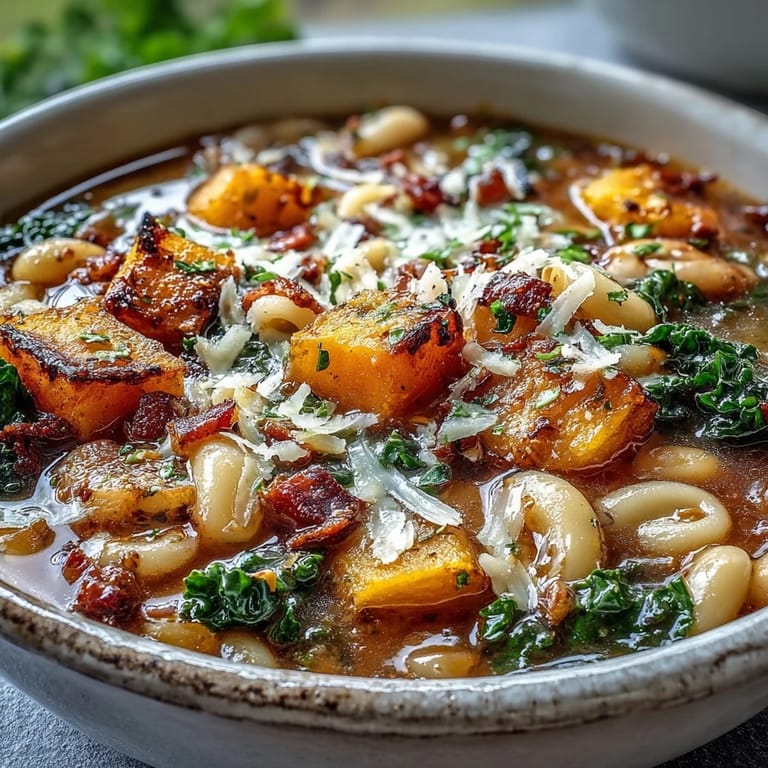 Save
Save This Fall Minestrone has become my edible ambassador of comfort, the recipe I reach for when words arent enough. Whether youre making it for yourself or sharing it with others, I hope it brings the same warmth to your table that its brought to mine.
Recipe FAQs
- → Can I make this vegetarian?
Absolutely. Simply omit the pancetta and use vegetable broth instead of chicken broth. Add a pinch of smoked paprika to maintain that savory depth that the pork typically provides.
- → What other pasta shapes work well?
Small pasta shapes like orzo, small shells, or even broken spaghetti pieces work beautifully. Just adjust the cooking time according to package instructions.
- → Can I freeze this soup?
Yes, though it's best to freeze without the pasta. Cook and freeze the base, then add fresh pasta when reheating to prevent it from becoming mushy.
- → How do I prevent the kale from becoming too mushy?
Add the kale during the last 8-10 minutes of cooking. This keeps it tender yet retains some texture, rather than completely disintegrating into the broth.
- → What can I substitute for butternut squash?
Acorn squash, delicata squash, or sweet potato work well as alternatives. They'll provide similar sweetness and creamy texture when cooked down in the broth.
- → Is there a gluten-free option?
Use gluten-free pasta shapes or simply omit the pasta entirely and add an extra can of white beans for more protein and substance.