 Save
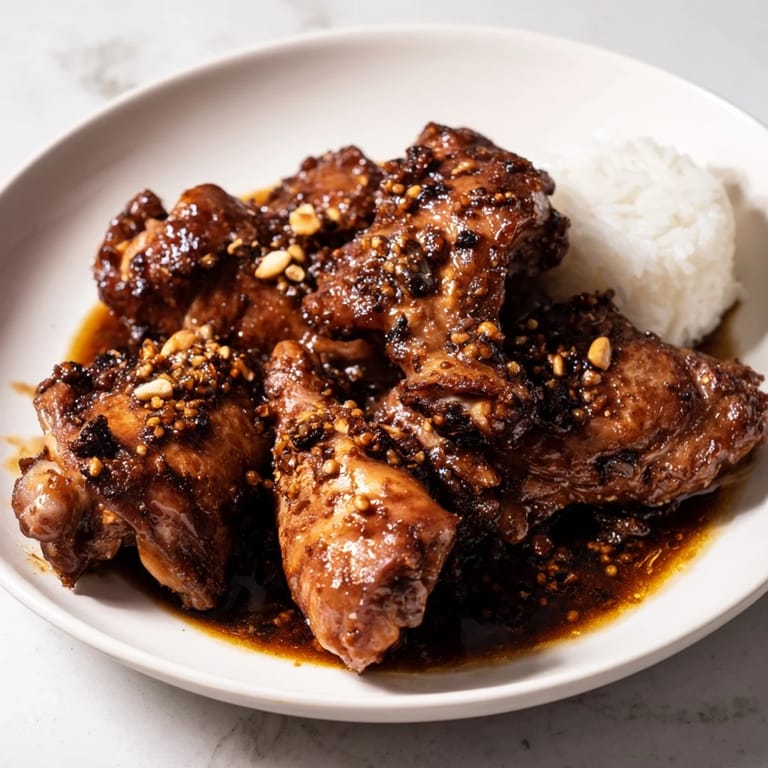
Save My tita taught me adobo on a humid afternoon in her kitchen, where the smell of vinegar and garlic seemed to settle into everything—the walls, her apron, even my hair. She said adobo wasn't fancy, just honest, and that if I could master this one dish, I'd always have something to cook when people mattered. Twenty years later, I still smell that kitchen moment every time I braise chicken in that dark, glossy sauce.
I made this for my partner's family dinner once, nervous they wouldn't get it because it wasn't dressed up or complicated. Instead, three people asked for the recipe, and my partner's mom ate it straight from the pot while standing at the counter, which I took as the highest compliment.
Ingredients
- Chicken (1.5 lbs bone-in, skin-on thighs and drumsticks): Dark meat holds up to long braising without drying out, and the bones add richness to the sauce that boneless breasts simply can't match.
- Soy sauce (1/3 cup): Use good soy sauce here—it's half your flavor base, so don't grab the cheapest bottle you can find.
- Cane vinegar (1/3 cup): This is the soul of adobo; if you can't find cane vinegar, white vinegar works, but the flavor will be sharper and less rounded.
- Garlic (6 cloves, smashed): Smash it, don't mince it—you want whole cloves that flavor the sauce gently and can be easily removed.
- Bay leaves (2): Essential for that subtle herbal note that makes people wonder what the secret is.
- Black peppercorns (1 teaspoon whole): Whole peppercorns release flavor slowly as they simmer, giving you black pepper without bitterness.
- Brown sugar (1 tablespoon, optional): A pinch of sweetness to balance the vinegar's sharpness—trust me on this one.
- Water (1/2 cup): Allows the sauce to braise gently instead of cooking down too fast and becoming too concentrated.
- Cooking oil (2 tablespoons): You need a neutral oil with a high smoke point for searing; save your fancy olive oil for after.
Tired of Takeout? 🥡
Get 10 meals you can make faster than delivery arrives. Seriously.
One email. No spam. Unsubscribe anytime.
Instructions
- Coat and Wait:
- Combine your chicken with soy sauce, vinegar, garlic, bay leaves, peppercorns, and brown sugar in a large bowl, getting everything coated evenly. Marinating does two things—it starts breaking down the chicken and lets the flavors deepen, so give it at least 30 minutes, though overnight in the fridge is where the real magic happens.
- Dry and Sear:
- Pull the chicken from the marinade, pat it completely dry with paper towels (wet chicken won't brown properly), and set that liquid aside because you're about to use it. Heat your oil in a deep skillet over medium-high heat until it shimmers, then lay the chicken skin-side down and let it sear for 3 to 4 minutes without moving it—you want golden, crispy skin.
- Flip and Finish Searing:
- Turn each piece carefully and sear the other side for another 3 to 4 minutes, working in batches if your pan feels crowded. Don't rush this part; proper browning adds a depth that skipping straight to braising won't give you.
- Braise Low and Slow:
- Pour in that reserved marinade plus the water, bring it to a boil, then drop the heat low and cover the pan. Simmer gently for 25 minutes, turning the chicken halfway through so it cooks evenly and stays moist.
- Reduce and Taste:
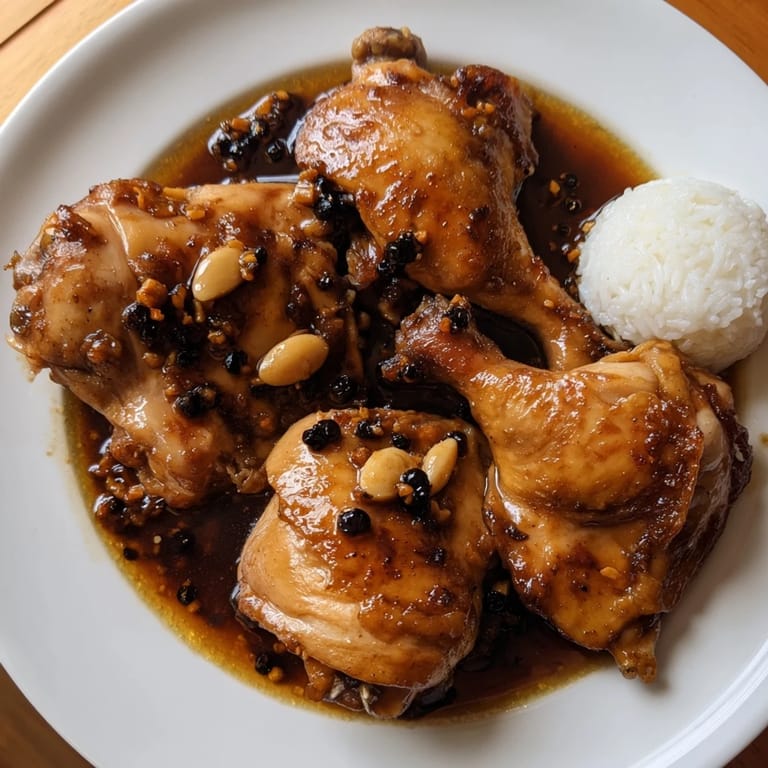
- Uncover the pan and simmer for another 10 to 15 minutes, letting the sauce concentrate and thicken while the chicken stays tender. Skim off any excess fat that's risen to the surface if you like, then taste and adjust the seasoning—it should taste like a conversation between salty, tangy, and slightly sweet.
 Save
Save There's a moment near the end of cooking when you lift the lid and the steam rises and the kitchen fills with that dark, complex aroma—that's when I know it's right, when I can already taste it on someone else's tongue, when this simple dish becomes the kind of thing that sticks with people longer than fancy food ever could.
Why Adobo Matters
Adobo isn't revolutionary or trendy, and it doesn't need to be—it's the dish Filipinos cook when they want something that tastes like home, whether home is Manila or Minnesota. It's been feeding families through everyday dinners and celebrations for generations, surviving because it's cheap, forgiving, and absolutely delicious. The genius is in its simplicity: vinegar and soy sauce, two things that should clash but instead dance together until you can't imagine them apart.
Serving and Pairing
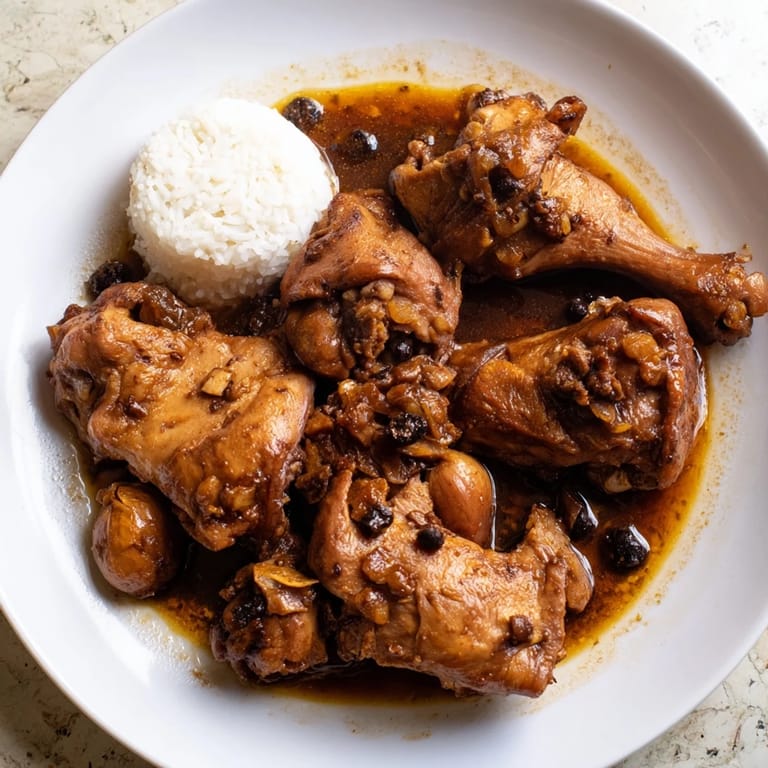
Serve this over steamed white rice—jasmine if you have it, regular if you don't—and let the sauce soak into the grains where it becomes even more itself. A squeeze of calamansi if you can find it, or a lime if you can't, brightens everything. Some people add a scatter of green onions, and while it's optional, that fresh onion bite cutting through the deep sauce is a small joy worth having.
Variations and Flexibility
Adobo is one of those rare dishes that improves with flexibility—add a splash of coconut milk to make it richer, throw in a few dried chilies if you want heat, or swap pork for chicken if that's what you have on hand. I've made it with extra garlic because I was obsessed that month, with less sugar because someone was watching their intake, with extra vinegar because the bottle was open and I was curious. It always comes out tasting like adobo, just with a different voice.
- Coconut milk transforms it into something almost creamy without losing its essential flavor.
- Dried chilies add complexity and heat without overwhelming the other flavors.
- Leftover adobo becomes an incredible sandwich filling or rice bowl topping the next day.
 Save
Save This is the dish I come back to when I want to cook something that feels both easy and thoughtful, the kind of meal that takes an hour from start to finish but tastes like you've been working on it all day. Make it for someone you love.
Recipe FAQs
- → What cut of chicken works best?
Bone-in, skin-on chicken thighs and drumsticks are ideal for juicy, tender results and better flavor absorption.
- → Can I marinate the chicken longer?
Yes, marinating between 30 minutes and up to 8 hours enhances flavor penetration and tenderness.
- → Is it necessary to brown the chicken first?
Browning adds depth and texture to the dish, though you can skip it for a quicker preparation.
- → What can be served alongside this dish?
Steamed white rice is traditional and helps balance the bold savory and tangy sauce.
- → Are there ingredient substitutions available?
You can swap cane vinegar with white vinegar, and brown sugar is optional to add subtle sweetness.