 Save
Save My neighbor knocked on the door one July evening holding a canvas bag overflowing with zucchini and squash. Her garden had exploded, and she looked almost apologetic handing over what must have been five pounds of vegetables. I promised I'd put them to good use, and by the time the water was boiling, I knew exactly what to do. That night, with windows open and the smell of garlic drifting into the warm air, this pasta became my answer to summer abundance.
I made this for a friend who swore she didn't like zucchini. She finished her bowl and asked if there was more in the pan. Sometimes the simplest dishes are the ones that change minds, and watching her scrape up the last bits of basil and Parmesan reminded me why I keep coming back to this recipe. It doesn't try to be fancy, it just lets the vegetables speak for themselves.
Ingredients
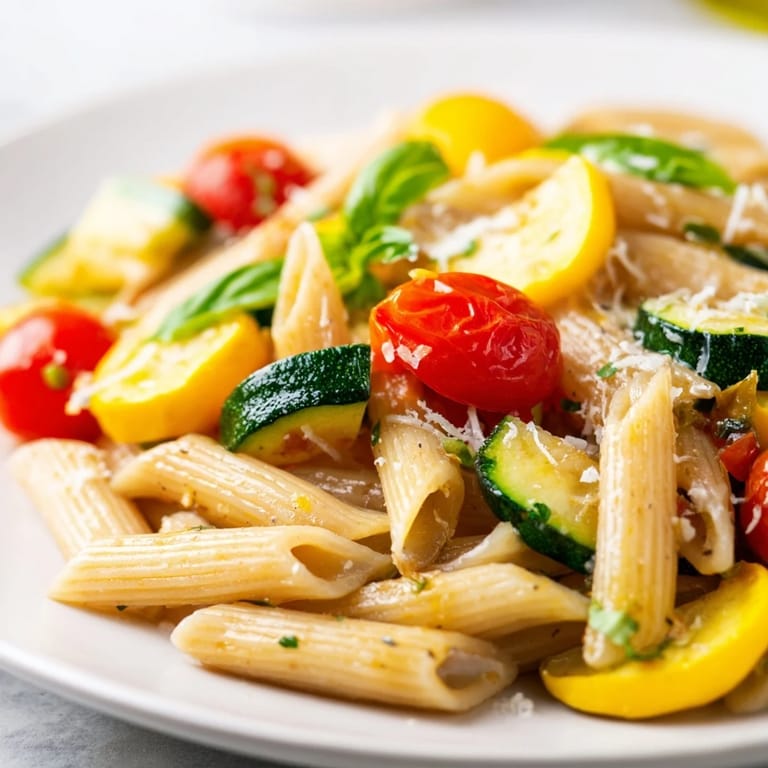
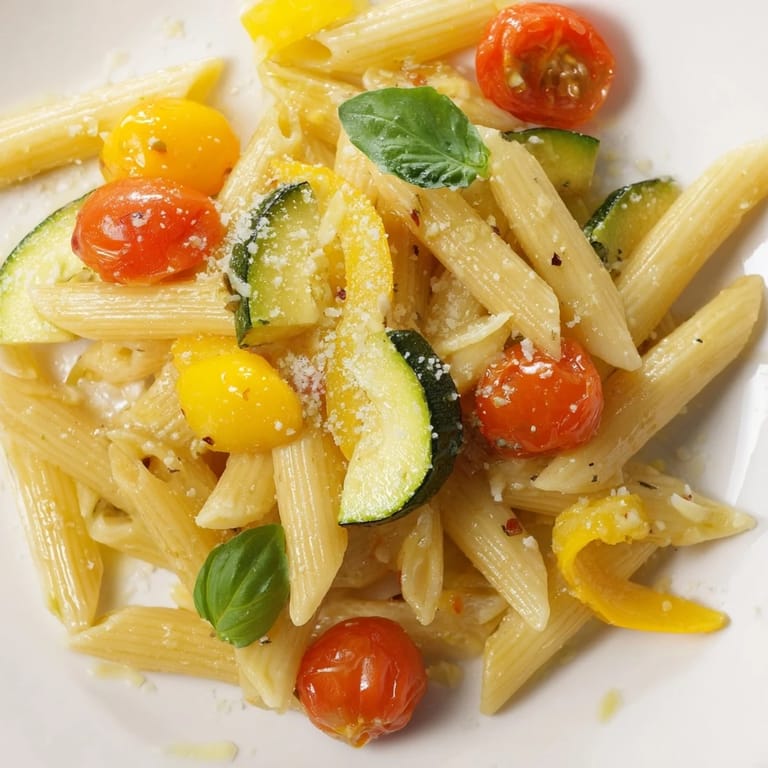
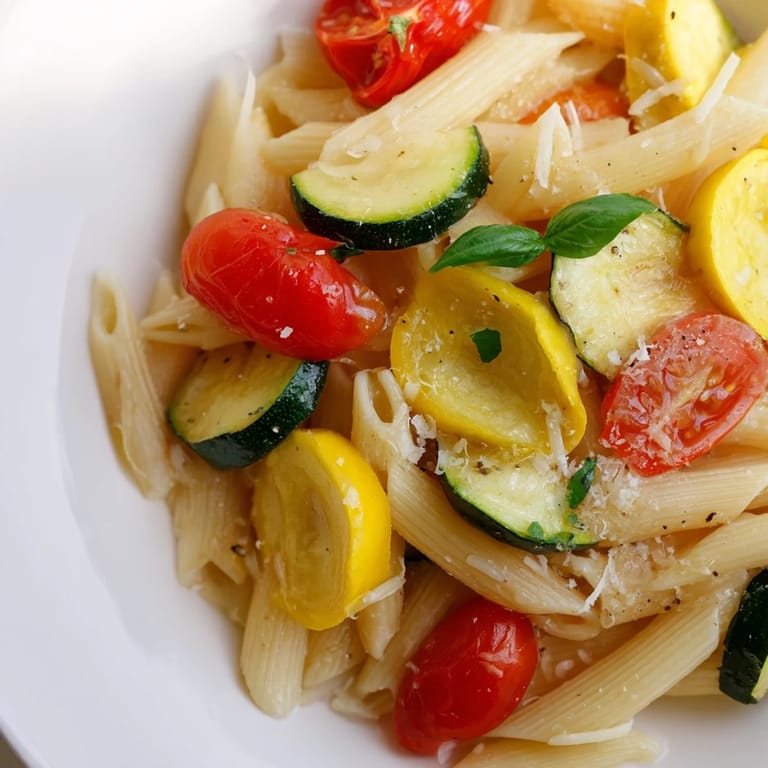
- Penne or fusilli pasta: The ridges and twists grab onto the vegetables and olive oil, making every bite complete.
- Zucchini and yellow squash: Slice them into half-moons so they cook evenly and nestle perfectly with the pasta.
- Cherry or grape tomatoes: Halving them helps them burst and release their juices, creating a natural sauce that needs no thickening.
- Extra virgin olive oil: Use the good stuff here, it carries the garlic and coats everything with a silky richness.
- Garlic: Minced fine and sautéed just until fragrant, it becomes sweet and mellow without overpowering the vegetables.
- Kosher salt and black pepper: Season the pasta water generously and taste as you go, the vegetables need enough salt to come alive.
- Fresh basil leaves: Sliced and stirred in at the end, they add a bright, peppery note that feels like summer in a bite.
- Red pepper flakes: Optional, but a pinch adds warmth without making the dish spicy.
- Parmesan cheese: A handful melts into the pasta and adds a nutty, salty finish, though the dish is lovely without it too.
- Lemon zest: A little grated on top brightens everything and makes the flavors pop.
Tired of Takeout? 🥡
Get 10 meals you can make faster than delivery arrives. Seriously.
One email. No spam. Unsubscribe anytime.
Instructions
- Boil the pasta:
- Bring a large pot of salted water to a rolling boil and cook the pasta until it still has a little bite. Reserve half a cup of the starchy cooking water before draining, it will help bring everything together later.
- Sauté the garlic:
- Heat olive oil in a large skillet over medium heat and add the minced garlic, stirring constantly for about a minute until it smells golden and sweet. Don't let it brown or it will turn bitter.
- Cook the squash:
- Toss in the zucchini and yellow squash, stirring occasionally, and let them soften for four to five minutes. They should be tender but still have a little structure.
- Add the tomatoes:
- Stir in the halved tomatoes along with salt, pepper, and red pepper flakes if you like a little heat. Cook for another few minutes until the tomatoes start to collapse and their juices mingle with the oil.
- Toss with pasta:
- Lower the heat and add the drained pasta to the skillet, tossing everything together. Splash in some reserved pasta water a little at a time until the sauce coats the noodles in a glossy, silky layer.
- Finish and serve:
- Stir in the fresh basil and Parmesan if using, then taste and adjust the seasoning. Serve in bowls with extra basil and a sprinkle of lemon zest on top.
 Save
Save One evening I served this to my parents on the back porch with a bottle of cold white wine. My dad, who usually asks where the meat is, went back for seconds without a word. My mom smiled and said it tasted like the dinners she used to make when tomatoes were cheap and summer felt endless. That's when I realized this dish isn't just about vegetables, it's about simplicity that feels like home.
Making It Your Own
If your garden or market has bell peppers or a bunch of spinach, toss them in with the squash. I've added handfuls of arugula at the end for a peppery bite, and once I stirred in a few spoonfuls of ricotta which made it creamy and almost indulgent. This recipe is forgiving and welcomes whatever vegetables you have on hand.
Pairing and Serving
A crisp Sauvignon Blanc or Pinot Grigio cuts through the olive oil and complements the bright tomatoes beautifully. I've also served this with crusty bread to soak up any sauce left in the bowl, and a simple green salad on the side keeps the meal light. It's the kind of dinner that feels complete without needing much else.
Storage and Leftovers
Leftovers keep well in the fridge for up to three days, though the pasta will absorb some of the sauce as it sits. Reheat gently in a skillet with a splash of water or broth to bring back the moisture, and add a drizzle of fresh olive oil to refresh the flavors. I've eaten this cold straight from the container for lunch, and it's surprisingly good that way too.
- Store in an airtight container to keep the basil from turning brown.
- If making ahead, undercook the pasta slightly so it doesn't get too soft when reheated.
- Grate fresh Parmesan right before serving for the best flavor and texture.
 Save
Save This pasta has become my go-to whenever summer vegetables pile up on the counter and I want something that feels both nourishing and light. I hope it finds a place in your kitchen the way it has in mine.
Recipe FAQs
- → Can I prepare this dish ahead of time?
Yes, you can prep vegetables several hours in advance and store them separately. Cook the pasta and vegetables just before serving for the best texture and flavor. The dish is best enjoyed fresh but can be gently reheated over low heat with a splash of pasta water if needed.
- → What type of pasta works best?
Penne and fusilli are ideal because their ridges and spirals catch the vegetable pieces and light sauce. Short pasta shapes generally work well; avoid long pasta like spaghetti as it doesn't hold the chunky vegetables as nicely.
- → How do I make this vegan?
Simply omit the Parmesan cheese or replace it with a plant-based alternative. The dish is naturally vegan without cheese, and the olive oil and pasta water create a silky sauce that requires no dairy.
- → Can I add protein to this dish?
Absolutely. Consider adding grilled chicken, white beans, chickpeas, or crispy tofu. You can also top with pine nuts or sunflower seeds for added texture and nutrition.
- → What vegetables can I substitute?
Bell peppers, eggplant, asparagus, spinach, and mushrooms all work beautifully. Adjust cooking times based on vegetable density—sturdier vegetables may need a few extra minutes.
- → Why should I reserve pasta water?
Pasta water contains starch that helps bind the sauce and creates a silky coating for the noodles. It's crucial for bringing the dish together and preventing it from feeling dry.