 Save
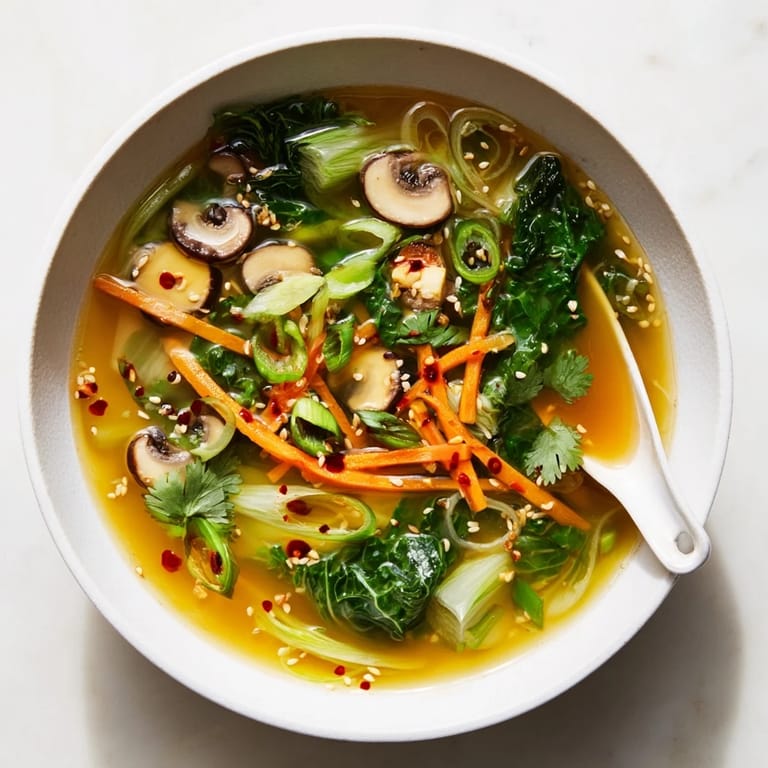
Save Last January, nursing a cold that refused to leave, I found myself craving something more sustaining than plain tea but lighter than heavy chicken noodle soup. My Japanese grandmother would have known exactly what to make, and I remembered her ceramic miso jar sitting untouched in my fridge. That afternoon became an experiment in gentle healing through simple ingredients, and the way my shoulders dropped after that first spoonful convinced me this would become my winter ritual.
My neighbor Sarah texted that she was coming down with something last week, and without thinking I doubled the recipe and brought over a Mason jar of this broth. She messaged me hours later saying she actually fell asleep for the first time in days. Now I keep small containers in my freezer for friends who need that kind of quiet comfort.
Ingredients
- Water or low-sodium vegetable broth: Starting with good liquid matters more here than in any soup I make, because misos subtle sweetness needs room to shine without fighting salty broth
- Fresh ginger: Slice it paper-thin so the flavor infuses without making the broth too spicy, and leave the slices in the bowls as edible garnish
- Garlic: Thin slices melt into the background and provide that aromatic foundation that makes you lean over the pot and breathe deeper
- White or yellow miso paste: White miso has a gentler sweetness I prefer for delicate soups, though yellow works if you want a slightly deeper, earthier note
- Napa cabbage: This cabbage becomes silkier than other varieties and absorbs the miso beautifully while still holding its shape
- Carrot: Julienned carrots look elegant and cook quickly enough to stay tender-crisp rather than mushy
- Shiitake mushrooms: Their meaty texture and umami punch make this feel substantial even without meat, and they add that forest-floor depth
- Scallions: Both white and green parts go in for different layers of sharp onion brightness
- Toasted sesame seeds: These tiny seeds add a nutty richness and satisfying crunch in every other spoonful
- Fresh cilantro or parsley: A handful of herbs at the end wakes up the whole bowl with color and fresh contrast
- Chili oil or flakes: Just enough heat to make your nose tingle without overwhelming the gentle ginger warmth
- Silken tofu and noodles: These turn a light soup into a complete meal when you need something more filling
Tired of Takeout? 🥡
Get 10 meals you can make faster than delivery arrives. Seriously.
One email. No spam. Unsubscribe anytime.
Instructions
- Build the aromatic base:
- Pour your water or broth into a large pot and bring it to a gentle bubble, then drop in the ginger and garlic slices and let them dance around for ten minutes until your whole kitchen smells like a spa
- Add the vegetables:
- Toss in the cabbage, carrots, and mushrooms and let everything simmer together until the vegetables are tender but still have some bite, about five to seven minutes
- Temper the miso:
- Ladle out some hot broth into a small bowl and whisk the miso paste until completely smooth, then stir it back into the pot off the heat so the beneficial bacteria stay alive and well
- Finish and serve:
- If you are adding tofu or noodles, let them warm through for a couple of minutes, then ladle the soup into bowls and scatter scallions, sesame seeds, herbs, and chili oil on top before serving immediately
 Save
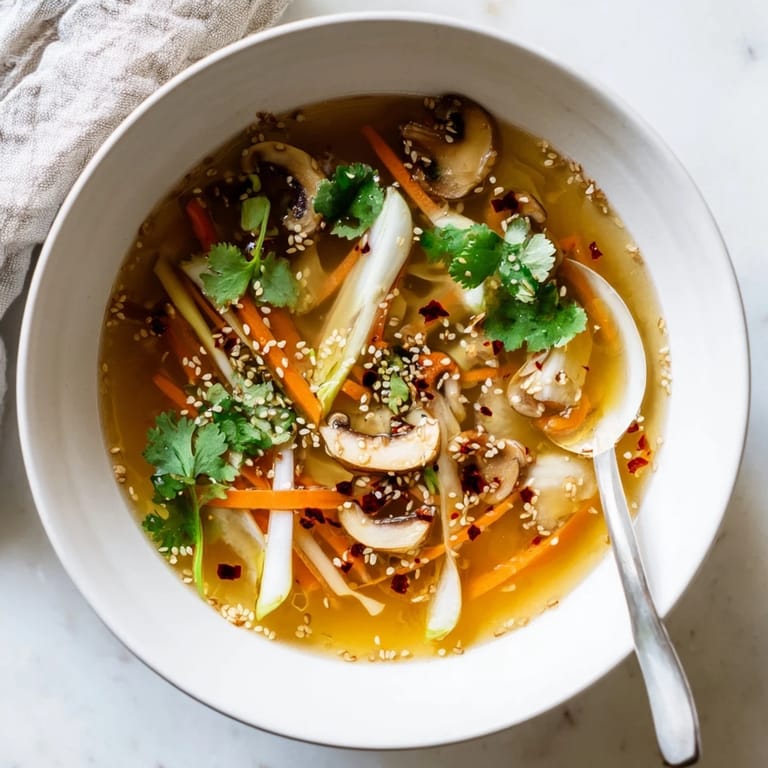
Save Last snow day, my kids came in from sledding with red cheeks and wet socks, demanding lunch immediately. This soup was ready before they even finished changing out of their snow pants, and watching them huddle over steaming bowls, silently going back for seconds, reminded me that the best recipes are sometimes the simplest ones.
Making It Your Own
Some days I swap bok choy for cabbage or throw in baby spinach at the very end just until it wilts. Daikon radish adds a lovely peppery bite and holds up beautifully in the hot broth, and sometimes when I want more substance I add soba noodles right in the pot for the last two minutes of cooking.
Serving Suggestions
This soup welcomes almost anything from your refrigerator or pantry. A soft-boiled egg with a runny yolk nestled into each bowl turns it into a complete meal, and a side of brown rice or warm crusty bread makes it feel even more substantial for dinner.
Perfect Pairings
A crisp dry white wine cuts through the rich miso beautifully, though a steaming cup of green tea feels more aligned with the soothing nature of this soup. For a complete Japanese-inspired meal, serve alongside simple cucumber salad or pickled vegetables.
- Keep extra miso paste in the freezer in small portions so it never goes bad
- The ginger slices soften enough to eat, but pick them out if you prefer a smoother broth
- This soup improves after a day in the refrigerator as the flavors deepen and meld together
 Save
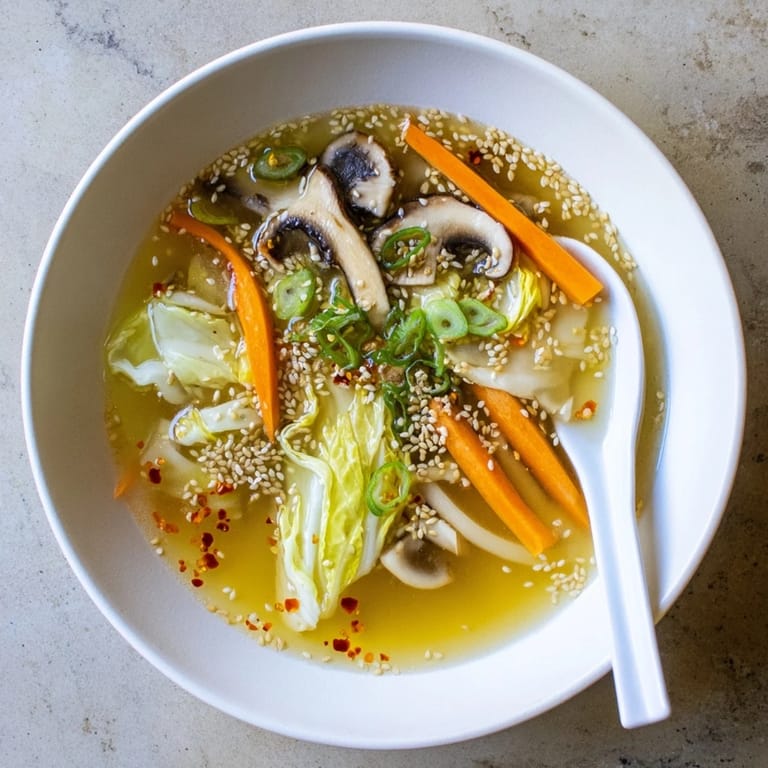
Save There is something profoundly restorative about a bowl of broth that took less than thirty minutes to make but tastes like it was made with intention and care. May it bring you as much comfort on cold days as it has brought me.
Recipe FAQs
- → Can I make this soup ahead of time?
Yes, prepare the broth and vegetables in advance, but add the miso paste just before serving. Boiling miso destroys its beneficial probiotics and can alter the delicate flavor profile.
- → What vegetables work best in this soup?
Napa cabbage, carrots, and shiitake mushrooms are traditional, but bok choy, spinach, daikon radish, or enoki mushrooms also work beautifully. Choose winter vegetables that hold their shape in broth.
- → Is this soup gluten-free?
The base is naturally gluten-free, but some miso brands contain barley. Check labels for certified gluten-free miso, and substitute rice noodles for soba to keep the entire bowl gluten-free.
- → Can I add protein to make it more filling?
Silken tofu cubes absorb the miso broth beautifully and add protein. You can also add soft-boiled eggs, edamame, or cooked chicken if you're not following a vegetarian diet.
- → How do I store leftovers?
Store in an airtight container in the refrigerator for up to 3 days. Reheat gently over medium-low heat—avoid boiling to preserve the miso's probiotics and prevent the vegetables from becoming mushy.
- → What type of miso should I use?
White or yellow miso paste works best for this soup's light, delicate flavor. Red miso is stronger and can overpower the ginger. If sensitive to sodium, choose a low-sodium variety.