 Save
Save The steam from a bubbling pot of minestrone soup has a way of fogging up kitchen windows on chilly autumn evenings. I first stumbled upon this recipe during a cooking class in Florence, where our instructor insisted that minestrone wasn't just food—it was practically medicine. Back home, I've adapted it countless times, depending on whatever vegetables are looking brightest at the market. The earthy aroma of herbs meeting tomatoes creates this incredible warmth that seems to seep into the walls of my home.
Last winter, I invited friends over during an unexpected snowstorm, and this soup became our refuge. We gathered around the kitchen island, everyone taking turns stirring the pot while sharing stories. My friend Marco, whose Italian grandmother would apparently disown him for complimenting my version, reluctantly admitted it reminded him of home. By the time we sat down to eat, the windows were completely steamed over, and we felt wonderfully isolated from the storm outside.
Ingredients
- Olive oil: Use a good quality one here—I learned the hard way that it creates the foundation for all those vegetables to release their flavors.
- Seasonal vegetables: The classic trio of onion, carrot, and celery creates the essential base, but zucchini and green beans add wonderful texture and color.
- Tomato paste: This concentrated little miracle adds an incredible depth that pulls everything together, especially when you let it caramelize slightly with the vegetables.
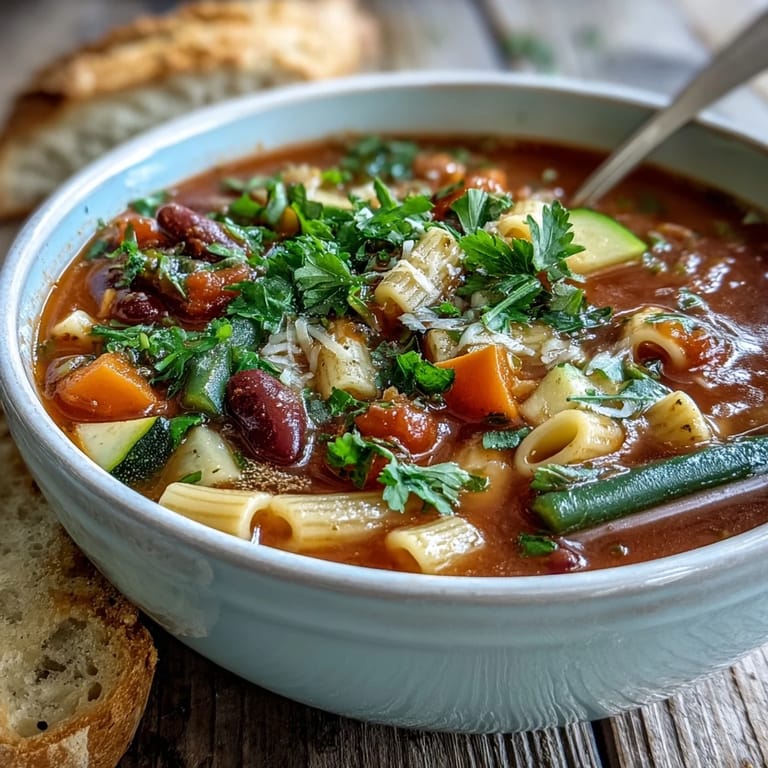
- Small pasta: Ditalini or elbow macaroni are perfect because they don't overwhelm the vegetables—they should be just another delightful component in each spoonful.
- Fresh herbs: The dried herbs provide the backbone, but fresh parsley at the end brings a brightness that wakes up the entire pot.
Tired of Takeout? 🥡
Get 10 meals you can make faster than delivery arrives. Seriously.
One email. No spam. Unsubscribe anytime.
Instructions
- Build the flavor base:
- Heat olive oil in a large pot and add your diced onion, celery, and carrots, sautéing until they begin to soften and the onions become translucent. You want to hear a gentle sizzle, not a harsh one.
- Layer in more vegetables:
- Add the garlic, zucchini, and green beans, cooking just until the colors brighten. The vegetables should still have some life to them.
- Create the broth:
- Pour in the diced tomatoes, tomato paste, vegetable broth, and dried herbs, then bring everything to a gentle boil before reducing to a simmer. The kitchen should start filling with that unmistakable Italian aroma.
- Add the pasta and beans:
- Stir in your small pasta and cannellini beans, allowing them to cook in the flavorful broth. Watch carefully as the pasta cooks—you want it tender but not mushy.
- Finish with greens:
- Just before serving, fold in the spinach or kale and fresh parsley, letting them wilt into the hot soup. These last-minute additions bring color and freshness to the pot.
- Season and serve:
- Remove the bay leaf, taste for seasoning, and adjust with salt and pepper. Ladle into warmed bowls, sprinkle with extra parsley, and serve with crusty bread for dipping.
 Save
Save One Sunday afternoon, my neighbor's eight-year-old daughter stopped by while I was making a pot of minestrone. She wrinkled her nose at first, declaring she hated vegetables. I invited her to help stir and taste as we went along. By the time dinner was ready, she'd not only claimed credit for the entire pot but asked for the recipe to take home to her mom. That's the magic of this soup—it transforms both ingredients and people who experience it.
Seasonal Adaptations
I've made this minestrone in every season, each with its own personality. Summer brings fresh tomatoes and tender young zucchini that need barely any cooking. Fall versions feature butternut squash cubes and hearty kale. Winter calls for root vegetables that take longer to soften but add wonderful sweetness. Spring minestrone is lighter, with fresh peas and asparagus tips added just before serving. The core technique remains the same, but the soup evolves with what's available at the market.
Make It Your Own
My Italian friend's grandmother apparently had strict rules about what constitutes a proper minestrone, but I've learned to embrace the freedom of this forgiving soup. Sometimes I'll add a Parmesan rind while it simmers, which melts partially and adds this incredible savory depth. Other times, I've swapped the pasta for farro or barley when I want something more substantial. I've even created a version with a bit of pancetta for non-vegetarians, which adds a subtle smokiness that's absolutely delicious but completely optional.
Serving Suggestions
While this minestrone is certainly a complete meal on its own, I've discovered a few accompaniments that elevate the experience. A simple green salad dressed with lemon and olive oil provides a bright contrast to the rich soup. Warmed focaccia or ciabatta is perfect for sopping up the last bits in your bowl. For special occasions, I'll even make garlic-rubbed crostini topped with a little ricotta and herbs.
- For a casual lunch, serve in mugs rather than bowls, allowing guests to sip and chat while standing.
- Keep a bowl of freshly grated Parmesan nearby for those who want to add it to their individual portions.
- If serving for dinner parties, small portions in espresso cups make elegant appetizers before the main course.
 Save
Save There's something deeply satisfying about watching a simple collection of vegetables transform into something so nourishing and complete. Whether you're making it for a crowd or just for yourself, this minestrone offers comfort in a bowl—a reminder that good food doesn't have to be complicated to be extraordinary.
Recipe FAQs
- → What vegetables go in minestrone?
Traditional minestrone includes onions, celery, carrots, zucchini, green beans, and leafy greens like spinach or kale. You can adapt based on seasonal availability or personal preference.
- → Can I make minestrone soup gluten-free?
Yes, simply substitute gluten-free pasta for regular pasta and ensure your vegetable broth is certified gluten-free. The soup remains just as delicious and satisfying.
- → How long does minestrone soup last?
Stored in an airtight container in the refrigerator, minestrone keeps well for 4-5 days. The flavors continue to develop over time, often making leftovers even better than freshly made.
- → Can I freeze minestrone soup?
Yes, minestrone freezes beautifully for up to 3 months. For best results, slightly undercook the pasta before freezing, as it will continue to soften when reheated.
- → What pasta works best in minestrone?
Small pasta shapes like ditalini, elbow macaroni, shells, or small tubes are ideal because they fit well on the spoon and hold onto the flavorful broth. Avoid larger shapes that may overpower the vegetables.
- → Is minestrone soup vegan?
This version is naturally vegetarian and can be made vegan by omitting any Parmesan garnish. The soup relies on vegetables, beans, and pasta for its hearty, satisfying texture and protein.