 Save
Save The first time I made okonomiyaki at home, I was standing in a Tokyo apartment kitchen, watching my host slice cabbage so thin it almost disappeared. She laughed when I asked if I could try making it myself, handed me the knife, and said the real secret was patience with the shredding, not the sauce everyone obsesses over. That moment stuck with me—the confidence in her casual instruction, the way the pale green pile grew under my hands. Years later, I recreated that dish in my own kitchen and found myself reaching for the same slow, deliberate rhythm she'd shown me, suddenly understanding why okonomiyaki feels less like cooking and more like a small, joyful ritual.
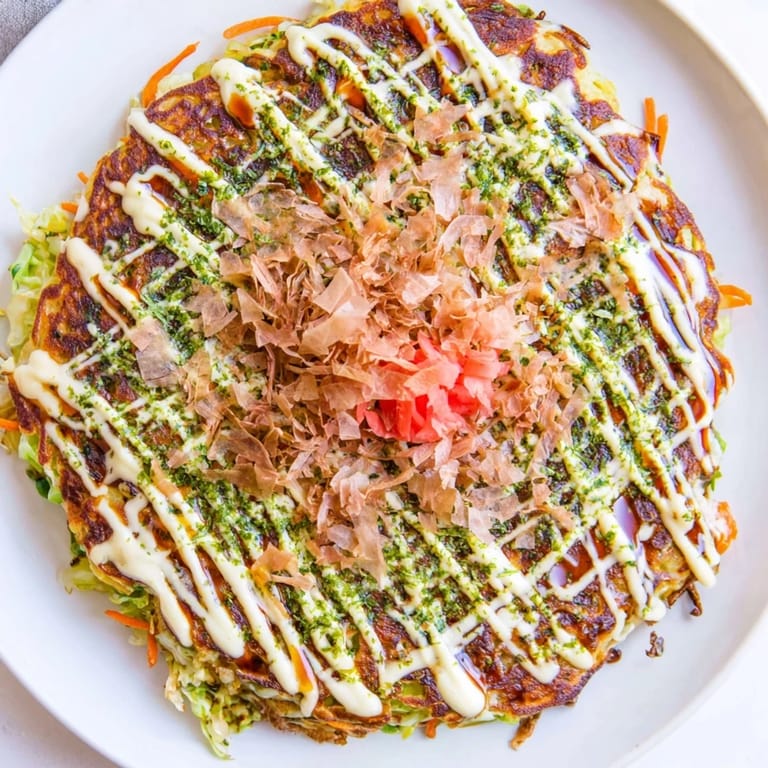
I made these for a small dinner party on a rainy Tuesday, and something magical happened when I set the first plate down and everyone watched the bonito flakes shimmer and curl from the warmth. Someone asked if this was from a restaurant, and I remember feeling this quiet pride, realizing I'd just fed people something that tasted like travel and care. That's when okonomiyaki stopped being a recipe I'd tried and became a dish I actually understood.
Ingredients
- All-purpose flour: The foundation that holds everything together, though some cooks swear by cake flour for an even lighter crumb—I haven't found it necessary, but the option is there if you want to experiment.
- Dashi stock: This is where the flavor lives; if you don't have it, water works, but dashi adds an umami depth that transforms the batter from simple to subtle and complex.
- Eggs: They bind the batter and give the pancakes their structure, so don't skip them or try to replace them.
- Shredded green cabbage: The star of the show—it should be cut fine enough that it releases moisture but stays textured, creating pockets of tender crunch throughout.
- Green onions: Fresh and slightly sharp, they add brightness that keeps the dish from feeling heavy.
- Okonomiyaki sauce: The tangy, subtly sweet backbone that ties everything together; if you can't find it, mix equal parts Worcestershire and ketchup with a splash of soy sauce and you'll be close.
- Japanese mayonnaise: Richer and more golden than American versions, it creates silky ribbons across the top—Kewpie is worth seeking out for the difference it makes.
- Bonito flakes: These paper-thin curls of dried fish move visibly from the heat of the pancake, and they add a smoky, oceanic note that's essential to the dish.
- Aonori: A whisper of briny, green seaweed that adds color and umami without overwhelming anything.
Tired of Takeout? 🥡
Get 10 meals you can make faster than delivery arrives. Seriously.
One email. No spam. Unsubscribe anytime.
Instructions
- Whisk the batter into submission:
- Combine your flour, dashi, eggs, salt, and baking powder in a bowl and whisk until completely smooth with no lumps hiding at the bottom—this takes about a minute of real attention, not just a few lazy circles. The batter should be thicker than pancake batter but still pourable, almost like a thick crepe batter.
- Fold in the vegetables with care:
- Add the cabbage, green onions, carrot, and your protein of choice, stirring gently until everything is evenly distributed without breaking down the cabbage into mush. This is where restraint matters—fold, don't stir aggressively.
- Heat your pan to medium and get it ready:
- A nonstick skillet is your friend here; medium heat ensures the inside cooks through before the outside burns to a crisp. Add just half a tablespoon of oil—the vegetables will release moisture and create their own steam.
- Make your pancake in one confident pour:
- Scoop about a cup of batter directly onto the hot pan and let gravity do the work for a moment before you gently nudge it into a round shape about six inches wide. Resist the urge to fuss with it immediately.
- Wait for the magic of the golden bottom:
- Cook for four to five minutes without moving it, resisting the urge to peek constantly; when you finally lift your spatula, you'll see a golden-brown crust that's developed its own subtle crispness. The edges will look slightly set and pulling away from the pan.
- Flip with decisive gentleness:
- Slide your spatula underneath and flip in one smooth motion, letting it land flat and ready for another four to five minutes on the other side. This side will cook a bit faster because the batter is already warm and partly cooked.
- Top while still hot from the pan:
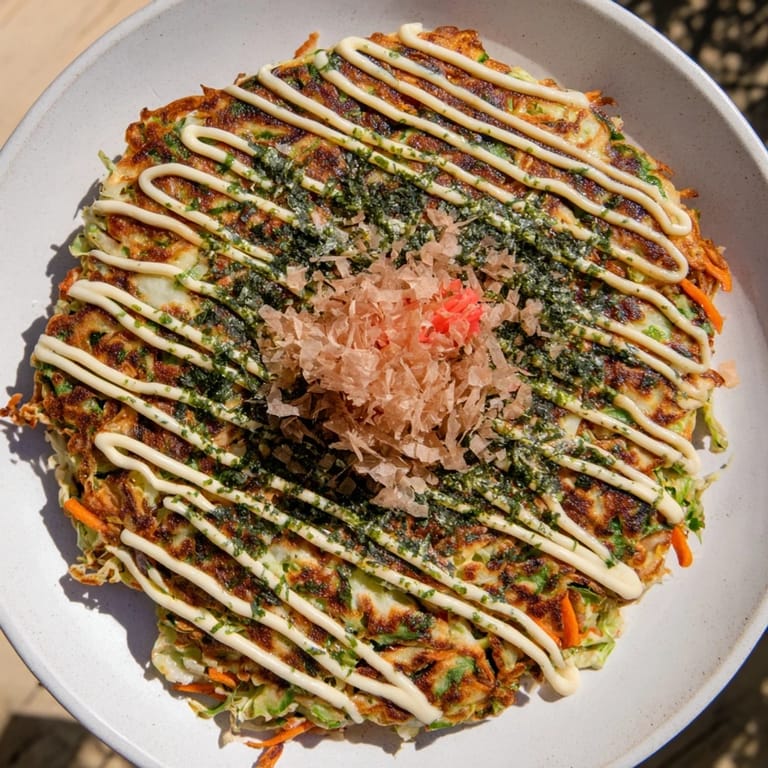
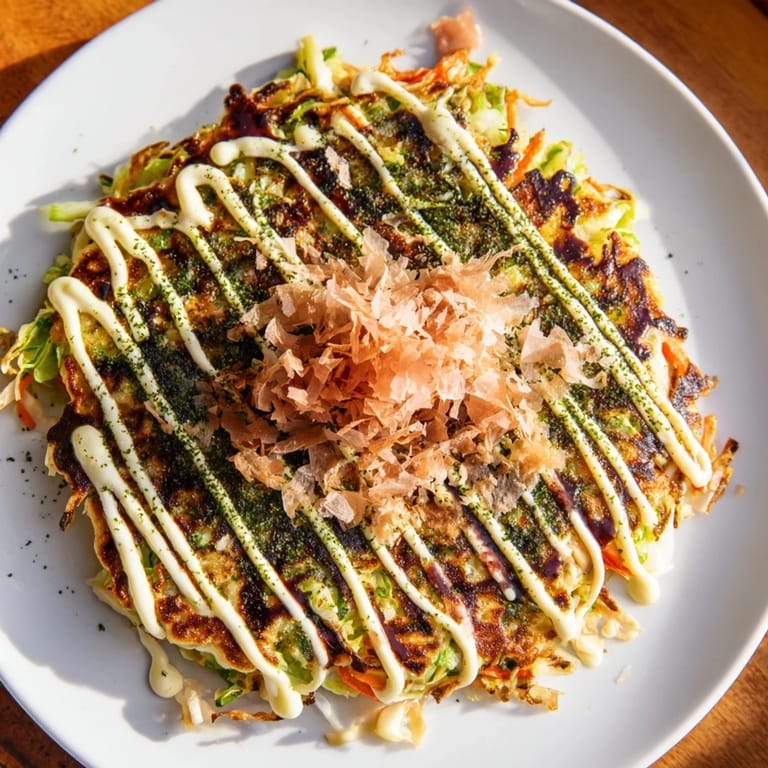
- Drizzle the okonomiyaki sauce in a zigzag pattern, then do the same with the mayonnaise, creating a crossing pattern that looks beautiful and ensures every bite gets both. Sprinkle the bonito flakes generously, and you'll see them immediately shimmer and curl from the residual heat—this is not a mistake, it's the whole point.
- Finish with the seaweed and serve:
- A light shake of aonori, perhaps a small scatter of pickled ginger if you have it, and your okonomiyaki is ready to eat while everything is still warm and the textures are at their best. Serve immediately on a warm plate.
 Save
Save I learned something true about okonomiyaki the night my cousin watched me make it and said, almost to herself, that it reminded her of the street stalls near her university in Osaka, and that memory alone made the dish worth making. Food that carries memory like that, that bridges distance without pretense, is food worth knowing how to make well.
Making It Your Own
The beauty of okonomiyaki is that it's endlessly flexible—some cooks add cheese, others throw in mushrooms or corn, and it somehow still works because the batter and toppings are forgiving enough to embrace variation. I've made versions with leftover roasted vegetables, with kimchi for a Korean-Japanese fusion moment, and even a fully vegetarian one with extra mushrooms and nori instead of bonito. The structure stays the same, but your kitchen intuition is welcome here, and experimentation rarely fails.
The Sauce Matters More Than You Think
There's a reason these pancakes come with sauce—it's not decoration or an afterthought, but the finishing touch that brings everything into focus. Okonomiyaki sauce itself is a balance of Worcestershire, ketchup, and soy sauce simmered into something thicker and more complex, and when you drizzle it over the warm pancake alongside the creamy mayonnaise, you're creating contrast and depth with almost no effort. I've been in enough Tokyo restaurants to know that the sauce application is taken seriously; watch how they use squeeze bottles to create deliberate patterns, and you'll understand that this final step is where okonomiyaki becomes more than just a pancake.
Timing and Temperature
The whole ritual of okonomiyaki comes together when you respect the heat and the timing—not too hot, which burns the outside before the inside cooks, and not too low, which leaves you with something steamed instead of pan-fried. I've learned to trust medium heat as a gentle middle ground that lets the batter cook through while the bottom develops color and texture, and I've never looked back. One more thing I've discovered: these pancakes are best eaten immediately, when the toppings are still warm enough to move and the textures are sharp against each other.
- Let your pancake rest for one to two minutes after cooking so the batter sets and the flakes can do their shimmer thing.
- Serve on a warm plate to keep everything hot through the first bites.
- Pair with cold beer or iced green tea for the complete experience.
 Save
Save Okonomiyaki became my favorite dish not because it's complicated or demanding, but because it feels generous—it takes whatever you have, transforms it into something beautiful, and asks only that you pay attention to the sizzle and the moment. That's worth remembering every time you make it.
Recipe FAQs
- → What gives these pancakes their unique flavor?
The combination of dashi stock in the batter, tangy okonomiyaki sauce, creamy Japanese mayonnaise, and smoky bonito flakes creates a distinctive savory profile.
- → Can I substitute shrimp in the batter?
Yes, shrimp can be replaced with cooked bacon slices or simply omitted for a vegetarian variation while maintaining plenty of vegetable flavor.
- → How do I achieve the perfect pancake texture?
Cooking on medium heat until golden brown on both sides and using a batter thick enough to hold shredded cabbage ensures a tender yet sturdy pancake.
- → What toppings are essential for authentic flavor?
Okonomiyaki sauce, Japanese mayonnaise, bonito flakes, aonori (seaweed flakes), and pickled ginger combine to deliver the classic layered taste experience.
- → Can these pancakes be served cold or reheated?
While best enjoyed warm to appreciate the texture and toppings, they can be reheated gently on a skillet to revive their crispness.