 Save
Save The first time I made laksa, I was standing in a small Malaysian kitchen on a humid afternoon, watching my friend's mother move through the preparation with such ease it seemed like muscle memory. She caught me staring at the lemongrass and smiled, saying this dish was less about following rules and more about trusting your senses—when the broth smells like a spice market, you know you're close. Years later, I finally understood what she meant when my own kitchen filled with that unmistakable aroma of coconut, garlic, and toasted spices.
I remember cooking this for a dinner party where one guest mentioned she'd never had proper laksa before, and watching her face light up after that first taste was worth every minute of prep work. The conversation paused for a moment—everyone focused entirely on their bowls—and I realized that's when you know a dish has done its job.
Ingredients
- Vegetable oil: You need enough to coat the bottom of your pot so the aromatics can fry without sticking; don't be shy with it at this stage.
- Onion, garlic, ginger, and lemongrass: These four are the foundation—they're what makes the broth smell like an actual Malaysian kitchen, so don't rush or skip any of them.
- Laksa paste: This is your flavor shortcut, carrying all those complex spices without requiring you to blend twenty ingredients; store-bought works beautifully here.
- Coconut milk: Full-fat is non-negotiable if you want that luxurious richness; light versions just won't deliver the same comfort.
- Vegetable broth: This dilutes the coconut enough to make the dish drinkable rather than like eating pudding, so don't skip it or reduce it.
- Soy sauce and sugar: A teaspoon of sugar might seem small, but it rounds out the heat and salt in a way that makes everything taste more like itself.
- Rice noodles: Thick noodles hold the broth better than vermicelli, though either works depending on your preference for texture.
- Tofu: Frying it first gives you contrast between the crispy exterior and tender inside, which changes the whole eating experience.
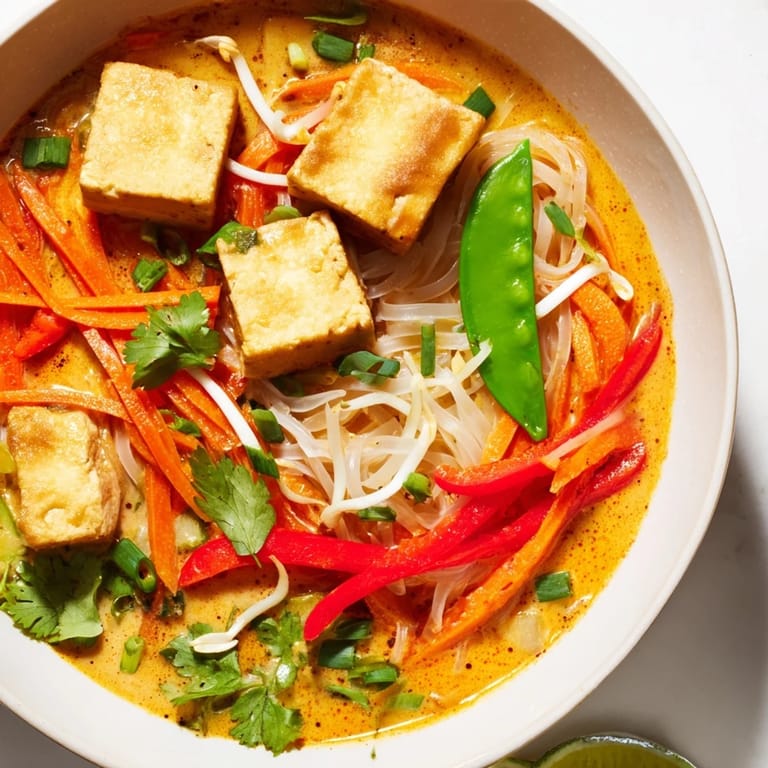
- Fresh vegetables (carrot, bell pepper, snow peas, bean sprouts, spring onion, cilantro): These aren't just toppings—they're what keep each bite bright and prevent the curry from feeling heavy.
- Lime wedges and chili: These are your final adjustments, letting each person make the bowl their own.
Tired of Takeout? 🥡
Get 10 meals you can make faster than delivery arrives. Seriously.
One email. No spam. Unsubscribe anytime.
Instructions
- Build your flavor base:
- Heat oil in a large pot and add your chopped onion, garlic, ginger, and lemongrass, cooking until the onions soften and everything becomes incredibly fragrant—you'll notice the smell shift from raw to cooked around the 3-minute mark. This is your signal to move forward, even if you're not sure if it's enough.
- Deepen the paste:
- Stir in your laksa paste and let it cook for 2 minutes, stirring often so it doesn't stick or burn on the bottom. You'll see the color darken and the smell become even more complex.
- Create the broth:
- Pour in the coconut milk and vegetable broth, stirring well to make sure the paste fully dissolves and releases all its flavor. It should look creamy and rich, with no streaks of separated paste.
- Season and simmer:
- Add soy sauce, sugar, and salt to taste, then let everything bubble gently for 10 minutes without a lid—this time is when the flavors really settle into each other. Taste as you go and adjust salt last, since it's easier to add than remove.
- Prepare your components:
- While the broth simmers, cook your rice noodles according to package directions and drain them, then quickly fry your tofu cubes in a nonstick skillet until they're golden and slightly crispy on the outside.
- Add the vegetables:
- About 4 minutes before you plan to serve, slide the carrots, bell pepper, and snow peas into the simmering broth—they should soften just enough to bite into easily without becoming mushy.
- Assemble with intention:
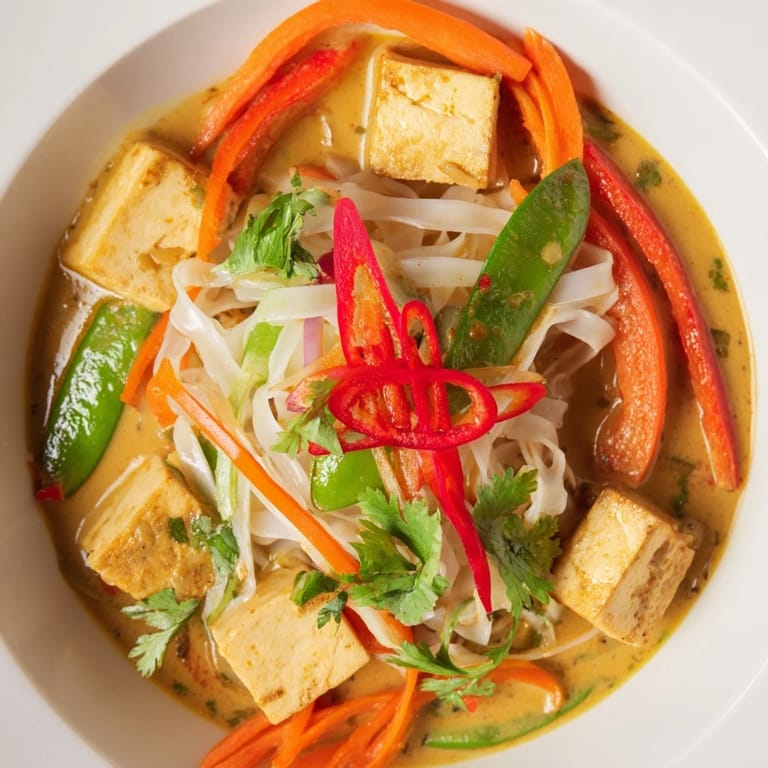
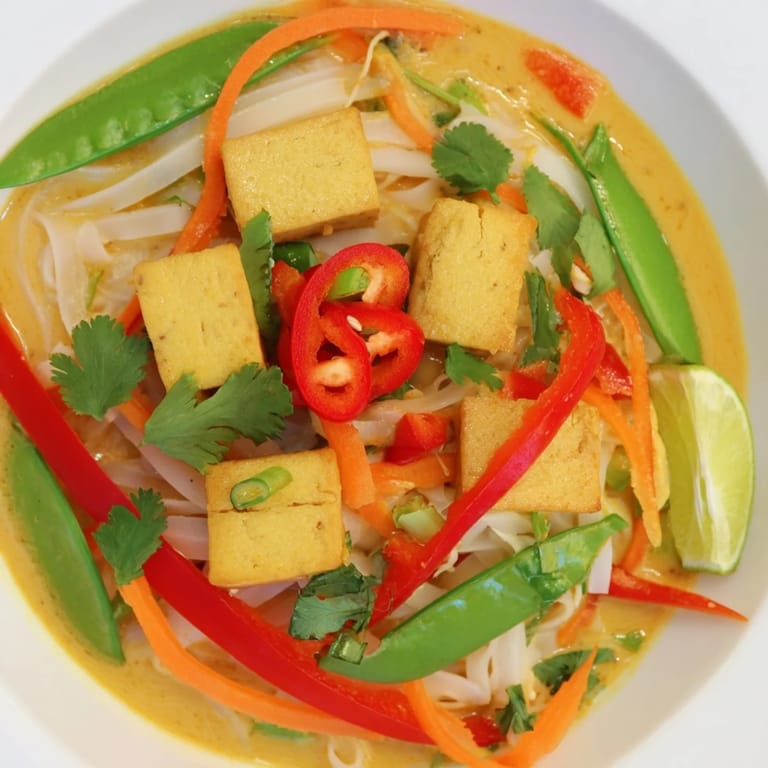
- Divide cooked noodles into bowls and ladle the hot broth and vegetables over top, then top with your fried tofu, fresh bean sprouts, spring onions, cilantro, and chili slices. Each person squeezes lime over their bowl and adjusts heat level to their taste.
 Save
Save There's something about sitting down to a bowl of laksa that feels ceremonial, even when you're eating it alone at your kitchen counter. The ritual of squeezing lime, adjusting chili, and wrapping fresh herbs around a spoonful of noodles makes the meal feel deliberate and special.
Why This Tastes Like the Real Thing
The secret isn't a fancy technique—it's respecting each ingredient's job and giving it time to shine. Lemongrass takes time to release its oils, laksa paste needs those 2 minutes to bloom in the oil, and the broth needs that 10-minute simmer to transform from separate components into something unified. Rushing any of these steps means missing the moment when everything clicks.
How to Make It Your Own
Once you've made this a few times, you'll start tweaking it based on what you have or what you're craving. Some days I add thick slices of mushroom or baby bok choy for more substance; other times I throw in a handful of cherry tomatoes for brightness. The structure stays the same, but the flexibility is part of what makes it feel homemade rather than restaurant-copied.
The Small Details That Change Everything
Laksa rewards attention to the little things—the size of your vegetable cuts, whether your tofu gets a proper sear, how much you stir the paste at the beginning. None of these are difficult, but they're the difference between a good bowl and one you remember hours later. Make it a few times and your hands will know exactly what to do.
- If your laksa paste separates or looks oily, don't panic—that's normal, and a good stir will bring it back together.
- Rice noodles can be prepared ahead and stored in the fridge with a light coating of oil to prevent sticking.
- Leftovers keep well for a few days, though the noodles soften after the first night, so store them separately and assemble fresh if you're planning ahead.
 Save
Save This laksa has become my kitchen anchor—the dish I make when I want to feel grounded and satisfied, and the one I'm always happy to cook for people who need comfort. It's proof that food doesn't need to be complicated to feel special.
Recipe FAQs
- → What type of noodles work best for this dish?
Rice noodles, either thick or vermicelli, are ideal as they absorb the rich coconut curry broth well while maintaining a pleasant texture.
- → How can I ensure the tofu is crispy and flavorful?
Lightly pan-fry firm tofu cubes in a nonstick skillet until all sides turn golden brown, adding a satisfying texture contrast.
- → Can I adjust the spice level of the broth?
Yes, the spice can be tailored by modifying the amount of laksa paste and adding fresh red chili slices according to taste preferences.
- → What vegetables complement the broth and tofu?
Carrots, red bell pepper, snow peas, bean sprouts, and spring onions add freshness, color, and subtle crunch to the dish.
- → Is this dish suitable for vegan diets?
It can be vegan if the laksa paste contains no shrimp paste or fish sauce. Always check ingredient labels to ensure adherence.
- → How long does it take to prepare and cook this dish?
Preparation takes around 20 minutes and cooking about 25 minutes, totaling approximately 45 minutes for a complete meal.