 Save
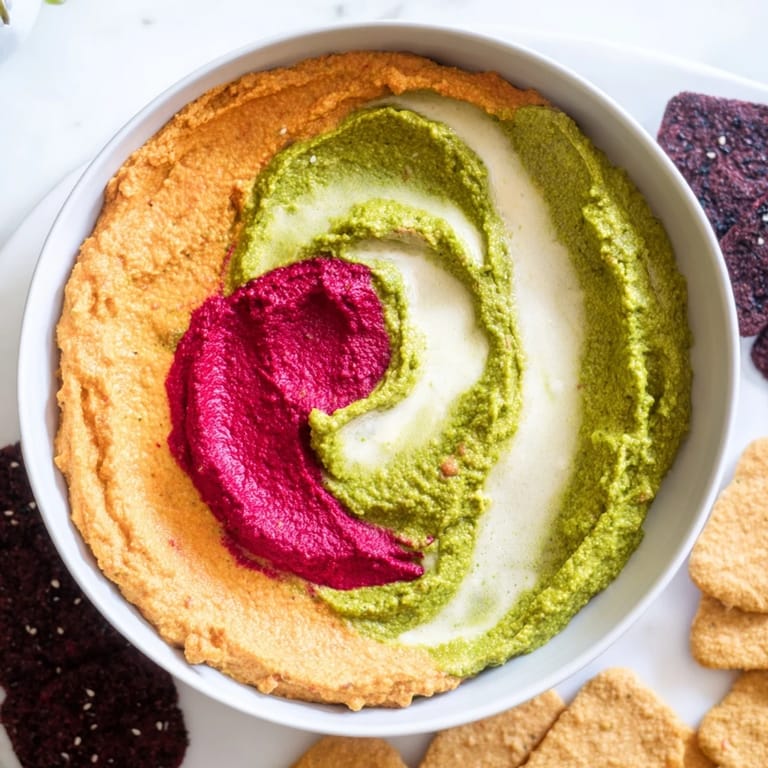
Save I discovered the magic of a marble swirl platter at a gallery opening where the food was almost as memorable as the art on the walls. Someone had arranged these jewel-toned dips in such a way that guests kept stopping mid-conversation to admire it before diving in with crackers. There's something about serving food that looks like it belongs in a museum that changes the entire mood of a gathering.
I made this for my sister's engagement celebration, and watching three generations crowd around the platter while catching up made me realize this isn't just appetizer—it's an excuse to slow down together. Someone's grandmother asked for the recipe, and that moment taught me that the most elegant dishes are often the ones that invite people to linger.
Ingredients
- Classic hummus: The creamy anchor that holds everything together and provides that familiar, comforting base note.
- Beet hummus: This gives you that deep jewel tone and brings an earthy sweetness that makes people pause and ask what it is.
- Spinach or basil pesto hummus: The green is essential for visual contrast, and the herbaceous flavor adds complexity without overwhelming.
- Roasted red pepper dip: Brings a vibrant warmth and slight sweetness that bridges between the earthier and fresher flavors.
- Greek yogurt: Use plain and unsweetened—this is your swirling secret weapon that creates those marble lines and adds subtle creaminess.
- Black sesame rice crackers: These crackers echo the sophistication of the platter and stay crisp longer than you'd expect.
- Beetroot crisps: They're crispy, slightly sweet, and mirror the beet hummus beautifully.
- Spinach or kale crackers: Choose whichever holds up best when you test one first—that matters more than you think.
- Classic water crackers: Your neutral player that lets each dip shine without competing.
Tired of Takeout? 🥡
Get 10 meals you can make faster than delivery arrives. Seriously.
One email. No spam. Unsubscribe anytime.
Instructions
- Build your color story:
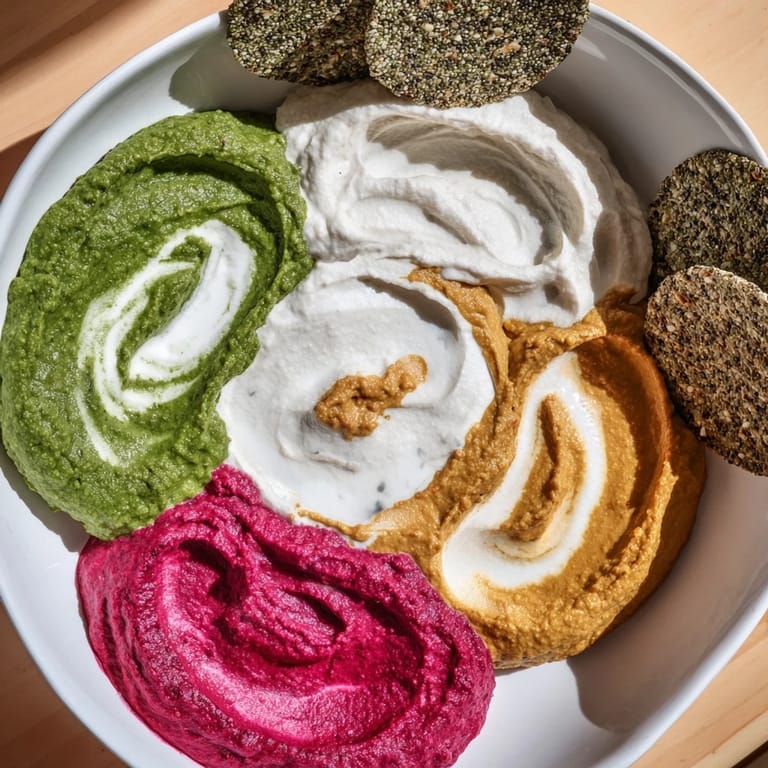
- Start by dolloping each dip randomly across your platter or shallow bowl, thinking like you're painting rather than following a grid. The more irregular the pattern, the more natural the final effect will look.
- Create the marble effect:
- Take a butter knife or the back of a spoon and gently drag it through the dips in one or two fluid motions, letting colors blend where they meet but stopping before everything becomes a muddy middle. You're looking for that moment when it looks intentional but not overworked.
- Add the yogurt drizzle:
- Spoon a few dollops of plain Greek yogurt across the top and make just a few light swirls with your knife—this adds those final marble veins and a silky texture that catches the light.
- Arrange the crackers:
- Group crackers by color around the perimeter like you're framing a piece of art, leaving enough white platter visible so everything feels intentional rather than crowded.
- Final touch:
- Step back and look at it from above, then serve immediately while everything is still at its peak vibrancy and the dips haven't separated.
 Save
Save My nephew, who's usually more interested in his phone than food, actually put it down to photograph this platter. He asked if he could make it at his school potluck, which meant everything to me in that moment because suddenly this simple appetizer had become something he wanted to create himself.
The Power of Presentation
Food that looks beautiful changes how people experience it—not because they're superficial, but because our eyes eat first. When you put effort into how something looks, you're essentially saying the people you're serving matter enough to deserve that extra thought. This marble swirl does all that work for you in under 20 minutes, which is the real magic.
Working with Store-Bought Dips Smartly
You don't need to make your hummus from scratch—quality store-bought versions are honestly better for this than rushed homemade ones. What matters is tasting each dip before you buy and choosing ones that feel distinctly different in flavor, not just color. I've learned that a vibrant roasted red pepper dip paired with a deep, earthy black bean version creates more interesting conversation than three subtle variations on a theme.
Customizing for Your Crowd
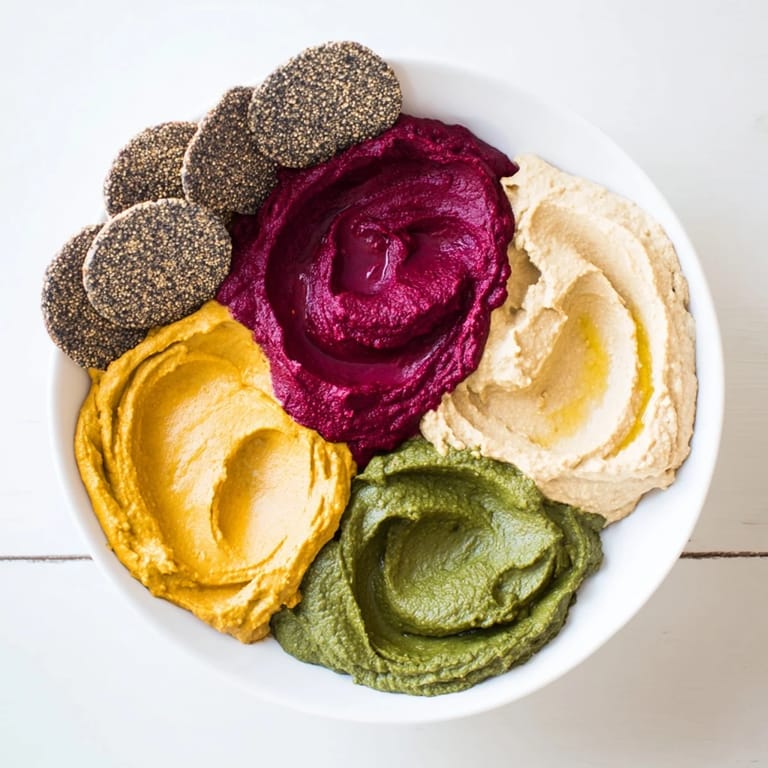
The beauty of this platter is that it adapts to whatever you have on hand or whatever's calling to you that day. Some seasons I reach for bright yellows and oranges—turmeric hummus, butternut squash dip—while winter feels right for deeper burgundies and forest greens. Think about what tells the story of right now, then let the dips follow.
- Add edible flowers or microgreens scattered across the top for an extra touch of sophistication that costs almost nothing.
- Try swirling in a drizzle of quality olive oil or tahini mixed with lemon juice for another layer of flavor and visual interest.
- Keep small spreaders or spoons nearby so guests don't double-dip, which is both more hygienic and more elegant.
 Save
Save This is the kind of dish that reminds me why I love cooking—not because the technique is complicated, but because the result makes people feel celebrated. Serve it with confidence and watch how a simple platter becomes the thing people remember about your gathering.
Recipe FAQs
- → How do I achieve the marble swirl effect?
Dollop each dip separately on the platter, then gently swirl together using a butter knife or spoon's back. Avoid overmixing to preserve distinct colors.
- → Can I substitute the Greek yogurt for a vegan option?
Yes, coconut yogurt or other plant-based alternatives work well to create the swirl lines without dairy.
- → What crackers complement the dips best?
Use a variety of crackers such as black sesame rice, beetroot crisps, spinach or kale crackers, and classic water crackers to match the dips’ vibrant colors.
- → How long can the dip platter be prepared in advance?
Prepare the dips ahead, but swirl and arrange crackers just before serving to keep colors fresh and vibrant.
- → Are there gluten-free options for the crackers?
Yes, select gluten-free crackers like rice or seed-based varieties to accommodate dietary restrictions.