 Save
Save The first time I watched my grandmother crack open a mud crab at the hawker center, I was mesmerized by the chaos of it all—hot sauce splattered across her apron, a knowing smile as she showed me how to extract every precious morsel of meat. Years later, I realized that chili crab isn't just about technique; it's about embracing the beautiful mess and celebrating seafood with an unafraid hand. This Singaporean classic found its way into my regular rotation one humid August evening when I decided to recreate that exact memory in my own kitchen.
I remember cooking this for a friend who'd just moved to the city and was homesick for Southeast Asian food—watching her face light up as she bit into a piece of crab slicked in that silky, spiced sauce made me understand why this dish has survived generations. She asked for the recipe before she even finished eating, which is always the highest compliment in my book.
Ingredients
- 2 whole live mud crabs (about 1.5 kg total), cleaned and cut into pieces: Mud crabs have sweeter, denser meat than other varieties and hold up beautifully to vigorous stir-frying without falling apart.
- 3 tbsp vegetable oil: High heat oil is essential here; it keeps the wok hot enough to properly sear the crab pieces and build flavor.
- 1 medium onion, finely chopped: The onion dissolves into the sauce base, providing sweetness and body that balances the heat.
- 5 cloves garlic, minced: Don't hold back—garlic is your friend in this sauce, adding depth that matures as the dish simmers.
- 3 red chilies, deseeded and chopped: Red chilies give color and a fruity heat without overwhelming; deseeding keeps the spice level manageable.
- 2 birds eye chilies, chopped: These small ones pack serious punch and should be adjusted based on your tolerance and audience.
- 2 cm piece fresh ginger, peeled and minced: Fresh ginger adds a clean bite that cuts through the richness of the sauce and the crab meat.
- 250 ml tomato ketchup: This is the soul of the sauce, providing umami and sweetness that modern chili crab is built upon.
- 2 tbsp chili sauce (such as Sriracha or sambal oelek): Your choice here matters; sambal oelek gives a more authentic Southeast Asian kick than Sriracha.
- 1 tbsp sugar: A touch of sweetness rounds out the spice and makes the sauce addictive rather than one-dimensional.
- 1 tbsp soy sauce: Soy brings saltiness and umami that binds all the flavors together.
- 1 tsp fish sauce: Just a whisper of fish sauce adds an authentic depth that diners won't be able to name but will crave.
- 250 ml chicken or seafood stock: Stock creates the liquid foundation for the glaze; seafood stock intensifies the flavor but chicken works just fine.
- 1 tsp cornstarch mixed with 1 tbsp water: This slurry thickens the sauce so it clings to the crab instead of running off the plate.
- 2 large eggs, lightly beaten: The eggs create silky ribbons that add richness and visual appeal; they're the final flourish that makes this feel special.
- 2 spring onions, sliced: Spring onions add a fresh green note and slight onion bite that brightens the heavy sauce.
- Fresh cilantro, chopped: Cilantro feels herbaceous and prevents the dish from feeling too heavy after a big bowl.
- Lime wedges, to serve: Lime is the secret weapon—a squeeze over each piece adds acid that cuts through richness and wakes up tired taste buds.
Tired of Takeout? 🥡
Get 10 meals you can make faster than delivery arrives. Seriously.
One email. No spam. Unsubscribe anytime.
Instructions
- Heat and soften:
- Set your wok over medium heat and let the oil shimmer for a moment before adding onions; this two-minute window is crucial for building a clean foundation rather than burning things at the start.
- Wake up the aromatics:
- Add garlic, ginger, and both types of chilies together and stir constantly for 2–3 minutes until your entire kitchen smells like a Southeast Asian night market. The noise should be almost a whisper in the oil, and the kitchen should smell incredible before you move on.
- Introduce the crab:
- Toss in the crab pieces and let them sit in the hot aromatics for a minute before stirring, allowing the shells to pick up color and the meat to start releasing its sweetness. You'll notice the smell shift from spicy to oceanic—that's when you know the crab is engaging with the flavors.
- Build the sauce:
- Pour in the ketchup, chili sauce, sugar, soy sauce, fish sauce, and stock all at once, stirring to combine so nothing catches on the bottom. The mixture will look thin and uncertain at first, but trust the process.
- Simmer and soften:
- Bring everything to a rolling boil, then reduce heat and let it bubble gently for 10–12 minutes, turning the crab pieces every few minutes so they cook evenly and the sauce reduces and concentrates. This is the moment to taste and adjust salt or spice if needed.
- Thicken to silky:
- Stir the cornstarch slurry one more time before pouring it in slowly while stirring; the sauce should thicken just enough to coat a spoon and cling to the crab pieces.
- Create the egg ribbons:
- Turn the heat up slightly so the sauce bubbles actively, then drizzle beaten eggs in a thin stream while stirring gently in one direction; the eggs will cook into delicate strands that float through the sauce. Stop as soon as you see the ribbons form—overworking them creates scrambled eggs instead of elegance.
- Finish and serve:
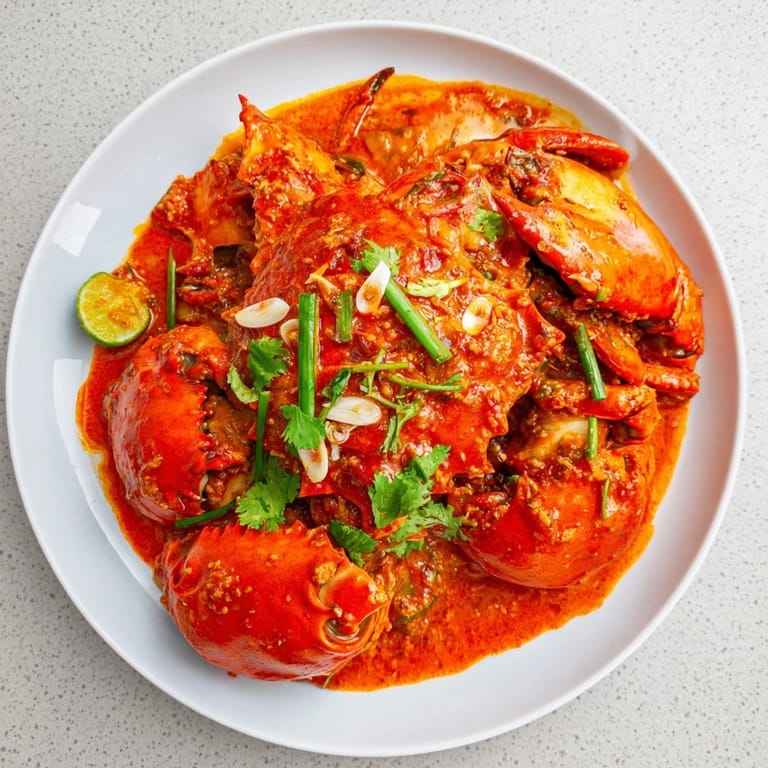
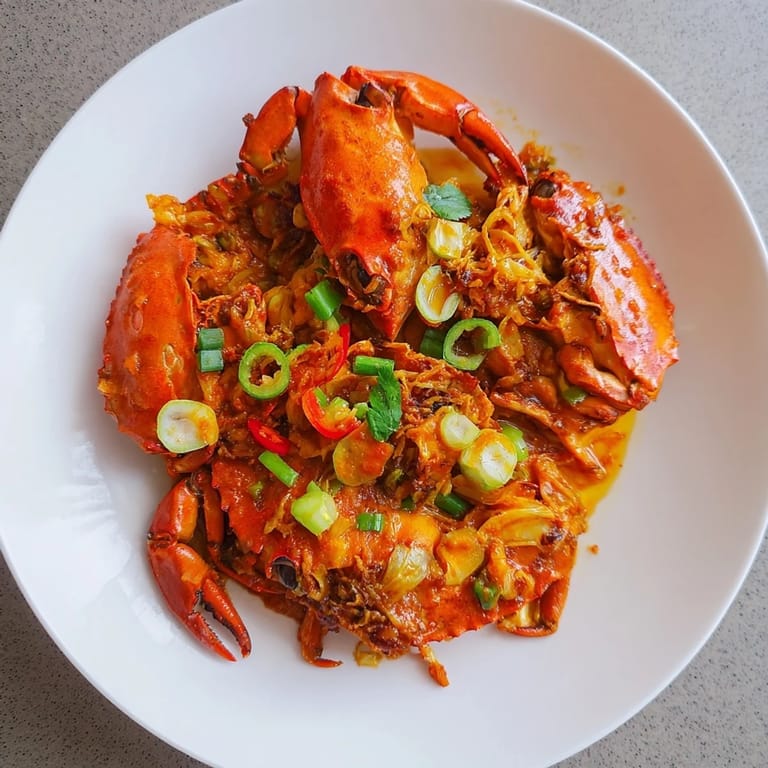
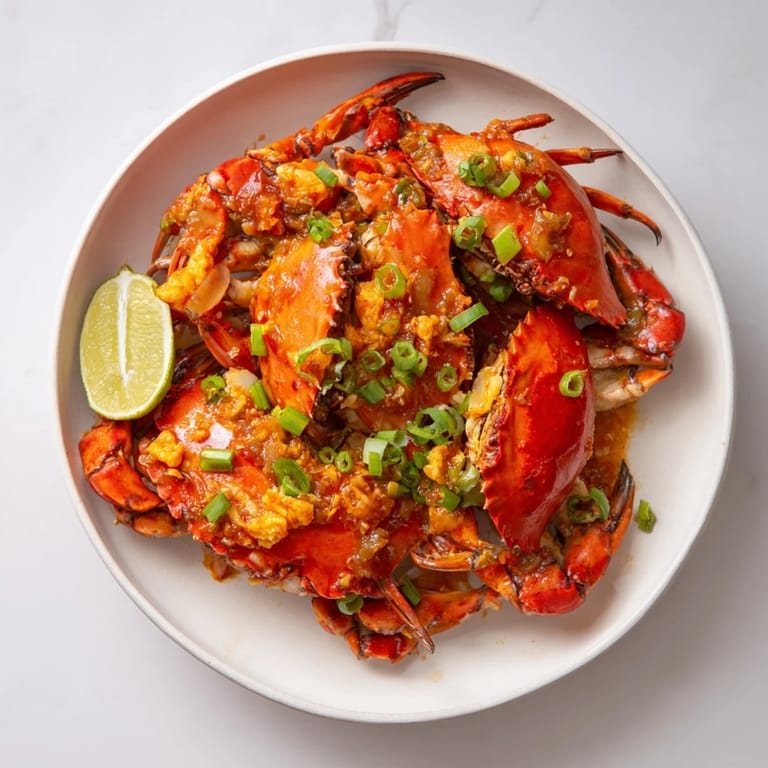
- Remove from heat, scatter spring onions and cilantro over the top, and bring the whole wok or pan to the table with lime wedges on the side. The crab should be a vibrant red-orange, glossy with sauce, and ready for hungry hands.
 Save
Save There's something about sharing chili crab that brings people together in a way other dishes don't—maybe it's because everyone looks equally undignified covered in sauce, or maybe it's the primal satisfaction of cracking open a shell and finding treasure inside. Either way, I've learned this dish is less about perfection and more about generosity.
Mastering the Sauce Balance
The magic of authentic chili crab lives in the sauce ratio, and I discovered this the hard way after a batch that tasted more like pure heat than a harmonious dish. The key is understanding that ketchup provides sweetness and body, chili sauce brings the fire, and fish sauce adds that almost invisible depth that makes people ask for the recipe. Start conservative with fish sauce—a teaspoon sounds tiny until you taste how far it carries.
Choosing Your Crab Wisely
Mud crabs are the traditional choice because their meat is firm and sweet, holding up to aggressive cooking without turning mushy or bland. If you can't find mud crabs, blue swimmer crabs work beautifully though they cook slightly faster, and Dungeness crabs offer a slightly different sweetness that isn't bad, just different. Whatever you choose, make sure it's alive right up until cooking—this matters more than you'd think.
The Art of Eating Chili Crab
This dish demands napkins, newspaper under the table, and a willingness to get messy in the best way possible. The sauce should be generously spiced, silky from the eggs, and thick enough to cling but loose enough to soak into steamed buns or rice. Serve it with plenty of lime wedges because that bright acid cuts through richness in a way nothing else can.
- Have hot water and lemon at the table for sticky fingers because half the experience is the tactile, hands-on eating.
- Pair this with soft white rice or steamed mantou buns, both of which become vehicles for every drop of sauce.
- Save the shells and any remaining sauce to make a quick seafood stock the next day—nothing goes to waste in proper cooking.
 Save
Save This chili crab recipe carries the spirit of Singapore's hawker culture into your home, turning an ordinary evening into a celebration. Make it often, adjust it fearlessly, and watch how quickly it becomes the dish people request first.
Recipe FAQs
- → What type of crab is best for this dish?
Fresh mud crabs are preferred for their sweet meat, but blue swimmer or Dungeness crabs can be substituted.
- → How spicy is the chili sauce?
The heat level can be adjusted by varying birds eye chilies; it balances spiciness with a mild sweetness.
- → Can I prepare the sauce ahead of time?
Yes, the chili tomato sauce can be made in advance and gently reheated before tossing with the crab.
- → What sides complement this dish well?
Steamed mantou buns or plain rice are ideal to soak up the flavorful sauce.
- → How do I get silky egg ribbons in the sauce?
Slowly pour lightly beaten eggs into the simmering sauce while stirring gently to create delicate ribbons.