 Save
Save There's a moment every winter when my kitchen smells like caramelized onions and I know exactly what's needed—those golden, crispy croutons that refuse to sink into the rich broth. I learned this trick by accident, really, when I had a day-old sourdough loaf sitting on my counter and decided to salvage it instead of tossing it into the compost. The tanginess of sourdough paired with melted Gruyère transformed what could have been an afterthought into the star of the bowl.
I made these for a small dinner party last November when a friend mentioned she'd never had proper French onion soup, only the canned version from a college dorm room. Watching her eyes light up when that first spoonful hit—the crouton still steaming, cheese pulling in those perfect strings—made me realize how much texture matters. A good crouton doesn't just sit there; it holds the soup together, gives you something to bite down on, becomes part of the whole experience.
Ingredients
- Sourdough bread (4 cups cubed, about 200 g): Day-old bread works best because it's drier and will crisp up beautifully without turning leathery; fresh bread tends to stay soft in the middle.
- Olive oil or melted butter (3 tbsp): Oil gives a cleaner flavor and crispier texture, while butter adds richness—choose based on what your soup already has.
- Garlic clove, minced (1): Fresh garlic is essential here; it'll dry slightly as it toasts and become almost sweet, melding perfectly with the sourdough.
- Sea salt (1/2 tsp): Sea salt dissolves more evenly than table salt and tastes cleaner on the finished crouton.
- Freshly ground black pepper (1/4 tsp): Grind it fresh right before tossing; pre-ground pepper loses its brightness.
- Dried thyme or herbes de Provence (1/4 tsp, optional): These herbs echo the French theme and add an herbaceous note that balances the richness of cheese.
- Grated Gruyère or Emmental cheese (1/2 cup, 50 g, optional): Gruyère melts smoothly and adds a nutty complexity that ordinary cheddar can't match.
Tired of Takeout? 🥡
Get 10 meals you can make faster than delivery arrives. Seriously.
One email. No spam. Unsubscribe anytime.
Instructions
- Set your oven to heat:
- Preheat to 375°F (190°C) and line a baking sheet with parchment paper so nothing sticks and cleanup stays simple.
- Build your coating:
- In a large bowl, whisk together olive oil, minced garlic, salt, pepper, and herbs if you're using them. The mixture should smell savory and alive.
- Coat every cube:
- Add your sourdough cubes and toss everything together until each piece glistens with the oil mixture. Don't be shy here; every corner should be touched.
- Spread and bake:
- Arrange the bread cubes in a single layer on your sheet and slide into the oven for 15–18 minutes, stirring once halfway through. You're looking for golden-brown edges and a crispy exterior.
- Add cheese if you like:
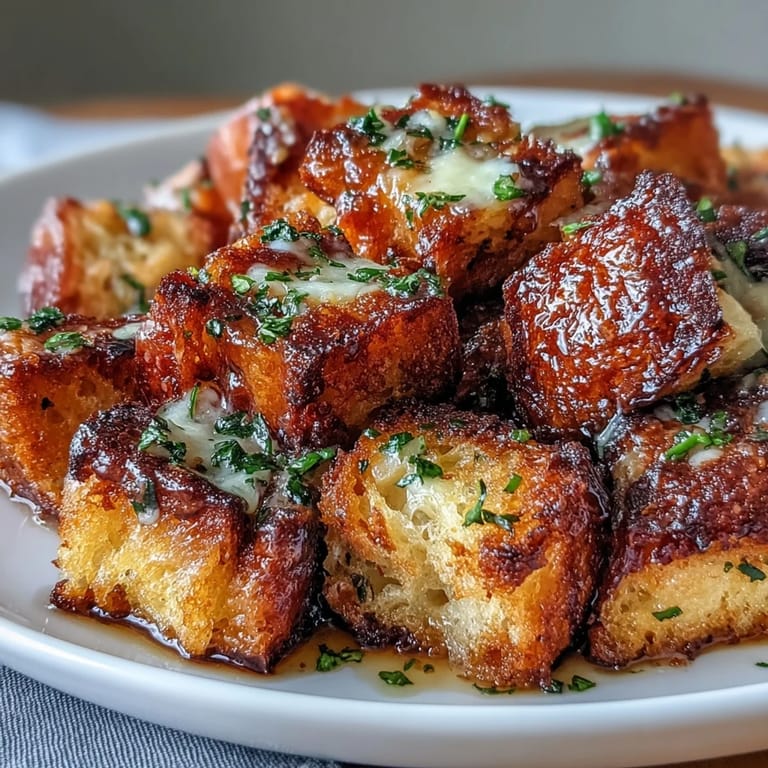
- Once the croutons are golden, sprinkle grated cheese over the hot bread and return to the oven for just 2–3 minutes until it's melted and bubbly. Watch carefully so it doesn't burn.
- Cool before serving:
- Let them rest on the baking sheet for a few minutes so the cheese sets and the croutons finish crisping as they cool slightly.
 Save
Save There's something about the moment when you float a perfect crouton on top of a steaming bowl of French onion soup and watch it bob slightly before sinking into the broth. It transforms the whole dish from good to memorable, from something warming to something you want to talk about hours later.
Storage and Make-Ahead Magic
These croutons taste best eaten the same day, while they're still crispy, but they'll hold in an airtight container for up to three days if you need to prep ahead. I usually make them in the morning and store them at room temperature, then float them on soup just before serving. If they've gone a bit soft, you can give them a quick 5-minute refresh in a 375°F oven to bring back the crunch.
Variations Worth Trying
Once you've made these once, you'll start experimenting. I've swapped Gruyère for Comté (which is earthier and slightly less sharp) and for aged Swiss cheese, which adds a different kind of depth. Some cooks rub the bread cubes with a halved raw garlic clove before cubing for an extra punch, though this is intense if you're sensitive to raw garlic. The herbs can shift too—a pinch of paprika gives subtle warmth, while fresh rosemary (if you have it) creates an entirely different mood.
The Finishing Touches
The real secret to croutons that feel intentional rather than thrown together is treating them like they matter. They're not a side note or a way to use up old bread; they're part of your soup's structure, its personality. Taste one right out of the oven before you put it in the bowl—this is when you know you've gotten it right.
- If your oven runs hot or cold, adjust timing by a minute or two; every oven behaves differently, so trust what you see, not just the timer.
- Make sure your bread cubes are roughly uniform in size so they bake at the same rate and none burn while others stay soft.
- If you're making soup for a crowd, double this recipe; croutons disappear quickly and people always want more.
 Save
Save French onion soup without proper croutons is like winter without a warm coat—it works, but it's missing something essential. These will change how you think about soup bowls.
Recipe FAQs
- → What type of bread works best for these croutons?
Day-old sourdough bread cut into 1-inch cubes is ideal to achieve a crunchy texture and pronounced flavor.
- → Can I use butter instead of olive oil?
Yes, melted unsalted butter can be used as an alternative to olive oil for a richer taste.
- → How can I add more flavor to the croutons?
Rubbing the bread with a halved garlic clove before cubing enhances garlic aroma; adding herbs like thyme or herbes de Provence adds complexity.
- → Is it necessary to add cheese?
Cheese is optional but adds a creamy, savory dimension when melted over the hot croutons.
- → How should I store leftover croutons?
Store in an airtight container at room temperature for up to three days to maintain crispness.