 Save
Save I discovered tteokbokki on a rain-soaked Seoul street corner, watching vendors stir massive pots of glossy rice cakes with practiced urgency. The steam rose thick and spicy, and I found myself mesmerized by how those humble cylindrical cakes transformed into something impossibly chewy and alive in the bubbling sauce. Now whenever I make it at home, my kitchen fills with that same intoxicating haze of gochujang and sesame, and suddenly I'm not just cooking—I'm standing in that crowd again, eager and hungry.
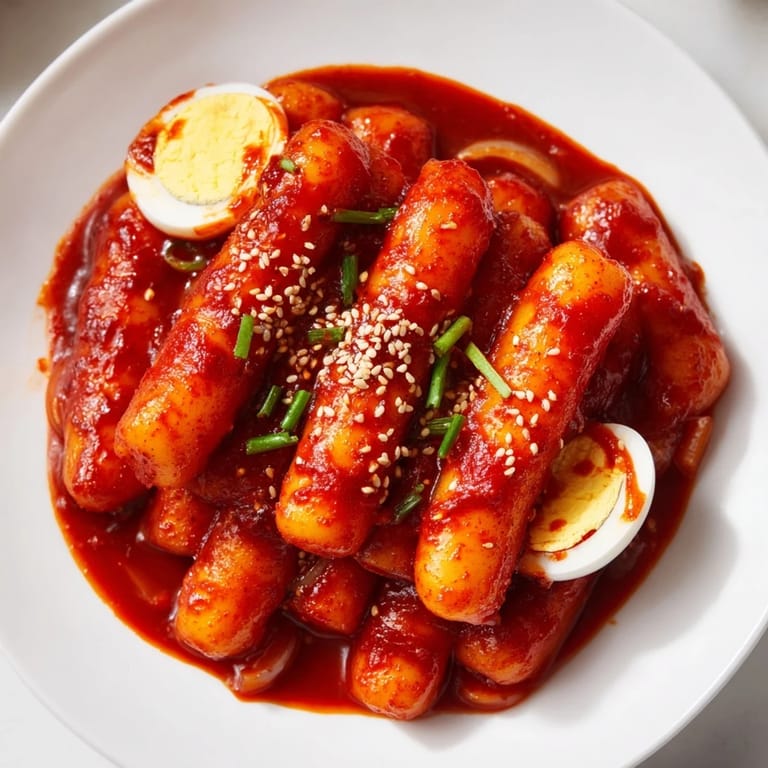
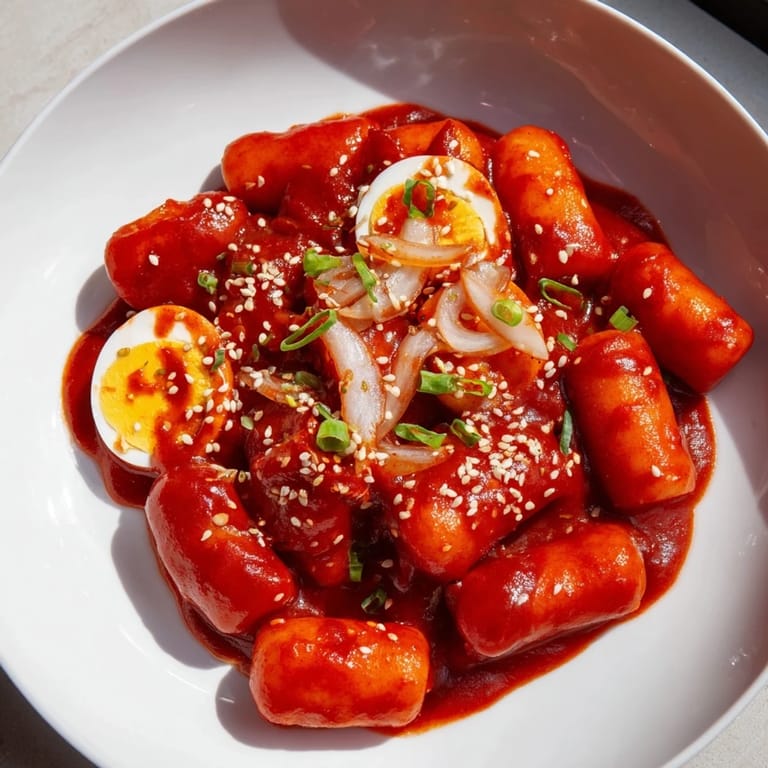
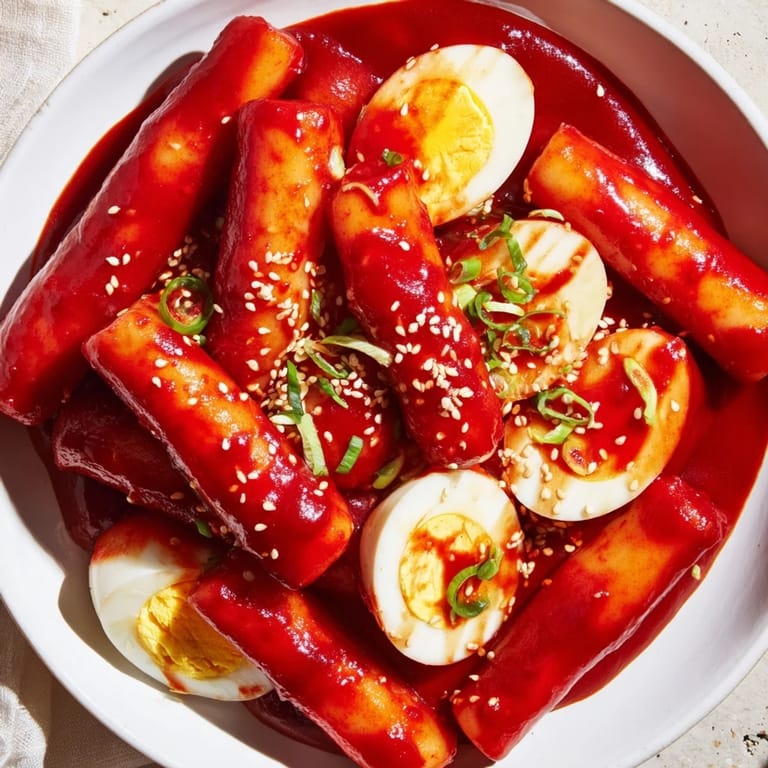
My roommate once stopped mid-conversation when she tasted this for the first time, fork pausing halfway to her mouth. That moment—when someone's expression shifts from polite curiosity to genuine delight—is exactly why I keep making it. The chewy rice cakes, the richness of the sauce clinging to each piece, the silky warmth of the egg yolk breaking into the broth: it's the kind of dish that doesn't need explaining, just tasting.
Ingredients
- Rice cakes (500g): Look for the cylindrical Korean tteok sold fresh or frozen; they're essential to the texture and can't really be substituted.
- Gochujang (3 tablespoons): This fermented chili paste is the soul of the dish, bringing depth that fresh chili alone never achieves.
- Gochugaru (2 tablespoons): The flakes add heat and a subtle texture; start with less if you prefer gentler spice.
- Eggs (4 large): The soft yolk becomes part of the sauce, so don't skip them or boil them past the 9-minute mark.
- Kombu and anchovies: These create an umami-rich broth that tastes like it's been simmering for hours, though it takes just 10 minutes.
- Sesame oil (1 teaspoon): Toasted sesame oil is non-negotiable; regular won't give you that warm, nutty whisper at the end.
- Garlic, soy sauce, honey: These three balance the heat with savory and sweet notes that make the sauce feel complete.
Tired of Takeout? 🥡
Get 10 meals you can make faster than delivery arrives. Seriously.
One email. No spam. Unsubscribe anytime.
Instructions
- Prepare your rice cakes:
- Soak them in warm water for 10 minutes if they're refrigerated or seem stiff. You'll feel them soften slightly, which means they're ready to absorb the sauce without turning into mush.
- Build your broth foundation:
- Water, kombu, and anchovies go into a saucepan and simmer for 10 minutes—you're not making soup, just extracting that deep umami backbone. Once the kelp and anchovies come out, what remains is pure, clear broth that tastes far better than it has any right to.
- Cook the eggs:
- Eight to nine minutes in boiling water gives you that creamy center while the white sets properly. As they cool in cold water, you're buying yourself precious minutes to handle everything else without rushing.
- Build the sauce:
- Whisk gochujang, gochugaru, soy sauce, sugar, honey, minced garlic, and sesame oil straight into the warm broth. Stir until you don't see any red paste streaks—the sauce should be smooth and glossy, almost like silk.
- Bring it all together:
- Rice cakes, onion, and fish cake (if using) go in now, and here's where the magic happens: over medium heat, they simmer for 10 to 12 minutes, the sauce gradually thickening as the rice cakes release their starch and the liquid reduces. Stir occasionally so nothing sticks.
- Finish with eggs:
- Peel those eggs, add them in, and let everything warm through for another 2 to 3 minutes. The heat will coax their warmth back without overcooking them.
- Garnish and serve:
- Green onions and sesame seeds scattered on top aren't just decoration—they add a fresh snap and nutty aroma that cuts through the richness.
 Save
Save One evening, my sister added extra gochugaru without telling me, and what I served ended up being genuinely too spicy for most guests. But she loved it, eating slowly and deliberately, tears streaming down her face while laughing at herself, and somehow that became the moment this dish felt like ours—not something from a cookbook, but something alive and personal.
The Heat Balance You're After
Tteokbokki isn't meant to blow your mouth apart; it's meant to wake it up. The gochujang brings warmth and depth, while gochugaru adds a sharper, more immediate heat. If you've only ever had the super-spicy street vendor version, know that you can absolutely pull back here and still have something delicious. Start with the amounts given, taste a rice cake as it cooks, and adjust if needed—there's no shame in being honest about your spice tolerance.
Customizing Your Bowl
The base recipe is beautiful as-is, but this is exactly the kind of dish that welcomes improvisation. Shredded cabbage or carrots add a subtle sweetness and crunch that plays nicely against the soft rice cakes. Ramen noodles make it more filling. Even a handful of mushrooms or a splash of fish sauce (if you're not vegetarian) can deepen the flavor further. I've never made it the exact same way twice, and that's kind of the point—you're not following instructions so much as cooking with intention.
Making It Vegetarian
Leaving out anchovies and fish cake doesn't diminish this dish nearly as much as you might fear. Use vegetable broth instead of water, and you lose almost nothing in terms of depth. If you want to lean into that umami a bit more, add a small piece of kombu and let it steep a little longer, or stir in a teaspoon of miso at the end. The dish remains warm, comforting, and entirely complete.
- Kombu alone can carry the broth if you give it proper simmering time, usually 12-15 minutes instead of 10.
- A pinch of MSG or a splash of soy sauce can bridge any umami gap you feel without complicated substitutions.
- Don't hesitate to add more vegetables when you're going vegetarian—they belong here and make the bowl feel fuller.
 Save
Save Tteokbokki is proof that the best dishes often come from limitations and tradition—a way to make something memorable from simple ingredients and technique. Every time I make it, I'm grateful for those Seoul streets and that rainy afternoon that changed what I thought food could be.
Recipe FAQs
- → What type of rice cakes are used?
Cylindrical Korean rice cakes (tteok) are ideal for their chewy texture and ability to absorb the bold sauce flavors.
- → Can I make a vegetarian version?
Yes, omit anchovies and fish cake, and use vegetable broth for a flavorful vegetarian alternative.
- → How spicy is the dish generally?
The spiciness comes from gochujang and gochugaru, which can be adjusted to taste for milder or more intense heat.
- → How are the eggs prepared?
Eggs are boiled for 8–9 minutes until tender, peeled, and then simmered briefly in the sauce for added flavor.
- → What garnishes enhance the dish?
Sliced green onions and toasted sesame seeds provide fresh and nutty notes, complementing the rich sauce.
- → Any tips for texture variation?
Adding vegetables like cabbage or carrots, or noodles such as ramen, can add interesting texture contrasts.