 Save
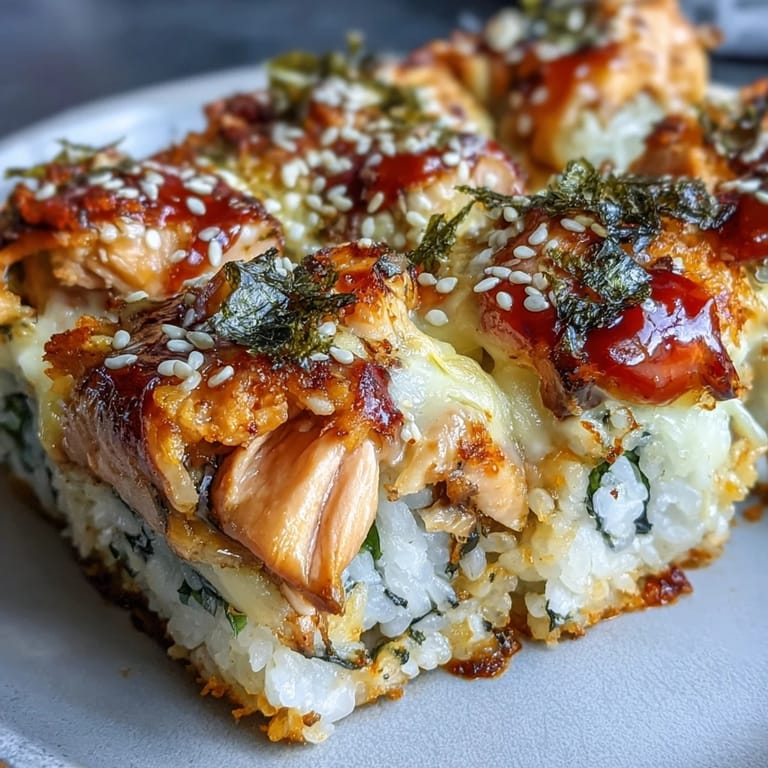
Save My friend texted me a TikTok link at midnight with the words "we're making this tomorrow." That's how I found myself standing in her kitchen the next afternoon, staring at a bubbling casserole dish that somehow tasted exactly like spicy salmon rolls but required none of the rolling skills I definitely don't have. The beauty of this sushi bake hit me immediately: all the flavor, none of the fuss, and enough to feed a small party. We devoured half the pan before anyone else arrived.
I made this for a potluck once and watched people hover around the dish, unsure whether to scoop it onto seaweed or just eat it straight from the spoon. Most chose both. There's something about the communal nature of a sushi bake that turns dinner into an event, everyone building their own little bites and adjusting the sriracha drizzle to their personal heat tolerance. One friend declared it better than takeout, which I'm still not sure I believe, but I'll take the compliment.
Ingredients
- Sushi rice: The foundation of everything, and rinsing it until the water runs clear is the difference between fluffy grains and a gummy mess.
- Rice vinegar, sugar, and salt: This trio seasons the rice with that classic sushi tang and subtle sweetness you can't skip.
- Salmon fillet: Fresh is ideal, but I've used thawed frozen fillets in a pinch and nobody noticed.
- Kewpie mayonnaise: The Japanese mayo with the slightly sweet, umami-rich flavor makes this taste authentic, though regular mayo works if that's what you have.
- Sriracha sauce: Start with two tablespoons and taste before adding more, because heat tolerance varies wildly and you can always add, never subtract.
- Soy sauce and toasted sesame oil: These deepen the flavor and add that nutty, salty backbone that makes the salmon mixture irresistible.
- Nori sheet: Crumbled between the rice and salmon, it adds that oceanic, slightly crispy element that screams sushi.
- Mozzarella cheese: Untraditional but wildly popular, it melts into a gooey, golden top layer that's completely optional but highly recommended.
- Sesame seeds and avocado: The final garnishes that make it look as good as it tastes, plus the avocado adds cool creaminess against the spice.
Tired of Takeout? 🥡
Get 10 meals you can make faster than delivery arrives. Seriously.
One email. No spam. Unsubscribe anytime.
Instructions
- Prepare the sushi rice:
- Rinse your rice under cold water, swishing it around until the water goes from cloudy to clear, which removes excess starch and prevents clumping. Cook it in your rice cooker or on the stovetop, then gently fold in the warm vinegar mixture while the rice is still hot so it absorbs all that sweet, tangy goodness.
- Bake the salmon:
- Brush your fillet with a little oil and slide it into a hot oven until it flakes easily with a fork, about 12 to 15 minutes depending on thickness. Let it cool just enough to handle, then use a fork to break it into small, tender pieces.
- Mix the spicy salmon:
- Combine the flaked salmon with mayo, sriracha, soy sauce, sesame oil, and green onions in a bowl, stirring until everything is creamy and evenly coated. Taste it now and adjust the sriracha if you want more heat or the mayo if you want it creamier.
- Assemble the layers:
- Press the seasoned rice into the bottom of your greased baking dish, creating an even layer, then scatter crumbled nori on top. Spread the spicy salmon mixture over the nori, and if you're using cheese, sprinkle it generously across the top.
- Bake until bubbly:
- Slide the dish into your preheated oven and let it bake until the cheese melts into a golden, bubbling layer and everything is heated through, about 10 to 12 minutes. Let it rest for a few minutes before garnishing with sesame seeds, avocado slices, and those final drizzles of sriracha and mayo that make it Instagram-ready.
 Save
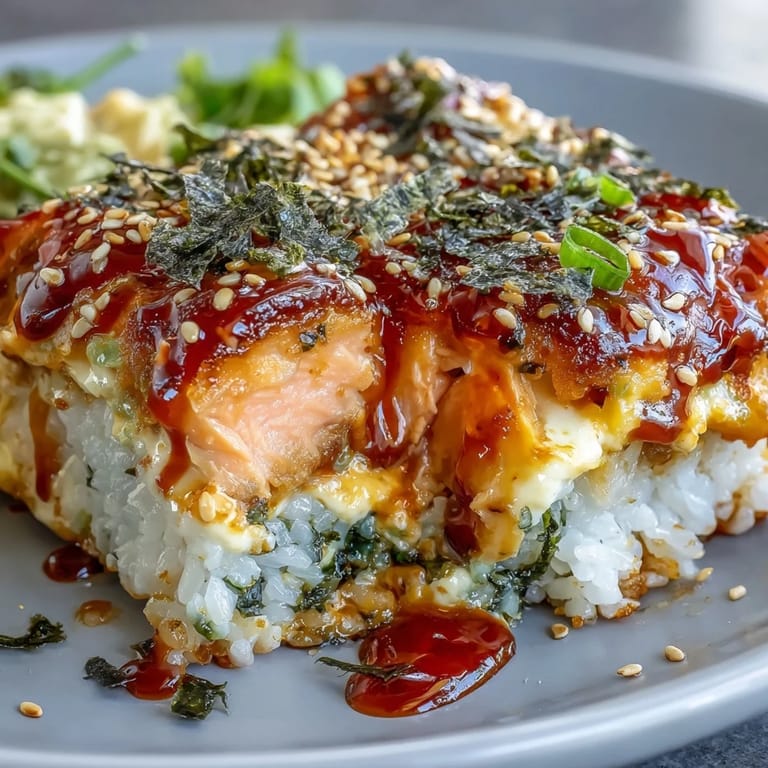
Save The first time I served this at a dinner party, someone asked for the recipe before they even finished their first helping. That moment when a dish crosses from "this is good" to "I need to make this myself" is what keeps me cooking. This sushi bake has earned that reaction more times than I can count, and I never get tired of watching people realize they can recreate restaurant flavors at home with minimal effort.
Choosing Your Salmon
I used to stress about finding sushi-grade salmon until I realized that since we are baking it fully, you can use any fresh salmon fillet from the grocery store. Look for bright, firm flesh without any fishy smell, and if the skin is still on, ask the counter to remove it or do it yourself with a sharp knife. Frozen fillets work beautifully too, just thaw them completely in the fridge overnight and pat them dry before baking to avoid excess moisture in your final dish.
Make It Your Own
Once you master the basic version, this becomes a playground for variations. I have swapped salmon for lump crab meat, added a layer of cream cheese for extra richness, and even stirred in diced cucumber for crunch. A friend tops hers with furikake seasoning and fried garlic, which adds a whole new level of umami. The structure is forgiving enough that you can adjust based on what you have in the fridge or what sounds good that day.
Serving and Storing
This is best served warm, straight from the oven, with roasted seaweed snacks on the side so people can scoop their own little handheld bites. Leftovers keep in the fridge for up to two days, though the rice will firm up, so I reheat individual portions in the microwave with a damp paper towel on top to add back some moisture. It does not freeze well because the texture of the rice and mayo changes too much, so plan to enjoy it within a couple of days.
- Set out small bowls of extra sriracha, mayo, and soy sauce so guests can customize their heat and richness levels.
- If you are making this ahead, assemble everything up to the final baking step, cover tightly, and refrigerate for up to four hours before popping it in the oven.
- Garnish just before serving so the avocado does not brown and the sesame seeds stay crunchy and visible.
 Save
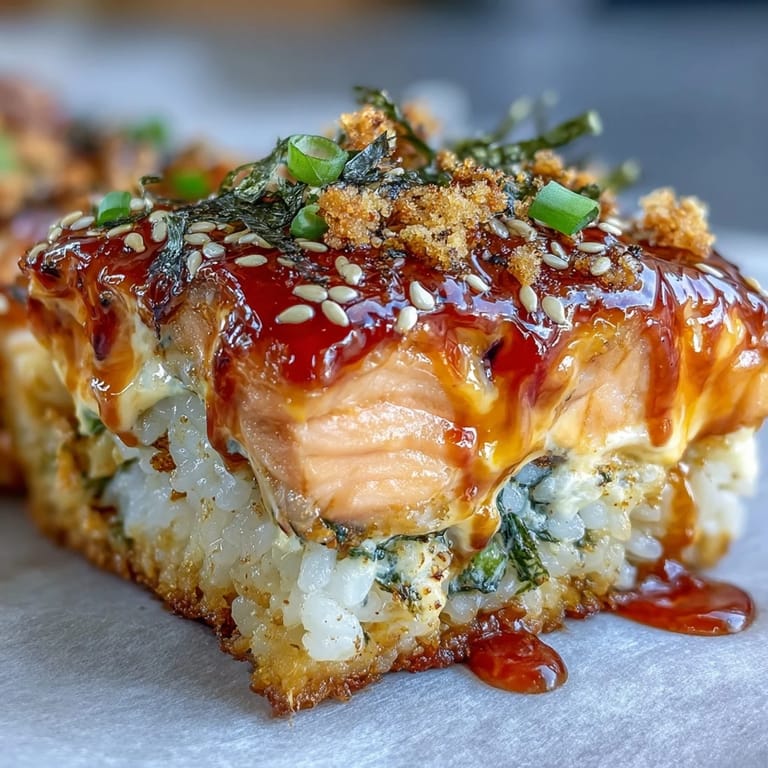
Save This dish has become my go-to whenever I want to impress without spending hours in the kitchen. It proves that some of the best recipes are the ones that take familiar flavors and reimagine them into something easier, shareable, and just as delicious.
Recipe FAQs
- → Can I make this ahead of time?
Yes, prepare the components up to 24 hours in advance. Store rice and salmon mixture separately in the refrigerator. Assemble and bake when ready to serve, adding 5-10 minutes to baking time if chilled.
- → What can I use instead of salmon?
Cooked crab, imitation crab, or cooked shrimp work beautifully as substitutes. Even cooked shredded chicken or tofu can be used for different variations while maintaining the creamy, spicy elements.
- → Is this dish spicy?
The heat level is easily adjustable. Start with 2 tablespoons sriracha for mild-medium spice, or increase to 3 tablespoons for more heat. You can always serve extra sriracha on the side for those who prefer it spicier.
- → Do I need a rice cooker?
No, you can cook sushi rice on the stovetop. Combine rice and water in a pot, bring to a boil, then reduce heat to low, cover, and simmer for 18-20 minutes until water is absorbed. Let stand covered for 10 minutes before seasoning.
- → How do I store leftovers?
Store in an airtight container in the refrigerator for up to 3 days. Reheat in the oven at 180°C (350°F) for 10-15 minutes or microwave individual portions. The rice may dry out slightly, so add a splash of water before reheating.
- → Can I freeze this dish?
While possible, freezing may affect the rice texture. If freezing, assemble before baking and wrap tightly. Thaw overnight in the refrigerator before baking as directed. For best results, enjoy fresh or refrigerated within 3 days.