 Save
Save The first time I made this bowl, my kitchen smelled like oranges and caramelized sugar, and my roommate wandered in asking what bakery I was secretly running. I had to explain it was just salmon with a gochujang glaze Id thrown together on a whim. She looked skeptical until she took a bite and immediately asked for the recipe.
Last winter, I was feeling stuck in a dinner rut, making the same rotation of roasted vegetables and grilled chicken. This salmon bowl broke me out of it completely. The contrast of warm salmon, cool cucumber, and creamy avocado made me actually excited about dinner again.
Ingredients
- 2 salmon fillets: Skin-on gives you crispy edges later, but skin-off works fine too. Just dont go super thin or theyll dry out.
- Salt and black pepper: Keep it simple here. The glaze does most of the heavy lifting on flavor.
- Gochujang: This Korean chili paste is the backbone of the whole dish. It brings this deep fermented heat that builds slowly.
- Fresh orange juice: Bottled juice tastes flat and sad. Squeeze a real orange, and youll taste the difference immediately.
- Soy sauce: Use tamari if you need it gluten-free, or coconut aminos if youre avoiding soy entirely.
- Honey: The glaze needs something to balance the heat and acid. Maple syrup works in a pinch, but honeys floral notes pair beautifully with the orange.
- Rice vinegar: Adds brightness that keeps the glaze from becoming too heavy or cloying.
- Toasted sesame oil: A little goes a long way. This stuff is potent and nutty and ties everything together.
- Fresh ginger and garlic: Grate the ginger on a microplane if you have one. No one wants an unexpected chunk of raw ginger in their first bite.
- Warm short-grain rice: The sticky texture is non-negotiable. Long-grain rice just doesnt hug the salmon and sauce the same way.
- Cucumber and avocado: Cool, creamy elements that make every bite feel complete. Use ripe avocado, or it will not be a good time.
- Nori sheets: Tear these into strips with your hands. Scissors work too, but tearing feels more satisfying somehow.
- Sesame seeds and scallions: The finishing touches that make it look like you tried harder than you actually did.
Tired of Takeout? 🥡
Get 10 meals you can make faster than delivery arrives. Seriously.
One email. No spam. Unsubscribe anytime.
Instructions
- Get your oven ready:
- Preheat to 200°C with the rack in the middle position. Line a baking sheet with parchment paper so cleanup is basically nothing.
- Season the salmon:
- Sprinkle salt and pepper on both sides of the fillets, then arrange them on the prepared tray with some space between each piece.
- Make the glaze:
- Whisk gochujang, orange juice, soy sauce, honey, rice vinegar, sesame oil, ginger, and garlic in a small bowl until its completely smooth.
- First glaze and bake:
- Brush about half the sauce over the salmon. Bake for 12 to 14 minutes, checking at the 12 minute mark. You want it just cooked through, still moist and flaky.
- Prep while it bakes:
- Slice your cucumber thin and cut your avocado while the oven does the work. Warm your rice if it cooled down.
- Second glaze and broil:
- Brush the remaining sauce onto the partially cooked salmon, then switch your oven to broil for 1 or 2 minutes. Watch it closely so the sugars dont burn.
- Build your bowls:
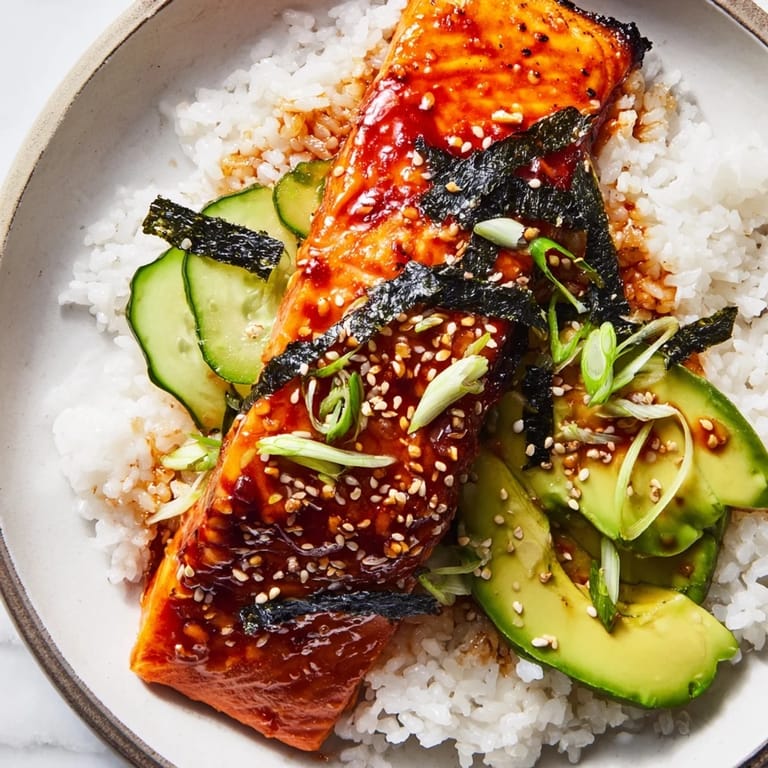
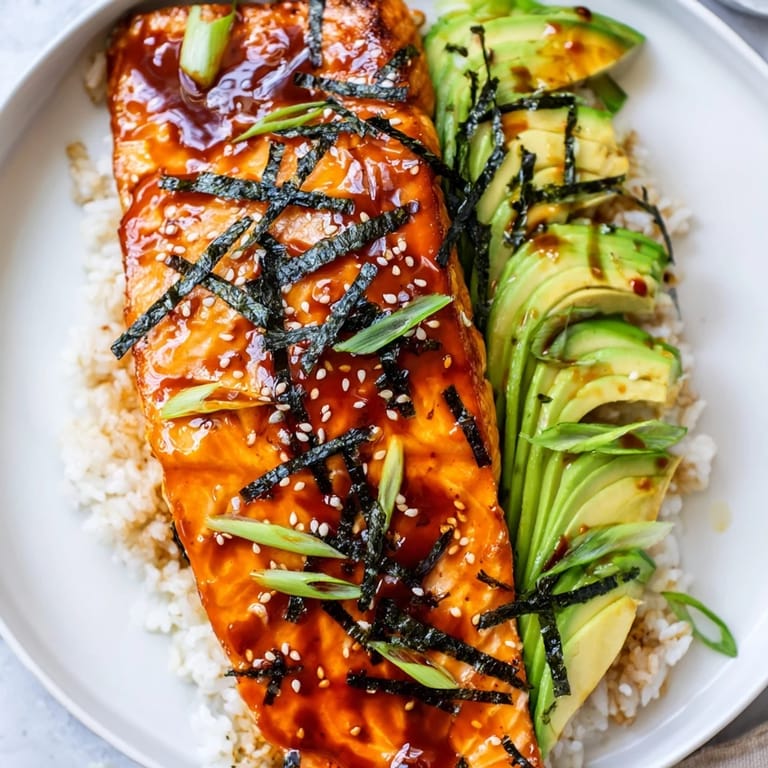
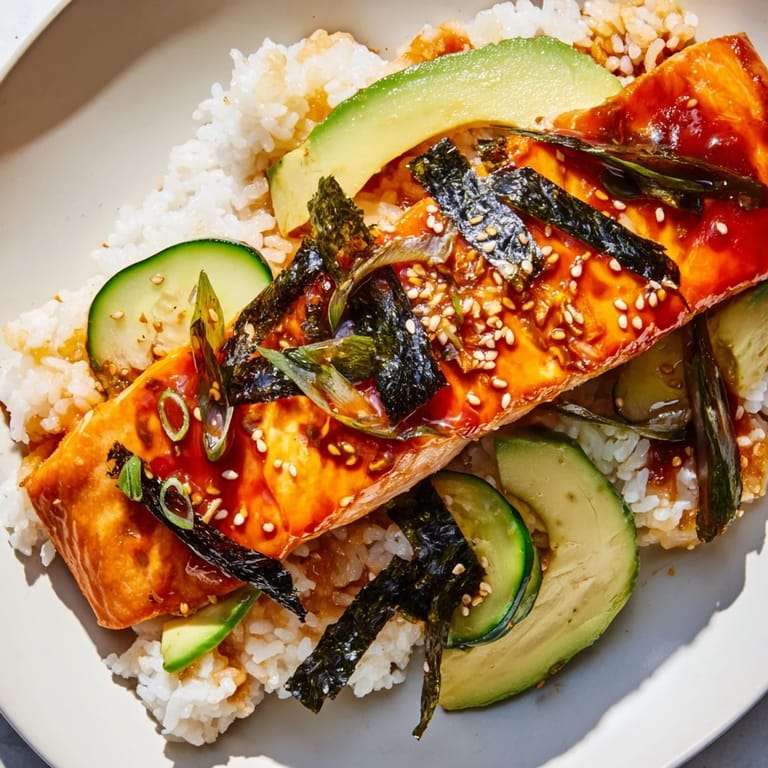
- Divide rice between two bowls. Place a salmon fillet on top, then arrange cucumber, avocado, nori strips, sesame seeds, and scallions around it like youre plating for a photo.
- Eat immediately:
- This bowl is best when the salmon is still warm and the glaze is at its stickiest.
 Save
Save My partner, who swore they didnt like fish, took one bite and asked when we could have this again. That was three months ago, and its now in our regular rotation. The bowl just works, the flavors hit every part of your palate, and it never feels like a compromise between healthy and actually delicious.
Make It Yours
Salmon is great, but this glaze is versatile enough to carry other proteins. I've tried it on tofu, chicken thighs, and even roasted cauliflower, and it delivers every time. Adjust the heat level by tweaking the gochujang, or add more honey if you want it sweeter.
Rice Matters
Short-grain rice clings to the sauce and salmon in a way that long-grain varieties just dont. If you have a rice cooker, use it. If not, rinse your rice until the water runs clear before cooking it on the stove, and you will get that restaurant texture at home.
Balance In Every Bite
The magic of this bowl is in the contrast. Warm salmon against cool cucumber, rich avocado balancing the spicy glaze, crispy nori adding texture. Each bite hits different notes, and that is what keeps you coming back for more.
- Marinate the salmon in half the glaze for 30 minutes before cooking if you have time.
- Double the glaze and save some for drizzling over the rice after assembling.
- Serve with a simple side salad if you want to stretch this to feed more people.
 Save
Save This is the bowl I make when I want something that feels special but doesnt require me to be a different kind of tired afterward. Hope it finds its way into your regular rotation too.
Recipe FAQs
- → What gives the glaze its sticky texture?
The combination of honey and soy sauce in the orange-gochujang glaze helps create a sticky, caramelized coating when baked and broiled briefly.
- → Can I substitute the salmon for a vegetarian alternative?
Yes, firm tofu can be used instead of salmon, absorbing the glaze flavors well while offering a plant-based option.
- → How should the salmon be cooked for best texture?
Baking the salmon at 200°C for 12–14 minutes until flaky, then broiling briefly with leftover glaze ensures a moist yet sticky finish.
- → What toppings enhance freshness in this dish?
Sliced cucumber, avocado, roasted nori strips, toasted sesame seeds, and scallions add crispness, creaminess, and umami afterbites.
- → Is this meal suitable for gluten-free diets?
Check labels for gluten content in gochujang and soy sauce; choose gluten-free versions to keep the dish wheat-free.