 Save
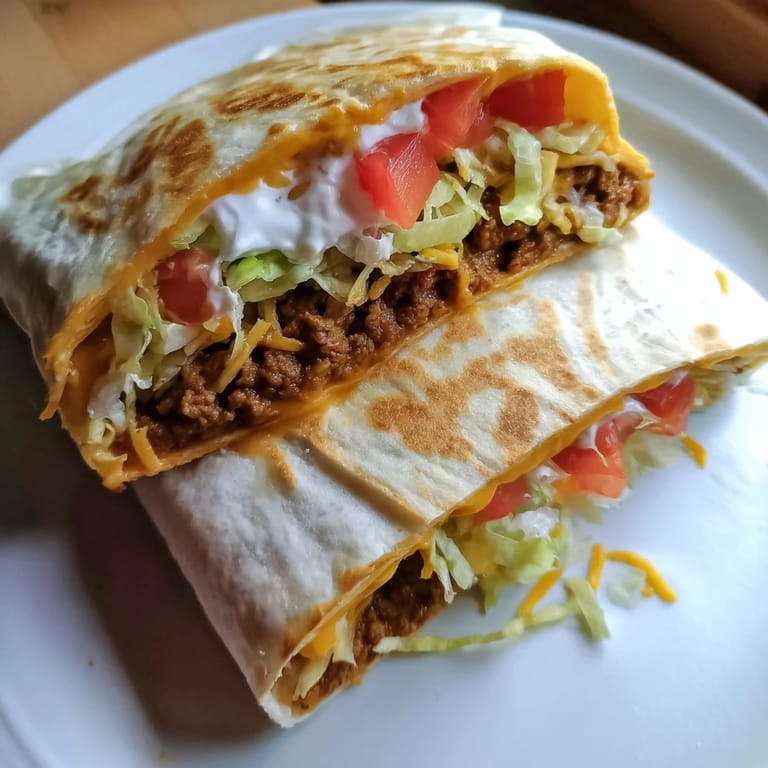
Save I discovered the magic of a homemade Crunchwrap Supreme on a late-night craving that I refused to surrender to. My kitchen at midnight became the unlikely setting for deconstructing what I thought was untouchable fast food, layering seasoned beef, that unmistakable nacho cheese, and a crispy tostada shell with the kind of intentionality that no drive-thru window could match. The first bite told me everything—this wasn't just food, it was proof that some cravings deserve to be made from scratch. Now it's the dish I make when I want to feel clever in my own kitchen.
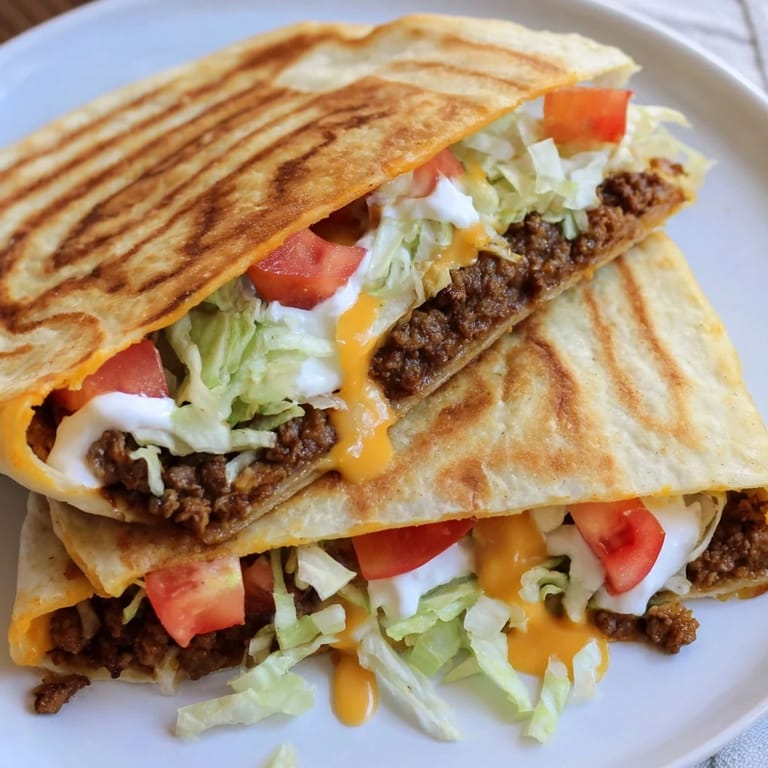
I made these for friends who bet me they couldn't possibly rival the real thing, and watching their skepticism melt into silence as they bit through that grilled exterior was a small, delicious victory. The kitchen filled with that toasted flour tortilla smell, and suddenly everyone stopped talking long enough to actually eat. Those moments remind me why I love feeding people food they didn't expect to love.
Ingredients
- Ground beef (1 lb): Use 85/15 or 80/20 blend so you get enough browning without excess grease pooling in your pan.
- Taco seasoning mix (1 packet): I learned the hard way that the powder matters more than you'd think—it carries all the flavor, so don't cheap out here.
- Water (1/3 cup): This thickens the seasoning into a clingy coating rather than a soupy mess.
- Nacho cheese sauce (1 cup): Store-bought works perfectly, and honestly, it's the soul of this sandwich.
- Shredded cheddar cheese (1/2 cup): This adds a sharp contrast to the mild nacho sauce, a lesson in textural layering.
- Sour cream (1/2 cup): Spread it thin over that tostada shell—it acts like a flavor barrier that keeps everything distinct.
- Large flour tortillas (4): Ten inches is the sweet spot; anything smaller and you'll struggle with the fold.
- Tostada shells (4): These are the non-negotiable crunch factor, so buy fresh ones if possible.
- Shredded iceberg lettuce (1 cup): The blandness is actually the point—it provides cool contrast to the heat and richness.
- Diced tomato (1 medium): Pat it dry with paper towels before using, or your sandwich becomes soggy within minutes.
- Red onion (1/4 cup, optional): If you add it, embrace the sharpness; it cuts through the cheese beautifully.
- Vegetable oil (1 tablespoon): For grilling the assembled wraps and sealing them into submission.
Tired of Takeout? 🥡
Get 10 meals you can make faster than delivery arrives. Seriously.
One email. No spam. Unsubscribe anytime.
Instructions
- Brown the beef with intention:
- Heat your skillet over medium, add the ground beef, and let it sit undisturbed for a minute before breaking it up—this develops real color and flavor. Once it's no longer pink, drain the fat away (you'll be surprised how much there is), then stir in the seasoning packet and water, simmering until everything clings to the meat like a flavorful coating.
- Get your cheese ready:
- While the beef finishes, warm your nacho cheese sauce according to package directions, which usually means a saucepan on low heat or the microwave in 30-second intervals. You want it pourable but still thick enough to cling to beef, not runny like a sauce.
- Lay down the foundation:
- Spread one flour tortilla on your work surface, spoon a quarter of the beef into the center, and drizzle with nacho cheese. This is your base layer, and the beef-to-cheese ratio matters more than you'd think.
- Build the structure:
- Place a tostada shell on top of the beef, then spread 2 tablespoons of sour cream over it—this acts like edible glue. Top with lettuce, tomato, cheddar cheese, and any onion you're feeling brave about. The height matters; you want a generous layer but not so much that folding becomes impossible.
- Fold like you mean it:
- Carefully bring the tortilla edges up and over the filling, creating four or five pleats that meet and seal in the center. If gaps remain where filling shows, cut a small circle from a spare tortilla and lay it over the opening before completing the final fold. This is puzzle-solving disguised as cooking.
- Grill until the exterior is a golden dream:
- Heat oil in a large nonstick skillet over medium heat, place your folded wrap seam-side down, and listen for that gentle sizzle. Cook for 2–3 minutes until the tortilla turns golden and the seal sets, then flip carefully and cook the other side. The exterior should have color but not char.
- Slice and serve with ceremony:
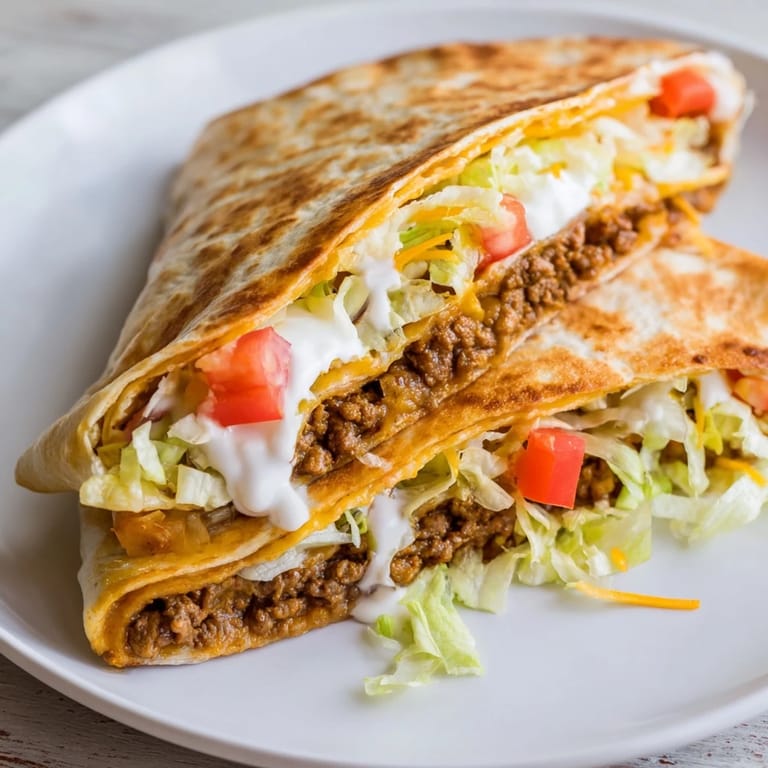
- Cut each wrap in half so the cross-section reveals all those layers, and serve immediately while everything's still hot and the exterior's still crispy. Hesitation is your enemy here.
 Save
Save The first time my nephew bit into one of these, his eyes went wide with that mixture of shock and joy that food rarely deserves. He kept asking how I 'made it so good,' not quite understanding that homemade isn't magic—it's just patience and better ingredients. That question taught me more about cooking than any recipe ever could.
The Folding Technique That Changes Everything
The fold is where this recipe either becomes impressive or falls apart—literally. Start by imagining your tortilla as a clock face with the filling in the center. Bring the bottom edge up and over the filling slightly, creating the first seal line, then fold the left side over and across, then the right side, then the top. You're creating overlapping pleats that interlock, not a tight wrap like a burrito. The seam should be a cluster of overlapping tortilla edges meeting on top, and if there's a visible gap showing filling, that's where your spare tortilla circle saves the day.
Variations and Personal Touches
Once you nail the basic formula, the variations unfold naturally. I've made versions with jalapeños scattered throughout, which add heat that builds as you eat. Some nights I use ground turkey to lighten things up, and honestly, it works just as well. I even tried refried beans once when I was out of beef, and while it wasn't the same experience, it proved the architecture of this thing is sound no matter what protein fills the center. The sauce choice matters too—some people swear by a chipotle mayo drizzled over the tostada shell, and they're not wrong.
Timing, Temperature, and the Grilling Sweet Spot
Medium heat on your skillet is non-negotiable; too hot and the tortilla chars before the filling warms, too cool and it sits there sweating without developing color. I learned this through trial and error, mostly error. The tortilla needs time to crisp and seal, which means resisting the urge to flip too soon—two to three minutes is actually the window where magic happens. The oil matters too; use just enough so the wrap slides slightly when it hits the pan, not so much that it pools and turns your sandwich into a fried thing.
- Listen for the sizzle as your cue that heat is right; silence means too cool, angry crackling means too hot.
- Use a thin, flexible spatula to flip carefully, sliding it under the seam first to support the weight.
- If you're making multiple wraps, keep the first one warm on a plate tented with foil while you grill the rest.
 Save
Save This is the kind of recipe that bridges the gap between cravings and cooking, proving that restaurant food isn't sacred. Make it once, and you'll understand why it belongs in a regular rotation.
Recipe FAQs
- → What type of beef is best for this dish?
Ground beef with around 80% lean content works best, as it balances flavor and moisture for a juicy filling.
- → How can I ensure the tortilla doesn’t tear when folding?
Use large flour tortillas and gently pleat the edges to seal. Cutting a small tortilla circle can cover gaps before folding.
- → Can I prepare the cheese sauce in advance?
Yes, nacho cheese sauce can be warmed before assembly or made ahead and reheated as needed for convenience.
- → What’s the best method to achieve a crispy exterior?
Grill the wrapped tortilla seam-side down in oil on medium heat, cooking each side 2-3 minutes until golden and sealed.
- → Are there good alternatives to beef for different diets?
Ground turkey, chicken, plant-based crumbles, or refried beans offer versatile protein options for varying preferences.