 Save
Save My neighbor brought over a steaming bowl of ramen one rainy evening, and I watched her slice a soft-boiled egg with such care that the yolk spilled into the broth like liquid gold. That simple moment stayed with me, but I wanted to chase it with something bolder, something that tasted like both Tokyo and Bangkok having a conversation. This Thai Miso Ramen Bowl is exactly that kind of dish, the kind that makes you feel like you're sitting in a tiny shop where two cuisines fell in love over a pot of simmering broth.
I made this for my partner on a night when neither of us wanted to leave the house, and watching his expression when that first spoonful hit, with the chicken and crispy shallots and bright cilantro all working together, reminded me why I cook at all. He actually put his phone down, which never happens.
Ingredients
- Vegetable oil: Use a neutral high-heat oil for searing and sautéing; it won't interfere with the delicate balance of Thai and Japanese flavors.
- Medium onion, finely chopped: The foundation of your aromatics, it sweetens slightly as it softens and carries the curry paste's flavor throughout the broth.
- Garlic cloves, minced: Fresh garlic is non-negotiable here; the bite mellows into the broth and anchors everything together.
- Fresh ginger, grated: Don't use powdered ginger, I learned that the hard way once; fresh ginger adds a living heat that transforms the entire bowl.
- Thai red curry paste: Buy a quality paste from the Asian section, not the small jars near regular spices; the difference in depth is remarkable.
- Chicken broth, low sodium: Low sodium lets you control the salt and prevents the miso from making it unbearably salty as it reduces.
- White miso paste: Milder than red miso, it blends smoothly into warm broth and won't overpower the Thai elements.
- Soy sauce: A splash of umami that complements both the miso and the fish sauce without creating confusion.
- Fish sauce: This is the secret weapon; just a tablespoon rounds out the broth with depth that makes people ask what that mysterious amazing flavor is.
- Sugar: A teaspoon balances the saltiness and the heat, acting as a gentle voice of reason in the broth.
- Sesame oil: Toasted sesame oil added at the end brings a nutty warmth that lingers on your palate.
- Boneless, skinless chicken breasts: They cook quickly and take on all the broth's personality without fighting back.
- Fresh ramen noodles: Fresh noodles absorb flavor better than dried and have a silkier texture, though dried works if that's what you have on hand.
- Bok choy, small heads: Blanching them at the last minute keeps them crisp and bright, a textural contrast to the soft noodles.
- Large eggs: Soft-boiled for exactly 7 minutes; one second longer and the yolk sets, one second shorter and it's runny.
- Crispy fried shallots: These add the crunch that makes every bite feel intentional; store-bought ones save time, but homemade are three times better if you have it in you.
- Scallions, sliced thin: A last-minute bright note that shouldn't be skipped, they add onion sweetness without overpowering.
- Red chili, sliced: Optional but recommended, especially if anyone at your table likes heat; it's prettier and easier to control than powder.
- Fresh cilantro leaves: The final kiss of green and herbaceous flavor that ties the whole bowl together.
Tired of Takeout? 🥡
Get 10 meals you can make faster than delivery arrives. Seriously.
One email. No spam. Unsubscribe anytime.
Instructions
- Season and sear the chicken:
- Pat the chicken dry with paper towels, then season generously with salt and pepper on both sides. Heat oil in your large pot over medium-high heat until it shimmers, then lay the chicken breasts in carefully and resist the urge to move them around; let them sit for 2 to 3 minutes per side until they're golden and smell incredible.
- Build your aromatic base:
- In the same pot, add another tablespoon of oil and soften the chopped onion for about 2 minutes, letting it turn translucent at the edges. Add the minced garlic and grated ginger, stirring constantly for just 1 minute until the kitchen smells like a Thai market, then add the red curry paste and let it caramelize slightly for another minute.
- Simmer the chicken in broth:
- Pour in the chicken broth, scraping the bottom of the pot to release all those golden bits, and bring it to a gentle simmer. Return the seared chicken to the pot and let it cook for 12 to 15 minutes, covered loosely, until it's cooked through and flakes easily when you test it with a fork.
- Add depth with miso and seasonings:
- Remove the chicken and set it aside, then whisk the white miso paste into the hot broth until it completely dissolves, followed by the soy sauce, fish sauce, sugar, and sesame oil. Keep tasting and adjusting; the broth should taste a bit too salty at this point because the noodles will dilute it slightly.
- Soft-boil the eggs to perfection:
- In a small pot, bring water to a rolling boil and gently lower the eggs in with a spoon, then set a timer for exactly 7 minutes. While they cook, prepare an ice bath, and when the timer goes off, move them immediately to cold water so the cooking stops.
- Cook noodles and blanch greens together:
- In another pot, bring salted water to a boil and add the fresh ramen noodles, cooking for about 3 minutes until they're tender but still have slight resistance. In the final 2 minutes, add the halved bok choy so it softens slightly but stays bright green.
- Assemble each bowl with intention:
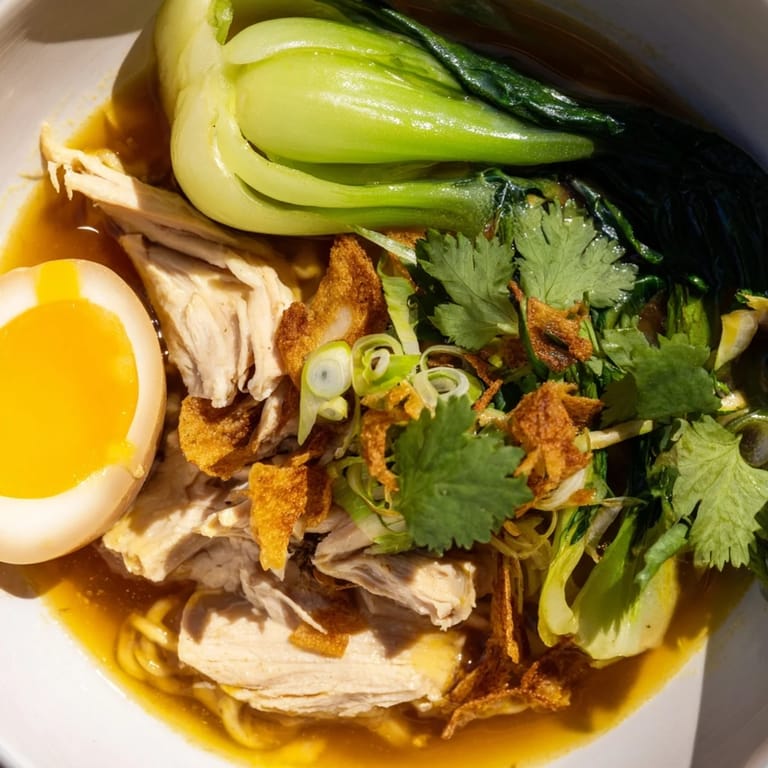
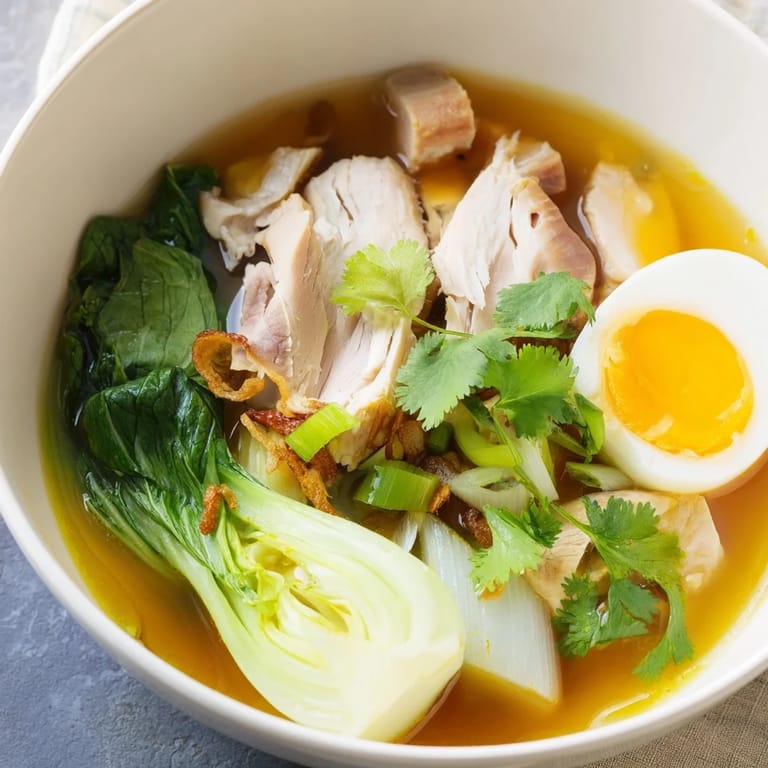
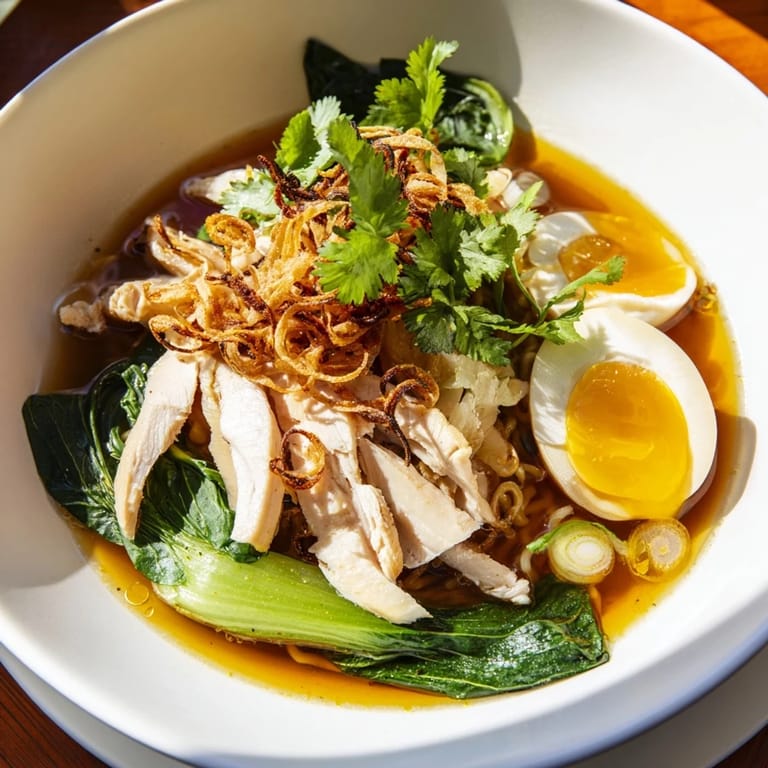
- Divide the cooked noodles and bok choy among four bowls, then ladle the hot broth over them generously. Arrange the sliced chicken, halved soft-boiled eggs, crispy shallots, scallions, red chili slices, and cilantro on top like you're plating something you're proud of, then pass lime wedges at the table for people to squeeze to taste.
 Save
Save One morning, I made extra broth the night before and reheated it gently while my friend was going through something difficult, and somehow serving her this bowl felt like the best thing I could offer without saying anything at all. She ate quietly, slowly, and when she finished, she asked for the recipe.
The Magic of Layered Flavors
This bowl works because it isn't trying to be one thing or the other; the miso and curry paste are like two different languages saying the same thing, and when they meet in the broth, they don't fight. The white miso is gentle enough that it doesn't compete with the Thai red curry, instead creating a foundation that lets both shine. I've learned that fusion cooking works best when you respect each cuisine equally, giving each element room to be itself while still contributing to the whole.
Timing is Everything
The beauty of this recipe is that you can prepare the broth completely ahead of time and reheat it gently when you're ready to eat; the flavors actually deepen overnight. Cook your eggs and noodles fresh each time though, because soft-boiled eggs lose their magic within a few hours, and reheated noodles become sad and mushy. On busy nights, I'll make the broth in the morning, and assembling dinner takes about 15 minutes flat.
Making It Your Own
The skeleton of this bowl is strong enough that it can handle your personal touches without falling apart. If you love heat, double the red curry paste or add extra chili; if you're feeding people who are cautious, you can dial it back and let the lime and cilantro do the talking instead. Some nights I'll add a handful of mushrooms to the broth while the chicken cooks, or swap the chicken for tofu if someone vegetarian is coming over.
- Swap the chicken for firm tofu or shrimp if you want variety without changing the broth recipe.
- Add fresh shiitake mushrooms directly to the simmering broth for earthy depth that works beautifully with both the Thai and Japanese flavors.
- Make the crispy shallots yourself if you have time; the aroma alone is worth the 10 minutes it takes.
 Save
Save This bowl has a way of becoming more than just dinner; it's a moment where everything slows down and tastes like care. Make it for someone you love, or make it for yourself on a night when you need reminding that good food is one of the simplest ways to say I'm here.
Recipe FAQs
- → Can I make this vegetarian?
Absolutely. Substitute vegetable broth for chicken broth, omit the fish sauce, and add cubed tofu or extra vegetables like mushrooms for protein and heartiness.
- → How do I get perfectly soft-boiled eggs?
Bring water to a rolling boil, gently add eggs, and cook for exactly 7 minutes. Transfer immediately to an ice bath to stop cooking, then peel under cool running water for easier removal.
- → What can I use if I don't have fresh ramen noodles?
Dried ramen noodles work perfectly and may even absorb the broth better. Cook according to package directions, usually 3-4 minutes, and add bok choy in the final 2 minutes.
- → How spicy is this bowl?
The heat level is moderate with 2 tablespoons of Thai red curry paste. Adjust by adding less paste for milder flavor or more for increased spice. Fresh chili slices can also be controlled based on preference.
- → Can I prepare components ahead of time?
Yes. The broth can be made up to 2 days ahead and reheated. Soft-boiled eggs keep refrigerated for 3 days. Cook noodles and vegetables just before serving for best texture and freshness.
- → What wine pairs well with this dish?
A crisp, citrusy white wine like Riesling complements the bold Thai and miso flavors beautifully. The acidity cuts through the richness of the broth and balances the heat from the curry paste.