 Save
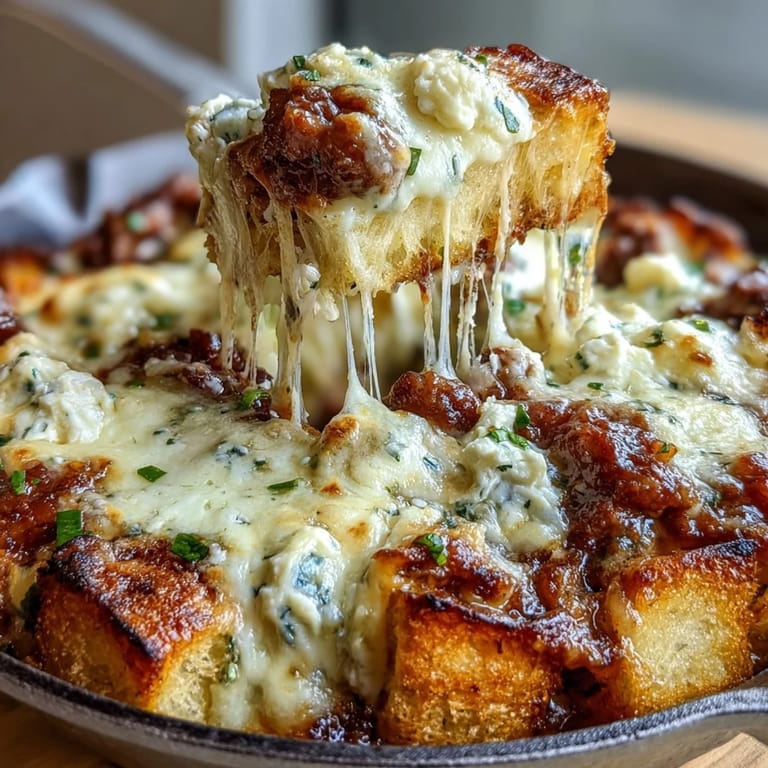
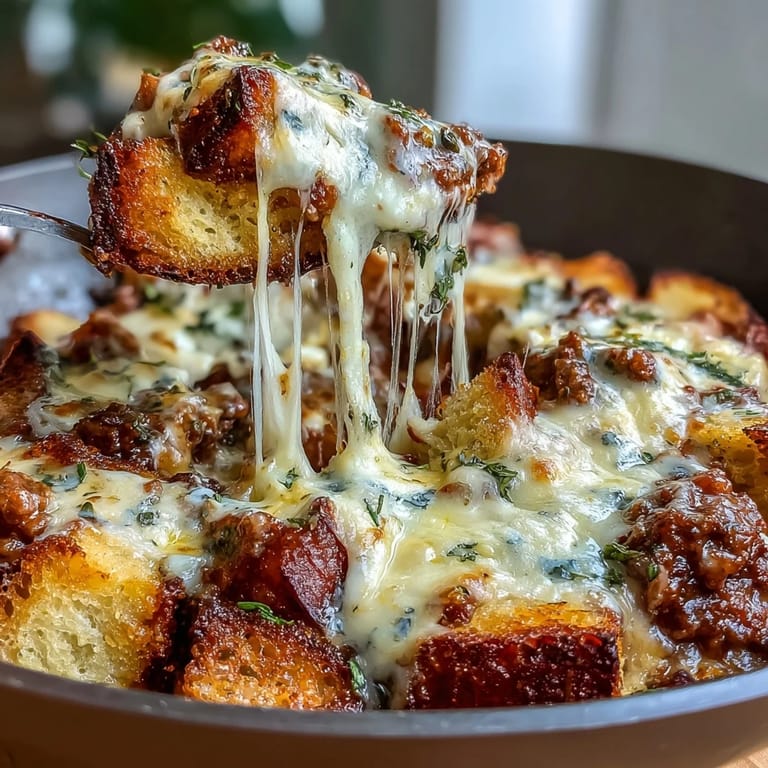
Save My sister called me in a panic one Sunday afternoon—she'd invited six people over for dinner and realized too late she didn't have time for her famous lasagna. I had about an hour, a cast-iron skillet on the stove, and a loaf of Italian bread sitting on the counter. What came together was pure improvisation: all the comfort of lasagna but built with garlicky bread cubes instead of noodles, everything baked in one glorious pan. That first forkful told me I'd stumbled onto something special, and now my family requests it more often than the traditional version.
I'll never forget watching my neighbor take the first bite at that impromptu dinner—he actually closed his eyes. He'd grown up eating his grandmother's traditional lasagna and thought nothing could compare, but he came back for thirds of this skillet version. That moment felt like permission to stop apologizing for shortcuts and start celebrating them.
Ingredients
- Italian bread, 1 large loaf cut into 1-inch cubes: The foundation of this whole dish—you want sturdy bread that won't turn to mush, so skip the super soft sandwich loaves and go for something with actual structure.
- Unsalted butter, 4 tbsp melted: This is what makes those cubes golden and addictive; salted butter will overpower the delicate garlic and herbs.
- Fresh garlic, 5 cloves minced total (3 for bread, 2 for sauce): Fresh is non-negotiable here—jarred garlic will taste metallic and flat against the other flavors.
- Fresh parsley, 2 tbsp chopped: A small gesture that lifts the entire dish; dried parsley tastes like disappointment by comparison.
- Ground beef, 1 lb: I prefer a blend with a bit of fat (not the leanest option) so the meat sauce stays rich and doesn't dry out as it simmers.
- Crushed tomatoes, 1 can (15 oz): Canned whole tomatoes that you crush yourself taste slightly fresher, but canned crushed works beautifully too.
- Ricotta cheese, 1 cup: The creamy binding layer—make sure it's not the liquid whey stuff that separates; full-fat ricotta holds the mixture together.
- Mozzarella cheese, shredded, 2 cups: Shred it yourself from a block if you can; pre-shredded often contains cellulose that prevents proper melting.
- Parmesan cheese, 1/2 cup grated: Freshly grated always tastes sharper and more authentic than the green can version.
- Egg, 1 large: This tiny addition is what keeps your ricotta mixture from being runny and separating during baking.
Tired of Takeout? 🥡
Get 10 meals you can make faster than delivery arrives. Seriously.
One email. No spam. Unsubscribe anytime.
Instructions
- Heat your oven and prep the bread:
- Preheat to 375°F while you toss those bread cubes with melted butter, garlic, parsley, and salt in a large bowl—the bread should glisten evenly. You're essentially making homemade croutons, so don't be shy with the coating.
- Build your meat sauce:
- Brown the ground beef in your cast-iron skillet over medium heat, breaking it into small pieces as it cooks—you want some texture, not a paste. Once it's deeply browned, add the onion and cook until soft, then garlic, then the tomatoes and seasonings, letting it all bubble away for 8–10 minutes while you prepare the other components.
- Mix the creamy layer:
- Combine ricotta, Parmesan, egg, fresh basil if using, and black pepper in a small bowl until smooth—this is the glue that holds all three layers together. Don't skip the egg or your layers will slide around during baking.
- Layer like you mean it:
- Spread half your meat sauce in the skillet, then half the garlic bread cubes, then dollops of half the ricotta mixture, then half the mozzarella—repeat with the remaining ingredients. It won't look perfectly neat, and that's exactly right; this is rustic cooking.
- Bake covered, then uncover:
- Cover the skillet loosely with foil and bake for 20 minutes so the layers heat through and the ricotta sets, then remove the foil and bake 10–15 minutes more until the cheese on top is bubbly and golden brown. You're looking for the edges to brown slightly and the center to bubble gently.
- Rest and serve:
- Let the skillet sit for 10 minutes before digging in—this gives everything a chance to set slightly so you can actually scoop out a clean portion. Garnish with fresh parsley or basil if you have it.
 Save
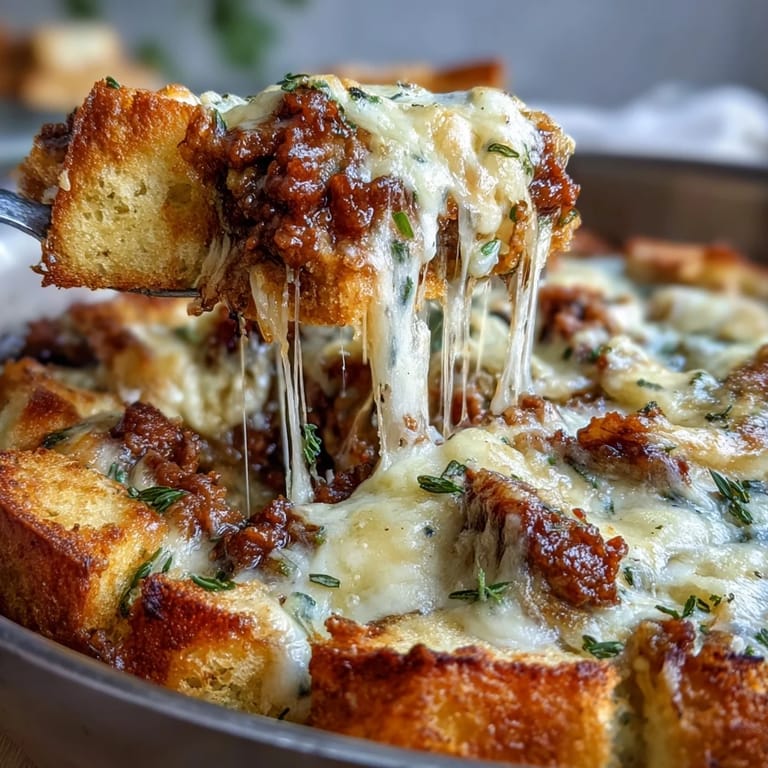
Save There's something deeply satisfying about pulling a bubbling cast-iron skillet out of the oven and knowing you're about to feed people something warm and filling and delicious without having made a dozen dirty dishes. This dish has become my go-to when I want to feel like I've cooked all day but haven't sacrificed a peaceful evening.
Why Cast Iron Matters Here
A cast-iron skillet doesn't just cook this dish—it becomes part of the meal. The even heat distribution means your bottom layer gets golden and crispy without burning, and the skillet's natural seasoning adds a subtle depth that regular baking dishes can't match. If you don't have a 12-inch, you can use a 9x13 baking dish, but honestly, investing in a good cast-iron is worth it for meals like this.
Timing and Make-Ahead Options
You can assemble this skillet completely in the morning, cover it, refrigerate it, and bake it straight from the fridge—just add 5–10 minutes to the baking time since it'll start cold. Leftovers reheat beautifully in a 350°F oven for about 20 minutes covered with foil, and the flavors actually deepen slightly as they sit together overnight.
Flavor Variations and Serving Ideas
This is a forgiving dish that welcomes creativity without losing its soul. Try stirring a handful of fresh spinach into the sauce, swapping Italian sausage for some of the ground beef, or adding a pinch of red pepper flakes if you like heat. Serve it with a simple green salad dressed in lemon vinaigrette to cut through the richness, and a glass of Chianti is the perfect partner.
- For a lighter version, substitute ground turkey or even lentils for half the ground beef without changing the baking time.
- Add fresh spinach or mushrooms sautéed into the meat sauce for extra vegetables and depth.
- Don't skip the 10-minute rest after baking—it makes scooping and serving so much cleaner.
 Save
Save This skillet has a way of turning an ordinary weeknight into something that feels special, mostly because everyone gets to taste that moment when comfort food becomes adventure. Once you've made it, you'll understand why my sister never lets me forget that Sunday afternoon panic that created something better than the plan.
Recipe FAQs
- → Can I make this ahead of time?
Yes, assemble the entire skillet up to 24 hours in advance and refrigerate. Add 5-10 minutes to the covered baking time since it will be cold. Let it rest at room temperature for 20 minutes before baking for even cooking.
- → What other meats work in the sauce?
Italian sausage adds great flavor and spice. Ground turkey or chicken makes a lighter version. For vegetarian options, use plant-based crumbles or sautéed mushrooms with spinach. Adjust seasoning accordingly.
- → Can I freeze leftovers?
Absolutely. Portion cooled leftovers into airtight containers and freeze for up to 3 months. Thaw overnight in the refrigerator, then reheat at 350°F covered for 15-20 minutes until hot throughout.
- → What if I don't have a cast-iron skillet?
Any deep 12-inch oven-safe skillet or Dutch oven works. Glass baking dishes need extra care—place on a baking sheet to catch drips and reduce oven temperature by 25°F to prevent burning the bottom.
- → How do I know when it's done?
The cheese should be melted and lightly golden in spots. A knife inserted into the center should come out hot. If the bread is still soft, cover and bake 5-10 more minutes. The resting period is crucial for firm texture.
- → Can I reduce the cheese?
You can cut the mozzarella to 1.5 cups, but don't reduce the ricotta mixture—it provides essential moisture and creaminess. Consider adding extra herbs or a splash of pasta water to compensate if using less cheese.