 Save
Save There's something about the first spoonful of pho that stops time. I discovered this dish not in a fancy restaurant but standing in a cramped kitchen with my friend's mom, watching her move through the steps with the kind of practiced ease that comes from decades of cooking. She insisted that the secret wasn't in rare ingredients or complicated techniques, but in patience and quality broth. That afternoon, I learned that good food doesn't always require hours of labor, just intention.
I made this for a group of friends on a Tuesday night when everyone was too tired for takeout. Watching them go quiet for that first sip, then immediately reach for more lime and basil, reminded me why I keep coming back to this recipe. It's the kind of meal that brings people together without demanding much from the cook.
Ingredients
- Low-sodium beef or chicken broth (8 cups): This is your foundation, so choose quality—it should taste clean and bright, not overly salty.
- Fresh ginger (2-inch piece, sliced): The spice and warmth matter here; avoid pre-minced ginger if you can, as it loses its punch.
- Whole star anise (3), cinnamon stick, and cloves: These spices bloom in the hot broth and create that unmistakable pho aroma that fills your kitchen.
- Fish sauce and soy sauce: They seem like they might overpower, but they anchor the broth with savory depth—use them without hesitation.
- Dried or fresh flat rice noodles (bánh phở, 300 g): Fresh noodles soften quickly, so if using fresh, add them just before serving to keep them from turning mushy.
- Beef sirloin or eye round (300 g, thinly sliced): Ask your butcher to slice it thin, or freeze the meat for a couple of hours first so you can slice it yourself more easily.
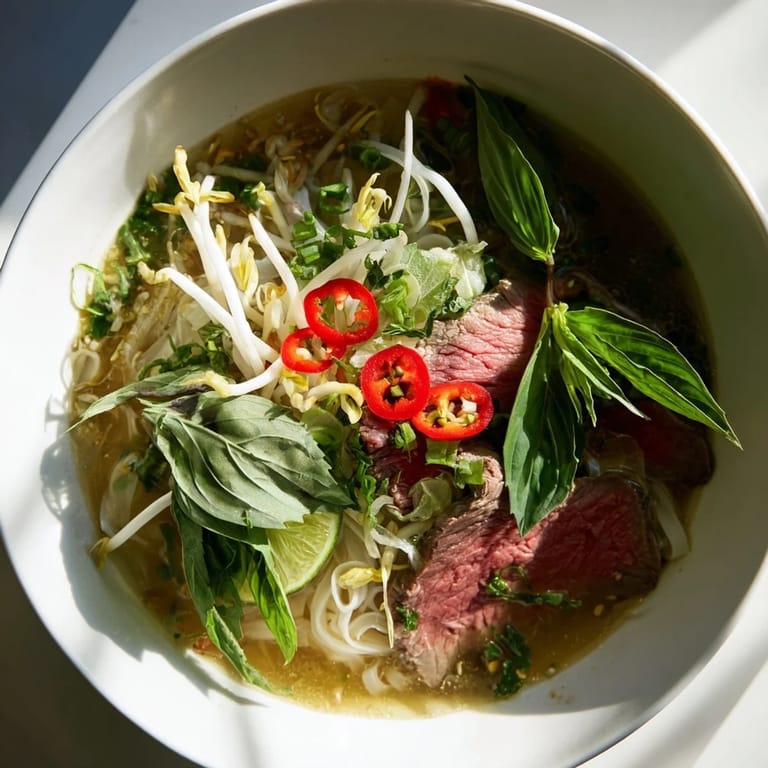
- Bean sprouts, Thai basil, cilantro, scallions, red chili, and lime: These are where you add personality to every bite; don't skip them even if you think you don't like herbs.
Tired of Takeout? 🥡
Get 10 meals you can make faster than delivery arrives. Seriously.
One email. No spam. Unsubscribe anytime.
Instructions
- Toast and simmer the aromatics:
- Combine broth, onion, ginger, star anise, cinnamon stick, and cloves in a large pot and bring to a boil. Reduce the heat and let it bubble gently uncovered for 20 minutes, allowing the spices to release their fragrance into the liquid.
- Season the broth:
- Stir in fish sauce, soy sauce, sugar, and a pinch of salt. Simmer for 5 more minutes, then strain through a fine-mesh strainer to remove all solids. Your broth should be clear and deeply aromatic.
- Cook the noodles:
- While the broth simmers, follow the package instructions for your rice noodles. Cook them until tender but not mushy, then drain well and divide among four large bowls.
- Arrange the meat:
- Lay thin slices of beef (or chicken) directly over the warm noodles in each bowl. The meat will cook through when the hot broth hits it.
- Add the broth:
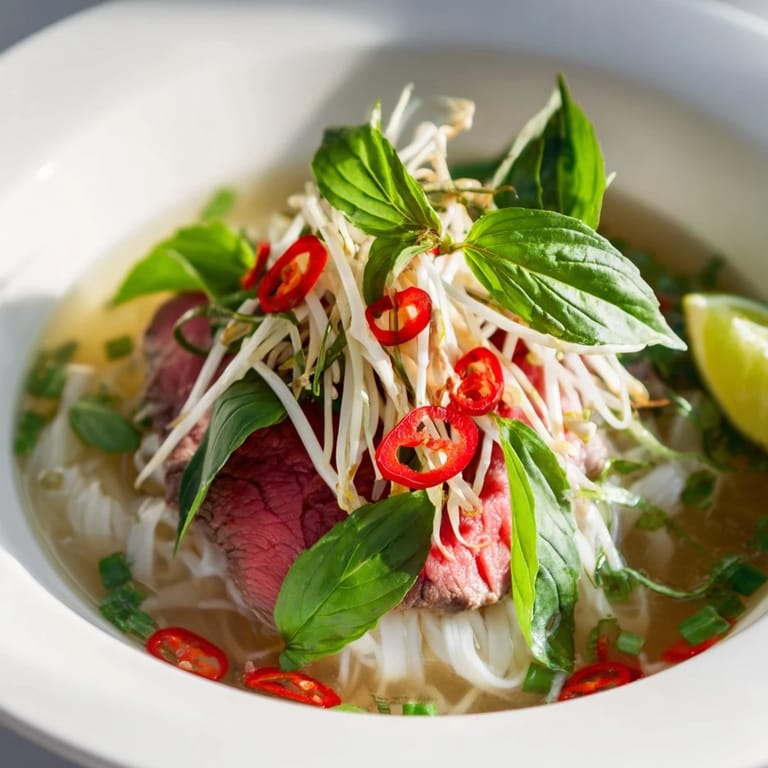
- Ladle the steaming broth directly over the noodles and meat, watching as the thin slices turn from red to cooked in just a few seconds.
- Garnish generously:
- Top each bowl with bean sprouts, basil, cilantro, scallions, and chili. Serve with lime wedges, hoisin sauce, and sriracha on the side so everyone can adjust the flavors to their liking.
 Save
Save The moment I understood pho wasn't just about the recipe was when my neighbor's kid asked for seconds and wanted to learn how to make the broth themselves. That's when I knew this wasn't just dinner—it was something worth passing on.
The Art of the Broth
The broth is where this dish lives or dies. I've learned that rushing this step by using boiling water instead of simmering time will leave you with something thin and forgettable. When you give the spices those 20 minutes to infuse, something magical happens—the broth becomes greater than the sum of its parts. The cinnamon softens the raw edge of ginger, the star anise adds a licorice whisper, and the cloves anchor everything with a warm spice note.
Customizing Your Bowl
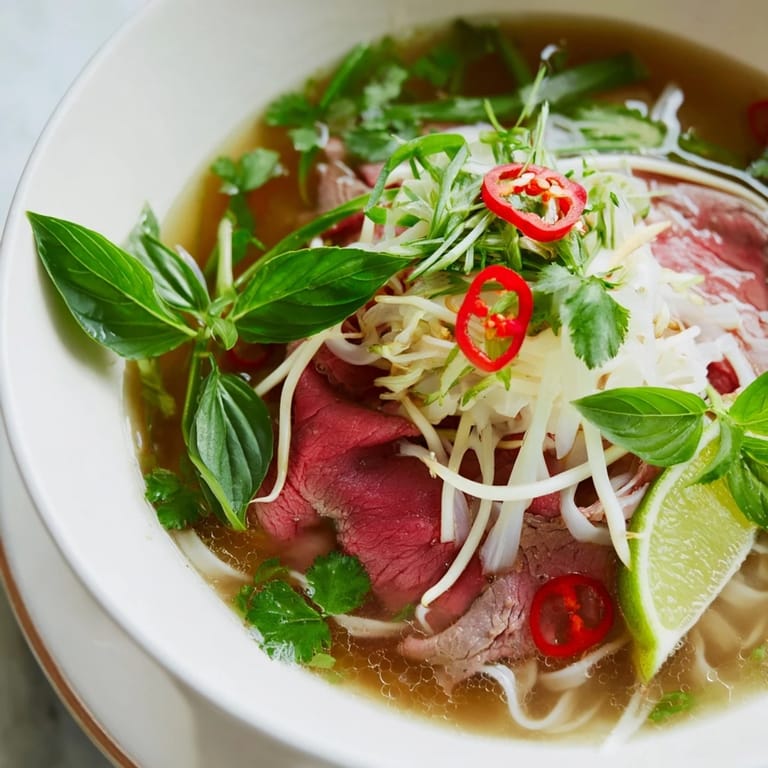
One of the joys of pho is that it's infinitely personal. Some people pile on the herbs until the bowl looks like a salad, while others prefer restraint. I've found that the best approach is to let each person build their own, offering everything on the side and watching them discover their own balance of flavors. Don't be shy with the lime juice and fresh herbs—they're not just garnish, they're the bright punctuation that makes the warm broth sing.
Quick Shortcuts and Swaps
If you're short on time, you can lightly char the onion and ginger over a flame before adding them to the broth—this caramelization deepens the flavor and shaves off precious minutes from your overall simmering time. For a vegetarian version, use vegetable broth and substitute the beef with silken tofu or crispy fried tofu, adjusting the cooking time accordingly so the tofu stays tender.
- Pre-slice your meat and arrange it in bowls before guests arrive, then simply ladle hot broth over just before serving.
- Toast the spices in a dry pan for 30 seconds before adding them to the broth to intensify their aroma.
- Keep the broth at a gentle simmer in a separate pot so it stays hot and ready to pour throughout the meal.
 Save
Save Pho is proof that the best meals don't demand hours in the kitchen or a long ingredient list. It just demands that you show up, pay attention, and serve it with warmth.
Recipe FAQs
- → How is the broth made flavorful?
The broth is gently simmered with star anise, cinnamon, ginger, and cloves, infusing it with aromatic, savory notes.
- → Can I use chicken instead of beef?
Yes, thinly sliced chicken breast can replace beef and cooks quickly when the hot broth is poured over it.
- → What noodles are best for this dish?
Flat rice noodles (bánh phở) are traditional, providing a soft, silky texture that pairs well with the broth and meat.
- → Which fresh herbs complement the bowl?
Thai basil, cilantro, and scallions add brightness and freshness, enhancing the overall flavor balance.
- → How can the dish be made vegetarian?
Substitute vegetable broth for meat-based broth and replace beef with tofu or mushrooms to maintain depth of flavor.
- → What garnishes add texture and spice?
Bean sprouts add crunch, while thinly sliced red chili adds a mild spicy kick; lime wedges brighten the flavors.