 Save
Save My neighbor Maria taught me that a proper Caprese isn't about fancy technique—it's about choosing ingredients so good they barely need help. We stood in her garden on a July afternoon, sun-warm tomatoes in one hand and a fistful of basil in the other, and she said the magic was in stopping yourself from over-complicating it. That lesson stuck with me, especially now when I make this salad and remember her voice telling me to taste before I season.
I made this for a dinner party where someone cancelled last-minute, and instead of panicking, I doubled down on the ingredients I already had. Four of us ended up crowded around the kitchen counter, passing the salad bowl between us, and somehow that improvised moment became more memorable than the formal dinner I'd originally planned. There's something honest about food that doesn't pretend to be anything other than what it is.
Ingredients
- Ripe tomatoes (400 g, heirloom or cherry): Choose tomatoes that smell fragrant at the stem and give slightly when you squeeze—they should taste like summer, not cardboard, so don't buy them plastic-wrapped.
- Fresh mozzarella balls (250 g, bocconcini or sliced): The fresher the better; if you can find it still warm from the creamery, even better, though room temperature works perfectly fine.
- Fresh basil leaves (1 small bunch): Tear them by hand rather than cutting with a knife to keep the edges from bruising and turning black.
- Rustic bread (4 slices, ciabatta or sourdough): Stale bread actually toasts better than fresh because it's already lost moisture, so don't throw out yesterday's loaf.
- Extra-virgin olive oil (3 tbsp): This is worth spending a bit more on since it's one of only a few ingredients, so taste it first to make sure you actually like it.
- Balsamic vinegar (1½ tbsp): The cheap stuff tastes thin and sharp, but a decent aged one brings sweetness and depth without overpowering everything.
- Salt and freshly ground black pepper: Grind the pepper fresh each time because pre-ground loses its brightness fast.
Tired of Takeout? 🥡
Get 10 meals you can make faster than delivery arrives. Seriously.
One email. No spam. Unsubscribe anytime.
Instructions
- Toast your bread until it's golden and crunchy:
- Heat your toaster or a grill pan and watch the bread carefully because it goes from perfect to burnt in seconds. Once it's crispy, either cut it into cubes or tear it into rough chunks with your hands—either way works, but the rough pieces feel more generous.
- Build your bowl with tomatoes and mozzarella:
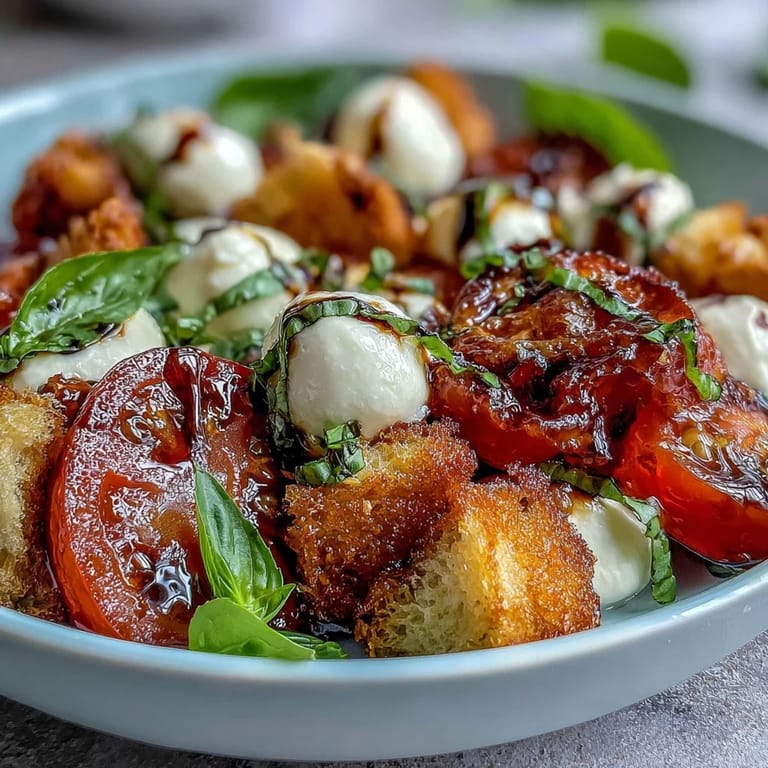
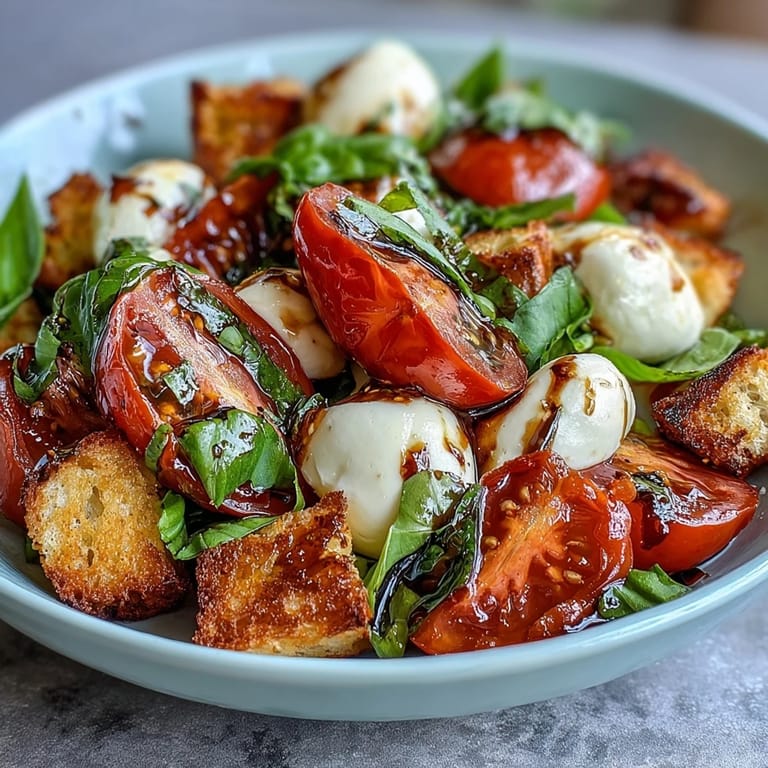
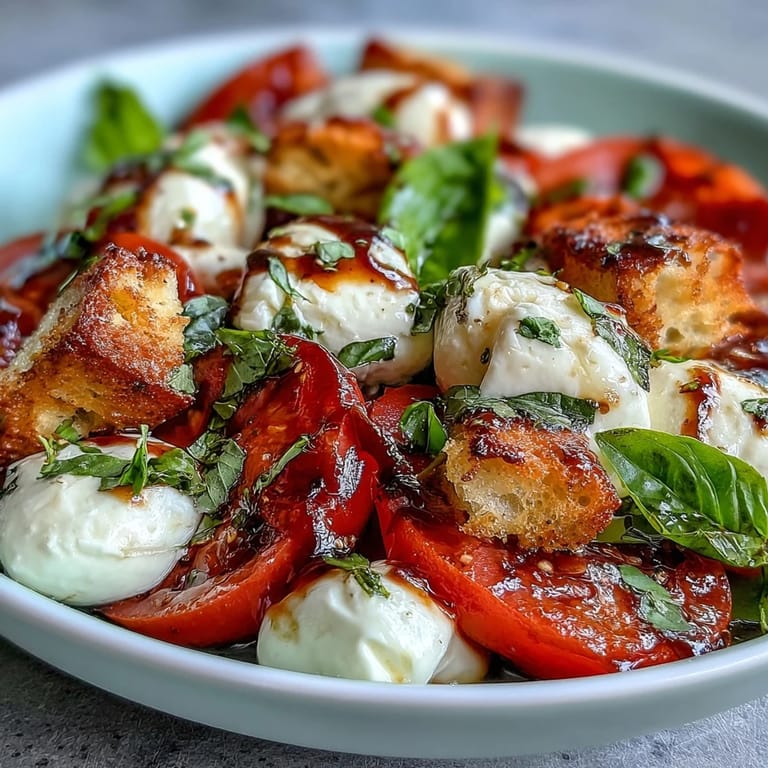
- Arrange them alternating in a large bowl or on a platter, which isn't just for looks but actually helps everything get dressed evenly. Take your time here because the visual appeal makes people want to eat it.
- Tuck basil leaves between the layers:
- This distributes the basil flavor throughout instead of it all sitting in one spot, and it looks beautiful too.
- Drizzle with oil and vinegar:
- Pour slowly and evenly so nothing gets over-dressed while other parts stay dry. Use your eyes and taste as you go rather than measuring exactly.
- Season generously:
- Add salt and pepper, then taste a piece of tomato with a bit of everything to make sure the balance feels right to you.
- Add the bread at the very last second:
- If you scatter it too early, it will soften and lose that crucial crunch that makes this dish sing.
 Save
Save My daughter once declared this her favorite meal because it was the one time I let her arrange the bowl however she wanted. She made patterns with the tomatoes and played with the basil until it looked like a garden, and watching her take ownership of something so simple reminded me that food isn't just about eating—it's about the hands that arrange it.
The Bread Matters More Than You Think
I used to skip toasting the bread or throw in whatever stale slices were hanging around, and the salad felt flat and forgettable. The day I actually toasted it until it was genuinely crispy, the whole dish transformed—suddenly you had this textural contrast between the warm bread, cold tomato, and creamy cheese that made your mouth actually wake up. Now I toast the bread with intention, sometimes rubbing it with a cut garlic clove first if I'm feeling fancy.
Timing Is Everything Here
This isn't a salad you can assemble an hour before dinner and expect it to be great. The magic happens in that narrow window when the tomatoes are still releasing juice, the basil is still fragrant, and the bread is still cracking between your teeth. Serve it within ten minutes of assembly, or better yet, assemble it right in front of your guests so they see and taste it at its absolute best.
Make It Your Own
This recipe is a jumping-off point, not a rulebook, so don't hesitate to experiment based on what looks good at your market. Sometimes I add thin slices of ripe avocado or a handful of peppery arugula, and it shifts the whole flavor in a way that feels fresh and interesting. The foundation is strong enough to handle variations, which is part of what makes it so reliable.
- If you want richness, swap burrata for mozzarella and watch everyone notice the difference immediately.
- A drizzle of good balsamic reduction instead of vinegar adds depth and sweetness that some people prefer.
- If you're serving wine, a cold Pinot Grigio or Vermentino pairs perfectly and somehow makes the salad taste even better.
 Save
Save This salad works because it trusts ingredients to be themselves rather than asking them to perform. Make it when you have access to good tomatoes and fresh mozzarella, and it will taste like summer every time.
Recipe FAQs
- → What type of tomatoes work best?
Heirloom or cherry tomatoes provide the best flavor and texture. Choose fully ripe ones for maximum sweetness and juiciness.
- → Can I prepare this ahead of time?
Prepare ingredients in advance but assemble just before serving to maintain bread crispiness and prevent tomatoes from becoming watery.
- → What can I substitute for mozzarella?
Brata offers a creamier texture, while fresh goat cheese or torn buffalo mozzarella provide delicious alternatives with unique flavor profiles.
- → How do I make it gluten-free?
Use certified gluten-free bread for the crispy croutons. All other ingredients naturally contain no gluten, making this an easy adaptation.
- → What wine pairs well?
A chilled Pinot Grigio complements the fresh ingredients beautifully. Sauvignon Blanc or light rosé also work wonderfully with the vibrant flavors.
- → Can I add other vegetables?
Yes, ripe avocado slices or fresh arugula make excellent additions that complement the existing flavors without overpowering the classic combination.