 Save
Save There's something about assembling a Mediterranean salad that feels less like cooking and more like painting with vegetables. My neighbor Maria once caught me in her garden at dusk, photographing the way her tomatoes glowed in the fading light, and she laughed—then handed me a bunch of oregano and insisted I make this salad that night. That moment taught me that the best meals aren't rushed; they're built with attention to what's actually in front of you.
I made this salad for a potluck once when everyone else brought casseroles and pasta salads, and it disappeared first—not because I'm bragging, but because people genuinely seemed surprised that a salad could be this satisfying. A woman I'd never met before asked for the recipe, and we ended up talking for twenty minutes about olive varieties and whether feta should be salty or mild. It's funny how food can make strangers into people who understand each other.
Ingredients
- Spring mix: Use whatever combination of lettuces and greens makes you happy—baby spinach, arugula, butter lettuce, whatever's fresh at your market. If one green wilts before you use it, don't toss it; chop it smaller and it'll disappear into the bowl.
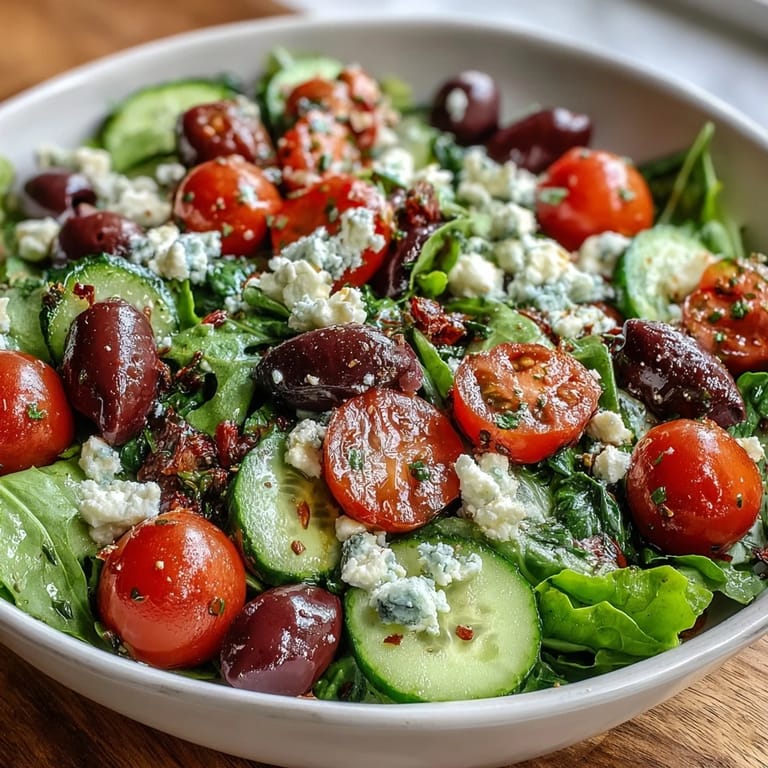
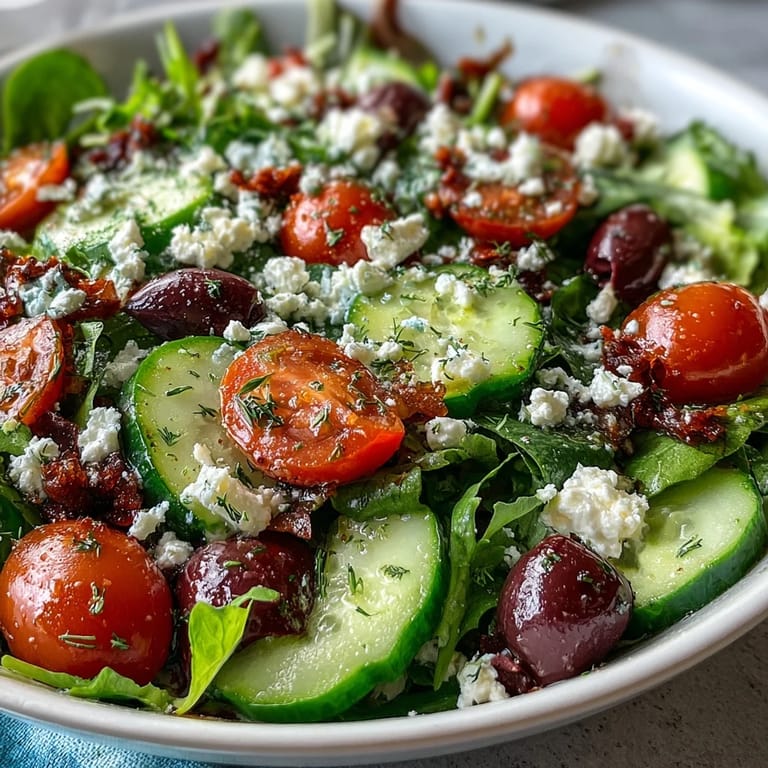
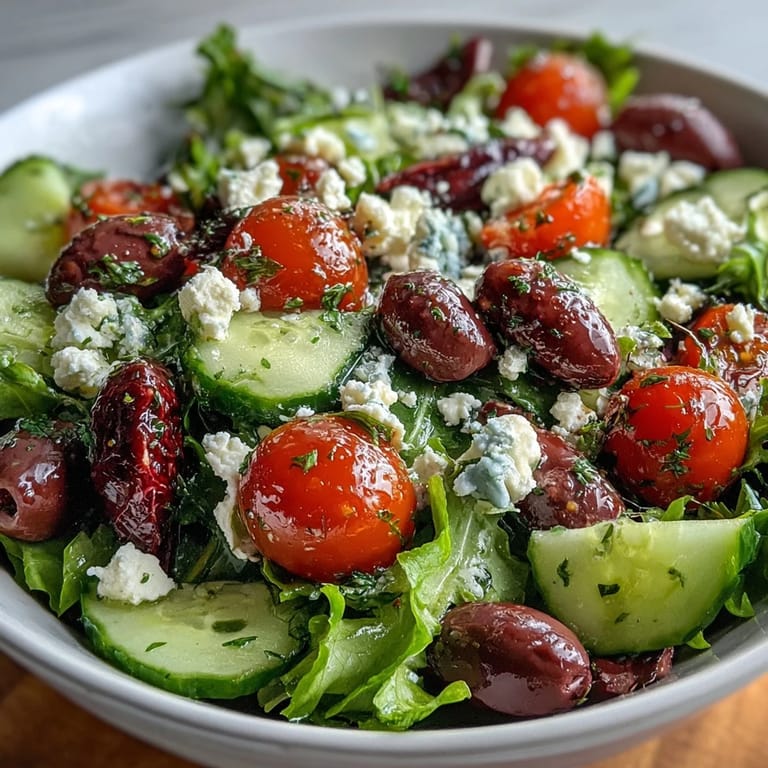
- Cherry tomatoes: Halving them instead of leaving them whole means they'll actually release their juice into the dressing rather than rolling around uneaten. Pick tomatoes that feel heavy and smell like summer.
- Cucumber: I slice mine thin because thick coins feel awkward to eat, and the thin ones absorb the dressing better. English cucumbers have fewer seeds, which some people prefer, though I've never minded them.
- Kalamata olives: The briny bite is non-negotiable here; they're what makes this taste Mediterranean instead of just green. Pit them yourself if you have time and enjoy the small ritual of it, or buy them pre-pitted and save fifteen minutes.
- Red onion: Slice it paper-thin or it'll taste too sharp and dominate everything else. If you're worried about the heat, soak the slices in cold water for ten minutes before tossing them in.
- Feta cheese: Crumble it by hand rather than chopping; the irregular pieces taste better somehow. A good feta should be tangy but not aggressively salty—taste it before you buy it if the shop lets you.
- Extra-virgin olive oil: This is where your money matters, genuinely. A cheap oil tastes thin and one-dimensional; a good one tastes peppery and alive. Use the kind you wouldn't cook with over high heat.
- Red wine vinegar: It brings brightness without the harshness of white vinegar, and it won't overpower the oil. If you only have balsamic, use less of it; it's sweeter and will throw off the balance.
- Dried oregano: Fresh is lovely if you have it growing somewhere, but dried oregano in this dressing is actually more reliable and tastes closer to how it tastes in Greece.
- Garlic and mustard: The garlic brings warmth and the mustard acts as an emulsifier, helping the oil and vinegar actually stay together instead of separating immediately.
Tired of Takeout? 🥡
Get 10 meals you can make faster than delivery arrives. Seriously.
One email. No spam. Unsubscribe anytime.
Instructions
- Prepare your vegetables with intention:
- Wash your greens and pat them completely dry—water on the leaves means the dressing slides off instead of clinging. Halve your tomatoes, slice your cucumber, and let the red onion sit in a small pile on your cutting board for a moment before you add it to the bowl.
- Build the salad base:
- Toss your greens, tomatoes, cucumber, olives, and red onion in a large bowl, letting each vegetable find its place naturally rather than arranging them too carefully. The bowl should feel abundant and loose, not packed down.
- Whisk the dressing until it's silky:
- In a small bowl or jar, combine the olive oil, vinegar, oregano, minced garlic, mustard, salt, and pepper. Whisk hard for a minute or so until the oil and vinegar actually emulsify—you'll see it change texture and become slightly creamy-looking. If using a jar, screw the lid on tight and shake like you mean it for about thirty seconds.
- Dress and serve with restraint:
- Pour the dressing over the salad just before eating and toss everything gently so every leaf gets coated without getting bruised. The feta goes on top at the very end so it stays crumbly and doesn't break down into the greens.
 Save
Save My mother made a version of this salad every single day during one summer when we visited Athens, and I remember thinking it was almost boring—until I realized I was eating it for lunch and dinner both and never getting tired of it. That's the mark of something truly good; it doesn't demand your attention with complicated flavors, it just satisfies you and makes you happy to eat it again.
The Dressing Makes Everything
I spent years buying bottled Greek dressing because I thought homemade would be harder, and then one afternoon I made it in thirty seconds and tasted it and felt slightly foolish. The secret isn't technique—it's just good ingredients whisked together. Once you understand that olive oil and vinegar can actually become something thick and luxurious if you whisk them with mustard and patience, you'll never buy the bottled version again.
How to Make This a Complete Meal
On its own, this salad is a beautiful side or a light lunch, but if you want it to be dinner, you can build on it without changing what makes it work. Grilled chicken breasts cut into strips sit nicely on top, as do warm chickpeas if you want to keep it vegetarian, or shrimp if you're feeling like the Mediterranean is calling you toward the coast.
Storage and Serving Wisdom
The vegetables will keep in a sealed container in the refrigerator for three days, and the dressing keeps for a week if you store it in a jar—which means you can have salad ready almost instantly on busy nights. The feta is best added just before eating so it doesn't get soggy and sad.
- Make the dressing in the morning and taste it again before serving; flavors settle and shift as they sit together.
- If you're bringing this to a picnic or potluck, pack the dressing separately and toss it all together just before people eat.
- Toasted pine nuts or sunflower seeds scattered on top add a crunch that makes the whole thing feel more substantial.
 Save
Save This is the kind of salad that becomes part of your life once you've made it a few times, showing up for picnics and weeknight dinners and moments when you want to eat something that tastes good and feels good at the same time. Make it once and you'll understand why people who've eaten Mediterranean food their whole lives never really stop missing it.
Recipe FAQs
- → Can I make this ahead of time?
You can prepare all ingredients in advance and store them separately in the refrigerator. Keep the dressing in a sealed jar and toss everything together just before serving to maintain the crisp texture of the vegetables.
- → How long does this keep in the refrigerator?
Best enjoyed fresh within 1-2 days. The dressed salad will wilt, so store undressed leftovers in an airtight container and add fresh dressing when ready to eat.
- → What can I use instead of feta?
Try goat cheese for a similar tangy creaminess, or use cubed avocado for richness without dairy. Vegan feta alternatives work well for a plant-based version.
- → Can I add protein to make it a complete meal?
Grilled chicken breast, pan-seared shrimp, or chickpeas transform this into a satisfying main dish. The Greek dressing complements most Mediterranean proteins beautifully.
- → What other vegetables work well in this bowl?
Bell peppers, radishes, shredded carrots, or artichoke hearts all add color and crunch. Grilled zucchini or roasted eggplant work nicely for warmer variations.
- → Is the Greek dressing customizable?
Absolutely. Add fresh herbs like parsley or dill, substitute lemon juice for vinegar, or include a touch of honey for sweetness. Adjust garlic to your preference.