 Save
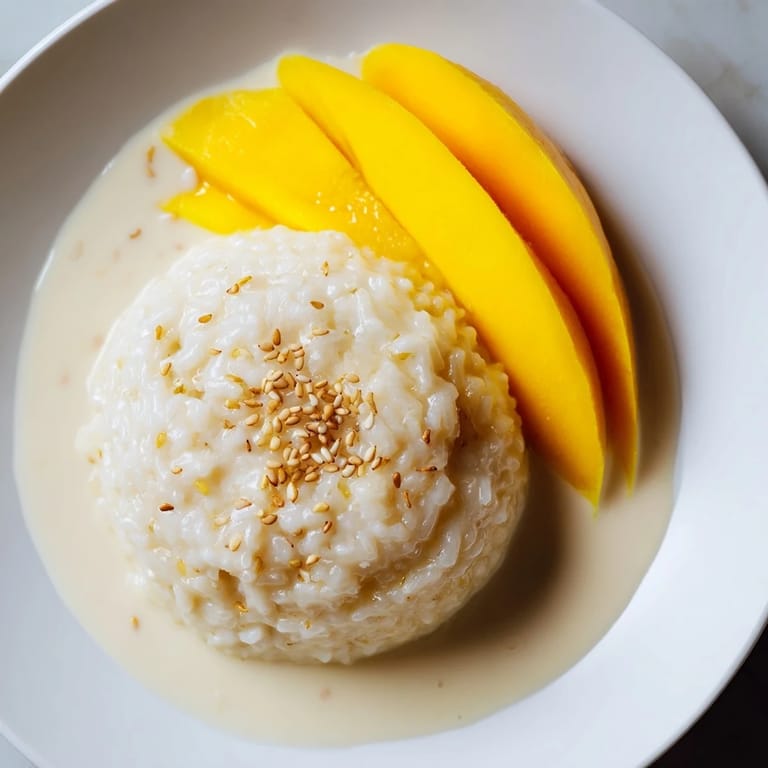
Save I was wandering through a Bangkok night market when the vendor scooped sticky rice onto a banana leaf, placed golden mango slices beside it, and drizzled warm coconut sauce over everything. That first bite—sweet, creamy, floral—made me close my eyes right there under the string lights. I flew home determined to recreate it, and after a few tries I finally nailed the texture: tender grains that hold together without turning gummy, coconut milk that soaks in but doesn't drown the rice.
My sister visited one summer evening and I served this after a spicy Thai curry. She looked skeptical—rice for dessert?—but took a bite and her face softened. We sat on the porch with our bowls, listening to cicadas, and she admitted she'd never tasted anything quite like it. Now she requests it every time she visits, and I always buy an extra mango just in case.
Ingredients
- Glutinous rice: Sometimes called sweet rice, this short-grain variety turns sticky and tender when steamed; long-grain rice will not work here, so check the label carefully.
- Coconut milk: Use full-fat canned coconut milk for richness; light versions produce a watery sauce that won't cling to the rice.
- Granulated sugar: Dissolves quickly and sweetens the coconut sauce without overpowering the mango; palm sugar adds deeper caramel notes if you have it.
- Salt: A small pinch sharpens the sweetness and brings out the coconut's natural flavor.
- Ripe mangoes: Look for fruit that gives slightly when pressed and smells fragrant at the stem; underripe mangoes taste tart and fibrous.
- Coconut cream: The thick layer that rises to the top of chilled coconut milk; it adds a silky drizzle and extra coconut punch.
- Toasted sesame seeds or mung beans: A crunchy garnish that contrasts beautifully with the soft rice and juicy mango.
Tired of Takeout? 🥡
Get 10 meals you can make faster than delivery arrives. Seriously.
One email. No spam. Unsubscribe anytime.
Instructions
- Soak the rice:
- Rinse the glutinous rice under cold running water, swirling with your fingers until the water runs clear. Cover with fresh water and soak for at least four hours or overnight; this step hydrates the grains so they steam evenly.
- Steam the rice:
- Drain the soaked rice and line your steamer basket with cheesecloth to prevent grains from falling through. Spread the rice in an even layer, cover, and steam for twenty-five to thirty minutes until the grains are translucent and tender but still have a slight chew.
- Prepare the coconut sauce:
- While the rice steams, combine coconut milk, sugar, and salt in a small saucepan over medium heat. Stir gently until the sugar dissolves completely; do not let it boil or the coconut milk may separate.
- Soak the rice in sauce:
- Transfer the hot steamed rice to a mixing bowl and pour in three-quarters of the warm coconut sauce. Fold gently with a spatula so every grain is coated, then cover the bowl and let it sit for ten to fifteen minutes so the rice drinks up the sauce and becomes creamy.
- Slice the mango:
- Peel each mango and cut the flesh away from the flat pit, then slice into thin strips or bite-sized pieces.
- Assemble and serve:
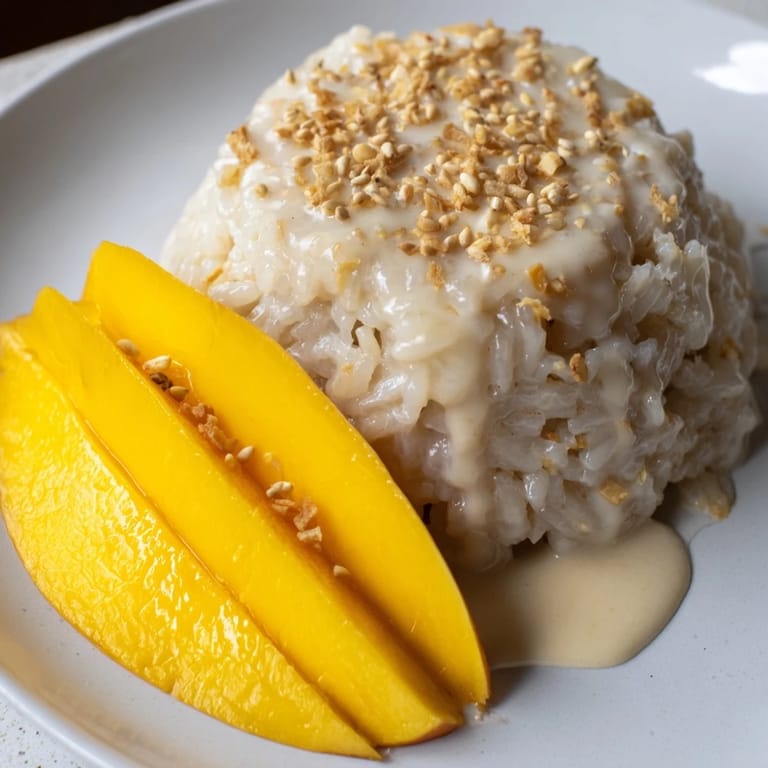
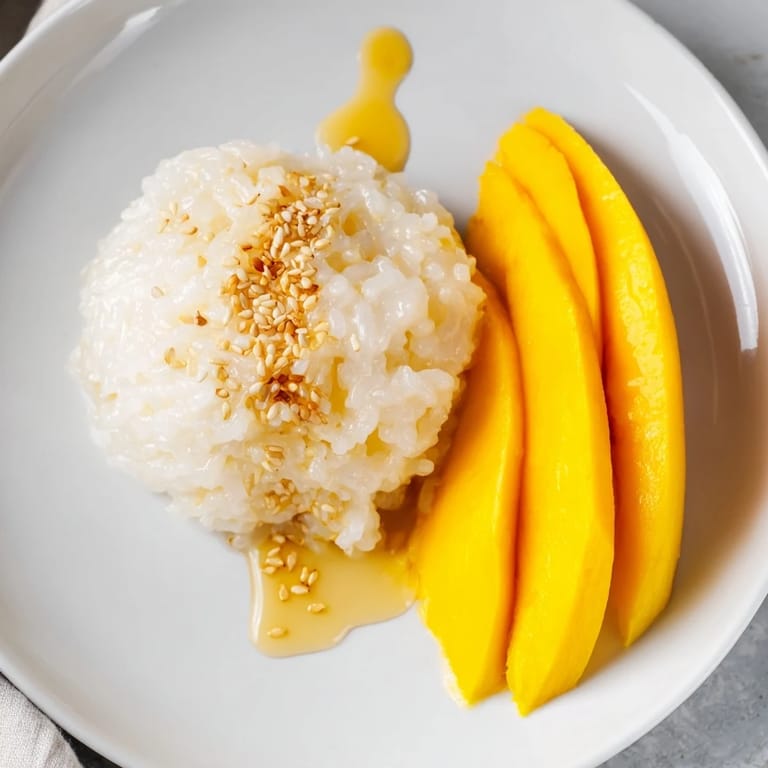
- Mound a generous scoop of sticky rice on each plate, arrange mango slices alongside, and drizzle with the reserved coconut sauce. Finish with a spoonful of coconut cream and a sprinkle of toasted sesame seeds or mung beans if you like.
 Save
Save One night I made a double batch for a potluck and watched people who'd never tried Thai dessert take cautious bites, then return for seconds. A friend pulled me aside and asked if I'd teach her how to steam rice this way because her kids kept asking for it. That's when I realized this dish has a quiet magic: it feels exotic and special, but it's built on just a handful of ingredients and a little care.
Choosing the Right Mango
The best varieties for this dessert are Ataulfo or Champagne mangoes, which have smooth, non-fibrous flesh and a honey-like sweetness. If you can only find larger Tommy Atkins or Kent mangoes, choose ones that yield gently to pressure near the stem and have a fruity aroma. I once used rock-hard mangoes and the dish tasted flat; ripe fruit is everything here.
Steaming Without a Traditional Steamer
If you don't own a bamboo or metal steamer, improvise by placing a heatproof plate or small rack inside a large pot with a lid. Add an inch of water to the pot, bring it to a simmer, then set a cheesecloth-lined colander or bowl of rice on the plate. I've done this dozens of times and it works perfectly as long as the water doesn't touch the rice.
Make-Ahead and Serving Tips
You can steam the rice and prepare the coconut sauce up to two hours before serving; just keep the rice covered at room temperature so it stays soft. Slice the mangoes right before plating to prevent browning. If you have leftover sticky rice, enjoy it for breakfast with a drizzle of honey or reheat it gently in a steamer with a splash of coconut milk.
- For a fragrant twist, tuck a pandan leaf into the rice while it steams.
- Swap granulated sugar for palm sugar to add a subtle caramel depth.
- Toast your sesame seeds or mung beans in a dry skillet until golden and fragrant for maximum crunch.
 Save
Save Every time I make this dessert I'm reminded that the best recipes don't need fancy techniques or hard-to-find ingredients—they just need respect for each component and a willingness to let simple flavors shine. I hope you love it as much as I do.
Recipe FAQs
- → What type of rice is best for this dish?
Glutinous or sticky rice is ideal for achieving the characteristic sticky texture essential to the dish.
- → How long should the rice be soaked?
Soaking the rice for at least 4 hours or overnight helps soften the grains and ensures even steaming.
- → Can I substitute the coconut milk?
Full-fat coconut milk provides the richest flavor and creaminess, but light coconut milk can be used with a slight difference in texture.
- → What’s the purpose of the coconut sauce?
The sauce moistens the sticky rice and adds a sweet, salty, and creamy layer, enhancing the overall balance.
- → Are there recommended garnishes for added texture?
Toasted sesame seeds, mung beans, or a drizzle of coconut cream can add pleasant nutty and creamy notes to the dish.
- → Can pandan leaves be used during steaming?
Yes, adding pandan leaves imparts a subtle fragrant aroma that complements the coconut and mango flavors.