 Save
Save Last autumn, a friend brought me a small tin of hojicha powder from Tokyo, and I spent weeks wondering what to do with it beyond the obvious cup of tea. The aroma alone—toasted, nutty, almost smoky—made me think of something more substantial, something that could turn a simple dessert into a moment of pause. One quiet Saturday morning, I decided to bake with it, combining it with ingredients I already had on hand: coconut milk, maple syrup, and gluten-free flour. What emerged from the oven was this delicate, moist cake that somehow felt both indulgent and nourishing at once.
I brought this cake to a dinner party where one guest had recently switched to a plant-based diet and wasn't sure what she could eat anymore. Watching her face light up when she tasted it, then immediately ask for the recipe, reminded me why I love baking—it's not about perfection, it's about creating something that makes people feel included and cared for.
Ingredients
- Gluten-free all-purpose flour blend (1 ½ cups): Choose a blend with xanthan gum already mixed in to avoid gumminess, and measure by spooning and leveling rather than scooping directly from the bag.
- Almond flour (½ cup): This adds moisture and a subtle nuttiness that complements hojicha beautifully; make sure it's finely ground, not coarse meal.
- Hojicha powder (2 tbsp): This is the star—invest in high-quality hojicha from a specialty tea supplier, as cheap versions taste dusty and flat.
- Baking powder and baking soda (1 ½ tsp and ½ tsp): Check your baking soda's expiration date; old baking soda won't give you the lift you need.
- Salt (¼ tsp): Even a small pinch rounds out the sweetness and deepens the hojicha flavor.
- Unsweetened almond milk (¾ cup): Any unsweetened plant milk works, but almond stays neutral and won't compete with the hojicha.
- Apple cider vinegar (1 tbsp): This creates vegan buttermilk and adds a slight tang that brightens the cake.
- Maple syrup (½ cup): Use pure maple syrup, not pancake syrup; the depth of flavor matters here.
- Coconut oil (1/3 cup, melted): Keep the oil warm when mixing so it doesn't seize up with the cold plant milk.
- Vanilla extract (1 tsp): Pure vanilla is worth the extra cost for this delicate cake.
- Full-fat coconut milk (1 can, refrigerated overnight): The overnight chill is non-negotiable—it's what separates fluffy frosting from a greasy mess.
Tired of Takeout? 🥡
Get 10 meals you can make faster than delivery arrives. Seriously.
One email. No spam. Unsubscribe anytime.
Instructions
- Prepare your mise en place:
- Preheat the oven to 350°F and grease your 8-inch round pan with a light hand—too much oil and the cake edges brown too fast. Line the bottom with parchment so the cake slides out cleanly.
- Make your vegan buttermilk:
- Pour the almond milk into a small bowl, add the apple cider vinegar, and let it sit for 5 minutes. You'll watch it thicken slightly and smell that subtle tang come alive—that's exactly what you want.
- Combine dry ingredients:
- In a large bowl, whisk together the gluten-free flour, almond flour, hojicha powder, baking powder, baking soda, and salt until the hojicha is evenly distributed with no streaks. This takes a bit of patience, but uneven hojicha means pockets of flavor and bland spots.
- Mix the wet ingredients:
- In another bowl, combine the vegan buttermilk, maple syrup, warm melted coconut oil, and vanilla extract. Whisk until smooth—the mixture should be glossy and homogeneous.
- Bring it together gently:
- Pour the wet ingredients into the dry and stir with a spatula using a folding motion, stopping as soon as you don't see flour streaks anymore. Overmixing gluten-free batter creates a dense, tough crumb, so resist the urge to keep stirring.
- Bake until set:
- Transfer the batter to your prepared pan and smooth the top with a spatula. Bake for 30 to 35 minutes—you'll know it's done when a toothpick inserted into the center comes out clean or with just a few moist crumbs clinging to it.
- Cool with intention:
- Let the cake rest in the pan for 10 minutes (this prevents it from breaking apart), then invert it onto a wire rack to cool completely. Patience here matters; frosting a warm cake creates a melting, sliding mess.
- Prepare the frosting:
- Open the refrigerated can of coconut milk and scoop the thick cream that's separated from the liquid into a clean bowl—save that liquid for smoothies. Add the maple syrup and vanilla extract, then beat with an electric mixer on medium-high speed for 2 to 3 minutes until light and fluffy, like whipped cream.
- Frost and finish:
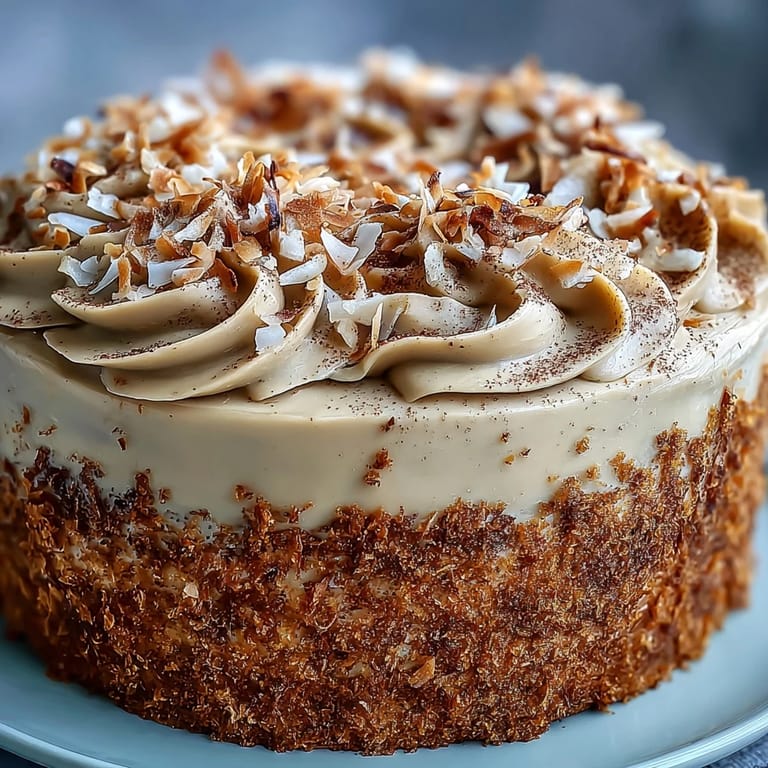
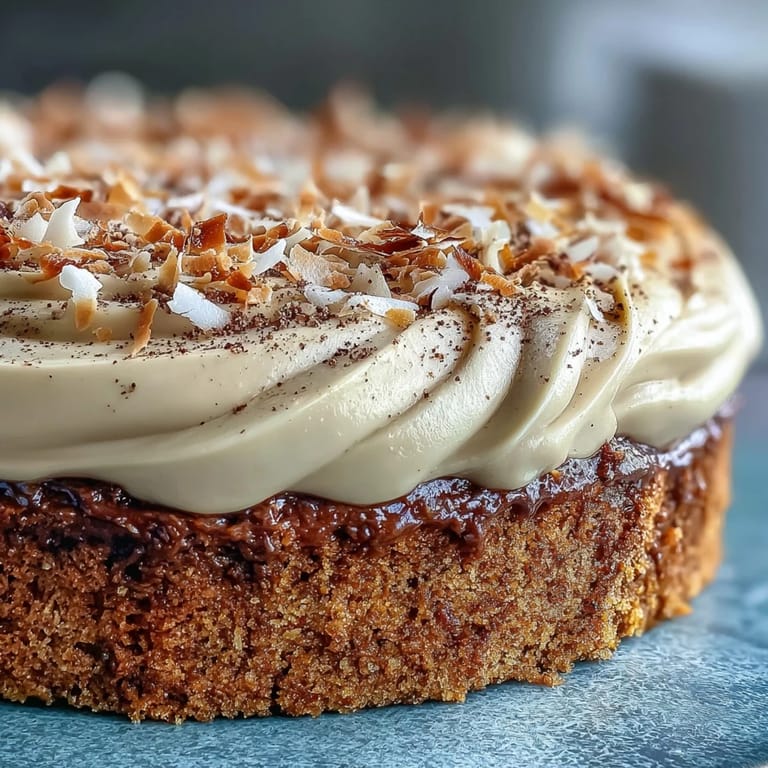
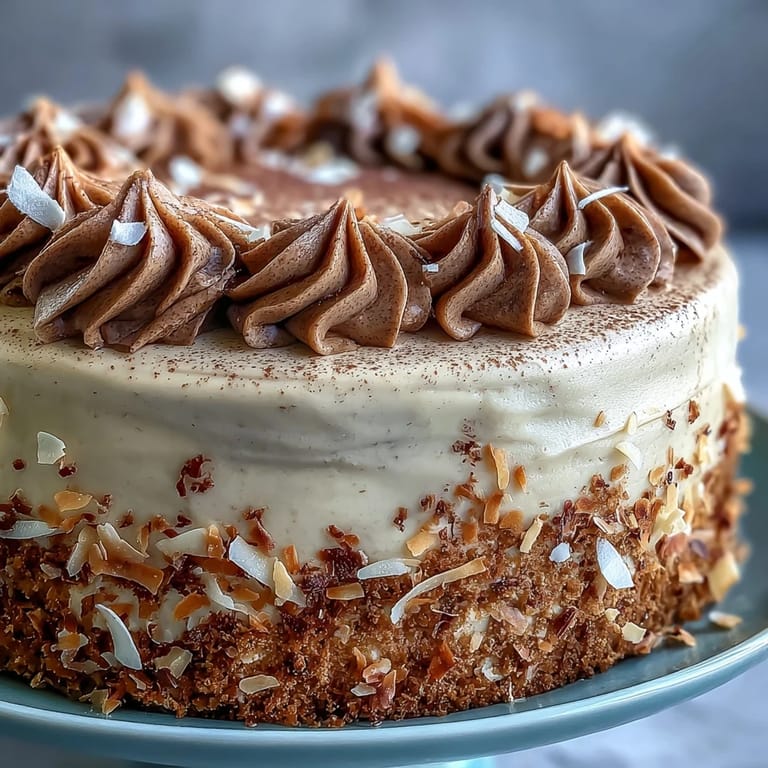
- Once the cake is completely cool, spread the coconut frosting evenly over the top using an offset spatula or the back of a spoon. Dust lightly with hojicha powder and scatter toasted coconut flakes across the surface if you'd like that textural contrast.
 Save
Save This cake somehow became the thing I make when I want to remind myself that wholesome eating doesn't mean sacrifice. A simple slice with tea and a moment of stillness feels like the most luxurious thing.
Why Hojicha Matters
Hojicha is roasted green tea, and that roasting process transforms it into something darker, warmer, and less grassy than regular matcha or sencha. The flavor is almost toasty, with notes that sit somewhere between coffee and caramel without being either one. In baking, it adds sophistication without shouting—it's the kind of ingredient that makes people pause mid-bite and ask what they're tasting.
Making This Cake Your Own
The beauty of this recipe is that it's a foundation, not a decree. Some people want to double the layers and stack them, creating a two-layer cake with frosting between and on top—if you go that route, increase the frosting batch by 50 percent. Others have added a light drizzle of white chocolate on top, or pressed a few candied flowers into the frosting before it sets. The cake is sturdy enough to handle additions and variations.
Storage and Serving Wisdom
This cake keeps beautifully in the refrigerator for up to three days, covered loosely so the frosting doesn't get condensation on it. Cold slices have a cleaner crumb and the hojicha flavor becomes even more pronounced. Serve it alongside a pot of hojicha tea, or pair it with something completely different—I've found it works wonderfully alongside light sake or even a simple glass of unsweetened almond milk for breakfast.
- Remove the cake from the fridge about 20 minutes before serving so the frosting softens slightly and the cake warms up just enough.
- A sharp, thin-bladed knife dipped in hot water and wiped clean between cuts gives you neat slices without tearing the delicate crumb.
- This cake freezes well for up to a month if you wrap it tightly in plastic wrap before frosting—frost it fresh after thawing.
 Save
Save This cake is proof that baking without eggs, dairy, or gluten doesn't require compromise—it just requires attention and care. Every time I make it, I'm reminded that the best recipes are the ones that bring people together, regardless of what they eat.
Recipe FAQs
- → What does hojicha taste like?
Hojicha offers a warm, roasted flavor with earthy notes and subtle caramel undertones. Unlike matcha's grassy brightness, hojicha is milder and lower in caffeine, making it perfect for baking into treats that feel comforting rather than energizing.
- → Can I substitute the almond flour?
You can replace almond flour with additional gluten-free flour blend, though the texture may become slightly denser. For nut-free options, try sunflower seed flour or oat flour, ensuring your blend remains certified gluten-free.
- → Why must the coconut milk be refrigerated overnight?
Refrigerating separates the solid cream from the liquid. Only the thick solids create a fluffy, stable frosting—using the entire can would result in a runny glaze rather than a spreadable topping.
- → How should I store leftovers?
Keep slices refrigerated in an airtight container for up to three days. The frosting firms when chilled, so let pieces sit at room temperature for 15 minutes before serving for the best texture.
- → Can I make this as a layer cake?
Absolutely—double the sponge batter and bake in two pans. You'll need approximately 1.5 times the frosting amount to generously fill and cover both layers for an impressive presentation.
- → Is hojicha powder the same as matcha?
No—both are ground Japanese teas, but hojicha is roasted while matcha is steamed. This gives hojicha a reddish-brown color and toasty flavor profile distinct from matcha's vibrant green and vegetal taste.